Overview
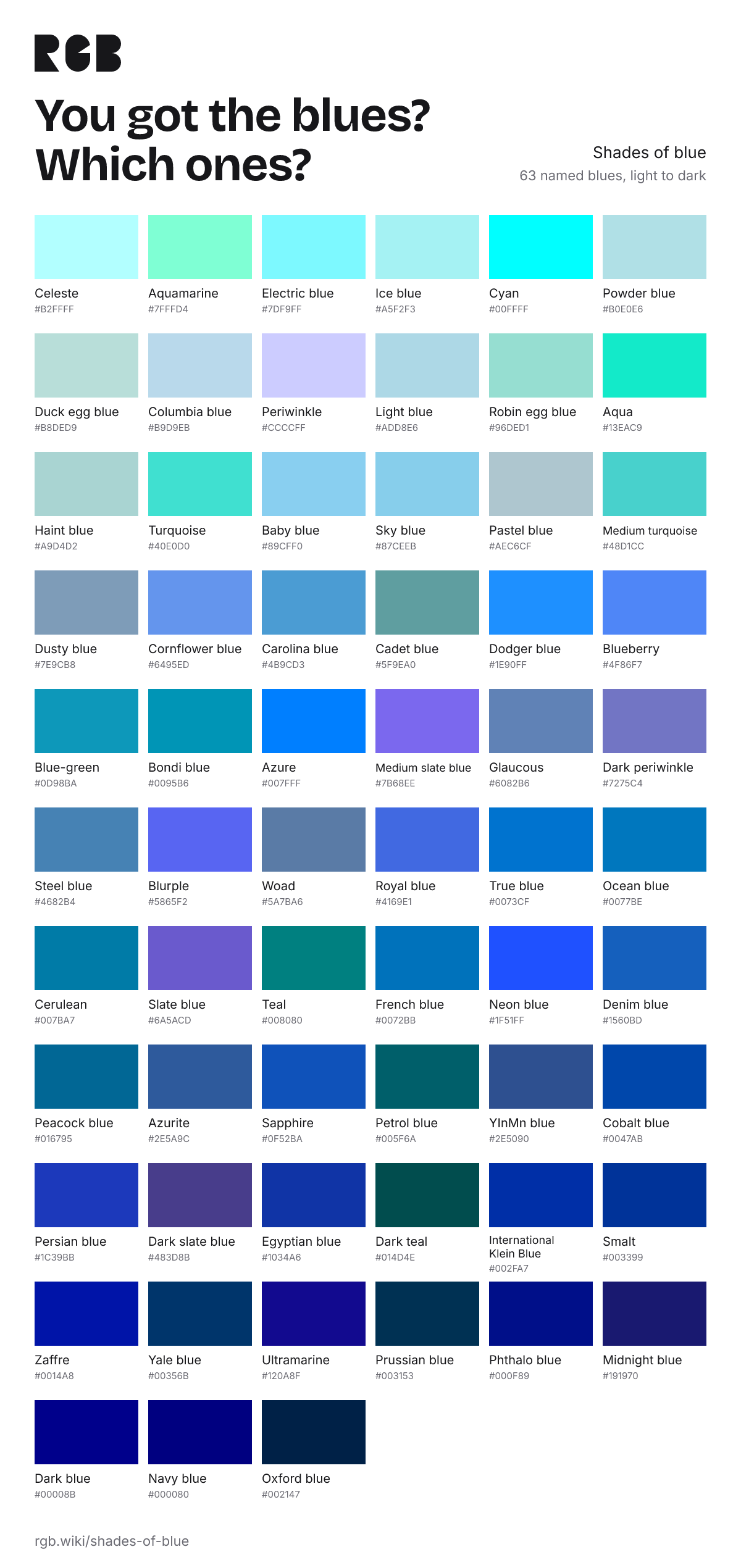
Blue sits between green and violet in the rainbow. For most of history, strong blue paint was rare and expensive, so many blue names come from minerals and chemistry.
On screens, pure blue is #0000FF, the CSS keyword blue: blue light at full strength, with no red or green. It is very dark for such a strong color, so pure blue text on black is hard to read.
Named blues lean toward green, like turquoise and teal, or toward purple, like periwinkle and ultramarine. They run from pale baby blue to near-black navy blue.
| HEX | #0000FF | |
|---|---|---|
| RGB | rgb(0, 0, 255) | |
| HSL | hsl(240, 100%, 50%) | |
| HSV | 240°, 100%, 100% | |
| CMYK | 100, 100, 0, 0 | |
| OKLCH | oklch(45.2% 0.313 264.1) |
Types of blue
Light blues
Blue with plenty of white: baby blue, light blue, powder blue, sky blue and pastel blue.
Bright blues
Strong, clear blues: azure, cornflower blue, royal blue, neon blue and cobalt blue.
Green-blues
Blues that lean toward green: aquamarine, cyan, turquoise, blue-green and teal.
Muted blues
Blues softened with gray: dusty blue, cadet blue, glaucous and steel blue.
Deep blues
The darkest blues: sapphire, Prussian blue, midnight blue, navy blue and Oxford blue.
Blues from pigments
Ultramarine, once ground from the stone lapis lazuli, Egyptian blue, often called the first synthetic pigment, azurite, a copper mineral, and smalt, made from ground blue glass.
Light, dark and other blues
Plain names like these have no single official code. Each card shows a typical value; click it to copy.
All 63 blues, light to dark