Named for melting
Word historyEnglish took smalt from French and Old Italian smalto, a word of Germanic origin related to Old High German smelzan, to melt, and to English smelt. It names what the pigment is: a melted glass.1, 2
A deep blue named after powdered cobalt glass, the painter’s blue that has quietly turned gray in museums.
Smalt is a deep, strong blue. Its usual web code, #003399, has no red, a little green and blue at 60 percent, so it reads as a dark royal blue with a slightly cool edge. It sits between International Klein Blue and cobalt blue, a shade darker than the second.
The name belongs to a pigment. Smalt is glass: zaffre, roasted cobalt ore, melted with sand and potash into a glass so rich in cobalt it looks almost black, then crushed and washed into grades. Coarse grains give a deep violet-blue, fine grains a pale gray-blue. European painters used it from about 1400 to the mid-1700s, often where azurite or ultramarine would have cost more, and households bought it by the barrel as powder blue for the laundry.
Smalt did not last in oil. Over the centuries potassium leaches out of the glass, the cobalt loses its blue, and the oil around it yellows. Skies and robes painted in smalt now look gray, greenish gray or brown. The sky behind Veronese’s Boy with a Greyhound at the Metropolitan Museum of Art has turned gray, and Christ’s cloak in a National Gallery painting from the 1560s is now yellowish brown.
The web code is a picture of fresh smalt, not of what survives on old canvases. It holds white text well (10.9:1) and looks at home with lead white, gold, vermilion and warm stone colors.
| HEX | #003399 | |
|---|---|---|
| RGB | rgb(0, 51, 153) | |
| HSL | hsl(220, 100%, 30%) | |
| HSV | 220°, 100%, 60% | |
| CMYK | 100, 67, 0, 40 | |
| OKLCH | oklch(37.1% 0.173 262.1) |
The dictionary’s deep blue sits to the left of the web code, toward greenish blue, at about the same lightness. Its moderate blue sits further left and well above the outline: lighter and much grayer. Ridgway’s smalt blue sits to the right, toward violet, a little darker, near the edge of the outline. The outline is an approximate range, not a measured one.
Tints with white
Shades with black
Tones with gray
Pairings that work in rooms, outfits and interfaces.
The mix painters relied on: lead white helped smalt dry and keep its blue.
Deep blue, gold and vermilion on a dark ground, like an altarpiece.
Fresh smalt beside the olive gray it becomes. Quiet and museum-like.
Near-opposites. Bold and warm, good for posters and covers.
Deep blue softened by a pale pink. Elegant for stationery.
Clean and dependable for interfaces, with smalt as the action color.
Pick a palette to see where its colors sit on the color wheel. The caret marks smalt. Tap a band to copy its code.
Lined up by hue around smalt. Hover a color to see how similar it is.The bar under each name shows how similar it is. Similarity comes from the distance between the two colors in OKLab, a model of how we see color.
Smalt’s meaning comes from the material: a blue made by melting cobalt into glass and grinding it fine, cheap enough to cover whole skies. Its best-known trait today is a sad one, that it loses its color in oil paint. The claims below rest on dictionaries, museum records and conservation science. No study has tested how the color smalt makes people feel.
English took smalt from French and Old Italian smalto, a word of Germanic origin related to Old High German smelzan, to melt, and to English smelt. It names what the pigment is: a melted glass.1, 2
Researchers at the National Gallery, London, describe smalt as unstable: in many paintings it has lost its color and yellowed the oil, so the paint now looks brownish yellow or greenish gray, often with cracks and patchy blanching.3
Smalt’s blue comes from cobalt held in a particular arrangement in the glass. A 2011 synchrotron study of samples from the National Gallery and the Louvre found that as potassium leaches out, the cobalt shifts into a different arrangement, and the particles go colorless.4
In the sky of a Paolo Fiammingo painting, only smalt mixed with plenty of lead white is still blue; smalt alone in the layer below has turned yellow. The National Gallery team concluded that light is not the main cause of the damage.3
Older books credit a Bohemian glassmaker, Christoph Schürer, with inventing smalt around 1540–60. Analysis has since found smalt in paintings a century earlier, and historians trace the story to Saxon claims on the cobalt trade.2
Smalt had a long run in European painting, from about 1400 until Prussian blue pushed it aside in the 1700s. Its second story began in museum laboratories, where scientists worked out why so much of it has lost its blue.
The Medieval Latin word smaltum is first recorded, from the same Germanic root as the German schmelzen, to melt.1
An anonymous German panel painting receives what is now the oldest smalt confirmed in a European easel painting, identified by X-ray fluorescence.1
Accounts record a large purchase of smalt to decorate the gallery of Francis I at Fontainebleau.1
Michelangelo Biondo, writing in Venice, calls Flemish smalt the finest available.1
First known use of “smalt” in English.2
Pier Francesco Foschi paints parts of a Florentine portrait’s drapery in smalt. Analysis later shows it has discolored.3
Paolo Veronese paints Boy with a Greyhound with a smalt blue sky that has since turned gray.4
Prussian blue, stronger and steadier in oil, displaces smalt. By about 1750 it is rarely a painter’s main blue.1
A National Gallery study of degraded smalt shows potassium leaching from the glass and finds Christ’s cloak in The Conversion of the Magdalen, attributed to Pedro Campaña, now yellowish brown.5
Synchrotron analysis links the loss of color to a change in how the cobalt sits in the glass once potassium is gone.6
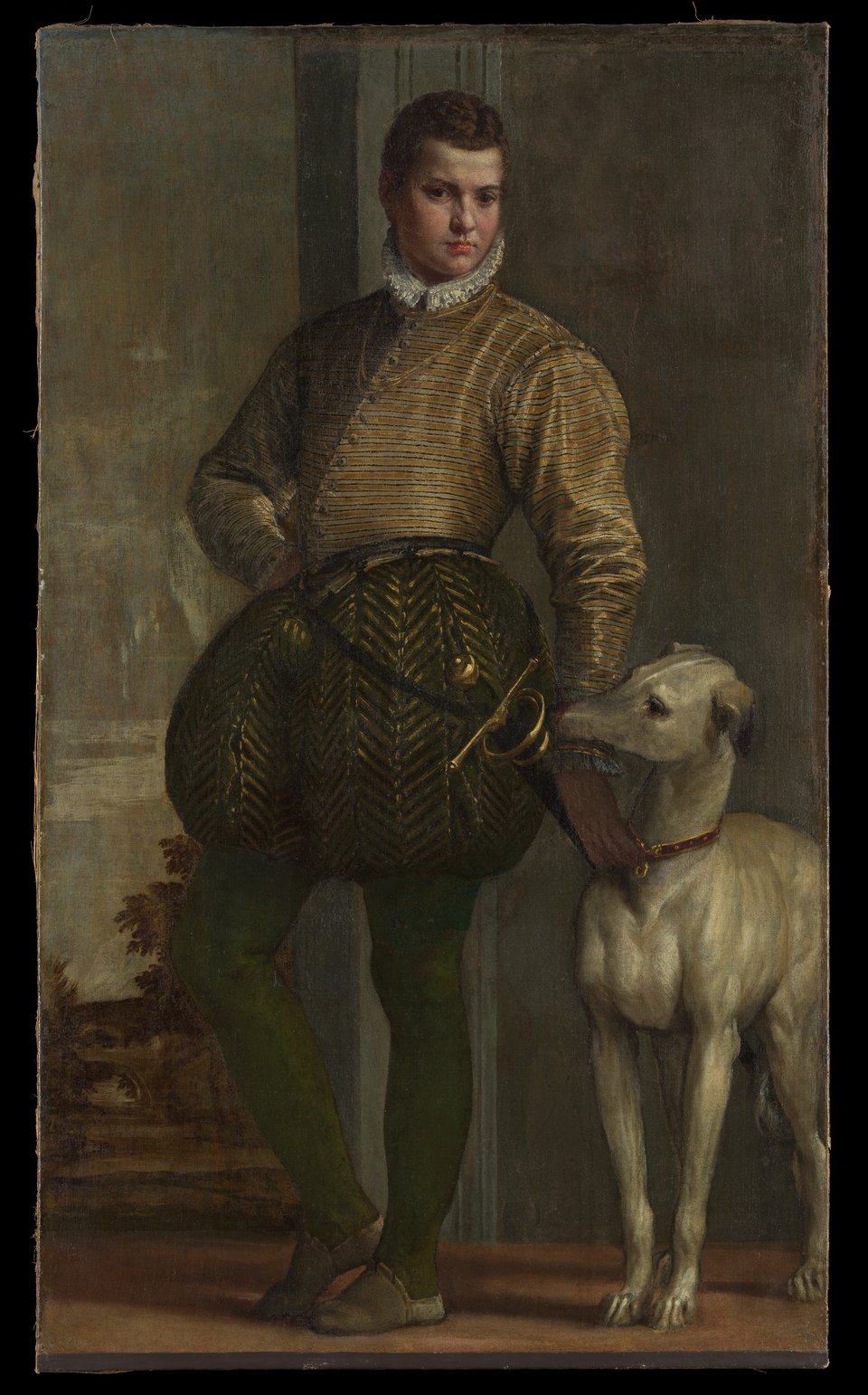
Paolo Veronese’s portrait of a boy and his dog, at the Metropolitan Museum of Art. The museum notes that the sky, painted with smalt, has turned gray with age. The sky at upper left now samples as olive gray and brown, nothing like the blue of #003399.
Sampled from the sky in the Metropolitan Museum of Art’s photograph (29.100.105), released under its Open Access policy as CC0 (public domain). The note on the smalt sky comes from the museum’s record. Colors in a photo shift with the lighting, so read the codes as close, not exact.
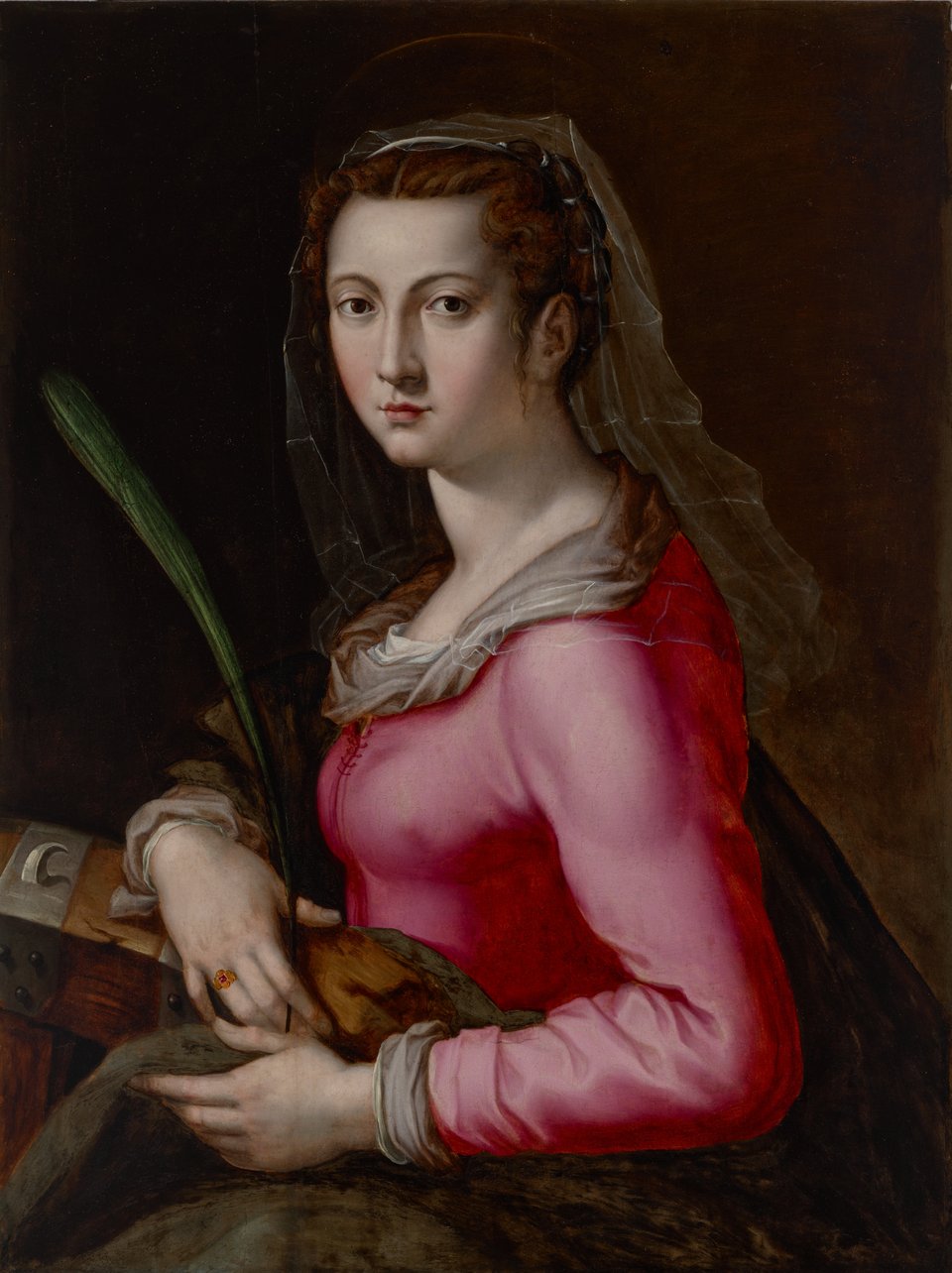
A Florentine portrait by Pier Francesco Foschi at the Cleveland Museum of Art. Technical analysis found that the smalt in parts of the drapery has discolored, along with a copper pigment in the background. The museum does not say which folds were blue; the dark mantle now samples close to black-brown.
Sampled from the Cleveland Museum of Art’s photograph (1916.825), released as CC0 (public domain). The pigment and its condition come from the conservation statement in the museum’s record. Colors in a photo shift with the lighting, so read the codes as close, not exact.
Booking.com’s dark blue, #003B95, is nearly the same as this page’s code, just a shade lighter and less saturated.
Codes from the theme colors in the stylesheet of Booking.com’s newsroom, read on November 18, 2026.

Jio’s blue, #2B3990, is a touch lighter, grayer and more purple than this page’s code. It fills the circle behind the white Jio wordmark.
The blue is the fill in the Jio logo file linked from jio.com. The logo shown is that file.
Logos belong to their owners and are shown unaltered, only to show where each palette comes from. Palettes are sampled in-house.
A deep, strong blue. The usual web code is #003399 (RGB 0, 51, 153): no red, a little green and blue at 60 percent. Real smalt pigment ranged from deep violet-blue to pale gray-blue depending on how finely it was ground.
Glass. Roasted cobalt ore (zaffre) was melted with sand and potash into a dark blue glass, which was then crushed, ground and washed into grades for painters.
In oil paint, potassium slowly leaches out of the glass. Without it, the cobalt loses its blue, and the oil around it yellows. Skies and robes once painted in smalt now look gray, greenish gray or brown.
No. Both get their color from cobalt, but smalt is a ground glass used from about 1400, while cobalt blue is cobalt aluminate, invented in 1803. Cobalt blue is stable in oil; smalt is not. On screen, cobalt blue (#0047AB) is a little lighter.
Zaffre is the roasted cobalt ore used to make smalt and to color ceramic glazes. Smalt is the finished blue glass, ground into a pigment.
No standard defines it for smalt. It appears in color lists and on Wikipedia, and it is one of the 216 web-safe colors. The 1955 ISCC-NBS dictionary files Maerz and Paul’s smalt sample as deep blue, #00416A.
Warm white and gold, as in old paintings, vermilion red, saffron for strong contrast, and soft pink or cool gray for a modern look.