Aquamarine

A bright, minty blue-green on screens, named after a pale blue gem.

Overview

Aquamarine is a bright, pale blue-green, close to mint. Its code is #7FFFD4, the CSS color named aquamarine: full-strength green, a lot of blue and half-strength red, which makes it light and fresh.

The name is Latin for “sea water”, and it comes from a gem: aquamarine, the greenish blue to blue variety of beryl, the mineral of emerald. Most aquamarines are a light, pastel greenish blue, and most of those sold today have been heated to make them bluer.

So the screen color and the gem disagree. The CSS code is far greener and brighter than the pale stone, and dictionaries side with the gem: Merriam-Webster defines the color as pale blue to light greenish blue. The web’s minty aquamarine dates from 1989, when a list of color names for Unix computers was retuned. In the first version, in 1985, aquamarine had been a medium green.

As a screen color, aquamarine feels fresh and summery. It is too light for white text, so pair it with navy, teal or charcoal, or use it as a background behind dark text.
HEX#7FFFD4
RGBrgb(127, 255, 212)
HSLhsl(160, 100%, 75%)
HSV160°, 50%, 100%
CMYK50, 0, 17, 0
OKLCHoklch(91.5% 0.130 169.0)
Every code converts from the HEX value #7FFFD4. #7FFFD4 is the CSS keyword aquamarine, defined in the CSS Color Module Level 4. It comes from the X11 color list of Unix computers, by way of SVG 1.0 (2001). The aquamarine gem is a paler, bluer color; see the range below. CMYK is a screen-based estimate; print results vary.
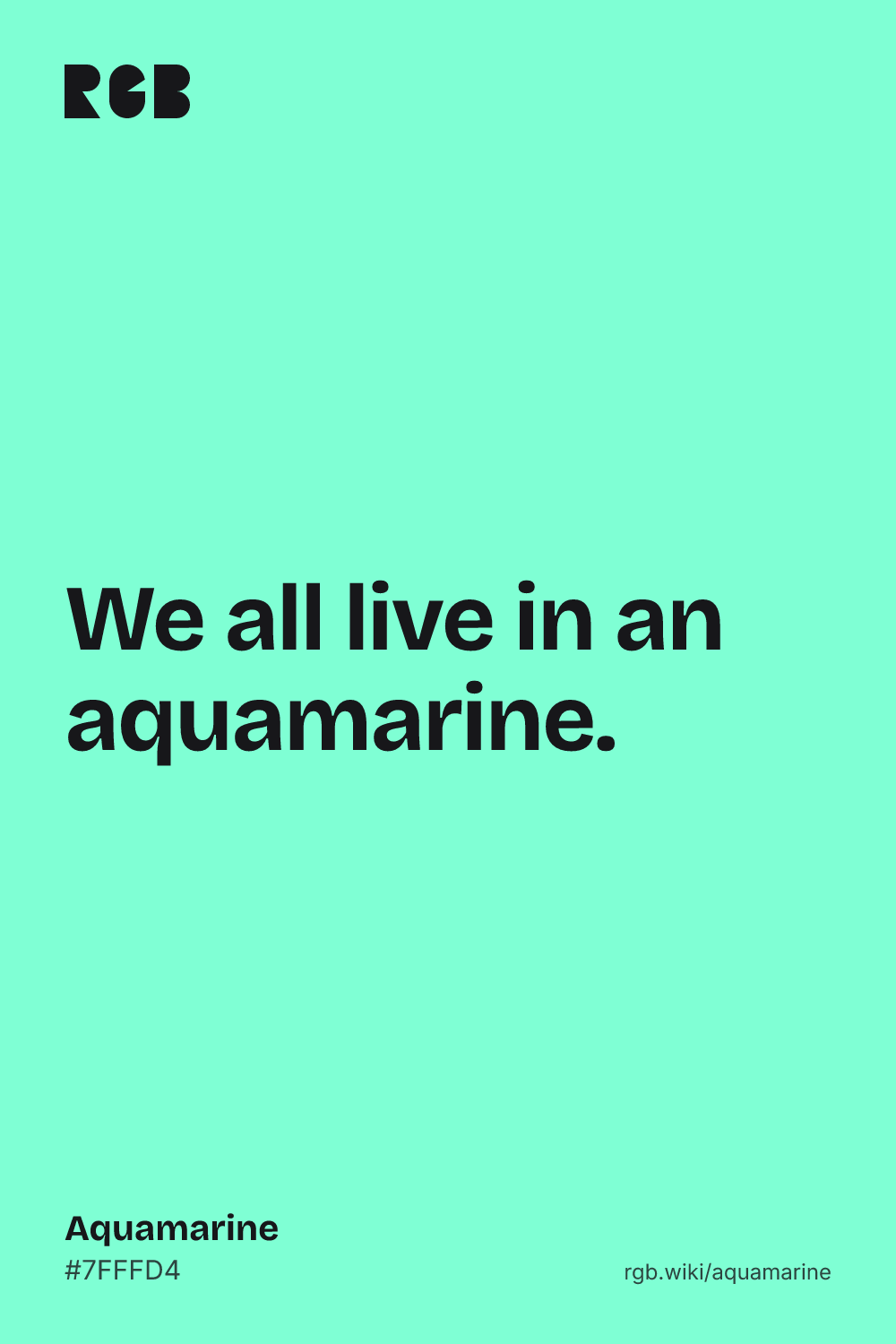
Aquamarine color card, hex #7FFFD4: “We all live in an aquamarine”

Aquamarine on the color map

People’s average aquamarine in the xkcd survey is darker and a little bluer, just below the outline. The 1985 X11 aquamarine sits down and to the left: greener and darker. The gem is far from all of them. The dictionary’s light greenish blue lies beyond the right edge of this view, and the carved seal samples as a pale gray-green, low on the left and nearly colorless. The outline is an approximate range, not a measured one.

Shades and tints

Tints with white

Shades with black

Tones with gray

Aquamarine sits in the middle. Tints add white, shades add black and tones add gray, in 10% steps out from it. Tap any swatch to copy its code.

Light and dark aquamarine

#CCFFEE
Pale aquamarineMixed 60% with white. Barely tinted, for backgrounds.
#7FFFD4
AquamarineThe reference color.
#66CDAA
Medium aquamarineThe CSS keyword mediumaquamarine: almost exactly aquamarine mixed 20% with black. See medium aquamarine
#4C997F
Deep aquamarineMixed 40% with black. A sea green that holds white text at large sizes.
#40806A
Dark aquamarineMixed 50% with black. Dark enough for text on light backgrounds.

Colors that go with aquamarine

Pairings that work in rooms, outfits and interfaces.

Aquamarine and navy

Bright mint on deep blue. Fresh and nautical.

Screen and stone

The CSS color beside the pale blue of the real gem.

Aquamarine and sand

Beach colors. Calm and summery.

Aquamarine and teal

A cool, tonal blend. Good for health and water brands.

Aquamarine and coral

Cool mint against warm coral. Lively and playful.

Aquamarine and charcoal

High contrast. The mint glows on a dark ground.

Color-wheel palettes

Pick a palette to see where its colors sit on the color wheel. The caret marks aquamarine. Tap a band to copy its code.

Similar colors

Mint green63%Seafoam green72%AquamarineCyan66%Celeste60%Ice blue64%Electric blue67%

Lined up by hue around aquamarine. Hover a color to see how similar it is.The bar under each name shows how similar it is. Similarity comes from the distance between the two colors in OKLab, a model of how we see color.

Aquamarine vs turquoise

Aquamarine#7FFFD4 · hue 160°
  • Lighter and greener on screen
  • Named after a pale blue beryl gem
  • A March birthstone
Turquoise#40E0D0 · hue 174°
  • Bluer and a little darker
  • Named after the turquoise stone
  • A December birthstone

Meaning

  • Gemstone
  • Sea water
  • March birthstone
  • Sailors’ lore
  • Screen color

Aquamarine means sea water, and most of its meanings come from the sea. In legend, ancient sailors claimed the gem would calm the waves and keep them safe. Today it is a birthstone for March. On screens, the bright CSS aquamarine reads as fresh and minty, a long way from the pale stone. As with most named colors, research on color and emotion tests broad hues, not aquamarine itself.

Colored by iron

Well established

Aquamarine is beryl, the same mineral as emerald; colorless beryl has its own name, goshenite. Iron gives aquamarine its pale blue. Most stones are a light greenish blue, most on the market have been heated to make them a purer blue, and the finest are a deep, slightly greenish blue.1, 2

A March birthstone since 1912

Historical record

When American jewelers met in Kansas City in August 1912, they made bloodstone the birthstone for March, with aquamarine as its alternate. Today both count as March birthstones, and aquamarine is also the gem for a 19th wedding anniversary.3, 4

Greener on screen than in the stone

Calculated

The CSS code has an OKLCH hue of 169°, a mint green. The dictionary aquamarine, a light greenish blue, sits near 217°, among the blues. A carved aquamarine seal at the Met samples as a pale gray-green with almost no color at all.5, 6

Sources (6)
  1. Gemological Institute of America, “Aquamarine quality factors”.
  2. Wikipedia, “Beryl”, aquamarine and goshenite, citing Viana et al. (2002), Physics and Chemistry of Minerals, 29, 78.
  3. Kunz, G. F. (1913). The Curious Lore of Precious Stones, chapter on birthstones, “The list suggested and adopted in Kansas City”. Project Gutenberg.
  4. Gemological Institute of America, “March birthstones”.
  5. Jaffer, A. “(M) Dictionary of Color”, the ISCC-NBS placements of Maerz and Paul’s color names (1955 dictionary).
  6. The Metropolitan Museum of Art, “Seal”, China, 1800s, aquamarine (59.150.4).

History

Aquamarine was a gem and a color word for centuries before computers gave it a code. The code itself changed once, in 1989.

  1. 1598

    First recorded use of “aquamarine” as a color name in English.1

  2. 1677

    First known use of aquamarine, Latin for “sea water”, as the name of the gem.2

  3. 1835–50

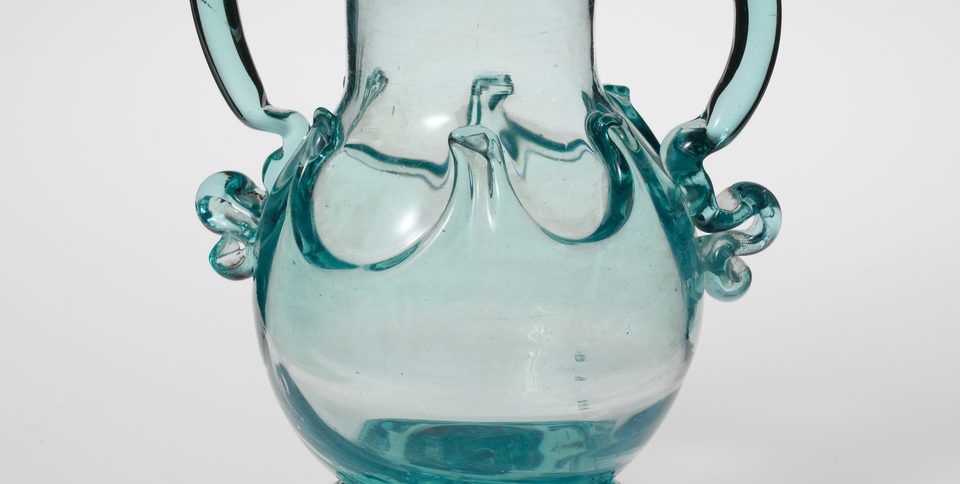
    American glassmakers blow vases, bottles and flasks in a pale blue-green glass that the Metropolitan Museum of Art catalogs as aquamarine glass.3

  4. 1910

    Miners in Minas Gerais, Brazil, find the largest Brazilian aquamarine crystal on record: 110 kg (244 lb).4

  5. 1912

    Jewelers meeting in Kansas City name aquamarine the alternate birthstone for March, after bloodstone.5

  6. 1936

    Brazil gives Eleanor Roosevelt a 1,298-carat aquamarine. It is now at the Franklin D. Roosevelt Presidential Library in Hyde Park, New York.6

  7. 1985

    The first X11 color list for Unix computers names a medium green, #70DB93, aquamarine.7

  8. 1989

    A retuned version of the list, from Paul Raveling, gives aquamarine its bright mint code, #7FFFD4.7

  9. 2001

    SVG 1.0 adopts the X11 names, with aquamarine at #7FFFD4. CSS takes the same list.8, 9

Sources (9)
  1. Wikipedia, “Aquamarine (color)”, citing Maerz and Paul’s A Dictionary of Color (1930), p. 190.
  2. Merriam-Webster, “aquamarine”, definition, etymology and first known use.
  3. The Metropolitan Museum of Art, “Vase”, American, 1835–50, blown non-lead aquamarine glass (37.137.2).
  4. Gemological Institute of America, “Aquamarine quality factors”.
  5. Kunz, G. F. (1913). The Curious Lore of Precious Stones, chapter on birthstones, “The list suggested and adopted in Kansas City”. Project Gutenberg.
  6. Gemological Institute of America, “March birthstones”.
  7. X Consortium historical sources, revision history of rgb.txt: the initial revision of 19 August 1985 and the tuned version of 26 October 1989.
  8. W3C (2001). Scalable Vector Graphics (SVG) 1.0, Recognized color keyword names.
  9. W3C. CSS Color Module Level 4, Named colors, which notes that most of the names come from the X11 color system by way of SVG.

Aquamarine in use

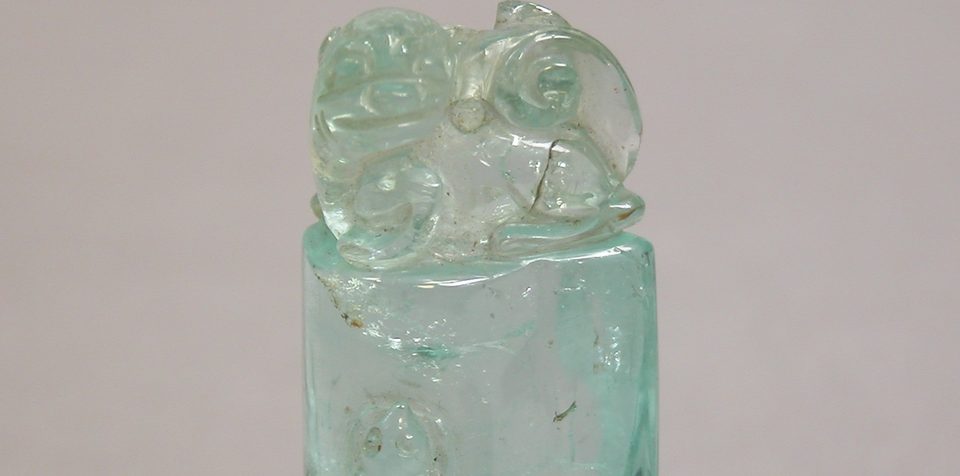
A small, clear, pale blue-green stone seal with a carved figure on top
#9BA79F#A8B2A8#8B9C8D
CarvingSeal carved from aquamarine, China (1800s)

A small seal topped with a carved figure, cut from a single aquamarine and now at the Metropolitan Museum of Art. Like most aquamarine it is pale and watery, about #9BA79F: a soft gray-green with none of the screen code’s brightness.

#9BA79F#A8B2A8#8B9C8D
Source: The Met
Detail of a pale blue-green blown glass vase with two looped handles and applied swirls
#668D8C#1E585A#B5C7C4
GlassVase of aquamarine glass, United States (1835–50)

American glasshouses made bottles, flasks and tableware in this pale blue-green, which the Met catalogs as aquamarine glass. Where the glass is thick it deepens to about #668D8C; thin walls are almost clear.

#668D8C#1E585A#B5C7C4
Source: The Met

Palettes are sampled in-house.

Questions

What color is aquamarine?

On screens, a bright, pale blue-green close to mint. The CSS code is #7FFFD4 (RGB 127, 255, 212). The aquamarine gem is paler and bluer.

Is aquamarine blue or green?

It depends which aquamarine you mean. The CSS color is a minty green-blue. The gem is light greenish blue to blue, and dictionaries define the color as pale blue to light greenish blue.

Why does the screen color look so different from the gem?

The code comes from a list of color names made for Unix computers in the 1980s, not from measuring gems. Its first aquamarine was a medium green; a 1989 retune gave it today’s bright mint, which web browsers later adopted.

What is the difference between aquamarine and turquoise?

Turquoise (#40E0D0) is bluer and a little darker. Aquamarine (#7FFFD4) is lighter and greener. Both are named after stones, and both are birthstones: aquamarine for March, turquoise for December.

What colors go with aquamarine?

Navy, teal and charcoal for contrast, sand and coral for a beach look, and the gem’s pale blue for a soft, tonal palette.

What is the March birthstone?

Aquamarine and bloodstone. In the list American jewelers adopted in 1912, bloodstone came first and aquamarine was its alternate.