Ivory

An off-white with a hint of yellow, named after elephant ivory.

Overview

Ivory is an off-white with a faint yellow tint. Its web code is #FFFFF0: red and green at full strength and blue just below, so it reads as white warmed by a trace of yellow.

The name comes from the material of elephant tusks. The word reached English in the 1200s through French, from Latin ebur, and goes back to an Egyptian word for elephant and ivory. It has been a color name since 1385.

The web’s ivory is much lighter than the real thing. Carved ivory in museum photos is a deep cream to pale tan, and dictionaries call the color a pale yellow. The code comes from a 1989 computer color list, whose light colors were copied from a paint maker’s samples to make better window backgrounds.

Ivory is a softer choice than pure white for walls, paper, fabric and screens. It pairs well with navy, sage, gold and charcoal.

HEX#FFFFF0
RGBrgb(255, 255, 240)
HSLhsl(60, 100%, 97%)
HSV60°, 6%, 100%
CMYK0, 0, 6, 0
OKLCHoklch(99.6% 0.020 106.8)
Every code converts from the HEX value #FFFFF0. #FFFFF0 is the CSS keyword ivory, defined in the CSS Color Module Level 4 and first listed among the web’s color names in SVG 1.0 (2001). It comes from the X Window System’s 1989 color list, which added a set of light and off-white colors copied from a paint maker’s color samples. CMYK is a screen-based estimate; print results vary.
Ivory color card, hex #FFFFF0: “Tickling the ivories”

Ivory on the color map

The web code and people’s average ivory are lighter than the top of this view, so their dots sit just above its top edge; people’s ivory is a little more yellow. The dictionary’s pale yellow sits below and to the left, inside the outline: darker and more golden. The outline is an approximate range, not a measured one.

Shades and tints

Tints with white

Shades with black

Tones with gray

Ivory sits in the middle. Tints add white, shades add black and tones add gray, in 10% steps out from it. Tap any swatch to copy its code.

Light and dark ivory

#FAF9F6
Off-whiteWhiter and more neutral, with only a trace of warmth. See off white
#FFFFCB
Warm ivoryWhat people call ivory on average, in the xkcd survey. More yellow.
#FFFFF0
IvoryThe reference color.
#EEEEE0
Gray ivorySlightly darker and grayer. The X11 color list calls it ivory2.
#E3DAC9
BoneDarker, warmer and grayer, closer to old carved ivory. See bone

Colors that go with ivory

Pairings that work in rooms, outfits and interfaces.

Ivory and navy

Crisp and classic. Softer than navy on pure white.

Ivory and sage

Soft and natural. Good for calm rooms and garden weddings.

Ivory and gold

Elegant and formal. Suits invitations and packaging.

Ivory and charcoal

Quiet and modern. A gentler contrast than black on white.

Ivory and pale pink

Soft and romantic. Suits weddings and stationery.

Ivory and forest green

Deep and traditional. Good for heritage brands and libraries.

Color-wheel palettes

Pick a palette to see where its colors sit on the color wheel. The caret marks ivory. Tap a band to copy its code.

Similar colors

Floral white94%Cosmic latte91%IvoryOff white90%Light yellow89%Honeydew90%Mint cream91%

Lined up by hue around ivory. Hover a color to see how similar it is.The bar under each name shows how similar it is. Similarity comes from the distance between the two colors in OKLab, a model of how we see color.

Ivory vs cream

Ivory#FFFFF0 · hue 60°
  • Almost white, with a faint yellow tint
  • Named after elephant ivory
  • A CSS keyword, ivory
Cream#FFFDD0 · hue 57°
  • Deeper and more yellow
  • Named after dairy cream
  • No CSS keyword

Meaning

  • Luxury carving
  • Piano keys
  • Ivory tower
  • Protected elephants

Ivory reads as soft, warm and refined: a white that is not quite white. The name comes from elephant tusks, a material carved into luxury objects for centuries and still the word behind “ivory tower” and old piano keys. In 1990 the international ivory trade was banned to protect elephants. As with most named colors, mood research tests broad hues, not ivory itself.

Prized for carving

Museum record

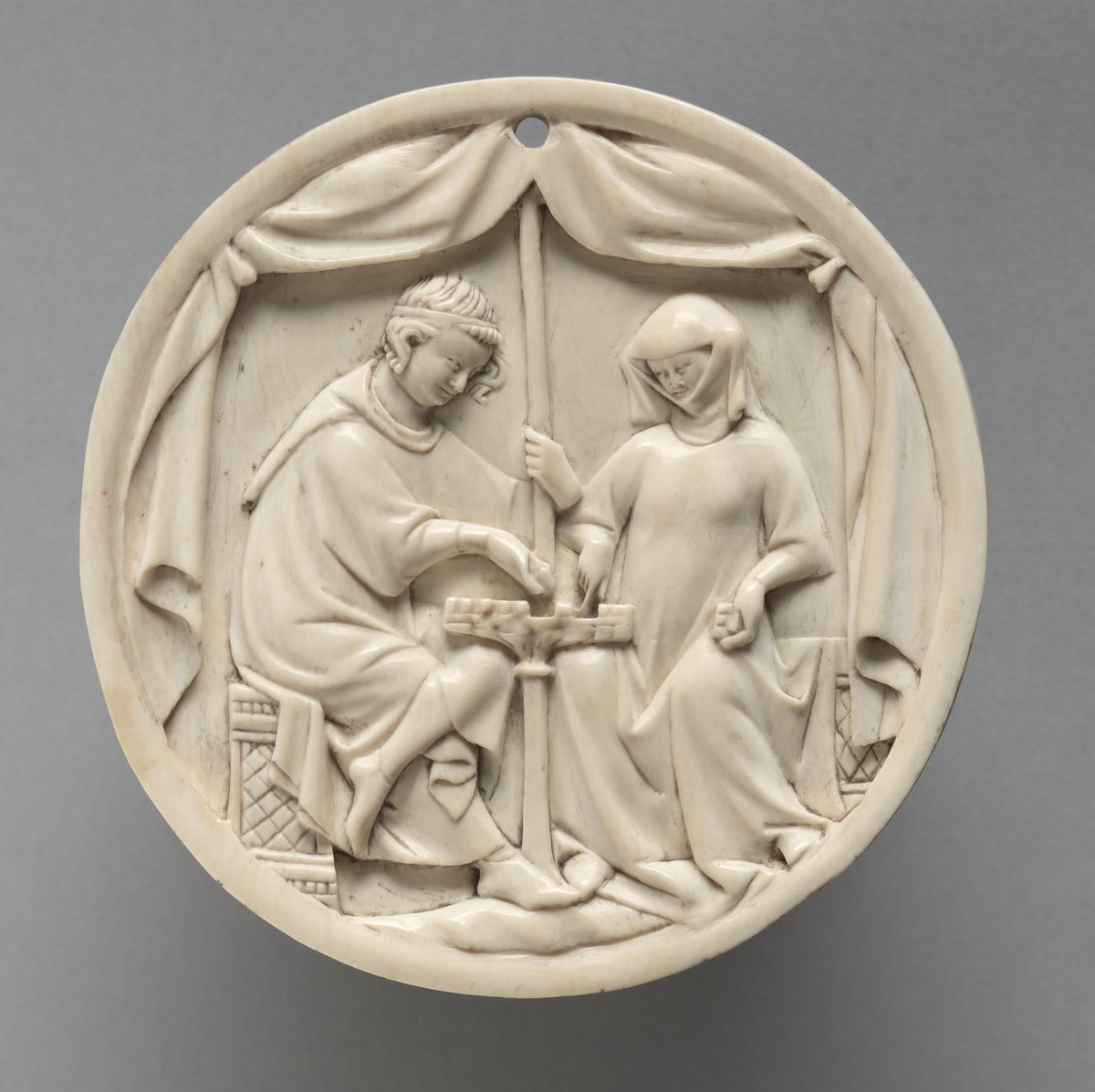
In the 1300s, courtly patrons valued elephant ivory as the finest material for showing the human form, and Paris was the center of production for luxury ivories, the Cleveland Museum of Art notes. Mirror cases like the one shown further down were emblems of wealth, status and taste.1
Banned from trade in 1990

Official record

In October 1989, the member countries of CITES, the treaty on trade in endangered species, moved the African elephant to Appendix I, its strictest list, which bars commercial trade in wild specimens. The listing took effect on January 18, 1990, banning the international ivory trade.2, 3

More than a color word

Dictionary

Dictionaries list ivories as things made of ivory or a similar material, such as piano keys. “Ivory tower”, a translation of the French tour d’ivoire, has meant an aloof, impractical attitude since 1894, and also a place of learning.4, 5

Sources (5)
  1. Cleveland Museum of Art, “Mirror Case with a Couple Playing Chess”, France, Paris, 1325–50, accession 1940.1200, collection record.
  2. Wikipedia, “Ivory trade”, on the 1989 CITES meeting and the January 1990 ban, and “CITES”, section on Appendix I.
  3. U.S. Fish and Wildlife Service (1990). News release, January 18, 1990, on the reclassification of the African elephant to CITES Appendix I.
  4. Merriam-Webster, “ivory”, definitions, etymology and first known use.
  5. Merriam-Webster, “ivory tower”, definitions, etymology and first known use.

History

Ivory is one of the oldest color names in English, taken from a material prized for carving long before it became a code for screens.

  1. 1200s

    “Ivory” enters English through French, from Latin ebur. The word goes back to an Egyptian word for elephant and ivory.1

  2. 1300s

    Paris is the center of production for luxury ivories, carved for the court and aristocracy as emblems of wealth and status.2

  3. 1385

    First recorded use of “ivory” as a color name in English.3

  4. 1894

    First known use of “ivory tower”, a translation of the French tour d’ivoire.4

  5. 1989

    The X Window System’s color list adds ivory, 255, 255, 240, in a new set of light and off-white colors copied from a paint maker’s samples and meant for window backgrounds.5, 6

  6. 1990

    The African elephant’s move to CITES Appendix I takes effect on January 18, and the international ivory trade is banned.7, 8

  7. 2001

    SVG 1.0 adds “ivory” to the web’s color names, as #FFFFF0.9

Sources (9)
  1. Merriam-Webster, “ivory”, definitions, etymology and first known use.
  2. Cleveland Museum of Art, “Mirror Case with a Couple Playing Chess”, France, Paris, 1325–50, accession 1940.1200, collection record.
  3. Wikipedia, “Ivory (color)”, citing Maerz and Paul’s A Dictionary of Color (1930), p. 197 and plate 10.
  4. Merriam-Webster, “ivory tower”, etymology and first known use.
  5. Jaffer, A. “Color-Name Dictionaries”, quoting Paul Raveling’s notes on his X11 list, raveling.txt.
  6. Wikipedia, “X11 color names”, history of the list; X11 Release 4 shipped the merged list in December 1989 (X.Org archive).
  7. U.S. Fish and Wildlife Service (1990). News release, January 18, 1990, on the reclassification of the African elephant to CITES Appendix I.
  8. Wikipedia, “Ivory trade”, on the 1989 CITES meeting and the January 1990 ban.
  9. W3C (2001). Scalable Vector Graphics (SVG) 1.0, recognized color keyword names.

Ivory in use

A round ivory plaque carved in relief with a man and a woman seated under a draped canopy, playing chess on a small board between them
#E0D6C2#C8BCA6#B2A58F#93856F
CarvingMirror case with chess players (1325–50)

A Paris mirror back carved from elephant ivory, about 10 cm across, at the Cleveland Museum of Art. Under museum lights the ivory is a deep cream to pale tan, much warmer and darker than the web’s ivory.

#E0D6C2#C8BCA6#B2A58F#93856F
Source: Cleveland Museum of Art
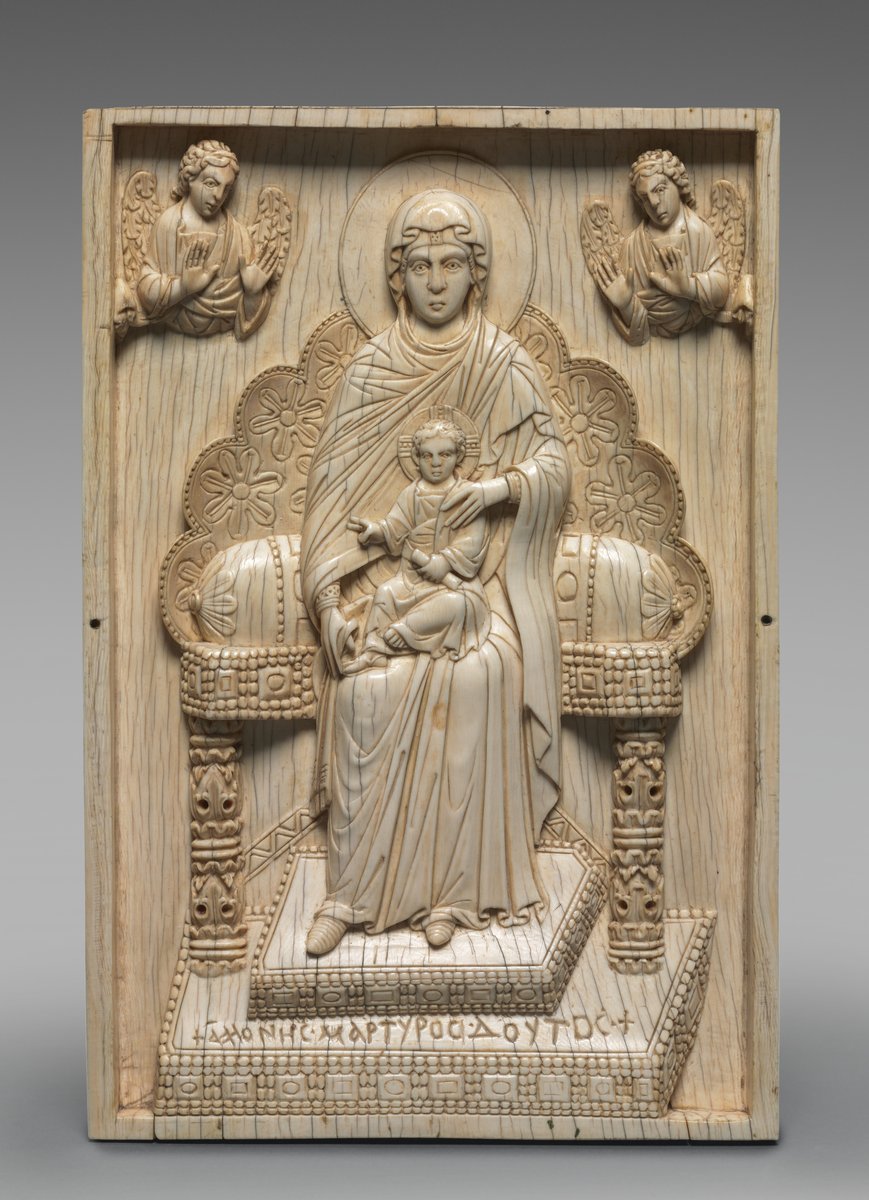
A rectangular ivory plaque carved with the Virgin Mary seated on a high-backed throne, holding the Christ child, with an angel in each upper corner
#D5C8B4#B9A689#A28C6F#7C6B55
CarvingThe Stroganoff Ivory (950–1025)

A Byzantine plaque from Constantinople, carved around the year 1000 and now at the Cleveland Museum of Art. It reads as a light tan, with brown in the deep carving.

#D5C8B4#B9A689#A28C6F#7C6B55
Source: Cleveland Museum of Art

Palettes are sampled in-house.

Questions

What color is ivory?

An off-white with a faint yellow tint. The web code is #FFFFF0 (RGB 255, 255, 240): full red and green, with blue just below full. Dictionaries describe ivory more loosely as a pale yellow.

What is the difference between ivory and cream?

Ivory (#FFFFF0) is almost white, with a faint yellow tint. Cream (#FFFDD0) is deeper and more yellow. Dictionaries call both a pale yellow, so in speech they overlap.

Is ivory white or off-white?

Off-white. On screen it is very close to white, with just a little less blue. Real ivory, as in old carvings, is darker: a creamy tan.

What is the difference between ivory and champagne?

Champagne (#F7E7CE) is darker and peachier, a pale beige with a warm orange tint. Ivory is lighter and leans toward yellow, not peach.

What colors go with ivory?

Navy, charcoal and forest green for contrast, sage and pale pink for something soft, and gold for a formal look.

Why is it called ivory?

After the material of elephant tusks, carved into fine objects for centuries. The word goes back through Latin ebur to an Egyptian word for elephant and ivory, and it has been a color name in English since 1385.