
Alabaster

A warm off-white named after a soft, milky stone.

Overview

Alabaster is a warm off-white with a faint yellow cast. Its code here is #F2F0E6: red and green almost equal and blue a little lower, a soft white that looks slightly deeper than paper.

The name comes from the stone. Alabaster is a soft, fine-grained rock, usually white and translucent, carved since ancient times into vases, figures and tomb effigies. The word reached English in the 14th century, from Greek alabastros by way of Latin and French. As a color word it goes back at least to 1594, when Shakespeare gave Lucrece “alabaster skin”.

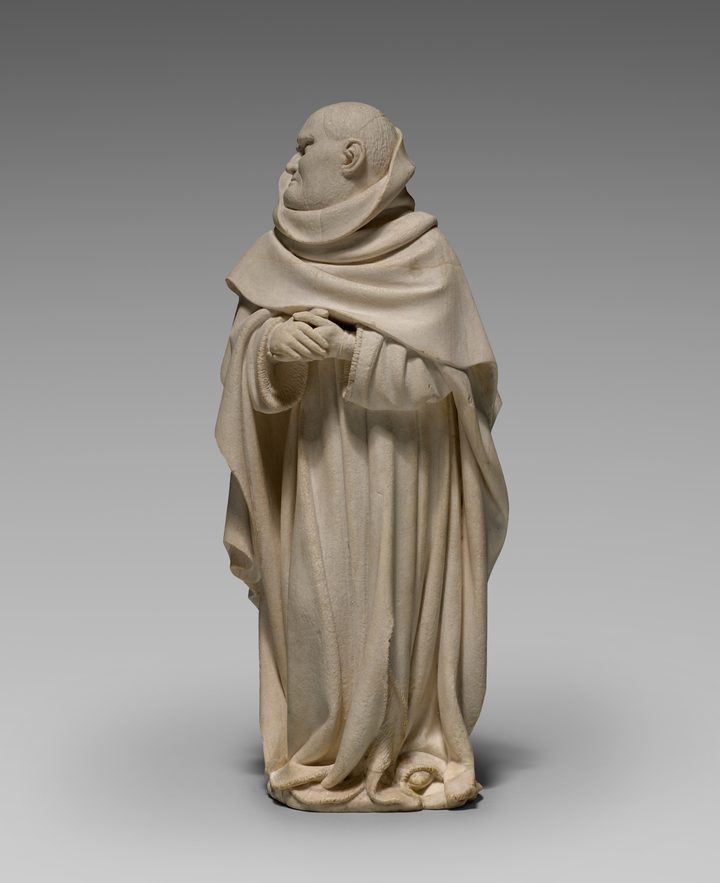
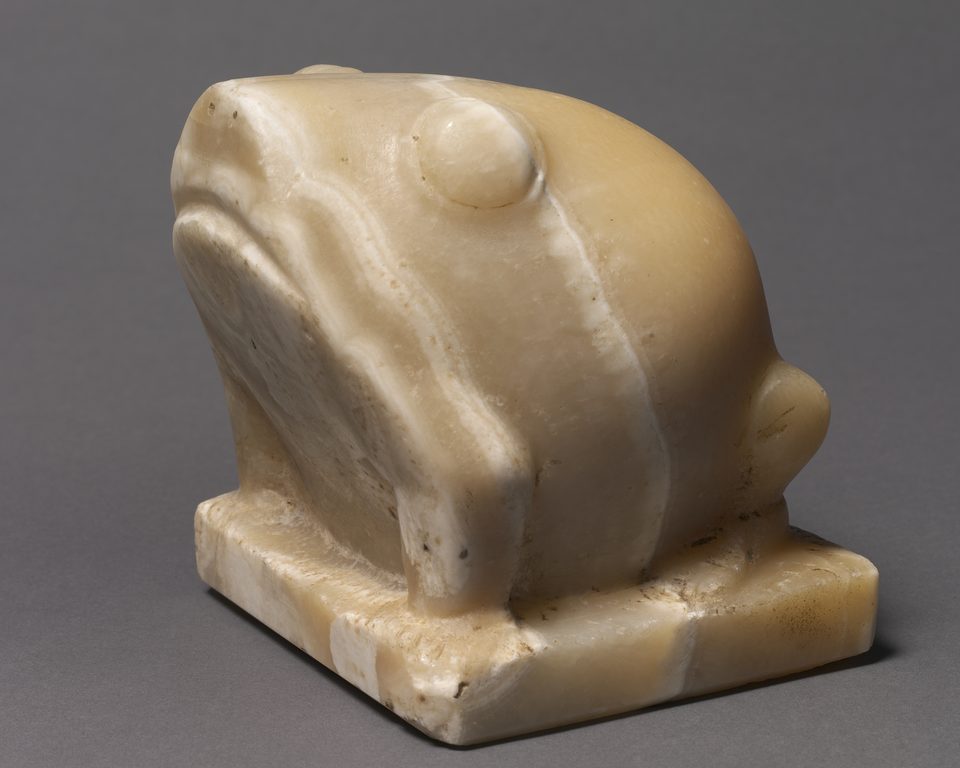
Real alabaster is rarely this even. Two different minerals share the name, gypsum and calcite, and only the purest is snow-white: iron oxide clouds and veins it brown, and calcite alabaster is often banded. Carved pieces in museums, like the two below, photograph as pale tans and grays, much darker than this code. What the color keeps is the stone’s soft, milky look.

Use alabaster as a page or wall color when pure white feels too cold. It sits well with black, slate and dusty blue, and with warm wood and metal tones such as oak and copper.

HEX#F2F0E6
RGBrgb(242, 240, 230)
HSLhsl(50, 32%, 93%)
HSV50°, 5%, 95%
CMYK0, 1, 5, 5
OKLCHoklch(95.4% 0.013 97.4)
Every code converts from the HEX value #F2F0E6. #F2F0E6 is a widely used web value for alabaster, but no standard defines it. Alabaster has no CSS keyword, and older references disagree: the 1955 ISCC-NBS dictionary files the alabaster of Maerz and Paul’s A Dictionary of Color (1930) under both pale yellowish pink and yellowish gray. Treat this code as typical, not official. CMYK is a screen-based estimate; print results vary.
Alabaster color card, hex #F2F0E6: “Alabaster la vista”

Alabaster on the color map

Every documented alabaster sits below and to the left of the outline: darker and warmer than the web code. Pale yellowish pink is the closest, a little lower and at the far left, much pinker. Yellowish gray and the two carved stones sit well below, near the bottom of the view. The outline is an approximate range, not a measured one.

Shades and tints

Tints with white

Shades with black

Tones with gray

Alabaster sits in the middle. Tints add white, shades add black and tones add gray, in 10% steps out from it. Tap any swatch to copy its code.

Light and dark alabaster

#F7F6F0
Light alabasterMixed 40% with white. Almost white, with a trace of warmth.
#F2F0E6
AlabasterThe reference color.
#F0EAD6
EggshellA deeper, more yellow off-white. See eggshell
#DAD8CF
Shaded alabasterMixed 10% with black. A pale warm gray, like the stone in shadow.
#BFB8A5
Stone alabasterThe yellowish gray that the 1955 ISCC-NBS dictionary gives for one of Maerz and Paul’s alabasters, closer to many carved pieces.

Colors that go with alabaster

Pairings that work in rooms, outfits and interfaces.

Alabaster and black

Elegant and graphic, like a gallery wall.

Alabaster and oak

Warm and natural. Suits homes and furniture.

Alabaster and slate

Cool and calm. Slate gray keeps the warm white crisp.

Alabaster and copper

Rich and warm. Good for menus and packaging.

Alabaster and olive

Earthy and Mediterranean, like limewash and olive trees.

Alabaster and dusty blue

Soft and airy. Suits bedrooms and wedding stationery.

Color-wheel palettes

Pick a palette to see where its colors sit on the color wheel. The caret marks alabaster. Tap a band to copy its code.

Similar colors

Linen95%Isabelline96%Antique white90%Old lace90%Lead white97%AlabasterTitanium white93%

Lined up by hue around alabaster. Hover a color to see how similar it is.The bar under each name shows how similar it is. Similarity comes from the distance between the two colors in OKLab, a model of how we see color.

Alabaster vs ivory

Alabaster#F2F0E6 · hue 50°
  • Slightly deeper and grayer
  • Named for a soft stone
  • No standard code
Ivory#FFFFF0 · hue 60°
  • Lighter, with a clearer yellow tint
  • Very close to pure white
  • A CSS keyword

Meaning

  • Sculpture
  • Ancient Egypt
  • Poetry
  • Translucent windows
  • Interiors

In English, alabaster stands for pale and smooth, a meaning taken straight from the stone. Poets used it for skin, and sculptors used the stone itself for tombs and altars. There is no research on alabaster as a color and mood, so the claims below are about the stone and how people have used it.

Two different stones

Mineral reference

Alabaster is the name for two minerals. Gypsum alabaster, a calcium sulfate, is so soft that a fingernail scratches it. Calcite alabaster, a calcium carbonate, is harder and fizzes in hydrochloric acid. The purest alabaster is snow-white, but iron oxide often clouds and veins it brown.1
A poet’s word for pale skin

Literary record

Shakespeare used alabaster for white, smooth skin. Lucrece has “alabaster skin” (1594), and Othello describes Desdemona’s skin as “whiter … than snow” and “smooth as monumental alabaster”.2

Chosen for tomb effigies

Historical record

In 14th- and 15th-century England, Nottingham carvers made alabaster altarpiece panels, a major English export. Alabaster was also used for life-size tomb effigies: lying figures suited the soft stone, and it was cheaper and easier to carve than good marble.1

Sources (2)
  1. Wikipedia, “Alabaster”, citing the Oxford University Museum of Natural History and the Encyclopædia Britannica (1911).
  2. Shakespeare, W. The Rape of Lucrece (1594) and Othello, Act 5, Scene 2. Project Gutenberg, The Complete Works of William Shakespeare.

History

People have carved alabaster for more than five thousand years. The stone gave English a word for pale smoothness long before anyone gave it a color code.

  1. Late 4th millennium BC

    Thousands of gypsum alabaster objects are made at Tell Brak, in what is now Syria.1

  2. About 2950 BCE

    An Egyptian sculptor carves a frog from banded Egyptian alabaster, using the bands to round out its body. It is now at the Cleveland Museum of Art (below).2

  3. 9th–7th century BC

    Assyrian palaces in what is now northern Iraq are lined with huge reliefs in “Mosul marble”, a gypsum alabaster, including the Lion Hunt of Ashurbanipal.1

  4. 3rd century BC

    Etruscans carve funeral urns from the alabaster of Volterra, in Tuscany, where alabaster is still worked today.1

  5. 14th century

    The word “alabaster” enters English, from Greek alabastros through Latin and French.3

  6. 14th–15th century

    Alabaster carving becomes a valuable industry in Nottingham and a major English export.1

  7. 1404–10

    Claus de Werve carves alabaster mourners for the tomb of Philip the Bold, Duke of Burgundy, near Dijon. The tomb was commissioned in 1381 and finished in 1410 (below).2

  8. 1594

    Shakespeare’s The Rape of Lucrece describes “her alabaster skin”, the earliest recorded use of alabaster as a color word in English.4

  9. 2002

    The Cathedral of Our Lady of the Angels in Los Angeles is dedicated, with large windows of thin gypsum alabaster from Aragon, in Spain. Special cooling keeps the panes from overheating and turning opaque.1

  10. 2015

    Sherwin-Williams names its Alabaster paint the 2016 Color of the Year, calling it “a hue symbolic of new beginnings”.5

Sources (5)
  1. Wikipedia, “Alabaster”.
  2. Cleveland Museum of Art, records for Statue of Heqat, the Frog Goddess (1976.5) and Mourner from the Tomb of Philip the Bold (1958.67).
  3. Merriam-Webster, “alabaster”, etymology and first known use.
  4. Wikipedia, “Shades of white: Alabaster”; text from Project Gutenberg.
  5. Sherwin-Williams, “Sherwin-Williams Names Alabaster 2016 Color of the Year”, PR Newswire, 18 November 2015.

Alabaster in use

A small pale stone statue of a mourner in a heavy hooded robe with deep folds, hands clasped at the chest, head turned to one side
#BBAC9B#A0917E#887965#6D5D48
SculptureMourner from the Tomb of Philip the Bold, Claus de Werve (1404–10)

One of the small hooded mourners carved for the tomb of the Duke of Burgundy, now at the Cleveland Museum of Art. The museum notes that the soft stone let the carvers cut fine detail, and that the milky white alabaster could be polished to a high gloss. In the photo the stone reads as a warm gray-beige, about #BBAC9B.

#BBAC9B#A0917E#887965#6D5D48
Source: Cleveland Museum of Art
A smooth, rounded stone frog crouching on a square base, carved from cream and honey colored stone with pale bands running through it
#D0BDA2#B59D79#90795D#5A4B3D
SculptureStatue of Heqat, the Frog Goddess, Egypt (about 2950 BCE)

A crouching frog carved from Egyptian alabaster, a banded calcite stone, now at the Cleveland Museum of Art. The museum notes how the sculptor used the natural banding of the stone to round out the body. In the photo the stone is a honey cream, about #D0BDA2, with paler bands.

#D0BDA2#B59D79#90795D#5A4B3D
Source: Cleveland Museum of Art

Palettes are sampled in-house.

Questions

What color is alabaster?

A warm off-white with a faint yellow tint. The code here is #F2F0E6 (RGB 242, 240, 230). It is named after alabaster, a soft white stone used for carving.

What is the hex code for alabaster?

#F2F0E6 is a common web value, but no standard defines it and there is no CSS keyword for alabaster. Other sources give different codes, so check which one a design uses.

Is alabaster white or off-white?

Off-white. It is a little deeper and warmer than pure white (#FFFFFF), and much lighter than most real alabaster stone.

What is the difference between alabaster and ivory?

Ivory (#FFFFF0) is lighter, with a clearer yellow tint. Alabaster is a touch deeper and grayer.

What is alabaster stone?

A soft, fine-grained stone, usually white and translucent. Two minerals share the name: gypsum, soft enough to scratch with a fingernail, and the harder calcite, which is often banded.

What colors go with alabaster?

Black and slate gray for contrast, oak and copper for warmth, and olive or dusty blue for a soft, natural palette.