A deep, vivid blue named after the best-known color of the gem.
Overview
Sapphire is a deep, vivid blue. The code most references use is #0F52BA: almost no red, some green and strong blue. It is the color called sapphire in Maerz and Paul’s A Dictionary of Color (1930), converted to a screen color.
The gem is corundum, the same mineral as ruby. Pure corundum is colorless. A few hundredths of a percent of iron and titanium turn it blue, and the more iron it holds, the darker the blue. Blue sapphires range from greenish blue to violetish blue, and sapphires also come in pink, yellow, orange, green and purple: any corundum that is not red counts as sapphire.
The name is older than the gem. Greek sappheiros and Latin sapphirus meant lapis lazuli: Theophrastus and Pliny describe the stone as blue with golden spots, which fits lapis, not corundum.
The code and the gem only roughly agree. The finest sapphires are a deep, velvety blue, but many museum stones photograph as grayish blues, and one color dictionary files sapphire among the dark blues. On screens, the code is strong enough to carry white text, so it works for buttons, links and headings.
HEX
#0F52BA
RGB
rgb(15, 82, 186)
HSL
hsl(216, 85%, 39%)
HSV
216°, 92%, 73%
CMYK
92, 56, 0, 27
OKLCH
oklch(46.7% 0.176 260.0)
Every code converts from the HEX value #0F52BA. #0F52BA is the color named sapphire in Maerz and Paul’s A Dictionary of Color (1930, plate 37, sample L8), as Wikipedia converts it to a screen color. It is the code most references use, but no web standard defines it, and the ISCC-NBS system files Maerz and Paul’s sapphire under dark blue, a much darker color; see the range below. CMYK is a screen-based estimate; print results vary.
Sapphire on the color map
LighterDarker
People’s average sapphire in the xkcd survey is a little darker and more violet, inside the outline. The dictionary’s dark blue sits low on the left, greener and much darker. The two museum stones fall inside the outline, the brooch lower and the snuff bottle a little higher, but both are grayish: this map shows hue and lightness, not how strong a color is. The outline is an approximate range, not a measured one.
Shades and tints
Tintswith white
Shadeswith black
Toneswith gray
Sapphire sits in the middle. Tints add white, shades add black and tones add gray, in 10% steps out from it. Tap any swatch to copy its code.
Light and dark sapphire
#B7CBEA
Pale sapphireMixed 70% with white. A soft, airy blue for backgrounds.
#6F97D6
Light sapphireMixed 40% with white. A clear, light blue for highlights and dark themes.
#0F52BA
SapphireThe reference color.
#0C4295
Deep sapphireMixed 20% with black. Richer, close to cobalt blue.
#072554
Dark sapphireMixed 55% with black. Nearly navy, for text and dark backgrounds.
Colors that go with sapphire
Pairings that work in rooms, outfits and interfaces.
Sapphire and gold
The jeweler’s pairing: a blue stone in a gold setting.
Sapphire and silver
Cool and polished, like a stone set in platinum.
Sapphire and ruby
Two colors of one mineral, corundum. Rich and regal.
Sapphire and blush
Blue beside the pink of a pink sapphire. Soft and romantic.
Sapphire night
A dark theme with a lighter sapphire as the accent.
Screen and stone
The screen code beside the grayish blue of a carved sapphire.
Color-wheel palettes
Pick a palette to see where its colors sit on the color wheel. The caret marks sapphire. Tap a band to copy its code.
Lined up by hue around sapphire. Hover a color to see how similar it is.The bar under each name shows how similar it is. Similarity comes from the distance between the two colors in OKLab, a model of how we see color.
Sapphire vs cobalt blue
Sapphire#0F52BA · hue 216°
A little lighter and brighter
Named after a gem, blue corundum
A September birthstone
Cobalt blue#0047AB · hue 215°
A little darker and deeper
Named after a metal and its pigment
Almost exactly the same hue
Meaning
Gemstone
Royalty
September birthstone
Engagement rings
Heaven
Sapphire’s meanings come from the gem. GIA notes that sapphires have long been linked with royalty and romance and are said to stand for faithfulness and the soul. The best-known recent example is the 12-carat sapphire engagement ring first worn by Princess Diana and later given by her son to Kate Middleton. As with most named colors, research on color and emotion tests broad hues, not sapphire itself.
Blue from iron and titanium
Well established
Sapphire is corundum, aluminum oxide, which is colorless when pure. Traces of iron and titanium make it blue, and more iron makes the blue darker. Chromium can give the red of ruby and the pink of pink sapphire. In 1909 the chemist Auguste Verneuil used the same recipe to grow the first synthetic blue sapphire.1, 2
A September birthstone since 1912
Historical record
When American jewelers met in Kansas City in 1912, they made sapphire the birthstone for September. Most older lists gave sapphire to April and chrysolite to September, and the gem scholar George F. Kunz objected to the change. Sapphire is also the gem for 5th and 45th wedding anniversaries.3, 4
Lore of heaven and protection
Folklore
GIA records that the elite of ancient Greece and Rome believed blue sapphires protected their owners from harm and envy, that medieval clerics wore sapphires as a symbol of Heaven, and that ancient Persians thought the earth rested on a giant sapphire that made the sky blue. These are beliefs, not tested effects.4
Wikipedia, “Sapphire”, synthetic sapphire, citing Verneuil’s 1911 patent (US 988,230) and Hughes (2017), Ruby & Sapphire: A Gemologist’s Guide.
Kunz, G. F. (1913). The Curious Lore of Precious Stones, chapters on the stones of the Bible and on birthstones, including “The list suggested and adopted in Kansas City”. Project Gutenberg.
The word sapphire first named another blue stone. It settled on blue corundum in the Middle Ages, and its screen code comes from a 1930 color dictionary.
Antiquity
Theophrastus and Pliny describe sapphirus as a blue stone with golden spots: lapis lazuli, not today’s sapphire.1
337–50
A Byzantine carver cuts an emperor’s portrait into a star sapphire. Around 950–1000 a goldsmith, perhaps in the Rhineland, sets it at the center of a brooch with pearls.2
1200s
First known use of “sapphire” in English, for a clear, bright blue precious stone.3
1430
First recorded use of “sapphire” as a color name in English.4
1881
A landslide in the Himalayas of Kashmir exposes velvety “cornflower” blue crystals. Between 1882 and 1887, thousands are dug out, and Kashmir sapphire becomes one of the world’s most coveted gems.5
1909
Auguste Verneuil, who had already made synthetic ruby, grows synthetic blue sapphire with iron and titanium. He patents the process in 1911.6
1912
American jewelers name sapphire the birthstone for September, moving it from April.7
1930
Maerz and Paul’s A Dictionary of Color prints a sample called sapphire, the source of today’s code.4
1934
John D. Rockefeller Jr. buys a 62.02-carat sapphire from Myanmar from an Indian maharaja. It becomes known as the Rockefeller Sapphire.5
1955
The ISCC-NBS dictionary of color names places Maerz and Paul’s sapphire in its dark blue group.8
Sources (8)
Kunz, G. F. (1913). The Curious Lore of Precious Stones, chapters on the stones of the Bible and on birthstones, including “The list suggested and adopted in Kansas City”. Project Gutenberg.
The Metropolitan Museum of Art, “Brooch with Intaglio of an Emperor”, setting Ottonian, ca. 950–1000, intaglio Byzantine, 337–50, star sapphire, pearls and gold (1988.15).
Merriam-Webster, “sapphire”, definition, etymology and first known use.
Wikipedia, “Shades of blue”, sapphire, citing Maerz and Paul’s A Dictionary of Color (1930), p. 97, plate 37, sample L8, and p. 204.
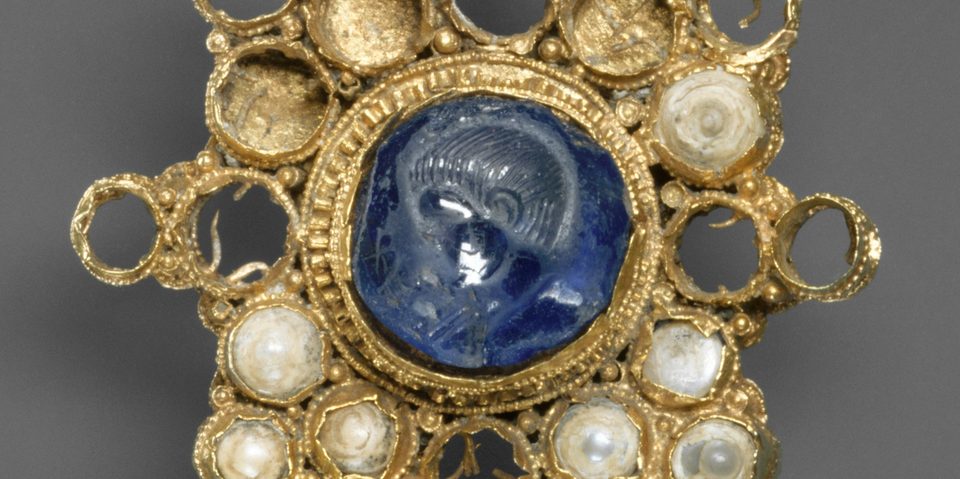
JewelryBrooch with a star sapphire, Rhineland (about 950–1000)
The sapphire at the center of this gold brooch was carved with an emperor’s portrait in the 300s and reset among pearls some 600 years later. The stone is a dark, grayish blue, about #323F58: deeper and much duller than the screen code.
#323F58#636E7D#957944
Source: The Met
Source
Sampled from the Metropolitan Museum of Art’s photograph (1988.15), released as CC0 (public domain). The picture shown is a detail. Colors in a photo shift with the lighting, so read the codes as close, not exact.
#626B78#4B535C#41443E
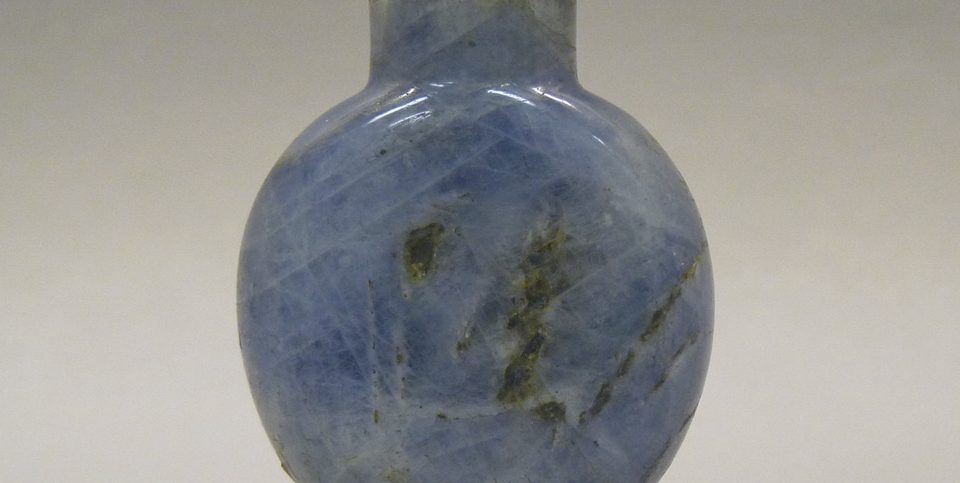
CarvingSnuff bottle carved from sapphire, China (1800s)
Not all sapphire is clear. This Qing dynasty snuff bottle was cut from a single cloudy piece, and it photographs as a soft grayish blue, about #626B78, with brownish flecks.
#626B78#4B535C#41443E
Source: The Met
Source
Sampled from the Metropolitan Museum of Art’s photograph (21.175.211a, b), released as CC0 (public domain). The picture shown is a detail. Colors in a photo shift with the lighting, so read the codes as close, not exact.
#0904A9#090268#06051C
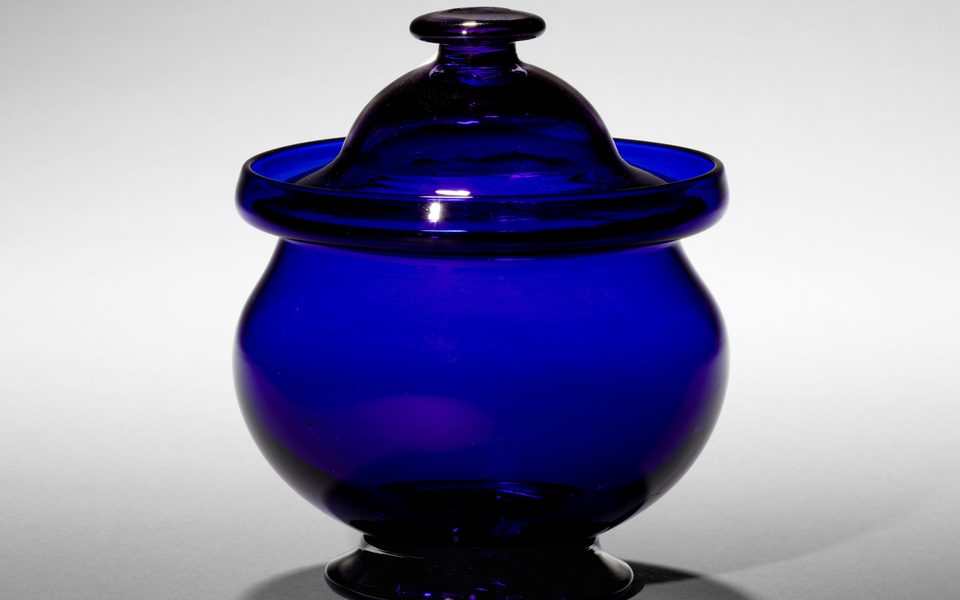
GlassSapphire blue sugar bowl, South Jersey (about 1840)
The Cleveland Museum of Art catalogs this blown glass bowl and its lid as sapphire blue. The glass is far more violet than the gem or the code, about #0904A9, and nearly black where it is thick.
#0904A9#090268#06051C
Source: Cleveland Museum of Art
Source
Sampled from the Cleveland Museum of Art’s photograph (1951.110), released as CC0 (public domain). The picture shown is a detail. Colors in a photo shift with the lighting, so read the codes as close, not exact.
#0058A3#FFDB00
BrandingIKEA
The furniture retailer’s blue, #0058A3, is grayer and a little greener than this page’s code. It fills the rectangle around the IKEA letters in the company’s logo.
#0058A3#FFDB00
Source: IKEA logo file
Source
The blue and yellow are the fills in IKEA’s own logo file, served on its website. The logo shown is that file.
#304CB2#E61C23#FCB415
BrandingSouthwest Airlines
Southwest’s blue, #304CB2, is a touch more purple and slightly grayer than this page’s code. It colors the Southwest wordmark, which sits beside the airline’s red, yellow and blue heart.
#304CB2#E61C23#FCB415
Source: Southwest logo file
Source
The colors are the fills in Southwest’s own logo file, served on its website. The logo shown is that file.
Logos belong to their owners and are shown unaltered, only to show where each palette comes from. Palettes are sampled in-house.
Questions
What color is sapphire?
A deep, vivid blue. The code most references use is #0F52BA (RGB 15, 82, 186). Real blue sapphires range from greenish blue to violetish blue.
Is sapphire blue the same as sapphire?
Usually. Sapphire blue is a common other name for this color. Merriam-Webster defines sapphire as a color as “a deep purplish blue”, and a few lists, Wikipedia among them, give sapphire blue its own, greener code, #0067A5.
Why are sapphires blue?
Traces of iron and titanium. Pure corundum is colorless; a few hundredths of a percent of these two elements make it blue, and more iron makes the blue darker.
Do sapphires come in other colors?
Yes. Sapphires come in every color except red, including pink, yellow, orange, green, purple, black and colorless. Red corundum is called ruby.
What is the difference between sapphire and cobalt blue?
They share almost the same hue. Cobalt blue (#0047AB) is a little darker; sapphire (#0F52BA) is a little lighter and brighter.
What is the September birthstone?
Sapphire. American jewelers adopted it for September in 1912. Most older lists gave sapphire to April and chrysolite to September.