The faint blue-green of a clear cake of ice, named in the days of the ice trade.
Overview
Ice blue is a very pale blue with a touch of green, the tint of a clear block of ice held up to the light. The code most color lists use, #A5F2F3, mixes green and blue light at almost full strength with about two-thirds as much red, which lifts it close to white.
The word comes from the age of the ice trade. Merriam-Webster dates ice-blue to 1851 and defines it as the color “seen in a cake of clear ice”. At the time, ice was cut from New England ponds in winter and shipped as far as India, and clear ice was the grade people paid most for. Henry David Thoreau watched the cutters at Walden Pond and wrote that its ice looked green close up but “beautifully blue” from a distance.
Real ice gets bluer the thicker it is. Ice absorbs a little red light, so a thin cake looks almost colorless and a glacier looks deep blue. The web code sits at the thin end of that scale, and people go paler still: in the xkcd color survey, the average ice blue was #D7FFFE, nearly white. A 1930 color dictionary has no ice blue at all, and its iceberg and glacier blue are dull grayish blues.
Ice blue is so light that white text on it can’t be read, and on a white page it almost disappears. Give it dark partners such as navy, slate or charcoal, or set it beside silver for a wintry look. A soft warm color, such as blush pink or a rosy cream, keeps it from feeling cold.
HEX
#A5F2F3
RGB
rgb(165, 242, 243)
HSL
hsl(181, 76%, 80%)
HSV
181°, 32%, 95%
CMYK
32, 0, 0, 5
OKLCH
oklch(91.2% 0.076 196.9)
Every code converts from the HEX value #A5F2F3. No color standard defines ice blue. #A5F2F3 is the code most color lists use. It fits Merriam-Webster’s definition, “very pale greenish blue like the color seen in a cake of clear ice”. CMYK is a screen-based estimate; print results vary.
Ice blue on the color map
LighterDarker
People’s average ice blue and ice in the xkcd survey sit just above the reference, inside the outline: far paler, close to white. The ISCC-NBS very light greenish blue sits lower and to the right, grayer and bluer. The grayish blue of the 1930 dictionary’s icy names is far below, off this view. The outline is an approximate range, not a measured one.
Shades and tints
Tintswith white
Shadeswith black
Toneswith gray
Ice blue sits in the middle. Tints add white, shades add black and tones add gray, in 10% steps out from it. Tap any swatch to copy its code.
Light and dark ice blue
#DBFAFA
Pale ice blueMixed 60% with white. Close to the near-white ice blue of the xkcd survey.
#A5F2F3
Ice blueThe reference color.
#B2FFFF
CelesteA touch lighter and fully saturated, with a page of its own. See celeste
#7DF9FF
Electric blueBrighter and more vivid, with a page of its own. See electric blue
#73A9AA
Dark ice blueMixed 30% with black. A muted, wintry blue-green.
Colors that go with ice blue
Pairings that work in rooms, outfits and interfaces.
Ice and navy
Pale ice against deep navy. Crisp, cold and easy to read.
Glacier layers
From a thin cake of ice to deep glacier blue: the thicker the ice, the bluer it looks.
Ice and silver
Cool metal and pale ice. Clean and wintry.
Arctic summer
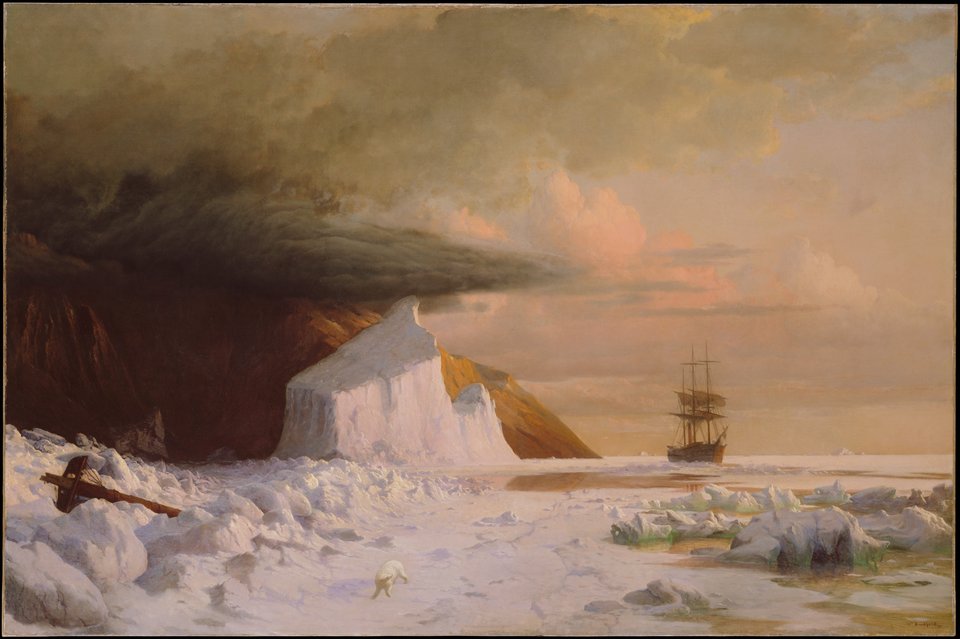
The rosy cream and ochre of Bradford’s iceberg painting, with ice blue as the cool note.
Ice and blush
Two soft pastels, one cool and one warm. Gentle and fresh.
Ice on slate
Ice blue glows on dark blue-gray. Calm and modern.
Color-wheel palettes
Pick a palette to see where its colors sit on the color wheel. The caret marks ice blue. Tap a band to copy its code.
Robin egg blue67%Duck egg blue73%Celeste81%Ice blueElectric blue82%Powder blue77%Columbia blue67%
Lined up by hue around ice blue. Hover a color to see how similar it is.The bar under each name shows how similar it is. Similarity comes from the distance between the two colors in OKLab, a model of how we see color.
Ice blue vs celeste
Ice blue#A5F2F3 · hue 181°
A little deeper and softer
Red, green and blue all below full strength
Named after clear ice
Celeste#B2FFFF · hue 180°
Lighter and fully saturated
Green and blue at full strength
Italian for sky blue
Meaning
Clear ice
Glaciers
Cold
Meteorites
Ice blue is the color of clear ice, and the science of ice explains it. Thin ice is nearly colorless and glaciers are deep blue, and the bare blue ice of Antarctica is where meteorites are found. Blue also reads as cold, though studies test the basic color blue, not ice blue, and one finds the opposite when people touch things.
Ice is blue only in bulk
Well established
Glacier ice is blue because it absorbs the red part of white light. The farther light travels through the ice, the bluer it looks. A cake of clear ice is thin, so it shows only the faint tint that the web’s ice blue imitates.1
White ice and blue ice are the same
Field observation
Ice from a home freezer is white. In Antarctica, where wind strips the snow off a glacier, the dense ice underneath looks blue. Nearly all meteorites found there turn up on these bare blue ice fields, where the dark rocks are easy to spot.2, 3
Clear ice was worth more
Historical record
In the 1800s ice trade, hard, clear ice was the most prized grade and was served at the table. Porous, white ice was worth less and went to industry. A clear, faintly blue cake was a sign of quality.4
Blue is linked with cold
Lab study, basic colors
People link red with heat and blue with cold, and a 2014 study confirmed the link with a reaction-time test as well as with people’s own reports. The study used plain red and blue, not ice blue, and it measured an association, not a change in how warm people felt.5
But blue can feel warmer to the touch
One study, surprising
In a second study, people touched objects of the same temperature. A blue object was more likely to be judged warm than a red one, the opposite of the usual link. It was one small study, and it tested basic red and blue.6
Wikipedia, “Ice trade”, section on harvesting, citing Blain (2006), p. 17.
Ho, H.-N., Van Doorn, G. H., Kawabe, T., Watanabe, J. & Spence, C. (2014). Colour-temperature correspondences: when reactions to thermal stimuli are influenced by colour. PLoS ONE, 9(3), e91854. PubMed 24618675.
Ho, H.-N., Iwai, D., Yoshikawa, Y., Watanabe, J. & Nishida, S. (2014). Combining colour and temperature: a blue object is more likely to be judged as warm than a red object. Scientific Reports, 4, 5527. PubMed 24992559.
History
Ice blue was named in the years when clear ice became something you could buy. Its story runs from New England ponds and a London shop window to the bare blue ice of Antarctica.
1806
New England businessman Frederic Tudor ships a trial cargo of New England ice to Martinique, starting the ice trade.1
1844
The Wenham Lake Ice Company opens a shop on the Strand in London. Staff put a block of ice in the window with a newspaper behind it, so passers-by can read the print through the ice.2
1846–47
About a hundred ice cutters work Walden Pond. Thoreau watches their stack of cakes and says it first looked “like a vast blue fort”.3
1851
The first known use of ice-blue, which Merriam-Webster defines as “very pale greenish blue like the color seen in a cake of clear ice”.4
1854
Walden is published. Thoreau notes that Walden ice “has a green tint” close up “but at a distance is beautifully blue”, and guesses that “the most transparent is the bluest”.3
1912
The Adelie Land meteorite becomes the first found in Antarctica. More than 45,000 have been collected from its ice since.5
1930
Maerz and Paul’s A Dictionary of Color lists iceberg, glacier blue and arctic blue, but no ice blue. The 1955 ISCC-NBS dictionary files all three as grayish blue.6
2010
Over five million color names are collected in the xkcd color survey. People’s average ice blue, #D7FFFE, is nearly white.7
2022
Scientists publish a map of Antarctica’s blue ice areas, where they estimate as many as 300,000 meteorites still wait to be found.5
Sources (7)
Wikipedia, “Ice trade”, citing Cummings (1949) and Weightman (2003).
Munroe, R., “Color survey results”, xkcd blog, 3 May 2010. The survey’s color averages are released as CC0 data.
Ice blue in use
#CBA89B#8E7A70#AF7539#4E2A1E
PaintingAn Arctic Summer, William Bradford (1871)
An iceberg against a dark cliff as a storm passes, with a ship on pink-lit water. Sampled from the photo, Bradford’s ice is not ice blue at all: its sunlit faces are a rosy cream that takes the color of the evening sky, with warm gray shadows.
#CBA89B#8E7A70#AF7539#4E2A1E
Source: The Met
Source
Sampled from the Metropolitan Museum of Art’s photograph (1982.443.1), released as CC0 (public domain). Colors in a photo shift with the lighting, so read the codes as close, not exact.
Palettes are sampled in-house.
Questions
What color is ice blue?
A very pale blue with a slight green cast, like a clear block of ice held up to the light. The usual code is #A5F2F3 (RGB 165, 242, 243).
What is the hex code for ice blue?
#A5F2F3 is the code most color lists use. No color standard defines ice blue, so other codes exist. People in the xkcd color survey chose a paler one on average, #D7FFFE.
Why is ice blue?
Ice absorbs a little of the red in white light, so the light that gets through looks blue. The effect builds up with thickness: a thin cake of ice looks nearly clear, while a glacier looks deep blue. Ice full of air bubbles or covered in snow looks white.
Is ice blue the same as celeste?
No, but they are close. Celeste (#B2FFFF) is lighter and fully saturated. Ice blue (#A5F2F3) is a little deeper and softer. Both sit almost exactly between blue and green.
When was ice blue first used as a color name?
Merriam-Webster dates ice-blue to 1851, during the years when clear ice was cut from ponds and sold by the cake.
What colors go with ice blue?
Navy, slate and charcoal for contrast, silver for a wintry look, and blush pink or a warm cream to soften it. Always use dark text on ice blue.
Does ice blue feel cold?
People link blue with cold, and lab tests confirm the link for plain blue. One study found the opposite when people touched objects: a blue object was more likely to feel warm. No study has tested ice blue itself.