A screen blue named for steel that turns blue in the fire.
Overview
Steel blue is a medium gray-blue, the CSS keyword steelblue, #4682B4. It is calm and a little muted, much bluer than slate gray and softer than cornflower blue.
The name is far older than screens. In English it goes back at least to 1803, both for a grayish blue and for the blues that polished steel takes on when it is heated. Blacksmiths read those colors as a thermometer, and armorers and gunsmiths heated steel on purpose to turn it deep blue.
Real blued steel is much darker than the web color, close to blue-black. It also does not last forever: armor that left the workshop deep blue is often dark gray in museums today.
The web code has a history of its own. The X Window System’s color list of 1987 gave steel blue as a darker, greener #236B8E. A retuned list in 1989 changed it to #4682B4, and that value passed to SVG and CSS together with its pale partner, light steel blue, #B0C4DE.
HEX
#4682B4
RGB
rgb(70, 130, 180)
HSL
hsl(207, 44%, 49%)
HSV
207°, 61%, 71%
CMYK
61, 28, 0, 29
OKLCH
oklch(58.8% 0.099 245.7)
Every code converts from the HEX value #4682B4. #4682B4 is the CSS keyword steelblue, from the X11 color list of 1989, adopted by SVG 1.0 in 2001 and still defined in the CSS Color Module Level 4. Light steel blue, #B0C4DE, is the keyword lightsteelblue from the same list. CMYK is a screen-based estimate; print results vary.
Steel blue on the color map
LighterDarker
The xkcd survey’s steel blue sits almost on top of the reference: the same hue and lightness, only grayer. John Thomas’s value sits inside the outline to the left, greener. The 1987 X11 value sits near the bottom left of the outline, darker and greener. ISCC-NBS moderate blue lies below and slightly right, darker and a touch more violet. Real blued steel is far darker and would sit off this map. The outline is an approximate range, not a measured one.
Shades and tints
Tintswith white
Shadeswith black
Toneswith gray
Steel blue sits in the middle. Tints add white, shades add black and tones add gray, in 10% steps out from it. Tap any swatch to copy its code.
Light and dark steel blue
#B0C4DE
Light steel blueThe CSS keyword lightsteelblue, a pale gray-blue with a hint of lavender. In the 1987 X11 list it was a grayish violet, #8F8FBC.
#4682B4
Steel blueThe reference color, CSS steelblue.
#5A7D9A
Survey steel blueThe average of what people called steel blue in the xkcd survey: grayer.
#236B8E
X11 steel blue, 1987The value before 1989: darker and greener.
#6082B6
GlaucousA close neighbor, a little bluer and lighter. See glaucous
#2A4E6C
Dark steel blueMixed 40% with black. Dark enough to carry white text at any size.
Colors that go with steel blue
Pairings that work in rooms, outfits and interfaces.
Steel blue and brass
Workshop metals: cool steel and warm brass. Solid and practical.
Steel blue and rust
A burnt orange against the cool blue. Rugged, with plenty of contrast.
Steel and slate
Steel blue with cool grays. Quiet and businesslike, good for dashboards.
Blued steel and gold
The colors of the Kinman sword: blue-black with gilding, and steel blue as the accent.
Steel blue and blush
A soft dusty pink warms the gray-blue. Gentle and modern.
Light steel blue
The pale keyword as a background, with steel blue and ink for text.
Color-wheel palettes
Pick a palette to see where its colors sit on the color wheel. The caret marks steel blue. Tap a band to copy its code.
Lined up by hue around steel blue. Hover a color to see how similar it is.The bar under each name shows how similar it is. Similarity comes from the distance between the two colors in OKLab, a model of how we see color.
Steel blue vs slate gray
Steel blue#4682B4 · hue 207°
Clearly blue
Named for heated steel
The CSS keyword steelblue
Slate gray#708090 · hue 210°
A gray with a hint of blue
Named for roofing stone
The CSS keyword slategray
Meaning
Heat
Tempering
Arms and armor
Early screens
Steel blue is named for a real effect: the blue film that forms on polished steel as it is heated. Smiths, armorers and gunsmiths used it on purpose, as a gauge and as a finish. The web color is something else, a calm gray-blue picked by eye for computer screens in the 1980s.
A color made by heat
Well established
When freshly polished steel is heated, a thin layer of iron oxide grows on its surface. Light reflects from both sides of the layer and interferes, so the steel shows colors that change as the layer thickens: light yellow, brown, purple and then blue. No pigment is involved. The Cleveland Museum of Art notes that bluing armor took at least 590 °F (310 °C).1, 2
A smith’s thermometer
Craft practice
The colors appear at precise temperatures, so blacksmiths used them to judge the temper of a tool: dark blue at about 310 °C for screwdrivers and wrenches, light blue at about 337 °C for springs and saws, gray-blue from about 371 °C. Past gray-blue, the oxide on plain carbon steel turns opaque and the method stops working.1
A blue that does not last
Museum records
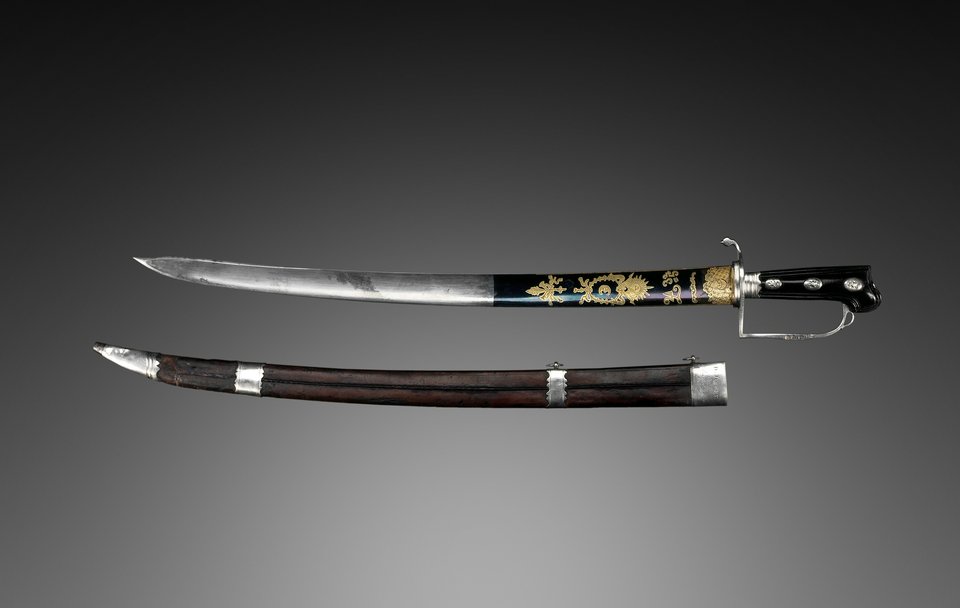
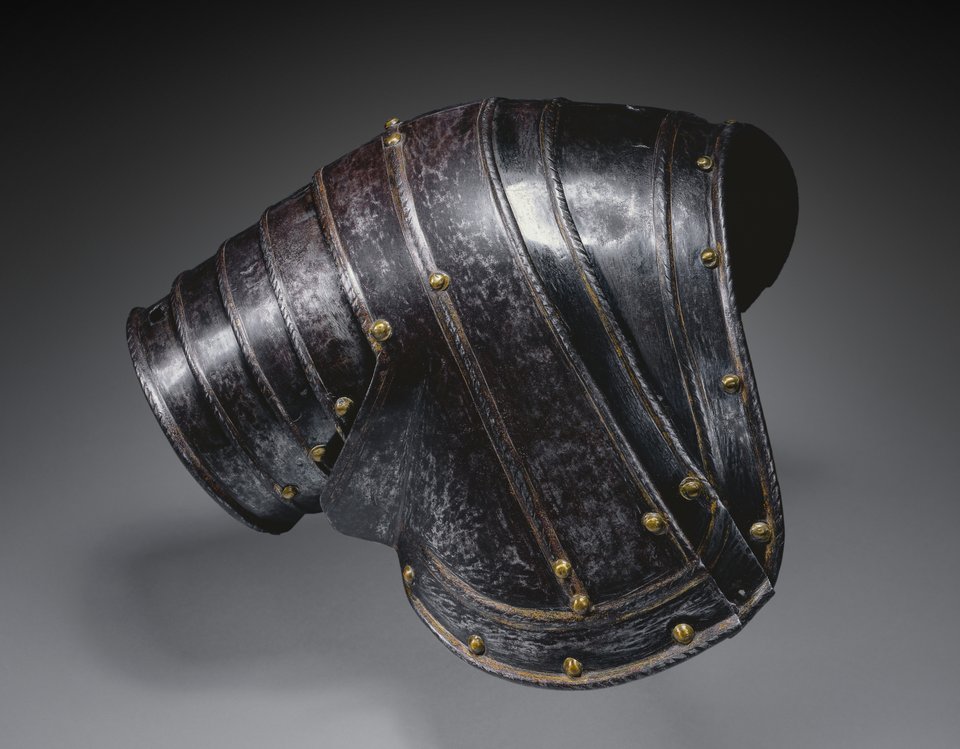
Armorers often gilded the borders of blued plates for contrast. But the blue can darken with age: Cleveland’s Italian pauldron of about 1560–70 was blued, and the museum says its color has since darkened. The museum’s hunting sword by William Kinman, from 1778–79, still shows blue-black steel under gold decoration.2, 3
The web’s steel blue came from a monitor
Historical record
The X Window System’s early color list was tuned for DEC VT240 terminals and gave steel blue as #236B8E. Paul Raveling at ISI retuned many colors on his own HP monitor, and X11 Release 4 in 1989 shipped a list built largely on his, including #4682B4 for steel blue and #B0C4DE for light steel blue. These are the values SVG and CSS later adopted.4, 5
Sources (5)
Wikipedia, “Tempering (metallurgy)”, section on tempering colors, citing Blandford, Practical Blacksmithing and Metalworking (TAB Books, 1988), pp. 74–75.
Arms and armorHunting sword by William Kinman (1778–79)
Near the hilt, the blade of this London sword was blued and then etched and gilded. The real blued steel samples as a blue-black, #0B141B, far darker than the web’s steel blue. Its blue shows mostly in the highlights.
#0B141B#3E484C#A59E80#9E9E9E
Source: Cleveland Museum of Art
Source
Sampled from the blued section and the bright blade in the Cleveland Museum of Art’s photograph (1916.1685), released as CC0 (public domain). The maker, date and technique come from the museum’s record. Colors in a photo shift with the lighting, so read the codes as close, not exact.
#232122#3D3B3E#5E5C5F#8B898E
Arms and armorItalian pauldron (about 1560–70)
This shoulder plate was blued and gilded, and the museum says it would once have been a deep shade of blue. Today it is a dark charcoal with traces of gilding, a reminder that blued steel changes with time.
#232122#3D3B3E#5E5C5F#8B898E
Source: Cleveland Museum of Art
Source
Sampled from the plates in the Cleveland Museum of Art’s photograph (1916.1528), released as CC0 (public domain). The description of its original color comes from the museum’s record. Colors in a photo shift with the lighting, so read the codes as close, not exact.
#021018#EB0028#FFFFFF
SportHouston Texans
The NFL team’s main color is called Deep Steel Blue. In the bull logo file the league serves, the dark blue is #021018, so deep it reads as black on most screens, beside a bright red, #EB0028.
#021018#EB0028#FFFFFF
Source: NFL logo file
Source
The colors are the fills in the team’s bull logo, from the logo file the NFL serves. The logo shown is that file. The color name comes from the team’s 2024 uniform announcement.
Logos belong to their owners and are shown unaltered, only to show where each palette comes from. Palettes are sampled in-house.
Questions
What is the hex code for steel blue?
#4682B4 (RGB 70, 130, 180). It is the CSS keyword steelblue, from the X11 color list of 1989.
What is light steel blue?
A pale gray-blue, #B0C4DE, the CSS keyword lightsteelblue. It comes from the same 1989 X11 list as steel blue.
Why is it called steel blue?
Polished steel turns blue when it is heated, because a thin oxide film forms on the surface and colors the reflected light. The name was in use in English by 1803.
Is steel blue the same color as blued steel?
No. Real blued steel is a deep blue-black with blue highlights. The web’s steel blue is a much lighter, softer gray-blue.
Can you put white text on steel blue?
Only at large sizes. White on #4682B4 reaches about 4.1 to 1 contrast, below the 4.5 to 1 needed for body text. For small text, use a darker shade such as #2A4E6C.
What colors go with steel blue?
Brass, rust orange and warm whites suit it well. Cool grays make it businesslike, and a dusty pink softens it.