A warm orange-red named after a toxic mercury pigment, the red of Chinese lacquer.
Overview
Vermilion is a warm orange-red. Its usual web code is #E34234: strong red with a little green and a little blue. The green warms it toward orange, and the blue softens it, so it looks less fiery than scarlet.
The name came into English in the 1200s from Anglo-French vermeillon, which goes back to Late Latin vermiculus, a bright red obtained from kermes insects. In Latin the word meant a grub, from vermis, worm. In English, vermilion came to mean a red pigment made of mercury sulfide.
The pigment was first ground from cinnabar, a mercury ore, and later made by heating mercury with sulfur. It was the main red of European painters from the Renaissance until the 20th century, and in China it colored lacquer. But it is toxic, and it can darken: the painter Cennino Cennini warned that on a wall it “turns black.” Cadmium red took its place in the 20th century.
Vermilion is warm and lively. It pairs well with black and gold, as on lacquerware, and with teal or cobalt blue for contrast. White text on it is readable only at large sizes (contrast about 4.1:1); black text works better.
HEX
#E34234
RGB
rgb(227, 66, 52)
HSL
hsl(5, 76%, 55%)
HSV
5°, 77%, 89%
CMYK
0, 71, 77, 11
OKLCH
oklch(61.3% 0.200 29.1)
Every code converts from the HEX value #E34234. #E34234 is the vermilion most color sites use, but no standard defines it: Wikipedia’s list of shades of red gives it as a match for the vermilion sample in Maerz and Paul’s A Dictionary of Color (1930), while its vermilion article gives #FF4000 for the same sample. Vermilion is not a CSS keyword, and Merriam-Webster defines it as “a vivid reddish orange.” CMYK is a screen-based estimate; print results vary.
Vermilion on the color map
LighterDarker
People’s average vermilion in the xkcd survey, where it was spelled “vermillion,” sits just above and right of the web code: brighter and a little more orange. The dictionary’s vivid reddish orange sits further right, inside the outline: more orange still. The outline is an approximate range, not a measured one.
Shades and tints
Tintswith white
Shadeswith black
Toneswith gray
Vermilion sits in the middle. Tints add white, shades add black and tones add gray, in 10% steps out from it. Tap any swatch to copy its code.
Light and dark vermilion
#F4B3AE
Pale vermilionVermilion with a lot of white. A soft, peachy pink.
#EE8E85
Light vermilionA lighter, gentler coral red.
#E34234
VermilionThe reference color.
#E44D2E
CinnabarNamed after the mercury ore the pigment was ground from. A shade more orange. See cinnabar
#88281F
Dark vermilionVermilion with black mixed in. Close to the red sampled from the lacquer plate below.
Colors that go with vermilion
Pairings that work in rooms, outfits and interfaces.
Vermilion and black
The lacquerware pairing. Dramatic and glossy.
Vermilion and gold
Festive and warm. Red and gold for celebrations.
Vermilion and teal
Near-opposites: warm and cool. Bold and modern.
Vermilion and cream
Warm and relaxed. Good for food and packaging.
Vermilion and cobalt
The Dutch flag’s colors by name: vermilion, white and cobalt blue.
Vermilion and sand
Earthy and sunny. Suits interiors and travel.
Color-wheel palettes
Pick a palette to see where its colors sit on the color wheel. The caret marks vermilion. Tap a band to copy its code.
Lined up by hue around vermilion. Hover a color to see how similar it is.The bar under each name shows how similar it is. Similarity comes from the distance between the two colors in OKLab, a model of how we see color.
Vermilion vs scarlet
Vermilion#E34234 · hue 5°
Softer and a little duller
Named after a mercury pigment
Dictionaries call it a reddish orange
Scarlet#FF2400 · hue 8°
Brighter, with red at full strength
Named after a costly cloth
Dictionaries call it a bright red
Meaning
Mercury pigment
Painting
Chinese lacquer
Toxic
Flags
Vermilion reads as warm, glowing and precious. For thousands of years it was a pigment, ground from cinnabar and later made from mercury and sulfur, and it was the main red of European painting and of Chinese lacquer. It is toxic, and it can darken with time. Two national flags have named their red after it. As with most named colors, mood research tests broad hues such as red, not vermilion itself.
A toxic mercury pigment
Reference works
Vermilion is mercuric sulfide, the same compound as the mineral cinnabar. Like most mercury compounds it is toxic, and genuine vermilion paint is still described as very toxic. In the 20th century, painters largely replaced it with cadmium red.1, 2
It can turn dark
Painters’ records
Vermilion can darken or develop a purplish-gray sheen. Cennino Cennini warned painters that on a wall, “over a period of time, standing in the air, it turns black.”2
The red of Chinese lacquer
Documented use
Vermilion colored Chinese lacquerware, which was exported around the world and gave rise to the term “Chinese red.” The Cleveland Museum of Art notes that red became the preferred color for carved lacquer partly because it has long been associated with good fortune in China.2, 3
Named in flag laws
Flag laws
A Dutch royal decree of 1937 set the flag’s colors as bright vermilion, white and cobalt blue. Romania’s 1994 flag law named its red vermilion red; since 2023, the law gives exact codes instead.4, 5, 6
Sources (6)
Merriam-Webster, “vermilion”, definitions, etymology and first known use.
Wikipedia, “Vermilion”, citing Bomford & Roy, A Closer Look: Colour, St. Clair, The Secret Lives of Colour (2016), and Broecke’s translation of Cennini’s Il Libro dell’Arte (2015).
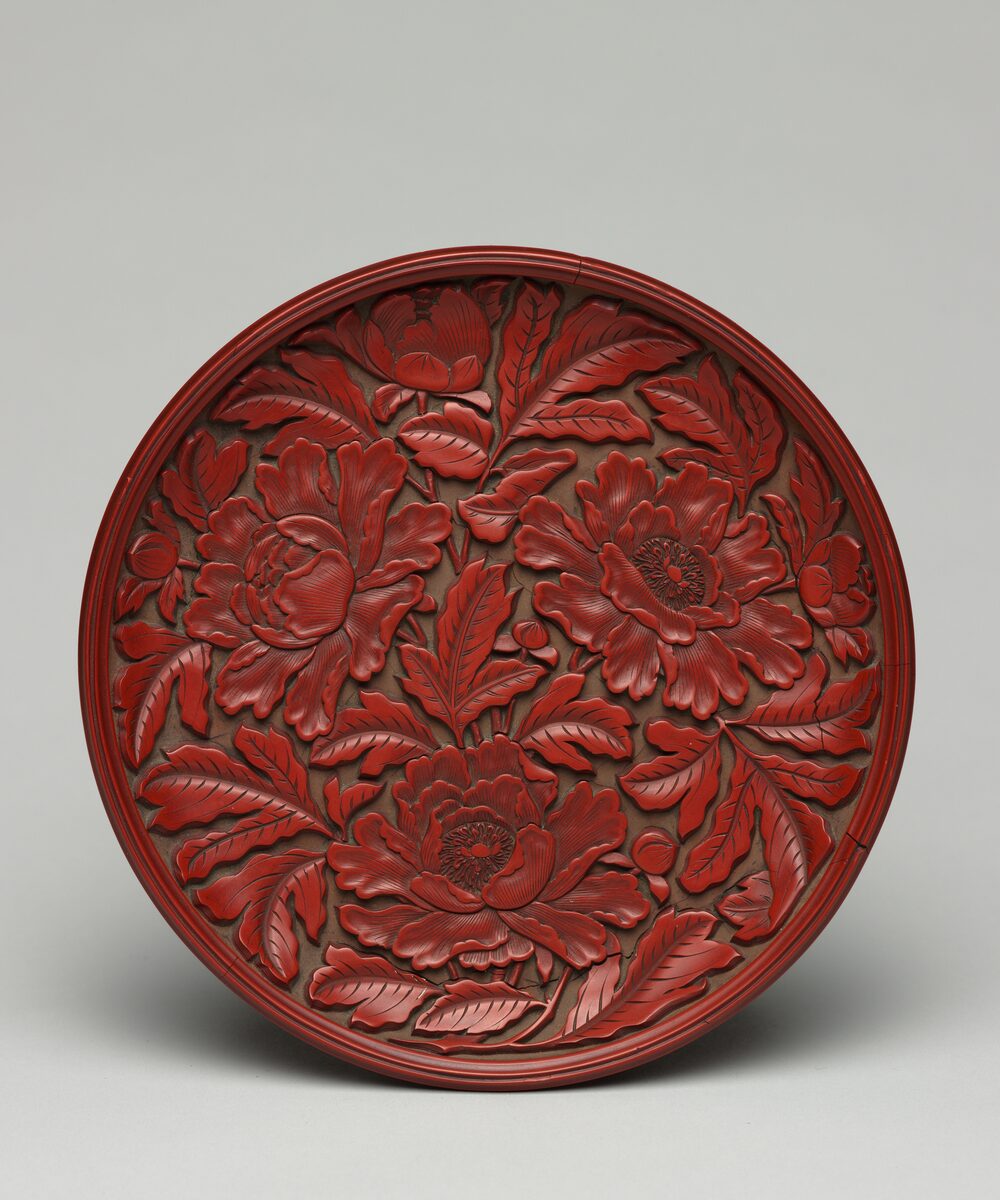
A plate of carved cinnabar lacquer from China, now at the Cleveland Museum of Art. Many layers of lacquer were built up and then carved into three peonies. Its red samples as a deep brick red, far darker than the web code.
#84281F#4D241D#81483D
Source: Cleveland Museum of Art
Source
Sampled from the Cleveland Museum of Art’s photograph (1977.6), released as CC0 (public domain). The date, the materials and the link between red and good fortune come from the museum’s record. Colors in a photo shift with the lighting, so read the codes as close, not exact.
#94342F#1C436A#946444#BAA288
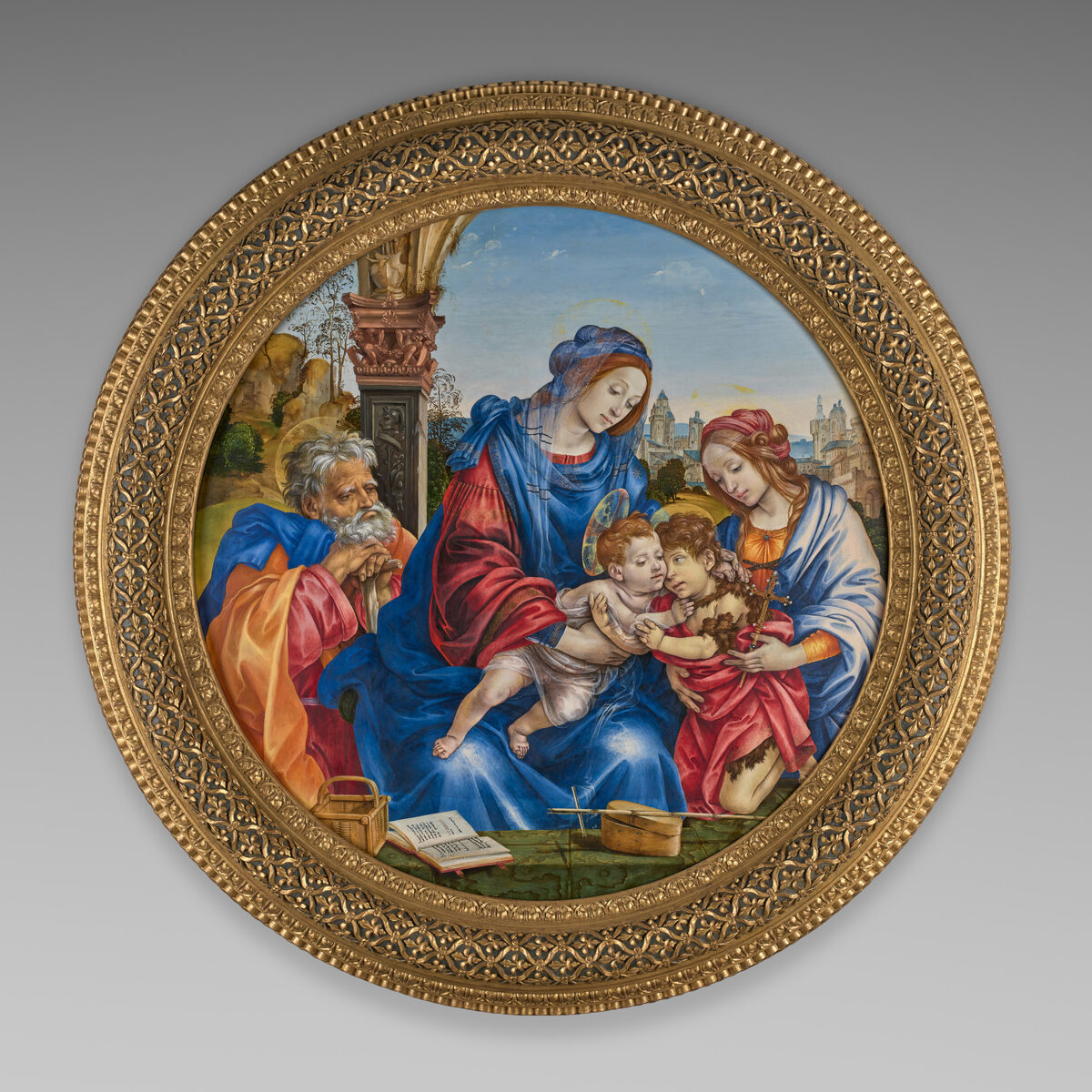
PaintingFilippino Lippi’s Holy Family (about 1488–93)
A large round panel by Filippino Lippi, now at the Cleveland Museum of Art. A technical study found vermilion among its pigments, alongside insect-based red lakes, ultramarine and gilding. The red robes sample darker than the web code.
#94342F#1C436A#946444#BAA288
Source: Cleveland Museum of Art
Source
Sampled from the Cleveland Museum of Art’s photograph (1932.227), released as CC0 (public domain). The pigments come from the conservation notes in the museum’s record. Colors in a photo shift with the lighting, so read the codes as close, not exact.
#CE1126#FCD116#002B7F
FlagFlag of Romania
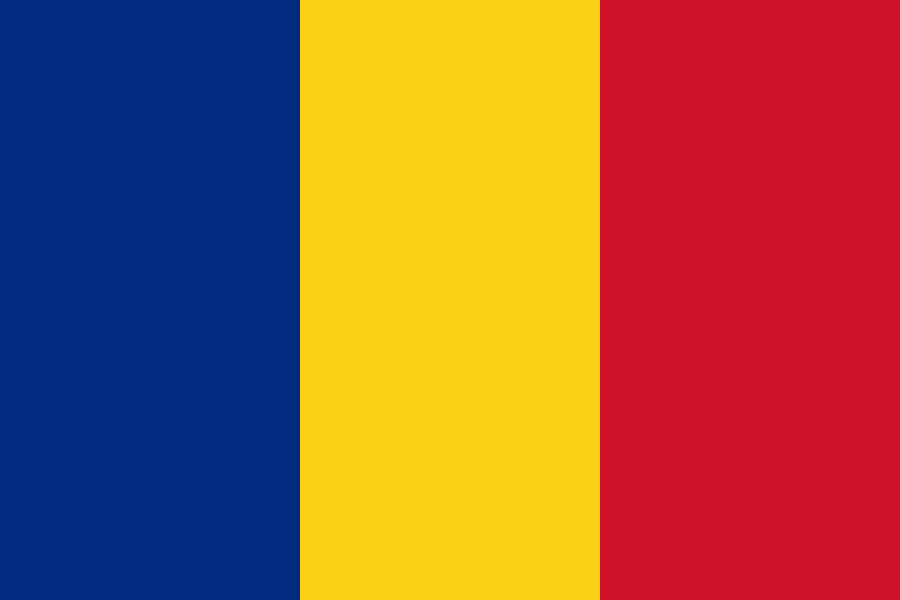
Romania’s 1994 flag law named its red vermilion red. A 2023 revision replaced the pigment names with exact codes. The official red, #CE1126, is darker than the web’s vermilion and leans the other way, toward crimson.
#CE1126#FCD116#002B7F
Source: Law No. 176 of 2023
Source
The codes are the RGB values in the annex of Romania’s Law No. 176 of 2023. The earlier wording, cobalt blue, chrome yellow and vermilion red, is reported by Flags of the World. The flag is drawn in-house: three equal vertical stripes in a 2:3 flag.
#EE2E24#FFFFFF
BrandingCircle K
The convenience store chain’s red, #EE2E24, is more saturated than this page’s code, with almost the same hue. It fills the Circle K name and its round K mark.
#EE2E24#FFFFFF
Source: Circle K logo file
Source
The red is the fill in Circle K’s own logo file, served on its website. The logo shown is that file.
#EA1C0A
BrandingE.ON
E.ON’s red, #EA1C0A, is a little darker and much more saturated than this page’s code, with about the same orange lean. It is the one color in the energy company’s logo.
#EA1C0A
Source: E.ON logo file
Source
The red is the fill in the logo file on E.ON’s Hungarian website. The logo shown is that file.
Logos belong to their owners and are shown unaltered, only to show where each palette comes from. Palettes are sampled in-house.
Questions
What color is vermilion?
A warm orange-red. The usual web code is #E34234 (RGB 227, 66, 52): strong red with a little green and a little blue.
Is it vermilion or vermillion?
Vermilion, with one l, is the standard spelling. Merriam-Webster lists vermillion as a less common variant, and it is the spelling used in the xkcd color survey.
What is the difference between vermilion and scarlet?
Both are orange-tinged reds. Dictionaries call vermilion a reddish orange and scarlet a bright red, but the usual web codes flip that: vermilion’s #E34234 is a little less orange, and softer, than scarlet’s #FF2400.
Is vermilion toxic?
The traditional pigment is. It is mercuric sulfide, and genuine vermilion paint is still described as very toxic. The color on a screen is just a code.
What is the difference between vermilion and cinnabar?
Cinnabar is the mercury mineral that vermilion was first ground from, and Maerz and Paul’s 1930 color dictionary treats them as the same color. As web colors, cinnabar (#E44D2E) is a shade more orange.
What colors go with vermilion?
Black and gold, as on lacquerware; teal or cobalt blue for contrast; cream and sand for a softer look.
Why is it called vermilion?
From Late Latin vermiculus, a bright red obtained from kermes insects. In Latin the word meant a grub, from vermis, worm. In English it came to name the red mercury pigment.