Robin egg blue is a soft, light blue-green, the color of the eggs of the American robin. The code here, #96DED1, is a common one for it and is the center point of “very light bluish green” in ISCC-NBS, the American system for naming colors.
The bird matters. The American robin lays three to five unmarked eggs, sky blue or blue-green. The European robin is an unrelated bird, and its egg is not blue at all but a warm white spotted with brown, as Maerz and Paul’s Dictionary of Color pointed out in 1930.
The blue comes from biliverdin, a pigment formed when heme breaks down; blue shells carry much more of it than brown ones. Ideas of the color vary. In the xkcd survey, “robin egg blue” averaged a lighter, bluer #8AF1FE, while Maerz and Paul matched real shells to a darker, grayer blue-green. A New York jeweler’s trademarked blue is a similar color.
Use robin egg blue as a fresh, gentle background with dark text: navy, charcoal or a deep brown. It pairs well with the warm browns of a nest, with cream and coral, and with soft gray for a modern look.
HEX
#96DED1
RGB
rgb(150, 222, 209)
HSL
hsl(169, 52%, 73%)
HSV
169°, 32%, 87%
CMYK
32, 0, 6, 13
OKLCH
oklch(84.9% 0.074 181.9)
Every code converts from the HEX value #96DED1. There is no standard robin egg blue. #96DED1 is a common code for it and is the ISCC-NBS center point for “very light bluish green”. Maerz and Paul’s Dictionary of Color (1930), which checked its robin’s egg blue against real shells, falls in darker and grayer areas of the same system, shown on the map. CMYK is a screen-based estimate; print results vary.
Robin egg blue on the color map
LighterDarker
People’s robin egg blue in the xkcd survey is lighter and bluer, just outside the outline above and to the right. Maerz and Paul’s robin’s egg blue, matched against real shells, falls in two ISCC-NBS areas: a darker blue-green below the outline and a grayer green below and to the left. The outline is an approximate range, not a measured one.
Shades and tints
Tintswith white
Shadeswith black
Toneswith gray
Robin egg blue sits in the middle. Tints add white, shades add black and tones add gray, in 10% steps out from it. Tap any swatch to copy its code.
Light and dark robin egg blue
#C0EBE3
Pale robin egg blueRobin egg blue with 40% white. Soft enough for walls and backgrounds.
#96DED1
Robin egg blueThe reference color.
#70A69D
Deep robin egg blueRobin egg blue with 25% black. Close to what Maerz and Paul matched to real shells.
#B8DED9
Duck egg blueA paler, grayer egg color, with a page of its own. See duck egg blue
#A9D4D2
Haint blueA grayer porch-ceiling blue, with a page of its own. See haint blue
Colors that go with robin egg blue
Pairings that work in rooms, outfits and interfaces.
Robin egg blue and chocolate
The egg in its nest: blue-green with warm brown.
Robin egg blue and coral
Fresh and cheerful. A spring and summer favorite.
Robin egg blue and navy
Crisp and classic, with navy for text.
Robin egg blue and cream
Soft and gentle. Good for nurseries and wedding stationery.
Robin egg blue and yellow
Bright and springlike: blue-green with buttery yellow.
Robin egg blue and gray
Quiet and modern. Gray keeps it from looking too sweet.
Color-wheel palettes
Pick a palette to see where its colors sit on the color wheel. The caret marks robin egg blue. Tap a band to copy its code.
Lined up by hue around robin egg blue. Hover a color to see how similar it is.The bar under each name shows how similar it is. Similarity comes from the distance between the two colors in OKLab, a model of how we see color.
Robin egg blue vs duck egg blue
Robin egg blue#96DED1 · hue 169°
Clearer and more colorful
Leans a little toward green
Named after the American robin’s egg
Duck egg blue#B8DED9 · hue 172°
Paler and grayer
A touch bluer
Named after a duck’s egg
Meaning
Robin eggs
The American robin
Egg pigment
Chinese glazes
Robin egg blue is named after a real thing, so its meaning starts with the bird. Biologists have studied why robin eggs are blue and how robins use egg color. No study tests what the color means to people, so the claims below are about the eggs.
The blue is biliverdin
Established science
Bird eggshell colors come from two pigments: red-brown protoporphyrin and blue-green biliverdin, a bile pigment formed when heme breaks down. Blue shells, like the robin’s, hold much more biliverdin than brown ones.1, 2
Vivid eggs, more feeding, in one study
One field experiment
In a field experiment, researchers swapped American robin clutches for pale or vivid blue model eggs. Males fed 3-day-old chicks more often in nests that had held vivid eggs, though not older chicks, so egg color may signal a female’s quality. It is one study, and the effect was short-lived.3
Robins reject eggs that look wrong
Replicated field study
Brown-headed cowbirds slip their eggs into robin nests. A 2018 repeat of a classic 1982 experiment found that robins throw out model eggs that look more like a cowbird’s in color, size or spotting, and that background color predicts rejection best.4
Sources (4)
Wiemann, J., Yang, T.-R., Sander, P. N. et al. (2017). Dinosaur origin of egg color: oviraptors laid blue-green eggs. PeerJ, 5, e3706. doi:10.7717/peerj.3706
English, P. A. & Montgomerie, R. (2011). Robin’s egg blue: does egg color influence male parental care? Behavioral Ecology and Sociobiology, 65(5), 1029–1036. doi:10.1007/s00265-010-1107-9
Luro, A. B., Igic, B., Croston, R., López, A. V., Shawkey, M. D. & Hauber, M. E. (2018). Which egg features predict egg rejection responses in American robins? Replicating Rothstein’s (1982) study. Ecology and Evolution, 8(3), 1673–1679. doi:10.1002/ece3.3759
History
Robin egg blue is an American color name, tied to the American robin. Its story runs from Chinese porcelain glazes to color dictionaries and recent research on egg pigments.
1720s
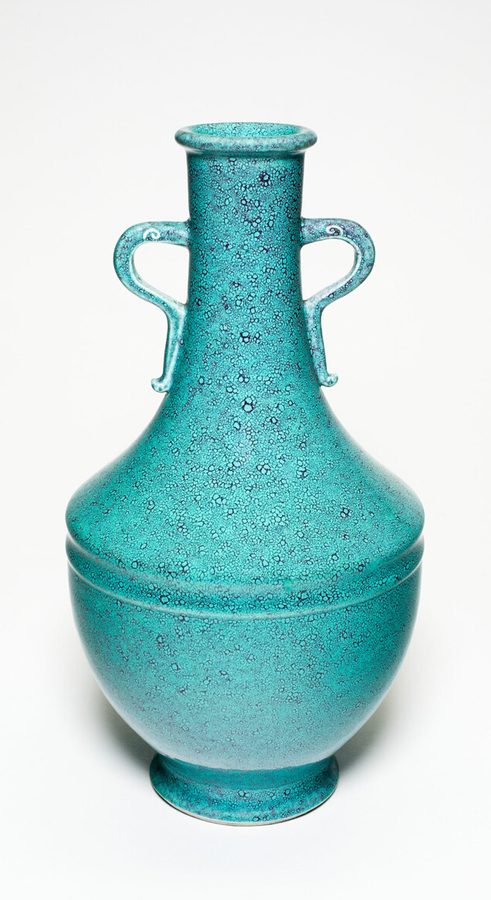
Potters in China make porcelain with a speckled robin’s egg blue glaze during the reign of the Yongzheng Emperor (1723–1735).1, 2
1873
First recorded use of “robin egg blue” as a color name in English.2
1930
Maerz and Paul’s Dictionary of Color checks its robin’s egg blue against real shells and warns that the English robin’s egg is not blue but white spotted with brown.3
2010
In the xkcd color survey, “robin egg blue” averages a lighter, bluer #8AF1FE.4
2011
A field experiment finds that male robins feed young chicks more often in nests with vivid blue eggs.5
2017
Researchers find biliverdin in fossil eggshells of an oviraptor dinosaur from China and reconstruct the eggs as blue-green.6
2018
A repeat of a 1982 experiment confirms that robins reject eggs whose background color looks like a cowbird’s.7
Sources (7)
Art Institute of Chicago, “Holder for Incense Sticks or Flowers”, Qing dynasty, Yongzheng reign mark and period, porcelain with robin’s egg blue glaze, 1964.636.
Wikipedia, “Robin egg blue”, citing Maerz and Paul (1930), p. 203, for the first use.
Maerz, A. & Paul, M. R. (1930). A Dictionary of Color. McGraw-Hill. Note on “Robin’s Egg Blue”.
English, P. A. & Montgomerie, R. (2011). Robin’s egg blue: does egg color influence male parental care? Behavioral Ecology and Sociobiology, 65(5), 1029–1036. doi:10.1007/s00265-010-1107-9
Wiemann, J., Yang, T.-R., Sander, P. N. et al. (2017). Dinosaur origin of egg color: oviraptors laid blue-green eggs. PeerJ, 5, e3706. doi:10.7717/peerj.3706
Luro, A. B., Igic, B., Croston, R., López, A. V., Shawkey, M. D. & Hauber, M. E. (2018). Which egg features predict egg rejection responses in American robins? Replicating Rothstein’s (1982) study. Ecology and Evolution, 8(3), 1673–1679. doi:10.1002/ece3.3759
Robin egg blue in use
#57BABD#369CA0#7DB2B5#1C7174
CeramicsVase with robin’s egg glaze, China (1736–95)
A Qing dynasty porcelain vase in the speckled robin’s egg glaze first made under the Yongzheng Emperor. The glaze is a deeper, stronger turquoise than the pale code on this page, flecked with dark blue.
#57BABD#369CA0#7DB2B5#1C7174
Source: Art Institute of Chicago
Source
Sampled from the Art Institute of Chicago’s photograph (1941.668.2), released as CC0 (public domain). Colors in a photo shift with the lighting, so read the codes as close, not exact.
Palettes are sampled in-house.
Questions
What color is robin egg blue?
A soft, light blue-green, the color of an American robin’s egg. The code on this page is #96DED1 (RGB 150, 222, 209).
Why are robin eggs blue?
The shell holds biliverdin, a blue-green pigment formed when heme breaks down, and blue shells carry much more of it than brown ones. Why robins evolved blue eggs is still being studied; one experiment found that vivid eggs got male robins to feed young chicks more.
Is robin egg blue blue or green?
Both. It sits between them, leaning a little toward green, at hue 169°. Real robin eggs range from sky blue to blue-green.
What is the difference between robin egg blue and duck egg blue?
Duck egg blue (#B8DED9) is paler and grayer. Robin egg blue is clearer and a little more colorful.
What colors go with robin egg blue?
Chocolate brown, like a nest, cream and coral for warmth, navy for contrast and soft gray for a modern look. Use dark text on it.
Do European robins lay blue eggs?
No. The European robin is an unrelated bird, and its egg is a warm white spotted with brown, as Maerz and Paul’s Dictionary of Color noted in 1930. The color name refers to the American robin.