Ultramarine

A deep violet-blue named for the lapis lazuli that came from “beyond the sea”.

Overview

Ultramarine is a deep blue with a slight violet lean. Its usual web code is #120A8F: a little red, almost no green and blue at just over half strength. The name belongs first to a pigment, one of the most prized in the history of painting.

The word comes from Medieval Latin ultramarinus, “beyond the sea”, because the stone it was made from, lapis lazuli, reached Europe from mines in Afghanistan. Turning that stone into paint took days of kneading and washing, and in the Renaissance the finest ultramarine cost more than gold. Painters often saved it for the robes of Christ and the Virgin.

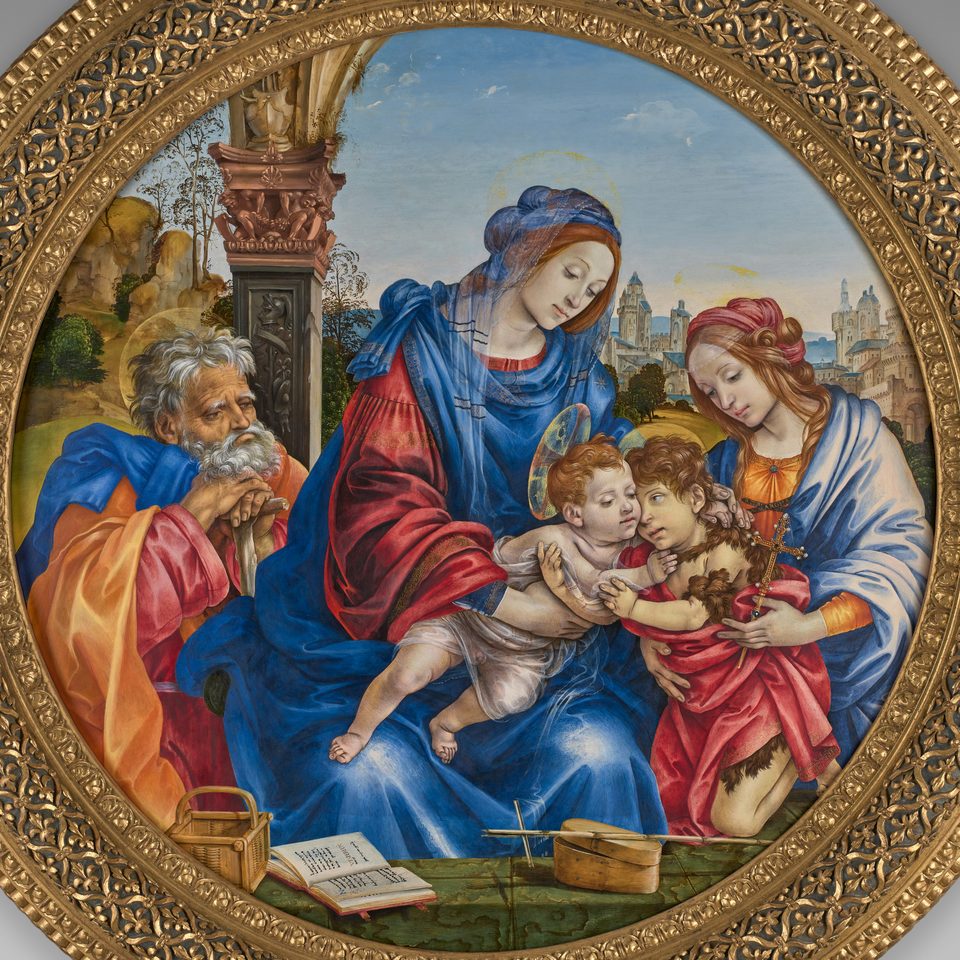
On canvas the real pigment looks different from the code. In the Cleveland Museum of Art’s photograph of a Filippino Lippi tondo, the Virgin’s ultramarine robe reads as a deep mid blue, about #275E92, with none of the screen color’s violet. Since 1828 a synthetic ultramarine, invented in France, has made the color cheap.

Ultramarine works as a rich accent or a dark base. It pairs naturally with gold and warm reds, as it did in medieval books, and it carries white text easily.

HEX#120A8F
RGBrgb(18, 10, 143)
HSLhsl(244, 87%, 30%)
HSV244°, 93%, 56%
CMYK87, 93, 0, 44
OKLCHoklch(30.7% 0.194 268.5)
Every code converts from the HEX value #120A8F. #120A8F is the ultramarine most color lists use, but no color standard defines it: Wikipedia credits it only to color websites. Ultramarine is first a pigment, and its color varies with the stone, the grind and the maker, so treat this code as typical, not official. CMYK is a screen-based estimate; print results vary.
Ultramarine color card, hex #120A8F: “Ultra marine, never sub”

Ultramarine on the color map

People’s average ultramarine in the xkcd survey sits inside the outline, a little brighter than the code. Their ultramarine blue is brighter still, just above the top edge. The robe in Lippi’s painting photographs as a lighter, less violet blue and sits above the outline, toward the left. The outline is an approximate range, not a measured one.

Shades and tints

Tints with white

Shades with black

Tones with gray

Ultramarine sits in the middle. Tints add white, shades add black and tones add gray, in 10% steps out from it. Tap any swatch to copy its code.

Light and dark ultramarine

#B8B6DD
Pale ultramarineMixed 70% with white. A soft lavender blue for backgrounds.
#716CBC
Light ultramarineMixed 40% with white. A muted violet-blue.
#120A8F
UltramarineThe reference color.
#002FA7
International Klein BlueYves Klein’s paint made with synthetic ultramarine, with a page of its own. See international klein blue
#0B0656
Dark ultramarineMixed 40% with black. Almost black, with a blue-violet glow.

Colors that go with ultramarine

Pairings that work in rooms, outfits and interfaces.

Ultramarine and gold

The pairing of altarpieces and illuminated books. Rich and ceremonial.

Ultramarine and vermilion

Blue against a warm red, as in medieval manuscripts. Bold and lively.

Ultramarine and white

Deep blue with crisp white. Strong for headers and night themes.

Ultramarine and stone gray

The blue and the gray of raw lapis lazuli. Calm and grounded.

Ultramarine and saffron

Near-opposites with high contrast. Let the yellow be the accent.

Ultramarine and blush

Soft pink tames the deep blue. Good for stationery and beauty brands.

Color-wheel palettes

Pick a palette to see where its colors sit on the color wheel. The caret marks ultramarine. Tap a band to copy its code.

Similar colors

Smalt65%Dark blue87%Navy blue80%Phthalo blue91%Zaffre76%UltramarineMidnight blue72%

Lined up by hue around ultramarine. Hover a color to see how similar it is.The bar under each name shows how similar it is. Similarity comes from the distance between the two colors in OKLab, a model of how we see color.

Ultramarine vs cobalt blue

Ultramarine#120A8F · hue 244°
  • Deep blue with a violet lean
  • First made from lapis lazuli
  • Synthetic version since 1828
Cobalt blue#0047AB · hue 215°
  • Clearer, slightly greener blue
  • Made from cobalt and alumina
  • Invented in France in 1803

Meaning

  • Painting
  • Sacred art
  • Luxury
  • Trade
  • Chemistry

Ultramarine carries the weight of its history. For centuries it was the costliest blue a painter could buy, so it came to signal devotion and wealth: it clothed the Virgin in altarpieces and lit the pages of illuminated books. Since a cheap synthetic version arrived in 1828, it has also become an everyday blue, in artists’ paints and even in the laundry. As with most named colors, research on color and emotion tests broad hues such as blue, not ultramarine itself.

Once priced above gold

Historical record

Lapis lazuli yields only 2 to 3 percent of its weight as pigment, and in the Renaissance ultramarine cost more than gold. Even in 1828 the natural pigment sold for 3,000 to 5,000 francs a pound in Paris, against 400 for the new synthetic kind.1, 2

Kept for the Virgin’s robe

Museum records

Painters often reserved ultramarine for the cloaks of Christ and the Virgin. When money was short, a workshop could paint Mary’s robe in azurite, a cheaper copper blue, as in a small Sienese Virgin and Child at the Cleveland Museum of Art.2, 3

Laundry blue made whites look whiter

Historical record

Once synthetic ultramarine was cheap, it was used by the ton. Besides paint and wallpaper, it served to hide the yellowish tinge of linen and paper, and it gave Britain its popular pale blue writing paper.1

Sources (3)
  1. Encyclopædia Britannica, 11th edition (1911), “Ultramarine”, vol. 27.
  2. WebExhibits, “History of Ultramarine”, Pigments through the Ages.
  3. Cleveland Museum of Art, “Virgin and Child”, Sano di Pietro’s workshop, Italy, 1400s (1944.56).

History

Ultramarine began as a stone mined in the mountains of Afghanistan. Its story runs through cave temples, Renaissance altarpieces and a French chemistry prize to modern art.

  1. 500s–600s

    Painters of Buddhist and Zoroastrian cave temples in Afghanistan use ground lapis lazuli, the earliest known use of the stone as a paint.1, 2

  2. About 1400

    In his painters’ handbook, Cennino Cennini calls ultramarine “a colour noble, beautiful, and perfect beyond all other colours”. He explains how to pull the blue out of powdered lapis lazuli by kneading it in a paste of resin, mastic and wax for at least three days.3

  3. 1488–93

    Filippino Lippi paints a large round Holy Family for a cardinal in Rome. Technical study at the Cleveland Museum of Art found ultramarine used liberally throughout, even for the tiny rooftops on the horizon.4

  4. 1598

    First known use of the word “ultramarine” in English.5

  5. 1824

    France’s Society for the Encouragement of National Industry offers 6,000 francs for a synthetic ultramarine that costs no more than 300 francs a kilo.2

  6. 1828

    On February 4, the prize goes to Jean-Baptiste Guimet, for a process he had worked out in secret in 1826. A month later the German chemist Christian Gmelin publishes his own method, and factories open in France and Germany by about 1830.2, 6

  7. 1960

    Yves Klein registers the formula of International Klein Blue, made with synthetic ultramarine in a matte resin binder, in a sealed Soleau envelope.7

Sources (7)
  1. Wikipedia, “Ultramarine”, Antiquity and Middle Ages, citing Joyce Plesters, “Ultramarine Blue, Natural and Artificial”, Studies in Conservation (1966).
  2. WebExhibits, “History of Ultramarine”, Pigments through the Ages.
  3. Cennini, C. (about 1400). The Book of the Art of Cennino Cennini, chapter 62, translated by Christiana J. Herringham (1899). Internet Archive.
  4. Cleveland Museum of Art, “The Holy Family with Saint John the Baptist and Saint Margaret”, Filippino Lippi, about 1488–93 (1932.227), conservation statement.
  5. Merriam-Webster, “ultramarine”, etymology and first known use.
  6. Wikipedia, “Jean-Baptiste Guimet”.
  7. Wikipedia, “International Klein Blue”, citing Modern Paints Uncovered (Getty Conservation Institute, 2007).

Ultramarine in use

All brand colors
A round Renaissance painting: the Virgin in a deep blue robe holds the infant Christ, who embraces the young John the Baptist, with Joseph and Saint Margaret on either side
#275E92#11365A#6287A2#B75148
PaintingThe Holy Family with Saint John the Baptist and Saint Margaret by Filippino Lippi (about 1488–93)

A large round painting at the Cleveland Museum of Art. The museum’s technical study confirmed ultramarine across the whole picture, from the Virgin’s robe to the rooftops on the horizon. In the photograph her robe is a deep mid blue, about #275E92, far less violet than the web code.

#275E92#11365A#6287A2#B75148
Source: Cleveland Museum of Art
A medieval manuscript miniature: Saint Matthew in a blue robe kneels on green grass, writing on a scroll, in front of a gold and blue patterned background
#40597D#3C4B64#ACA57F#D7C597
ManuscriptLeaf from a Book of Hours: Saint Matthew (about 1415–20)

A page painted in the style of the Limbourg brothers, at the Cleveland Museum of Art, which singles out its ultramarine blues. Saint Matthew’s robe photographs as a muted mid blue, about #40597D, against gold, soft pink and pale green.

#40597D#3C4B64#ACA57F#D7C597
Source: Cleveland Museum of Art
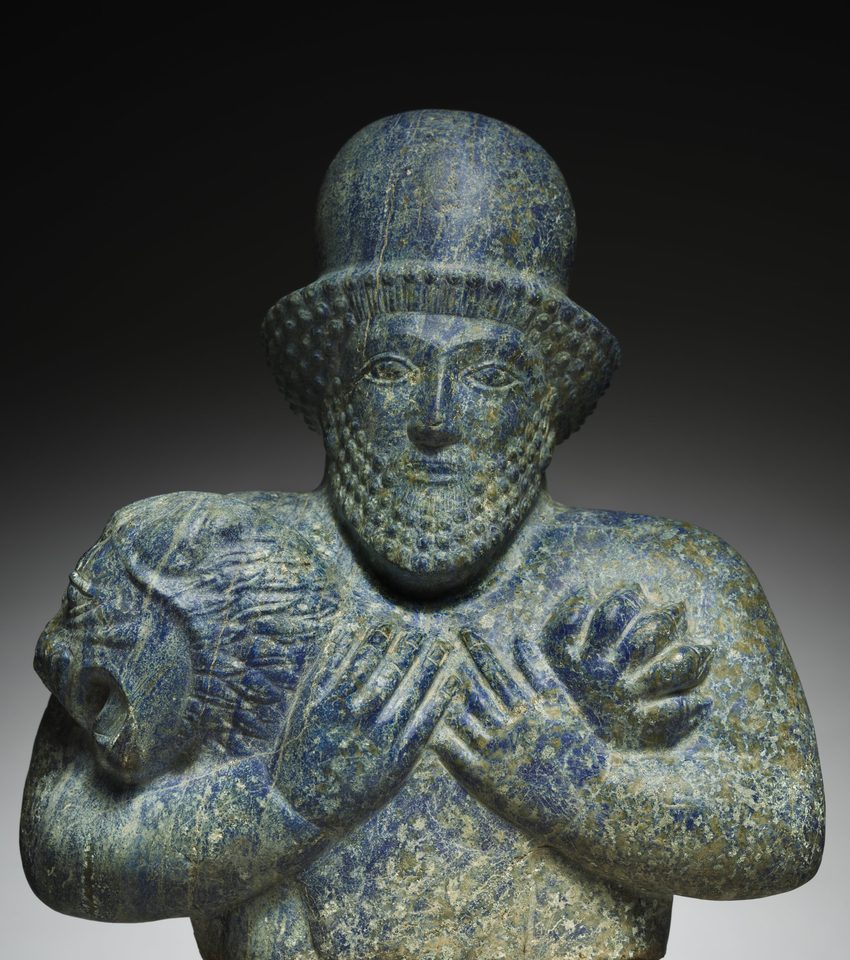
A small carved bust of a bearded man in a round hat, holding a lion cub against his chest, in mottled blue and gray lapis lazuli
#36475C#374247#576465#7D8A87
SculptureMedian Lion Strangler, carved in lapis lazuli (500–450 BCE)

A small Persian figure at the Cleveland Museum of Art, carved from the stone ultramarine is made from. Its blue, about #36475C here, comes in flecks scattered through gray and white minerals. Ground as it is, the stone gives a grayish powder, which is why painters had to extract the blue.

#36475C#374247#576465#7D8A87
Source: Cleveland Museum of Art

Logos belong to their owners and are shown unaltered, only to show where each palette comes from. Palettes are sampled in-house.

Questions

What color is ultramarine?

A deep blue with a slight violet lean. The usual web code is #120A8F (RGB 18, 10, 143). Real ultramarine pigment varies with the stone, the grind and the maker.

What is ultramarine made of?

Originally of lazurite, the blue mineral in lapis lazuli, separated from the rest of the stone by kneading and washing. Since 1828 most ultramarine has been synthetic, made by heating clay, soda, sulfur and charcoal.

Why was ultramarine so expensive?

The stone came a long way, from mines in Afghanistan, it yields only a few percent of its weight as pigment, and extracting the blue took days. In the Renaissance it cost more than gold, so painters saved it for the most important figures.

What is the difference between ultramarine and cobalt blue?

Ultramarine (#120A8F) leans toward violet. Cobalt blue (#0047AB) is a clearer, slightly greener blue. They are different pigments: ultramarine is a sulfur-bearing silicate, cobalt blue a compound of cobalt and alumina.

What does ultramarine mean?

Beyond the sea, from Medieval Latin ultramarinus. The name refers to the long journey of lapis lazuli from Asia to Europe.

Is ultramarine the same as International Klein Blue?

Not quite. International Klein Blue is Yves Klein’s paint, made with synthetic ultramarine in a matte resin binder. Its usual code, #002FA7, is lighter and less violet than #120A8F.