Terracotta

A warm brownish orange, the color of fired clay.

Overview

Terracotta is a warm reddish orange, the color of flowerpots and roof tiles. The code most color lists use is #E2725B: strong red, with less green and blue, which softens it toward pink.

The name is Italian for “baked earth”. Clay turns this color in the kiln, as the iron in it reacts with oxygen. Terra cotta has been an English word for fired clay since 1722.

Real terracotta varies a lot. Depending on the clay and the firing it can come out buff, orange, red or brown, and most of it is more orange and less pink than the usual code. In the xkcd color survey, people’s average terracotta was #CA6641, darker and more orange.

Terracotta suits warm, earthy designs. It pairs well with sage, cream and navy, and with the green of plants.

HEX#E2725B
RGBrgb(226, 114, 91)
HSLhsl(10, 70%, 62%)
HSV10°, 60%, 89%
CMYK0, 50, 60, 11
OKLCHoklch(67.7% 0.144 32.9)
Every code converts from the HEX value #E2725B. #E2725B is the terracotta most color lists use, but there is no single standard for the color. Wikipedia traces this code to an unofficial table of screen values for embroidery thread. The 1955 ISCC-NBS dictionary puts Maerz and Paul’s terra cotta (1930) in its deep orange and brownish orange. CMYK is a screen-based estimate; print results vary.
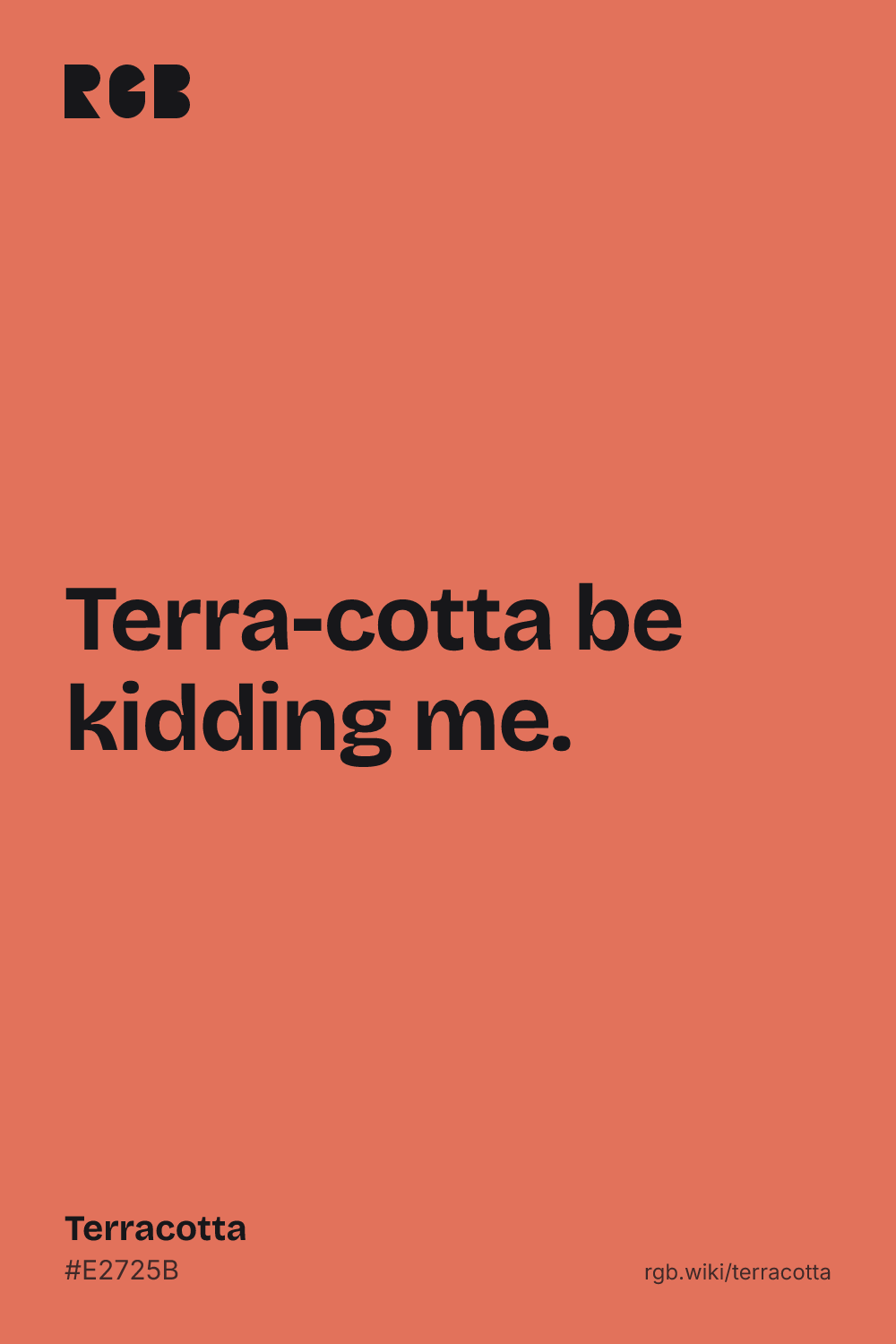
Terracotta color card, hex #E2725B: “Terra-cotta be kidding me”

Terracotta on the color map

People’s average terracotta in the xkcd survey is darker and more orange than the usual code. The ISCC-NBS brownish orange sits outside the outline, down and to the right: browner and more orange still. The outline is an approximate range, not a measured one.

Shades and tints

Tints with white

Shades with black

Tones with gray

Terracotta sits in the middle. Tints add white, shades add black and tones add gray, in 10% steps out from it. Tap any swatch to copy its code.

Light and dark terracotta

#EEAA9D
Light terracottaMixed 40% with white. A soft, peachy pink.
#E2725B
TerracottaThe reference color.
#B66A50
ClayBrowner and duller than terracotta, with a page of its own. See clay
#884437
Dark terracottaMixed 40% with black. A deep reddish brown.

Colors that go with terracotta

Pairings that work in rooms, outfits and interfaces.

Terracotta and sage

Earthy and calm. A favorite for homes and gardens.

Terracotta and navy

Warm against cool. Strong and grown-up.

Terracotta and cream

Soft and sunny, like a whitewashed house with a tiled roof.

Terracotta and olive

Natural and rustic. Suits food and outdoor brands.

Terracotta and teal

Near-opposites. Bold, with a retro feel.

Terracotta and charcoal

Modern and grounded. Good for interfaces.

Color-wheel palettes

Pick a palette to see where its colors sit on the color wheel. The caret marks terracotta. Tap a band to copy its code.

Similar colors

Light coral72%Grapefruit70%Salmon70%Tomato73%TerracottaPersimmon67%Cinnamon68%

Lined up by hue around terracotta. Hover a color to see how similar it is.The bar under each name shows how similar it is. Similarity comes from the distance between the two colors in OKLab, a model of how we see color.

Terracotta vs rust

Terracotta#E2725B · hue 10°
  • Lighter and softer
  • Leans a little toward pink
  • Named after fired clay
Rust#B7410E · hue 18°
  • Darker and more saturated
  • Leans toward orange-brown
  • Named after rusted iron

Meaning

  • Pottery
  • Fired clay
  • Architecture
  • Gardens
  • Warmth

Terracotta feels warm, earthy and handmade. It brings to mind flowerpots, roof tiles and sunbaked walls, and some of the oldest art people have made. Most of that meaning comes from the material: fired clay has been shaped into pots, figures and buildings for thousands of years. As with most named colors, color research tests broad hues, not terracotta itself.

Its color comes from iron

Well established

Most clay contains iron. In the kiln, the iron reacts with oxygen and turns the clay reddish. The result varies with the clay and the firing: terracotta can come out yellow, orange, buff, red, pink, gray or brown.1
The Terracotta Army was painted

Archaeological record

The clay soldiers buried with China’s first emperor around 210 BCE were painted in reds, greens, blues, purple and more. In Xi’an’s dry air, much of the paint flakes off within minutes of excavation, which is why we picture them clay-colored.2

Pinker than real clay

Calculated

The usual code has a hue of 10°, toward red and pink. People’s average terracotta in the xkcd survey sits at 16°, and the fired clay of an Athenian jar in the Met’s photograph near 29°: both more orange.3, 4

Sources (4)
  1. Wikipedia, “Terracotta”, production, citing the Grove Dictionary of Art.
  2. Wikipedia, “Terracotta Army”, citing Brook Larmer, “Terra-Cotta Warriors in Color”, National Geographic (June 2012).
  3. Munroe, R. (2010). “Color survey results”. xkcd blog. The survey’s color averages are released as CC0 data.
  4. The Metropolitan Museum of Art, “Terracotta neck-amphora (jar) with lid and knob”, attributed to Exekias, Athens, about 540 BCE (17.230.14a, b).

History

People were firing clay thousands of years before anyone named the color. The Italian name reached English in the 1700s, when terracotta was a favorite material of sculptors.

  1. About 540 BCE

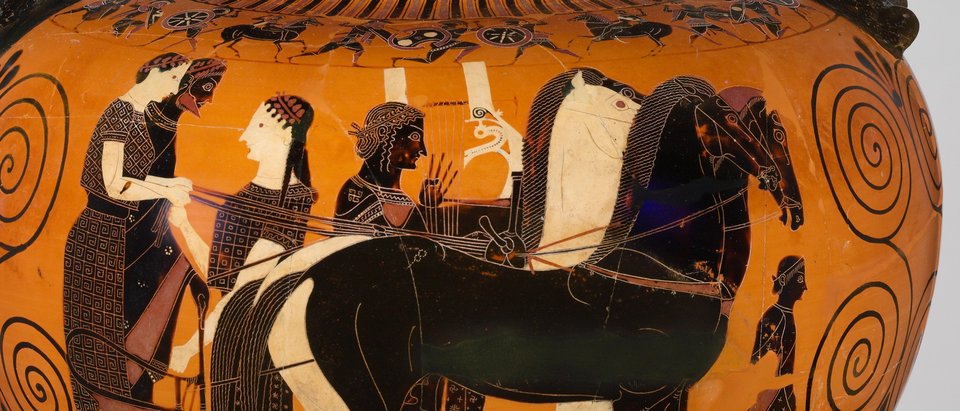
    In Athens, the painter Exekias decorates a wine jar in black on orange fired clay. It is now at the Metropolitan Museum of Art.1

  2. 210–209 BCE

    China’s first emperor, Qin Shi Huang, is buried with an army of painted terracotta soldiers.2

  3. 1722

    First recorded use of “terra cotta” in English, from the Italian for “baked earth”.3

  4. About 1780–90

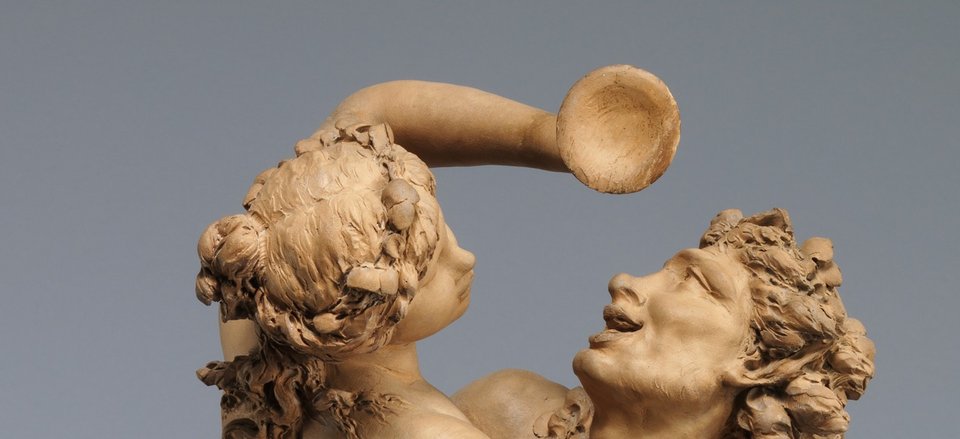
    The French sculptor Clodion models The Intoxication of Wine in terracotta.4

  5. 1881

    London’s Natural History Museum opens. Its architect, Alfred Waterhouse, used terracotta decoration for the entire building, partly because it stood up to the city’s soot.5

  6. 1974

    Farmers digging a well near Xi’an find the first figures of the Terracotta Army.2

Sources (5)
  1. The Metropolitan Museum of Art, “Terracotta neck-amphora (jar) with lid and knob”, attributed to Exekias, Athens, about 540 BCE (17.230.14a, b).
  2. Wikipedia, “Terracotta Army”, citing Brook Larmer, “Terra-Cotta Warriors in Color”, National Geographic (June 2012).
  3. Merriam-Webster, “terra-cotta”, definition, etymology and first known use.
  4. The Metropolitan Museum of Art, “The Intoxication of Wine”, Clodion (Claude Michel), about 1780–90 (14.40.687).
  5. Natural History Museum, London, “Architect Alfred Waterhouse and his iconic Natural History Museum building”.

Terracotta in use

Detail of an ancient Greek jar: black figures of men, women and horses with a chariot, painted on orange fired clay
#CE6E16#935125#201711#DABE9B
PotteryNeck-amphora attributed to Exekias (about 540 BCE)

A black-figure wine jar from Athens, at the Metropolitan Museum of Art, by one of the leading vase painters of his day. Its fired clay is a strong orange, about #CE6E16: less pink than the usual terracotta code.

#CE6E16#935125#201711#DABE9B
Source: The Met
Detail of a pale clay sculpture: a laughing satyr embracing a woman who holds a cup up high
#DCB78C#B78E61#87603B#492F1D
SculptureThe Intoxication of Wine by Clodion (about 1780–90)

A terracotta group of a bacchante and a satyr by the French sculptor Clodion, at the Metropolitan Museum of Art. This clay fired to a pale buff, about #DCB78C: terracotta is not always terracotta-colored.

#DCB78C#B78E61#87603B#492F1D
Source: The Met

Palettes are sampled in-house.

Questions

What color is terracotta?

A warm reddish orange, named after fired clay. The most common code is #E2725B (RGB 226, 114, 91).

Is terracotta orange or brown?

Somewhere between. Merriam-Webster calls it a brownish orange. The common code leans red and slightly pink, while real fired clay is often more orange or browner.

What is the difference between terracotta and rust?

Rust (#B7410E) is darker and more saturated, a deep orange-brown. Terracotta (#E2725B) is lighter and softer, with a pinkish lean. Both colors come from iron oxide: rust on metal, terracotta in fired clay.

What colors go with terracotta?

Sage green, cream and olive for an earthy look, navy or teal for contrast, and charcoal for something modern.

What does terracotta mean?

It is Italian for “baked earth”: clay fired in a kiln. The word has been used in English since 1722, and it names both the material and its brownish orange color.

Why is terracotta red?

Clay usually contains iron. When the clay is fired, the iron reacts with oxygen and turns it reddish. Different clays and firings give buff, orange, red or brown.