Worn by rulers for millennia
ArchaeologyArchaeologists have found that the rulers of ancient Egypt wore turquoise, and Egyptians mined it in Sinai from at least about 3000 BCE. Chinese artisans were carving it more than 3,000 years ago.1, 2
A bright blue-green named after the gem, the “Turkish stone”.
Turquoise is a light, bright blue-green. Its web code is #40E0D0: lots of green and blue with a little red, which makes it softer than pure cyan and tips it slightly toward green.
The name means “Turkish”. The gem probably first reached Europe from Turkish sources, and its French name, pierre tourques, “Turkish stone”, dates from the 1200s. English has used turquoise as a color name since at least 1573.
The web’s turquoise is greener than the stone people prize most. Gem experts value an even, intense, medium blue, sometimes called sky blue in the trade, and rate greenish stones lower. So the finest turquoise is bluer than the color named after it.
Turquoise is light, so pair it with dark text. It looks fresh with white and coral, earthy with terracotta, and rich with gold, the way it has been worn since ancient Egypt.
| HEX | #40E0D0 | |
|---|---|---|
| RGB | rgb(64, 224, 208) | |
| HSL | hsl(174, 72%, 56%) | |
| HSV | 174°, 71%, 88% | |
| CMYK | 71, 0, 7, 12 | |
| OKLCH | oklch(82.2% 0.131 185.1) |
People’s average turquoise in the xkcd survey is darker and a touch greener than the web code, at the bottom edge of the outline. The dictionary’s turquoise sits just below the outline: darker and much grayer. The outline is an approximate range, not a measured one.
Tints with white
Shades with black
Tones with gray
Pairings that work in rooms, outfits and interfaces.
Sea and reef. Warm and cool in balance, a summer favorite.
Stone and clay. Earthy and warm, with a desert feel.
Like the Egyptian and Mixtec jewelry below. Rich and festive.
Cool and polished, like the stone set in silver.
Clean and fresh, like a pool on a sunny day.
Light on dark. Nautical, with more energy than plain blue.
Pick a palette to see where its colors sit on the color wheel. The caret marks turquoise. Tap a band to copy its code.
Lined up by hue around turquoise. Hover a color to see how similar it is.The bar under each name shows how similar it is. Similarity comes from the distance between the two colors in OKLab, a model of how we see color.
Turquoise is first a stone, and most of its meanings come from the gem. Egypt’s rulers wore it, Tibet counts it as its national gem, and Native American peoples of the Southwest used it in ceremonies and as money. In the US it is a December birthstone. The color also had a turn on the flag of Honduras. Mood research tests broad words such as blue or green, not turquoise itself.
Archaeologists have found that the rulers of ancient Egypt wore turquoise, and Egyptians mined it in Sinai from at least about 3000 BCE. Chinese artisans were carving it more than 3,000 years ago.1, 2
Turquoise has long been seen as a stone that brings health, good fortune and protection from evil. It is the national gem of Tibet, and Apache hunters tied it to bows in the belief that it made them more accurate. These are beliefs, not tested effects.1
In the US, turquoise is one of three December birthstones, with tanzanite and zircon.3
A 1949 decree made the blue of Honduras’s flag turquoise, yet flags kept being made in navy for 73 years. Honduras switched to turquoise in 2022, then returned to navy in January 2026.4
People were mining turquoise five thousand years ago. The color name came much later, borrowed from the stone, and the web code arrived in 2001.
By Egypt’s First Dynasty, Egyptians are mining turquoise in the Sinai Peninsula.1
The French name pierre tourques, “Turkish stone”, appears. The gem probably reached Europe from Turkish sources.2
First recorded use of turquoise as a color name in English.3
First known use of “turquoise blue”.4
A decree in Honduras sets the blue of the national flag as turquoise. Flags are still made in navy.5
SVG 1.0 lists the color keyword turquoise at RGB 64, 224, 208, the code CSS uses today.6
Honduras starts using turquoise on its flag, as the 1949 decree asked. In January 2026 it goes back to navy.5
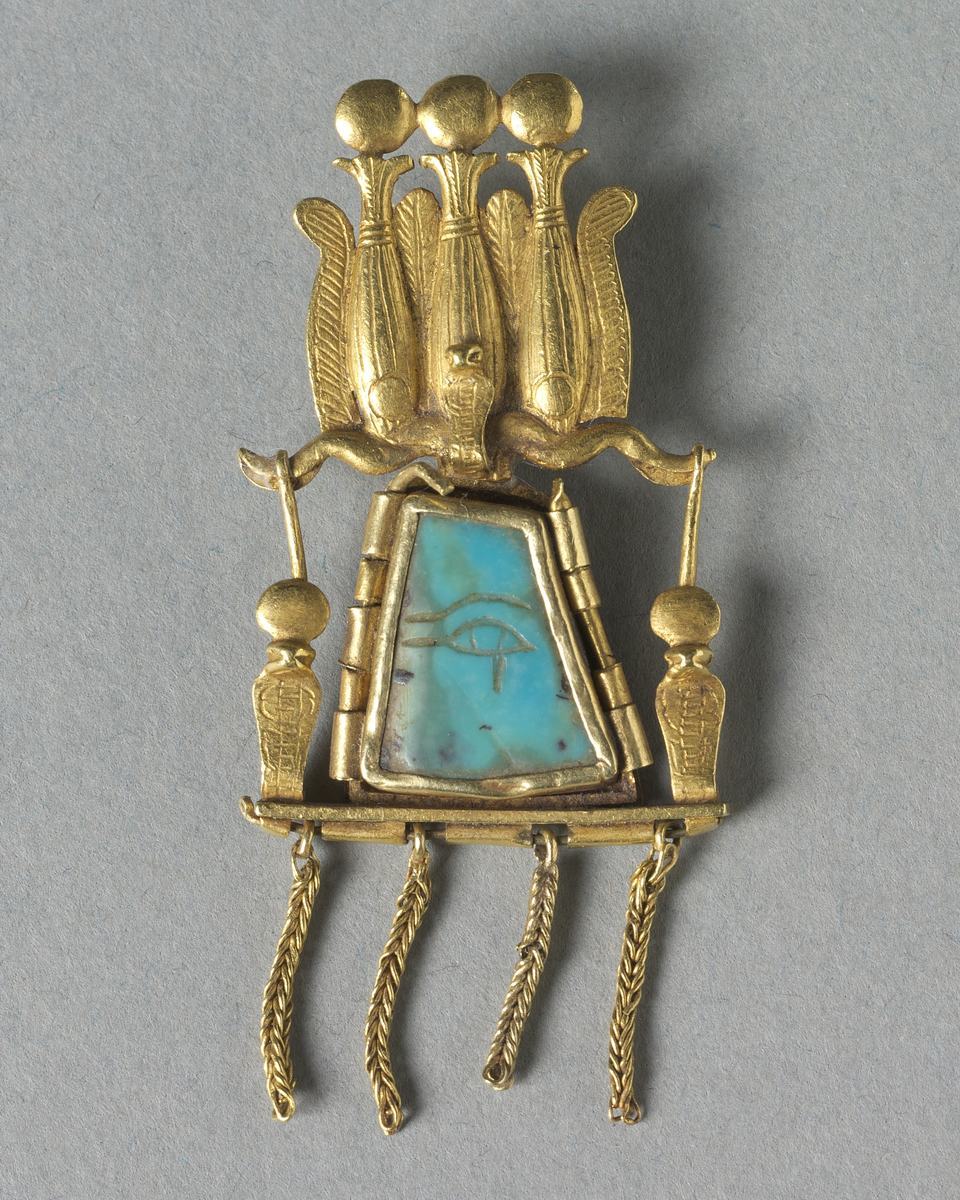
A small gold pendant from Egypt’s Third Intermediate Period, now at the Cleveland Museum of Art. Its turquoise plaque, carved with an eye, is greener and grayer than the web code, and paired with gold, as turquoise often is.
Sampled from the Cleveland Museum of Art’s photograph (1989.39), released as CC0 (public domain). The date and materials, gold and turquoise, come from the museum’s record. Colors in a photo shift with the lighting, so read the codes as close, not exact.
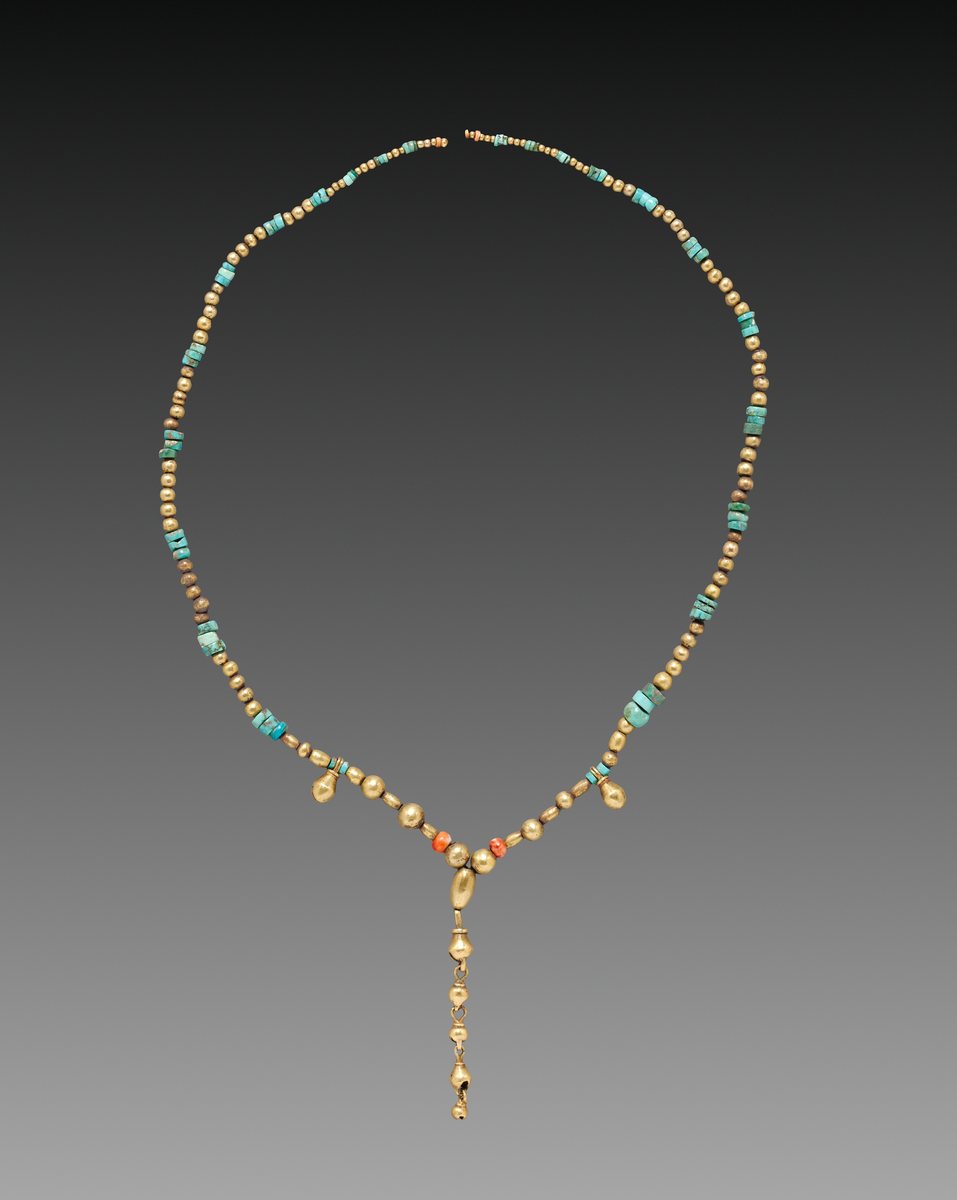
A necklace of gold beads, turquoise and red shell made by the Mixtec of Oaxaca, Mexico, now at the Cleveland Museum of Art. Its turquoise beads range from pale blue-green to deep green.
Sampled from the Cleveland Museum of Art’s photograph (1945.123), released as CC0 (public domain). The date, place and materials, gold, shell and turquoise, come from the museum’s record. Colors in a photo shift with the lighting, so read the codes as close, not exact.
From 2022 to January 2026, Honduras made its flag in turquoise, as a 1949 decree had asked. The blue used by the national university, #00BCE4, is bluer and a little darker than the web’s turquoise. The flag is navy again today.
The history and the code #00BCE4, adopted by the National Autonomous University of Honduras in 2020, come from Wikipedia. No flag is drawn here, because we found no official code for its turquoise.
Palettes are sampled in-house.
A light, bright blue-green. The web code is #40E0D0 (RGB 64, 224, 208), the CSS keyword turquoise.
Both. It sits between blue and green, leaning a little toward green. Dictionaries call it a light greenish blue.
Teal (#008080) is dark and deep, at half brightness. Turquoise (#40E0D0) is much lighter and brighter, and a touch greener.
No, though they are close. The aqua most people mean, about #13EAC9, is a little greener and more vivid. In CSS, aqua is the same as cyan, #00FFFF.
After the gem. Turquoise means “Turkish”: the stone probably first reached Europe from Turkish sources, and the French called it pierre tourques, “Turkish stone”.
Coral and white for a fresh, summery look, terracotta or gold for warmth, and navy or silver for something cooler.
An even, intense, medium blue, sometimes called sky blue or robin’s egg blue in the trade. Greenish turquoise is usually valued lower.