Tan

A light, warm brown named after the tanner’s trade.

Overview

Tan is a light, warm brown. Its web code is #D2B48C: red, green and blue all fairly high, with red the strongest, which gives a pale yellowish brown.

The name comes from tanning, the craft of turning hides into leather. The verb dates from the 1200s and goes back to the Medieval Latin tannum, tanbark: tree bark, often oak, that gave tanners their tannin. Tan has been a color name since 1590.

Tan covers a wide range. The CSS keyword is a pale, slightly grayish tan, and people’s average tan in the xkcd color survey is just as light but more golden. The old color dictionaries put tan much darker and more orange. The word also names skin darkened by the sun, a look that only became fashionable in the 1920s.

Tan is a calm neutral for backgrounds, clothing and interiors. It needs dark text, since white on tan is hard to read. It pairs well with navy, white, olive and rust.

HEX#D2B48C
RGBrgb(210, 180, 140)
HSLhsl(34, 44%, 69%)
HSV34°, 33%, 82%
CMYK0, 14, 33, 18
OKLCHoklch(78.6% 0.064 74.6)
Every code converts from the HEX value #D2B48C. #D2B48C is the CSS keyword tan in the CSS Color Module Level 4, taken from the X11 color list; Merriam-Webster defines tan as a light yellowish brown, while the 1955 ISCC-NBS dictionary files the tan of Maerz and Paul’s A Dictionary of Color (1930) as a darker brownish orange. CMYK is a screen-based estimate; print results vary.
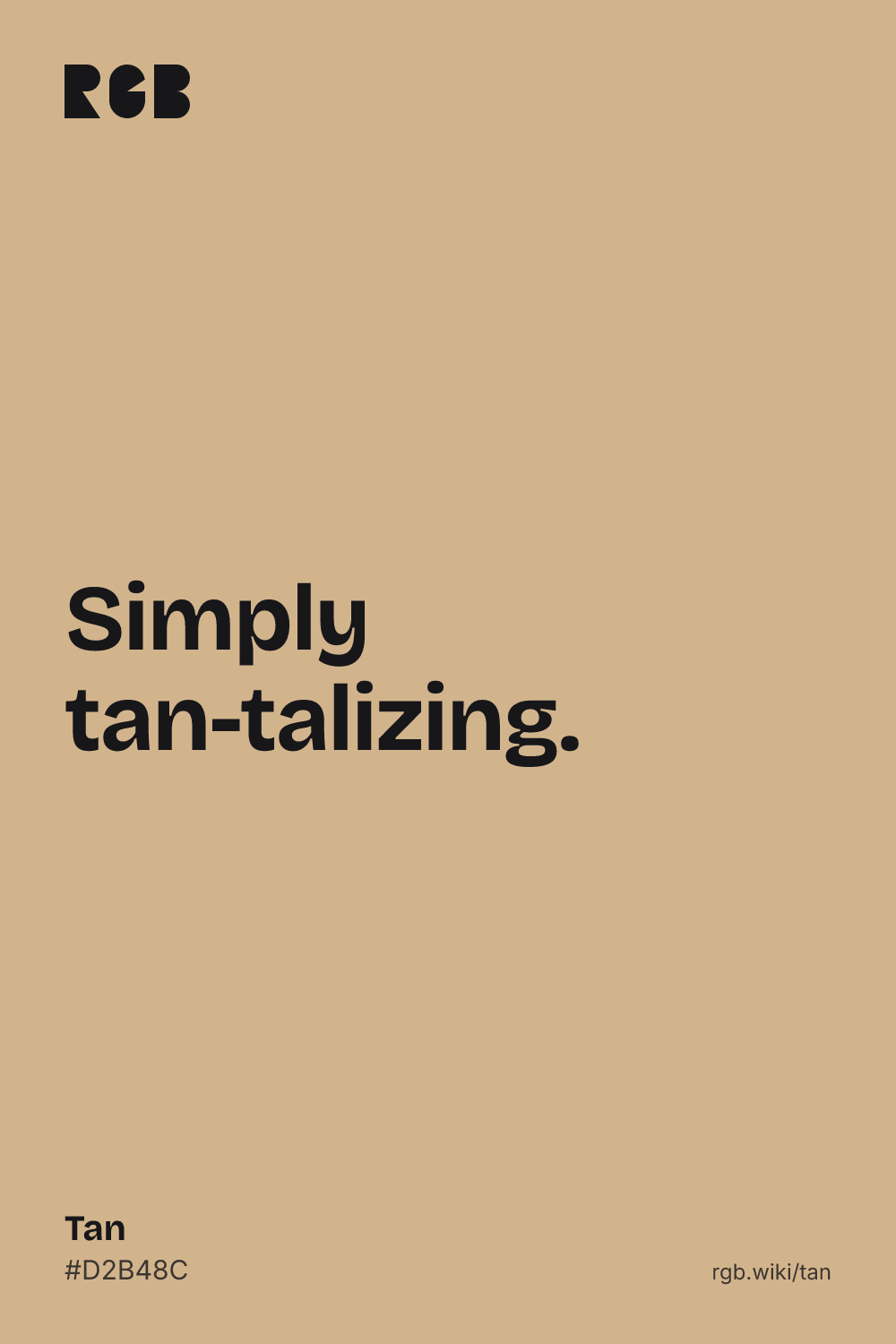
Tan color card, hex #D2B48C: “Simply tan-talizing”

Tan on the color map

People’s average tan in the xkcd survey is just as light as the web code but more golden, inside the outline toward the yellow side. The dictionary’s tan is much darker and more orange, well below the outline on the orange side. The outline is an approximate range, not a measured one.

Shades and tints

Tints with white

Shades with black

Tones with gray

Tan sits in the middle. Tints add white, shades add black and tones add gray, in 10% steps out from it. Tap any swatch to copy its code.

Light and dark tan

#F2E8DC
Pale tanMixed 70% with white. An off-white with a warm tint.
#E6D0B3
Light tanA paler, softer tan for backgrounds and walls.
#D2B48C
TanThe reference color, the CSS keyword tan.
#C19A6B
CamelA darker, warmer tan with more orange in it. See camel
#866D4B
Dark tanA deep, earthy tan that holds white text.

Colors that go with tan

Pairings that work in rooms, outfits and interfaces.

Tan and navy

Smart and classic, like chinos with a navy blazer.

Tan and white

Light and clean. A safe base for interiors and websites.

Tan and olive

Earthy and calm, like a field in late summer.

Tan and rust

Warm on warm. Cozy and autumnal.

Tan and charcoal

Soft and modern. The gray cools the warm tan.

Tan and dusty blue

Gentle and airy. Good for bedrooms and weddings.

Color-wheel palettes

Pick a palette to see where its colors sit on the color wheel. The caret marks tan. Tap a band to copy its code.

Similar colors

Nude81%Burly wood88%TanSandstone83%Khaki87%Putty89%Ecru85%

Lined up by hue around tan. Hover a color to see how similar it is.The bar under each name shows how similar it is. Similarity comes from the distance between the two colors in OKLab, a model of how we see color.

Tan vs beige

Tan#D2B48C · hue 34°
  • Darker and browner
  • Leans toward orange
  • Named after leather tanning
Beige#F5F5DC · hue 60°
  • Paler, close to an off-white
  • Leans toward yellow
  • Named after undyed wool

Meaning

  • Oak bark
  • Leather
  • Suntans
  • Uniforms

Tan is a working color. It is named after the tanner’s trade and is the color of much undyed leather. In the 20th century it also became a fashionable skin tone and a color for uniforms. Mood research tests broad words such as brown, not tan itself, so this section sticks to word history and documented uses.

Named after a craft

Word history

Tan began as a verb in the 1200s, meaning to turn hide into leather. It comes from the Medieval Latin tannare, from tannum, tanbark. Tanners soaked hides with tannin from tree bark. Tan has also named a light yellowish brown since 1590.1, 2, 3
A beret for the Rangers

Documented use

On 14 June 2001, the US Army’s 75th Ranger Regiment was authorized to wear a tan beret, replacing the black berets that had just become standard across the army.4

A fashion that flipped

Historical accounts

In the United States and Western Europe before the 1920s, a suntan marked people who worked outdoors. By the 1920s that had turned around, and a tan became a sign of leisure. Coco Chanel, back from the Riviera with a tan, is often credited with the change.5

Sources (5)
  1. Merriam-Webster, “tan”, definitions, etymology and first known use.
  2. Wikipedia, “Tanning (leather)”, history and etymology.
  3. Wikipedia, “Tan (color)”, citing Maerz and Paul’s A Dictionary of Color (1930).
  4. Wikipedia, “Tan beret”, United States, citing the US Army’s history of berets.
  5. Wikipedia, “Sun tanning”, history.

History

Tan started as the tanner’s word for making leather. It became a color name in the 1500s, and in the 1900s a fashion, a uniform color and a web keyword.

  1. 1200s

    First known use of the verb tan, to turn hide into leather, from the Medieval Latin word for tanbark.1

  2. 1590

    First recorded use of tan as a color name in English.2

  3. About 1818

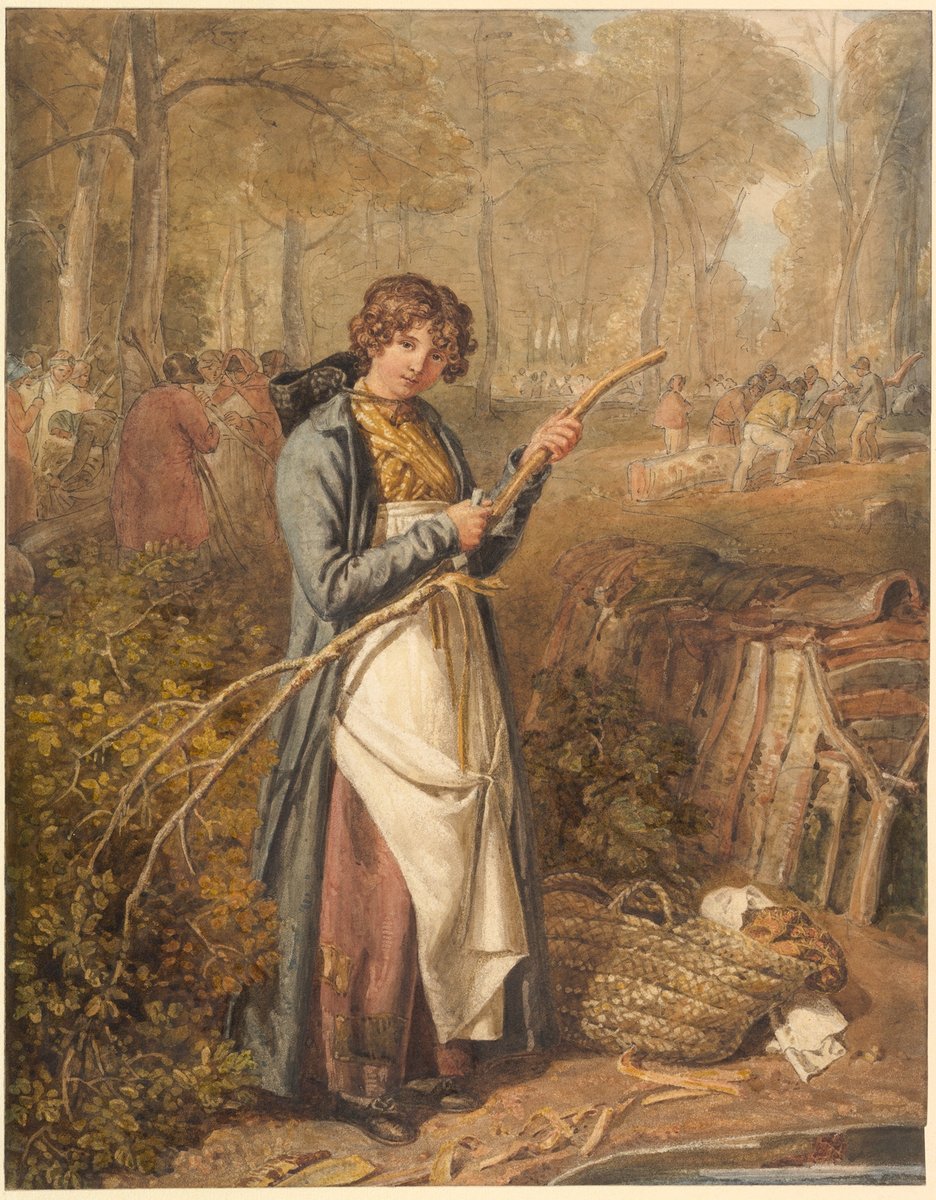
    Joshua Cristall paints workers barking timber, stripping bark from felled trees, in Wychwood Forest, Oxfordshire. Bark was the tanner’s source of tannin.3, 4

  4. 1920s

    Suntans turn fashionable in the United States and Western Europe after centuries in which pale skin signaled status.5

  5. 1955

    The ISCC-NBS color dictionary files the tan of Maerz and Paul’s 1930 A Dictionary of Color as a brownish orange, much darker than today’s web tan.6

  6. 2001

    SVG 1.0 lists tan as red 210, green 180, blue 140, the code CSS still uses.7

  7. 2001

    On 14 June, the US Army’s 75th Ranger Regiment is authorized a tan beret.8

Sources (8)
  1. Merriam-Webster, “tan”, etymology and first known use.
  2. Wikipedia, “Tan (color)”, citing Maerz and Paul’s A Dictionary of Color (1930), page 205.
  3. Metropolitan Museum of Art, “Barking Timber in Wychwood Forest, Oxfordshire”, Joshua Cristall, 1818 (?) (2013.106). Merriam-Webster, “bark” (verb): “to strip the bark from”.
  4. Wikipedia, “Tanning (leather)”, history.
  5. Wikipedia, “Sun tanning”, history.
  6. Kelly, K. L. & Judd, D. B. (1955). The ISCC-NBS Method of Designating Colors and a Dictionary of Color Names. NBS Circular 553. Group numbers as tabulated by A. Jaffer.
  7. W3C (2001). Scalable Vector Graphics (SVG) 1.0 Specification, recognized color keyword names.
  8. Wikipedia, “Tan beret”, United States.

Tan in use

A watercolor of a young woman in a long gray coat and white apron holding a stripped branch in a sunlit forest, with a basket at her feet, stacked bark beside her and workers among the trees behind
#B8966C#9E7951#7E5F40#594431
WatercolorBarking Timber in Wychwood Forest (about 1818)

Joshua Cristall’s watercolor, now at the Metropolitan Museum of Art, shows workers stripping bark from felled trees, with a young woman in front and stacks of bark behind her. That bark was the tanner’s raw material. Its light browns are a little darker and warmer than the web’s tan.

#B8966C#9E7951#7E5F40#594431
Source: The Met

Palettes are sampled in-house.

Questions

What color is tan?

A light, warm brown. The web code is #D2B48C (RGB 210, 180, 140), the CSS keyword tan.

What is the difference between tan and beige?

Tan (#D2B48C) is darker and more orange-brown. Beige (#F5F5DC) is paler, closer to an off-white.

Is tan the same as khaki?

No, but they are close. Khaki (#C3B091) is a little grayer and leans toward olive; tan is warmer. In CSS, khaki is a different color again, a pale yellow.

Why is it called tan?

After tanning, the craft of turning hides into leather with tannin from tree bark. The word goes back to the Medieval Latin tannum, tanbark.

What colors go with tan?

Navy and white for a classic look, olive and rust for something earthy, and charcoal or dusty blue to cool it down.

Is tan a warm or cool color?

Warm. Its red is stronger than its green and blue, which gives it a slight orange lean.