Azurite

A deep blue copper mineral that was medieval Europe’s everyday blue.

Overview

Azurite is a soft, deep blue mineral, a copper carbonate that forms where copper ores weather. On screen it is usually shown as #2E5A9C, a strong, medium-dark blue. Copper is what makes the mineral blue.

The name comes from French azur, azure, a word that goes back through Arabic and Persian to lapis lazuli. Ground to a powder, azurite was the blue European painters used most in the Middle Ages and the Renaissance: far cheaper than ultramarine and mined close to home, in Germany, Hungary and near Lyon in France.

Real azurite is often greener than the code. Its shade depends on how coarsely it is ground, and it can change with time: in open air the mineral slowly turns into green malachite, and azurite blues in old paintings can drift toward green or darken. The blue background of a Corneille de Lyon portrait photographs as a greenish blue, about #035C73.

As a design color, #2E5A9C is a dependable mid blue. It pairs well with copper, gold and malachite green, and it holds white text.

HEX#2E5A9C
RGBrgb(46, 90, 156)
HSLhsl(216, 54%, 40%)
HSV216°, 71%, 61%
CMYK71, 42, 0, 39
OKLCHoklch(47.1% 0.118 258.4)
Every code converts from the HEX value #2E5A9C. #2E5A9C is the code most color references use for azurite, but no standard defines it. Maerz and Paul’s A Dictionary of Color (1930) matched its blue bice, another name for azurite, from well-preserved old samples, and the 1955 ISCC-NBS dictionary files that color as a moderate blue. Treat this code as typical, not official. CMYK is a screen-based estimate; print results vary.
Azurite color card, hex #2E5A9C: “Azurite as rain”

Azurite on the color map

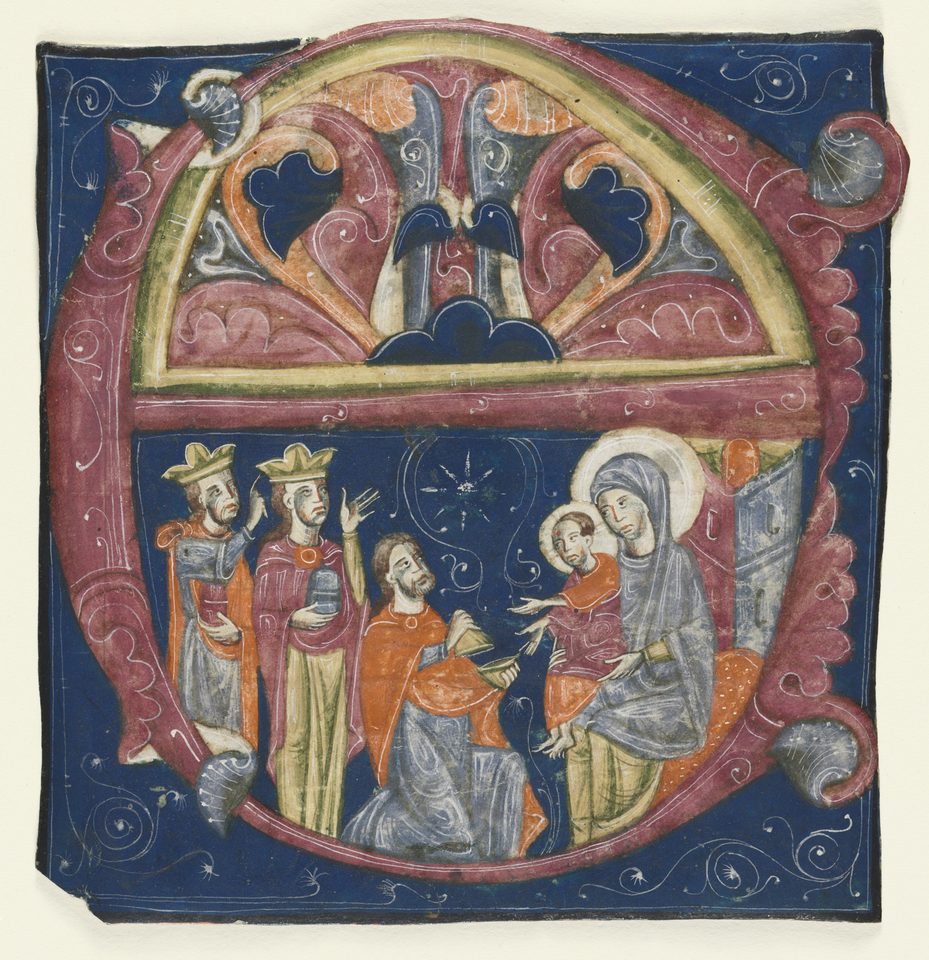
The dictionary’s azurite sits inside the outline, a little lighter and grayer than the code. The portrait background is much greener and sits beyond the left edge of the outline. The blue of the Sienese initial has the code’s hue but is darker and grayer, just below the outline. The xkcd survey has no average for azurite. The outline is an approximate range, not a measured one.

Shades and tints

Tints with white

Shades with black

Tones with gray

Azurite sits in the middle. Tints add white, shades add black and tones add gray, in 10% steps out from it. Tap any swatch to copy its code.

Light and dark azurite

#C0CEE1
Pale azuriteMixed 70% with white. A soft, cool blue for backgrounds.
#829CC4
Light azuriteMixed 40% with white. Like the paler grades of finely ground azurite.
#2E5A9C
AzuriteThe reference color.
#1C365E
Dark azuriteMixed 40% with black. A deep blue close to the darkest crystals.

Colors that go with azurite

Pairings that work in rooms, outfits and interfaces.

Azurite and malachite

The two copper minerals, often found together. Earthy and vivid.

Azurite and gold leaf

The blue and gold of medieval altarpieces. Warm and formal.

Azurite and copper

Blue with the metal that makes it. Good for craft and outdoor brands.

Azurite and parchment

Calm and bookish, like a page from a choir book.

Azurite night

A dark theme with light blue highlights. Easy on the eyes.

Azurite and coral

A warm accent against cool blue. Fresh and modern.

Color-wheel palettes

Pick a palette to see where its colors sit on the color wheel. The caret marks azurite. Tap a band to copy its code.

Similar colors

Peacock blue78%French blue62%Denim blue73%AzuriteCobalt blue66%Sapphire71%YInMn blue84%

Lined up by hue around azurite. Hover a color to see how similar it is.The bar under each name shows how similar it is. Similarity comes from the distance between the two colors in OKLab, a model of how we see color.

Azurite vs ultramarine

Azurite#2E5A9C · hue 216°
  • A copper mineral, mined in Europe
  • Leans slightly green
  • Can turn green or dark with age
Ultramarine#120A8F · hue 244°
  • Made from lapis lazuli from Afghanistan
  • Leans violet
  • Far more costly in its day

Meaning

  • Mineral
  • Copper ore
  • Painting
  • Manuscripts
  • Altarpieces

Azurite means two things: a crystal prized by collectors and a pigment that colored much of medieval Europe’s art. As a mineral it signals copper, and prospectors read its blue, often next to green malachite, as a sign of copper ore. As a pigment it was the practical blue, cheaper than ultramarine and used for skies, robes and backgrounds. Color research tests basic hues such as blue, not azurite, so there is no evidence about its mood.

Europe’s most common painted blue

Technical studies

In medieval and Renaissance European paintings, azurite turns up more often than the far costlier ultramarine. Workshops sometimes used it as a base layer and put a thin layer of ultramarine on top to save money.1

It can turn green

Mineralogy

Azurite and malachite are both copper carbonates, and in open air azurite can slowly change into green malachite. Some azurite blues in old paintings have turned greenish too, though in one Italian wall painting the green proved to be a copper chloride, not malachite.1, 2

Fading fears may be overblown

One expert’s view

Collectors are often told to keep azurite away from light and open air. Paul Desautels, a former curator of gems and minerals at the Smithsonian, wrote that specimens keep their deep blue for long periods under ordinary storage. Heat is a real danger: it destroys the mineral.2

Sources (2)
  1. Wikipedia, “Azurite (pigment)”, citing Rutherford J. Gettens and Elisabeth West FitzHugh, “Azurite and Blue Verditer”, in Artists’ Pigments, vol. 2 (1993), and Dei et al., Studies in Conservation (1998).
  2. Wikipedia, “Azurite”, citing Klein and Hurlbut’s Manual of Mineralogy (1993) and Paul E. Desautels, “Some Thoughts about Azurite”, Rocks & Minerals (1991).

History

Azurite has been dug, ground and painted for more than 4,000 years. Its story follows copper mines, medieval workshops and the arrival of cheaper blues.

  1. 2613–2494 BCE

    In Egypt’s Fourth Dynasty, a shell at Meidum serves as a palette for azurite. Egyptian painters used it less than their own synthetic Egyptian blue.1, 2

  2. Early 400s BCE

    Chinese bronze workers inlay a basin with powdered azurite and malachite, for blue and green against the metal.3

  3. About 1200–40

    A painter in Siena fills the ground of an initial letter in a choir book with azurite, as X-ray fluorescence later confirms.4

  4. About 1400

    Cennino Cennini describes azzurro della magna, “German blue”, found around veins of silver in Germany and near Siena. He warns that it “has a horror of the grinding-slab” and must be ground lightly.5, 2

  5. 1400s

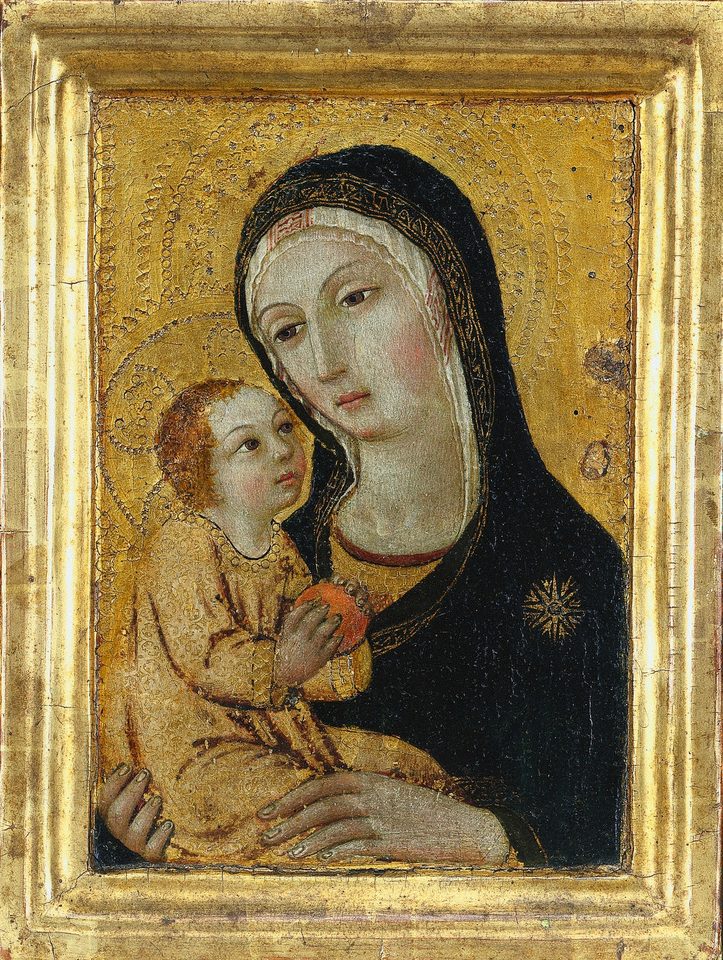
    A Sienese workshop paints the Virgin’s robe in azurite instead of ultramarine, a cheaper choice that helped the Cleveland Museum of Art date the panel to the 1400s and give it to Sano di Pietro’s workshop rather than the master.6

  6. About 1540

    Corneille de Lyon paints a portrait against a vivid azurite background, confirmed centuries later by X-ray fluorescence.7

  7. 1700s

    Prussian blue, first made in Berlin around 1706, displaces azurite as the most used blue in European painting.1

  8. 1842

    First known use of the word “azurite” in English. In the early 1800s the mineral was also called chessylite, after Chessy near Lyon.8, 2

Sources (8)
  1. Wikipedia, “Azurite (pigment)”, citing Gettens and FitzHugh, “Azurite and Blue Verditer”, in Artists’ Pigments, vol. 2 (1993).
  2. Wikipedia, “Azurite”, citing Nicholson and Shaw, Ancient Egyptian Materials and Technology (2000), and Mindat.org.
  3. Cleveland Museum of Art, “Shallow Basin Supported by a Bird (Bian)”, China, Warring States period, early 400s BCE (1991.8).
  4. Cleveland Museum of Art, “Historiated Initial (E) Excised from a Gradual: Adoration of the Magi”, Siena, about 1200–1240 (1952.280).
  5. Cennini, C. (about 1400). The Book of the Art of Cennino Cennini, chapter 60, translated by Christiana J. Herringham (1899). Internet Archive.
  6. Cleveland Museum of Art, “Virgin and Child”, Sano di Pietro’s workshop, Italy, 1400s (1944.56).
  7. Cleveland Museum of Art, “Portrait of a Woman”, Corneille de Lyon, about 1540 (1942.48), conservation statement.
  8. Merriam-Webster, “azurite”, etymology and first known use.

Azurite in use

Portrait of a young woman with red-gold hair in a pearl-trimmed headdress and dark gown with a gold bodice, set against a vivid greenish-blue background
#035C73#026481#01485A#C3B088
PaintingPortrait of a Woman by Corneille de Lyon (about 1540)

A small portrait on oak at the Cleveland Museum of Art. X-ray fluorescence of the background found the copper that points to azurite. In the photograph it is a deep greenish blue, about #035C73: real azurite can sit much closer to teal than the web code.

#035C73#026481#01485A#C3B088
Source: Cleveland Museum of Art
A small gilded panel of the Virgin in a nearly black mantle holding the infant Christ, who clutches an orange, against a tooled gold background
#141718#33312B#AE893B#A49673
PaintingVirgin and Child, Sano di Pietro’s workshop (1400s)

A small Sienese panel at the Cleveland Museum of Art. The museum reports that the Virgin’s robe was painted with azurite, a cheaper choice than ultramarine, and that the mantle has discolored and worn. Today it looks almost black, about #141718.

#141718#33312B#AE893B#A49673
Source: Cleveland Museum of Art
A large painted letter E in rose and gold on a dark blue ground, framing the three Magi bringing gifts to the Virgin and Child
#2F3F59#344155#95776B#B3A38A
ManuscriptInitial E with the Adoration of the Magi, Siena (about 1200–40)

A painted initial cut from a choir book, at the Cleveland Museum of Art. X-ray fluorescence showed that its dark blue ground contains azurite. Here it reads as a deep, grayish blue, about #2F3F59: the code’s hue, only darker.

#2F3F59#344155#95776B#B3A38A
Source: Cleveland Museum of Art

Palettes are sampled in-house.

Questions

What color is azurite?

A deep blue, from dark to pale depending on the crystal and the grind. The usual code is #2E5A9C (RGB 46, 90, 156). Azurite paint often looks greener than that.

Why does azurite turn green?

Azurite and malachite are both copper carbonates. In open air, azurite can slowly change into green malachite, and old azurite paint can turn greenish as it breaks down.

Is azurite the same as lapis lazuli?

No. Lapis lazuli is a rock whose blue mineral, lazurite, gives ultramarine. Azurite is a copper mineral. In the past, much azurite was sold under the name lapis lazuli.

How can you tell azurite from ultramarine?

Heat is the old test: ultramarine survives it, while azurite turns into black copper oxide. To the eye, azurite tends toward green and ultramarine toward violet.

Where is azurite found?

In the weathered upper parts of copper deposits, usually with malachite. Famous specimens come from Bisbee in Arizona, Chessy in France and Tsumeb in Namibia.

What colors go with azurite?

Malachite green and copper for an earthy pairing, gold for a medieval look, and parchment or cream for something calm.