Overview
Red sits at the long-wavelength end of the rainbow, just past orange. It is also one of the oldest colors in art: red ochre, a natural earth, colors some of the earliest cave paintings we know.
On screens, pure red is #FF0000: red light at full strength, with no green or blue. That is also what the CSS keyword red means.
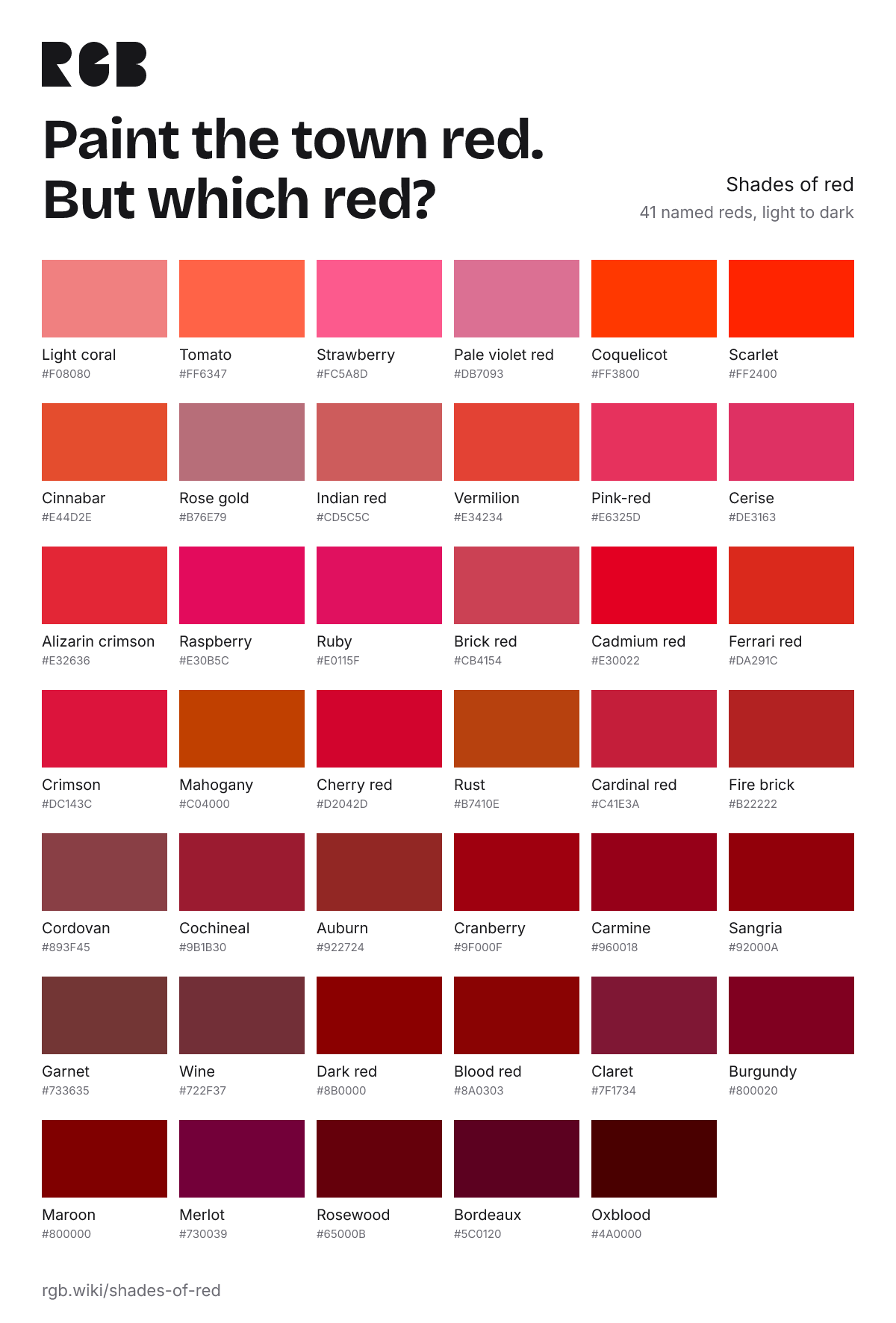
Most named reds move away from pure red in one of three ways. Some lean toward orange, like scarlet and vermilion. Some lean toward blue, like crimson and raspberry. Others get darker and duller, like burgundy, maroon and oxblood.
| HEX | #FF0000 | |
|---|---|---|
| RGB | rgb(255, 0, 0) | |
| HSL | hsl(0, 100%, 50%) | |
| HSV | 0°, 100%, 100% | |
| CMYK | 0, 100, 100, 0 | |
| OKLCH | oklch(62.8% 0.258 29.2) |
Types of red
Bright reds
Close to pure red: scarlet, vermilion, coquelicot and cherry red. The first three lean slightly toward orange.
Crimson and rose reds
Reds with a cool, bluish lean that edge toward pink: crimson, cerise, raspberry, ruby and carmine.
Earthy reds
Reds dulled with brown or orange, the colors of clay, brick and rust: brick red, rust, mahogany, auburn and Indian red.
Deep reds
Dark reds, many of them named after wine and gemstones: burgundy, maroon, wine, claret, garnet and oxblood.
Reds from dyes and pigments
Names that come from how the color was made: cochineal, a dye made from insects, cinnabar, a mercury mineral, alizarin crimson, first taken from the root of the madder plant, and cadmium red, a modern pigment made with cadmium and selenium.
Light, dark and other reds
Plain names like these have no single official code. Each card shows a typical value; click it to copy.
All 41 reds, light to dark