Ebony

A dark olive-gray named after a black wood, and much lighter than it.

Overview

Ebony, as a color code, is a dark gray with an olive-green cast. Its usual code is #555D50: a little more green than red or blue, at about a third of full brightness. Next to the wood it is named after, it looks surprisingly light.

Ebony is the heavy, dense wood of several Diospyros trees, relatives of the persimmon. The word goes back to ancient Egyptian hbny, through Greek ebenos and Latin. Egyptians carved it more than 3,000 years ago, and by the end of the 1500s Antwerp was making fine ebony cabinets. In Paris their makers became known as ébénistes, still the French word for a cabinetmaker. As a color word, ebony goes back to at least 1590.

The best ebony is jet black, but most is not: the Wood Database notes that few woods are a deep, solid black, and that even most Diospyros species aren’t. Color dictionaries never settled on a shade either. Maerz and Paul’s 1930 dictionary lists ebony simply as another name for black, and the 1955 ISCC-NBS dictionary files one source’s ebony as dark olive, olive gray or dark gray. The code #555D50 has no published standard; it is simply the code most references use.

As a design color, ebony is a muted, earthy dark that carries white text well. It pairs naturally with ivory and brass, and with soft greens, cream and terracotta. For the look of the real wood, use a brown-black such as #241B13 instead.
HEX#555D50
RGBrgb(85, 93, 80)
HSLhsl(97, 8%, 34%)
HSV97°, 14%, 36%
CMYK9, 0, 14, 64
OKLCHoklch(46.7% 0.023 133.3)
Every code converts from the HEX value #555D50. There is no published standard for #555D50: it is the code most references use, and Wikipedia credits it to Maerz and Paul’s 1930 Dictionary of Color, whose index lists ebony only as another name for black. CMYK is a screen-based estimate; print results vary.
Ebony color card, hex #555D50: “Ebony, minus the ivory”

Ebony on the color map

All three ISCC-NBS placements sit to the left of the outline, toward yellow: dark olive below and to the left, olive gray at the left edge, and dark gray, with no hue at all, just beyond it. The ebony of Boulle’s cabinet is a warm brown-black, far to the left and near the bottom, off this view. Grays carry so little color that a small shift swings their hue a long way on this map. The outline is an approximate range, not a measured one.

Shades and tints

Tints with white

Shades with black

Tones with gray

Ebony sits in the middle. Tints add white, shades add black and tones add gray, in 10% steps out from it. Tap any swatch to copy its code.

Light and dark ebony

#999E96
Pale ebonyMixed 40% with white. A soft gray-green for backgrounds.
#555D50
EbonyThe reference color.
#4D5D53
FeldgrauAlmost as dark, a little greener and cooler, with a page of its own. See feldgrau
#333830
Deep ebonyMixed 40% with black. Close to black, with an olive trace.
#241B13
Ebony woodSampled from Boulle’s cabinet: a warm brown-black, like the real wood.

Colors that go with ebony

Pairings that work in rooms, outfits and interfaces.

Ebony and ivory

The piano pairing: dark wood for the black keys, ivory for the white.

Ebony and brass

After Boulle’s furniture: dark wood set with bright gilded metal.

Ebony and sage

Calm and natural. Suits gardens, homes and wellness.

Ebony and terracotta

Earthy and warm, like clay pots against dark leaves.

Ebony and cream

Quiet and classic, for stationery and interiors.

Ebony and dusty rose

A soft, muted pink lightens the olive-gray.

Color-wheel palettes

Pick a palette to see where its colors sit on the color wheel. The caret marks ebony. Tap a band to copy its code.

Similar colors

Wenge82%Umber81%Coffee71%EbonyDim gray71%Hunter green71%Feldgrau94%

Lined up by hue around ebony. Hover a color to see how similar it is.The bar under each name shows how similar it is. Similarity comes from the distance between the two colors in OKLab, a model of how we see color.

Ebony vs onyx

Ebony#555D50 · hue 97°
  • A dark gray, about a third of full brightness
  • An olive-green tint
  • Named after a black wood
Onyx#353839 · almost no hue
  • Darker, close to charcoal
  • Almost neutral, a trace of blue
  • Named after a black stone

Meaning

  • Piano keys
  • Hardwood
  • Fine furniture
  • Chess pieces
  • Protected trade

Ebony has stood for black and for luxury for centuries: royal furniture, the black keys of a piano, the dark side of a chess set. Research on color and emotion tests basic words such as black, not ebony, so its mood is a matter of convention. What the sources do record is the wood itself: what it looks like, how it was used, and how its trade is now controlled.

The traditional black keys

Instrument history

A piano’s black keys were traditionally made of ebony and its white keys covered with ivory. Many harpsichords and organs from before the 19th century reversed this, with ebony for the main keys and white bone for the others.1

Most ebony is not jet black

Wood reference

Gaboon ebony’s heartwood is usually jet black, but the Wood Database notes that few woods are a deep, solid black, and that even most species in the Diospyros genus aren’t.2

A wood the law now protects

Legal record

In 2012 Gibson Guitar paid a $300,000 penalty under the U.S. Lacey Act over imports of Madagascar ebony for fingerboards. Since 12 June 2013, Madagascar’s ebony has been listed in CITES Appendix II, which controls its international trade.3, 4

Sources (4)
  1. Wikipedia, “Piano” and “Musical keyboard”.
  2. The Wood Database, “Gaboon Ebony” (Diospyros crassiflora).
  3. U.S. Department of Justice, U.S. Attorney’s Office, Middle District of Tennessee (6 August 2012). Press release on Gibson Guitar Corp.’s criminal enforcement agreement.
  4. Government of Canada, “Amendments to the CITES Appendices adopted at CoP16”, Diospyros spp., populations of Madagascar, in force 12 June 2013.

History

Ebony was a luxury wood for thousands of years before it was a color name, and the code it carries today has no clear source at all.

  1. c. 1391–1353 BCE

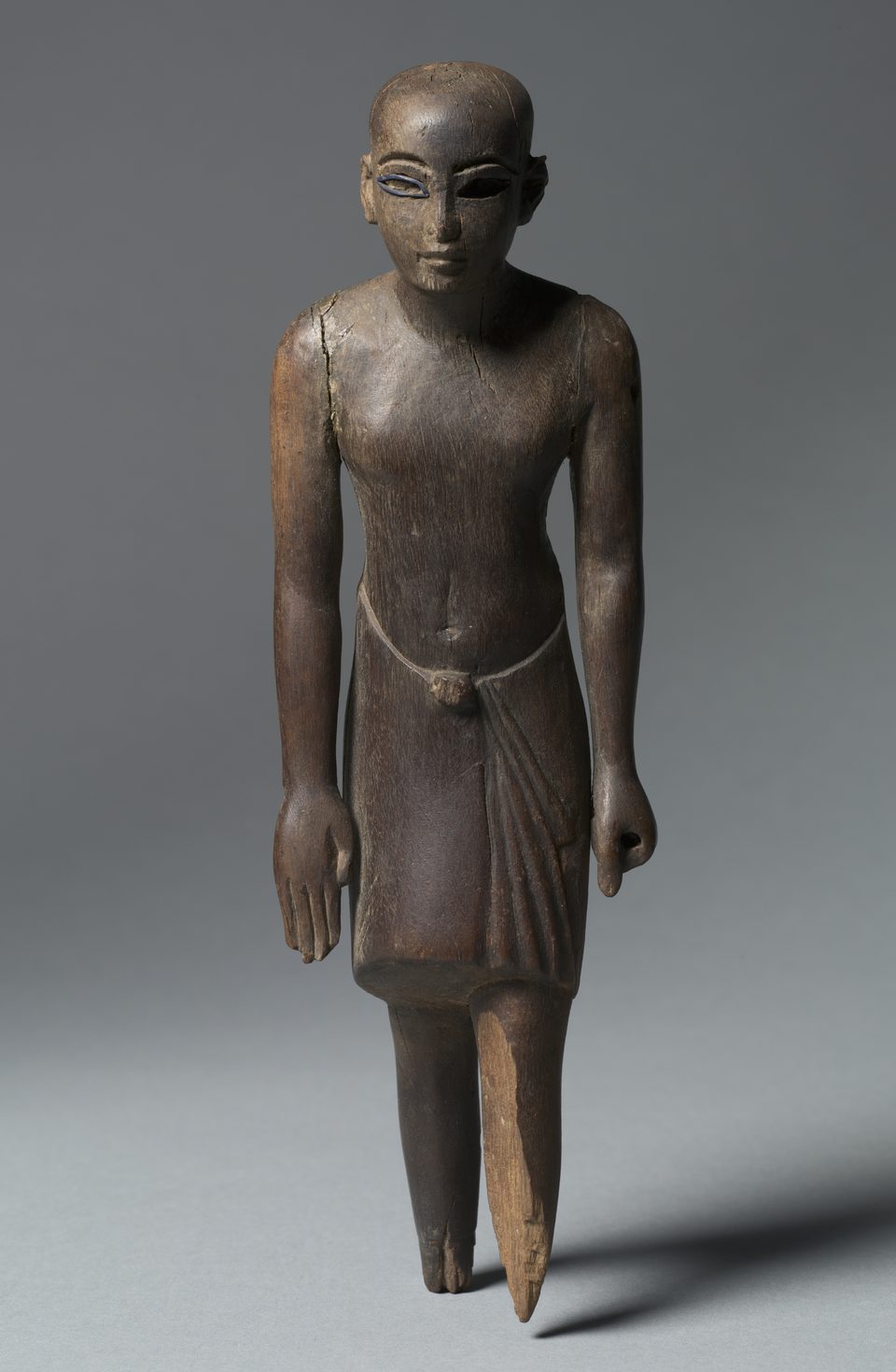
    An Egyptian carver makes a small ebony statuette of a man, with eyes inlaid in cobalt blue glass, late in the reign of Amenhotep III. It is now at the Cleveland Museum of Art.1

  2. 1590

    First recorded use of “ebony” as a color name in English.2

  3. Late 1500s

    Antwerp workshops make fine ebony cabinets for the luxury trade. In Paris their makers become known as ébénistes, still the French word for a cabinetmaker.3

  4. 1672

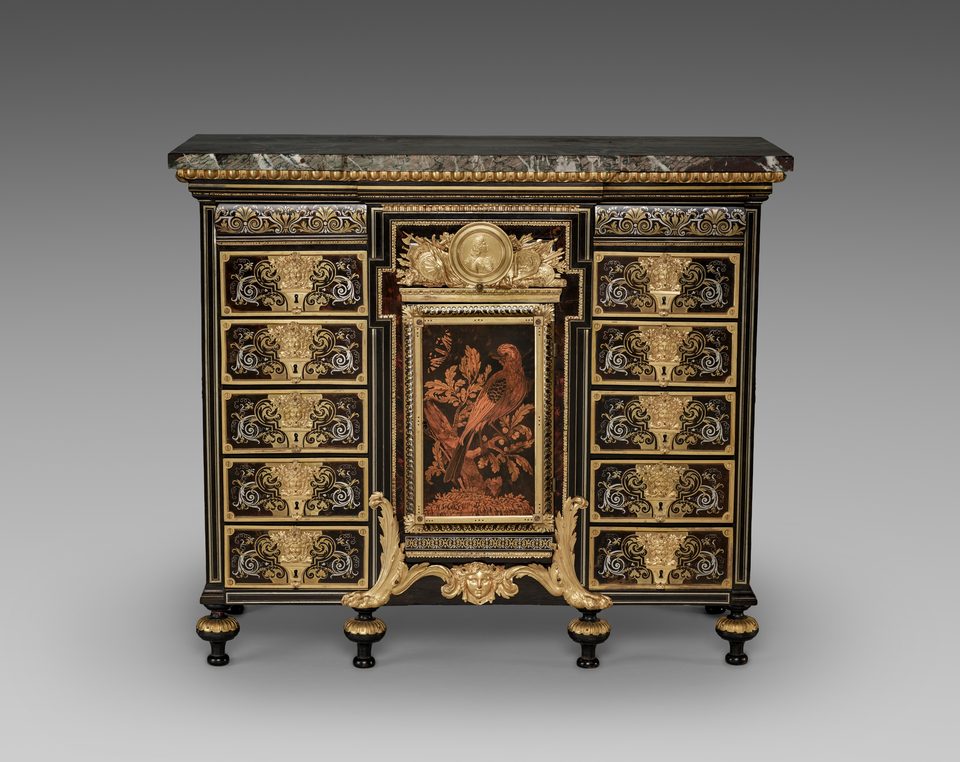
    André-Charles Boulle is appointed cabinetmaker to Louis XIV. Around 1690 he makes the ebony cabinet with metal and tortoiseshell marquetry now in Cleveland.4

  5. 1930

    Maerz and Paul’s A Dictionary of Color lists ebony in its index only as another name for black.5

  6. 1955

    The ISCC-NBS dictionary files the ebony of Taylor, Knoche and Granville’s Descriptive Color Names Dictionary under dark olive, olive gray and dark gray.6

  7. 2012

    Gibson Guitar agrees to pay a $300,000 penalty and $50,000 to the National Fish and Wildlife Foundation over shipments of Madagascar ebony fingerboard blanks.7

  8. 2013

    Ebony from Madagascar is added to CITES Appendix II, in force from 12 June.8

Sources (8)
  1. Cleveland Museum of Art, “Statuette of a Man”, Egypt, c. 1391–1353 BCE, ebony inlaid with cobalt blue glass (1983.98).
  2. Wikipedia, “Shades of black”, Ebony, citing Maerz and Paul’s A Dictionary of Color (1930), p. 194.
  3. Wikipedia, “Ebony”.
  4. Cleveland Museum of Art, “Cabinet”, André-Charles Boulle, c. 1690, ebony, marquetry in metal and tortoiseshell (1949.539).
  5. Maerz, A. and Paul, M. R. (1930). A Dictionary of Color. New York: McGraw-Hill. Index entry “Ebony, Ebon (Black)”.
  6. Jaffer, A. ISCC-NBS placements of Taylor, Knoche and Granville’s Descriptive Color Names Dictionary, “ebony”, with centroids from John Foster’s sRGB file.
  7. U.S. Department of Justice, U.S. Attorney’s Office, Middle District of Tennessee (6 August 2012). Press release on Gibson Guitar Corp.’s criminal enforcement agreement.
  8. Government of Canada, “Amendments to the CITES Appendices adopted at CoP16”, Diospyros spp., populations of Madagascar, in force 12 June 2013.

Ebony in use

A low black cabinet with a green marble top, rows of drawers inlaid with pale metal scrolls, a central door with a parrot among leaves, and gilded bronze mounts and feet
#241B13#4C3B29#765D40#A48557
FurnitureCabinet by André-Charles Boulle (c. 1690)

Boulle veneered this cabinet in ebony and set it with metal scrolls on tortoiseshell, bronze mounts and a medallion of Louis XIV. The ebony frame reads as a warm brown-black, about #241B13: real ebony, far darker than the ebony code.

#241B13#4C3B29#765D40#A48557
Source: Cleveland Museum of Art
A slender dark brown wooden figure of a striding man in a pleated kilt, arms at his sides, with one eye still outlined in blue glass
#27221D#453C36#615852#95897F
SculptureStatuette of a Man (c. 1391–1353 BCE)

This Egyptian figure is carved from ebony, yet the wood reads as a deep brown, from about #27221D in the shadows to #95897F on the worn highlights. It shows how varied real ebony can be.

#27221D#453C36#615852#95897F
Source: Cleveland Museum of Art

Palettes are sampled in-house.

Questions

What color is ebony?

As a color code, a dark gray with an olive-green tint: #555D50 (RGB 85, 93, 80). Ebony the wood is much darker, from deep brown to jet black.

Is ebony black?

The best ebony wood is jet black, and the name has long been used to mean black. But most ebony is a very dark brown, and the usual color code is a dark gray-green.

Why is the ebony color code green?

No one knows for sure. The code has no published standard; it is simply the code most references use. Color dictionaries have placed ebony anywhere from dark olive to plain black.

What is ebony wood used for?

Fine furniture, carvings, chess pieces, and parts of musical instruments, such as the black keys of a piano and the fingerboards of violins and guitars.

What colors go with ebony?

Ivory and brass for a classic look, sage and cream for a calm one, and terracotta or dusty rose for warmth. White text reads well on ebony.

What is the difference between ebony and onyx?

Ebony (#555D50) is a lighter, olive-tinted gray named after a wood. Onyx (#353839) is darker and almost neutral, named after a black stone.