Overview
Gray sits between black and white. On screens, any color with equal red, green and blue values is a neutral gray. Gray and grey are the same color: gray is the usual American spelling, grey the British one.
The CSS keyword gray is #808080, halfway between black and white in code values. Confusingly, the CSS name darkgray, #A9A9A9, is lighter than plain gray.
Most named grays are not perfectly neutral. A hint of blue makes them cool, like slate gray and blue-gray. A hint of brown or yellow makes them warm, like stone and cement.
| HEX | #808080 | |
|---|---|---|
| RGB | rgb(128, 128, 128) | |
| HSL | hsl(0, 0%, 50%) | |
| HSV | 0°, 0%, 50% | |
| CMYK | 0, 0, 0, 50 | |
| OKLCH | oklch(60.0% 0.000 89.9) |
Types of gray
Light grays
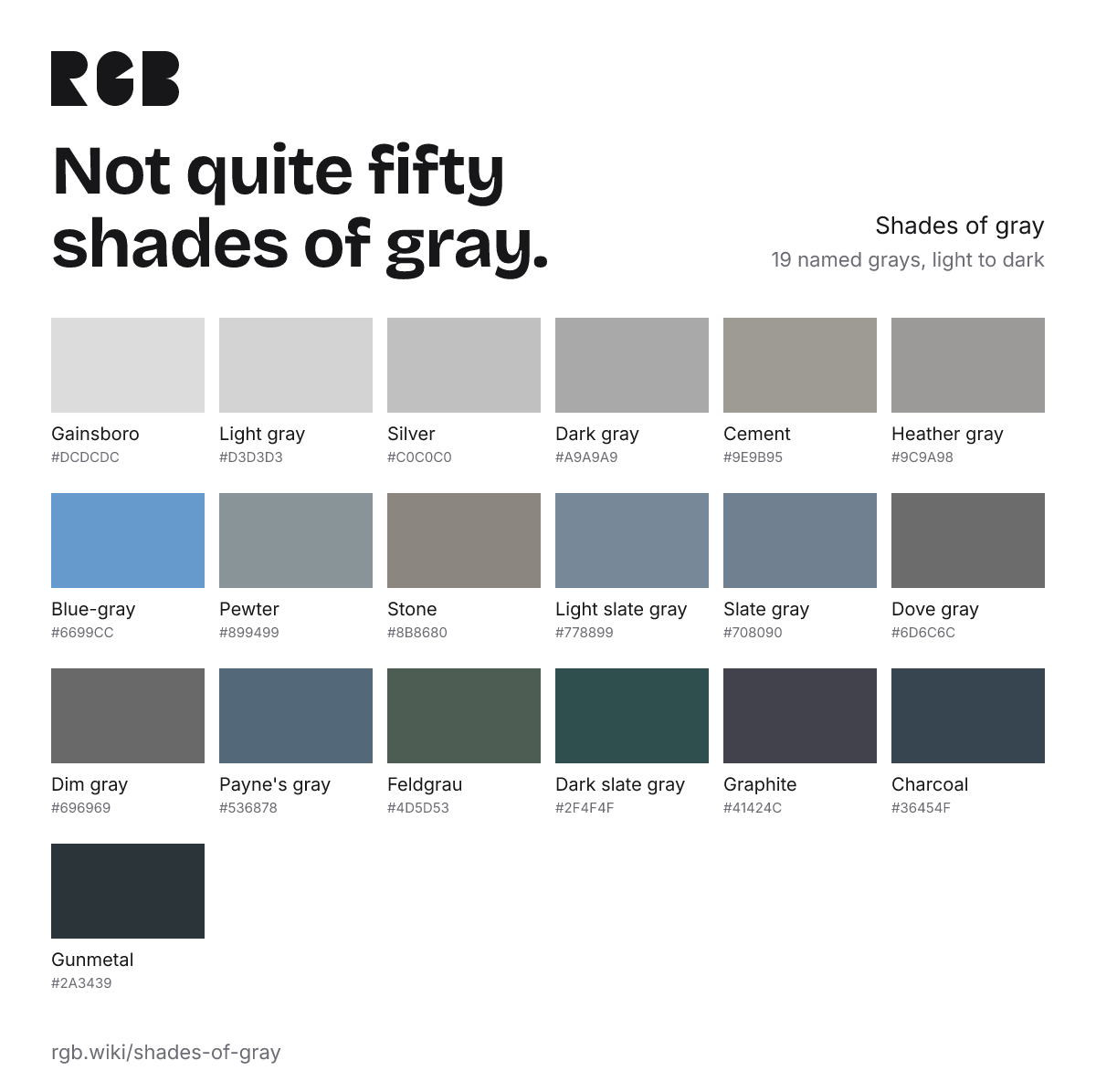
Pale grays close to white: platinum, gainsboro, light gray and silver.
Mid grays
Grays from the middle of the range: cement, heather gray, stone, dove gray and dim gray.
Cool grays
Grays with a blue tint: pewter, slate gray, blue-gray and Payne’s gray, named after the watercolor painter William Payne.
Dark grays
Grays close to black: feldgrau, German for “field gray”, dark slate gray, graphite, charcoal and gunmetal.
Warm and cool grays
Plain names like these have no single official code. Each card shows a typical value; click it to copy.
All 19 grays, light to dark