Onyx

A soft, near-black gray named after a banded stone that is rarely black by nature.

Overview

Onyx is a very dark charcoal gray, almost neutral, with a faint cool tint. The code most color lists use is #353839: red, green and blue all near 21%, with blue a hair higher. It is a soft black, not a true one.

The color is named after a stone. Onyx is chalcedony, a very fine-grained quartz, laid down in flat bands that are usually black and white. The word comes from the Greek onyx, “claw” or “fingernail”, and the Roman writer Pliny compared its white layer to the white of a fingernail.

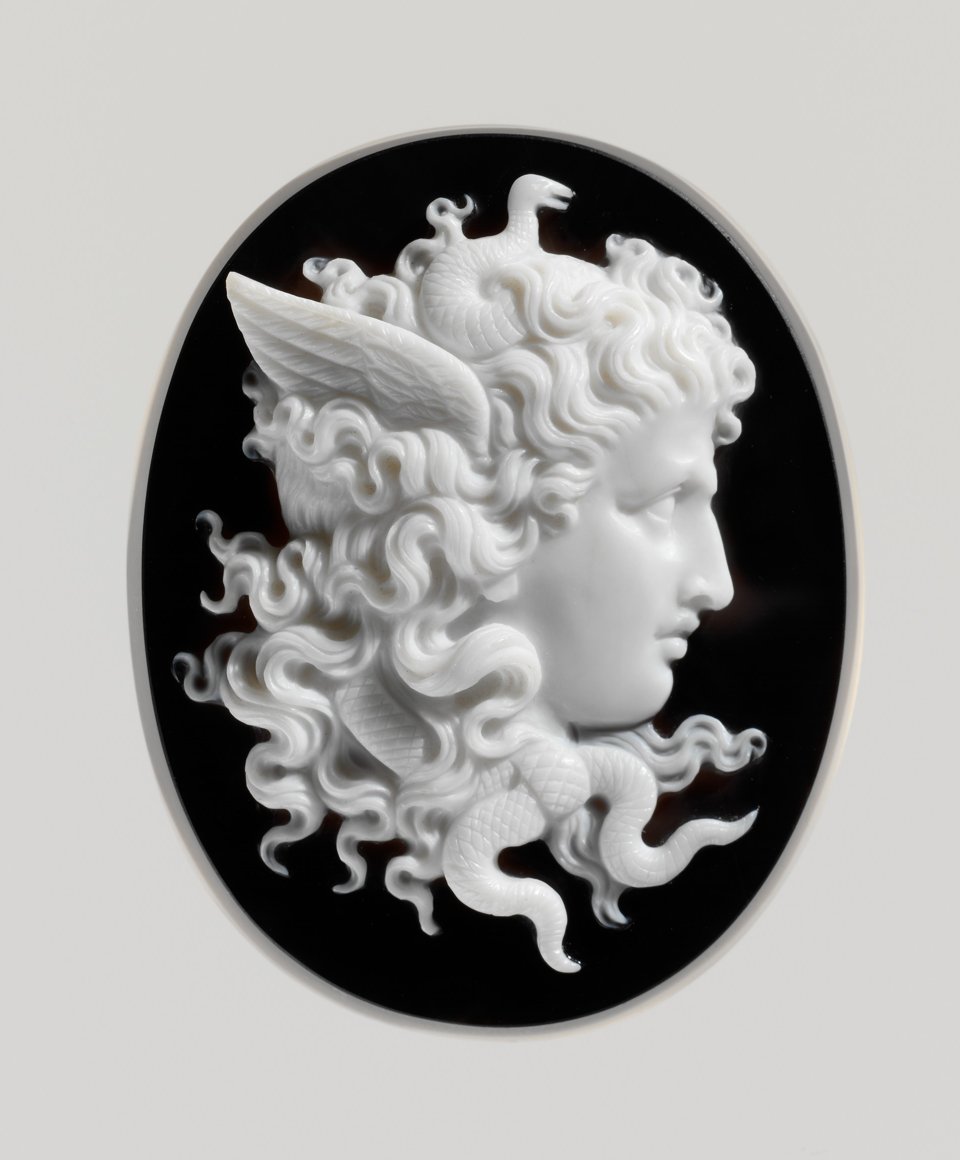
Real black onyx is much darker than the code. In museum cameos, the black layer photographs at about #070606, close to pure black. And most black onyx sold today was not black to begin with: it is banded chalcedony soaked in sugar and then in acid, which leaves carbon inside the stone, a trick known since ancient times.

On screens, #353839 is a softer alternative to pure black for text, icons and dark themes, and white text on it reads easily. Pair it with white or ivory for the cameo look, with gold for warmth, or with one bright accent.

HEX#353839
RGBrgb(53, 56, 57)
HSLhsl(195, 4%, 22%)
HSV195°, 7%, 22%
CMYK7, 2, 0, 78
OKLCHoklch(33.8% 0.004 219.6)
Every code converts from the HEX value #353839. No color standard defines onyx. #353839 is the code most color lists use; it comes from Wikipedia’s list of colors, which gives no source, while Wikipedia’s shades of black now shows a near-black, #0F0F0F, taken from a crayon set. Maerz and Paul’s 1930 color dictionary has no onyx. CMYK is a screen-based estimate; print results vary.
Onyx color card, hex #353839: “Onyx-pectedly gray”

Onyx on the color map

Near black, colors carry almost no hue, so on this map they scatter far to the sides or off the view. Only their lightness means much here: both museum cameos and Wikipedia’s near-black sit far below the reference. The polished stone is close to pure black; the web code is a charcoal gray. The outline is an approximate range, not a measured one.

Shades and tints

Tints with white

Shades with black

Tones with gray

Onyx sits in the middle. Tints add white, shades add black and tones add gray, in 10% steps out from it. Tap any swatch to copy its code.

Light and dark onyx

#AEAFB0
Pale onyxMixed 60% with white. A cool light gray for borders and backgrounds.
#5D6061
Soft onyxMixed 20% with white. A dark slate gray.
#353839
OnyxThe reference color.
#1A1C1C
Deep onyxMixed 50% with black. Nearly black, for dark themes.
#070606
Polished black onyxSampled from the black layer of a Medusa cameo of the 1860s. What the real stone looks like.

Colors that go with onyx

Pairings that work in rooms, outfits and interfaces.

Onyx and white

The cameo contrast: crisp and timeless.

Medusa cameo

From the museum photo: white stone carved against a black layer.

Onyx and gold

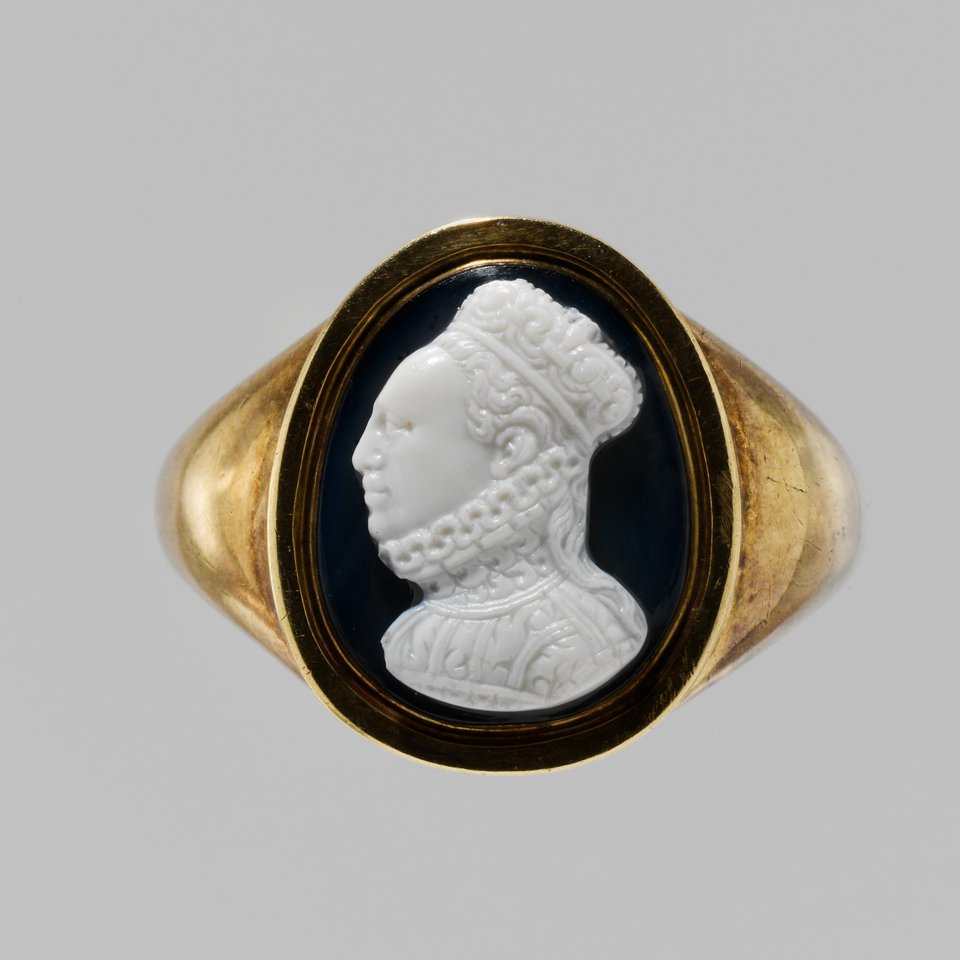
From the Elizabeth I ring: black, white and old gold. Rich and formal.

Onyx and blush

Soft pink lifts the dark gray. Modern and gentle.

Onyx and sage

Dark gray and muted green. Calm and natural.

Onyx and amber

A dark theme with one warm, bright accent.

Color-wheel palettes

Pick a palette to see where its colors sit on the color wheel. The caret marks onyx. Tap a band to copy its code.

A gray has no hue, so turning it around the wheel only gives the same gray back. Monochrome is the one wheel palette that works for it.

Similar colors

Taupe80%Phthalo green68%OnyxJet black93%Gunmetal88%Charcoal76%Graphite77%

Lined up by hue around onyx. Hover a color to see how similar it is.The bar under each name shows how similar it is. Similarity comes from the distance between the two colors in OKLab, a model of how we see color.

Onyx vs obsidian

Onyx#353839 · almost no hue
  • Lighter, a charcoal gray
  • Named after banded quartz
  • Most black onyx is dyed
Obsidian#0B1215 · hue 198°
  • Much darker, nearly black
  • Named after volcanic glass
  • A faint blue-green tint

Meaning

  • Gemstone
  • Banded stone
  • Cameos
  • Often dyed

Onyx’s meanings come from the stone: its bands, the cameos carved from them, and the long habit of dyeing it black. Research on color and emotion tests the broad word black, not onyx, so the claims here are about the stone and its history.

Banded quartz, named for a fingernail

Well established

Onyx is chalcedony, a mix of very fine quartz and moganite crystals, laid down in parallel bands. The bands are usually black and white; in sardonyx they are reddish brown. The name comes from the Greek for “claw” or “fingernail”.1, 2, 3
Most black onyx is dyed

Well established

Black onyx is the best-known kind but not the most common. Most black onyx on the market is chalcedony that was soaked or boiled in sugar solution and then treated with acid, which turns the sugar in its top layers to carbon. The method is old and still in use; in 1874 a science magazine called black onyx with white bands “always artificial”.1, 6

Made for cameos

Historical record

Because its layers contrast, onyx suits cameos and intaglios: the carver cuts away the white layer to leave a figure standing out from the dark one. Roman cutters used it for portraits of emperors, and carvers were still cutting onyx cameos in the 1500s and the 1800s.1, 4, 5

Not all “onyx” is onyx

Well established

The name is also given to banded calcite from Mexico, India and elsewhere, a much softer stone. Most carved items sold as onyx today are this calcite, not chalcedony.1

Sources (6)
  1. Wikipedia, “Onyx”, citing Mindat, Sinkankas, Gemstones of North America (1959), Liddicoat, Handbook of Gem Identification (GIA, 1987), and Kraus and Slawson, Gems and Gem Materials (1947).
  2. Merriam-Webster, “onyx”, definition and etymology.
  3. Pliny the Elder, The Natural History, book 37, chapter 24, “Onyx: the several varieties of it”, trans. John Bostock and H. T. Riley (1855). Perseus Digital Library.
  4. The Metropolitan Museum of Art, “Onyx cameo of the emperor Gaius (Caligula)”, Roman, ca. 37–43 CE (11.195.7).
  5. The Metropolitan Museum of Art, “Medusa”, onyx cameo, ca. 1860–70 (40.20.52).
  6. “The Manufacture of Gem Stones”, Scientific American, vol. 31, no. 4, 25 July 1874, p. 49. Internet Archive.

History

Onyx has been carved for its contrasting layers for two thousand years. Its name entered English long before anyone used it for a screen color.

  1. 9–12 CE

    Roman gem cutters carve the Gemma Augustea, a large cameo, from a two-layered onyx about 19 by 23 cm.1

  2. About 37–43 CE

    A Roman cameo portrait of the emperor Gaius, known as Caligula, is cut in onyx.2

  3. 77 CE

    Pliny the Elder describes onyx with a white like a fingernail, and an Arabian onyx that is black with white bands.3

  4. 1300s

    First known use of “onyx” in English, from Latin and the Greek word for claw or fingernail.4

  5. About 1570–1600

    A cameo portrait of Queen Elizabeth I of England is cut in onyx and set in a gold ring.5

  6. 1860s

    A carver cuts a winged Medusa in white against black onyx.6

  7. 1874

    Scientific American reports that black onyx crossed by white bands is “always artificial”: the stone is boiled in honey or oil, or soaked in a colorless solution, and the carbon in its pores is blackened by fire or sulfuric acid.7

Sources (7)
  1. Wikipedia, “Onyx”, section Historical use.
  2. The Metropolitan Museum of Art, “Onyx cameo of the emperor Gaius (Caligula)”, Roman, ca. 37–43 CE (11.195.7).
  3. Pliny the Elder, The Natural History, book 37, chapter 24, trans. John Bostock and H. T. Riley (1855). Perseus Digital Library.
  4. Merriam-Webster, “onyx”, etymology and first known use.
  5. The Metropolitan Museum of Art, “Elizabeth I of England (1533–1603)”, onyx and gold, ca. 1570–1600 (38.150.32).
  6. The Metropolitan Museum of Art, “Medusa”, onyx, ca. 1860–70 (40.20.52).
  7. “The Manufacture of Gem Stones”, Scientific American, vol. 31, no. 4, 25 July 1874, p. 49. Internet Archive.

Onyx in use

An oval cameo with a white carved head of Medusa, with wings and snakes in her curling hair, against a glossy black background
#070606#D6D6D5#B4B4B4#62605E
CameoMedusa, onyx cameo (about 1860–70)

A winged Medusa with snakes in her hair, cut from the white layer of the stone so that she stands out from the black one beneath. The black layer photographs at about #070606, almost pure black and far darker than the web code.

#070606#D6D6D5#B4B4B4#62605E
Source: Metropolitan Museum
A gold ring set with an oval cameo: a white profile portrait of Queen Elizabeth I in a ruff and jeweled headdress on a dark blue-black ground
#090F15#C2C2C1#C7AB79#A78651
JewelryCameo ring with Queen Elizabeth I (about 1570–1600)

A tiny portrait of the queen, 16 by 13 mm, with a ruff and jeweled headdress, cut in onyx and set in gold. The dark layer reads as a blue-black, about #090F15, and the white layer as a soft gray-white.

#090F15#C2C2C1#C7AB79#A78651
Source: Metropolitan Museum

Palettes are sampled in-house.

Questions

What color is onyx?

A very dark, almost neutral gray. The code most color lists use is #353839 (RGB 53, 56, 57). The stone is usually banded black and white, and polished black onyx is close to pure black.

Is onyx black?

The stone often looks it, but the web code is a dark charcoal gray. Natural onyx is banded, and most solid black onyx in jewelry has been dyed.

What is the difference between onyx and obsidian?

As screen colors, onyx (#353839) is a dark charcoal and obsidian (#0B1215) is nearly black. As stones, onyx is banded quartz and obsidian is volcanic glass.

Is black onyx real?

Usually it is real chalcedony, the stone onyx is made of, but its black color comes from treatment: the stone is soaked in sugar and then acid, which leaves carbon inside it.

What does the word onyx mean?

It comes through Latin from the Greek onyx, meaning claw or fingernail. English has used it since the 1300s.

What colors go with onyx?

White and ivory for a crisp cameo look, old gold for warmth, blush or sage for softness, and one bright accent such as amber in a dark theme.