Golden brown

A deep, warm yellowish brown, named for bread, toast and fried food cooked just right.

Overview

Golden brown is a deep, warm yellowish brown. Its code, #996515, is strong in red, medium in green and very low in blue. It sits between caramel, which is lighter and more golden, and russet, which is darker and redder.

The name is a cook’s word. Its first recorded use as a color name in English is from 1891. Victorian recipes said “a nice brown” instead: Mrs Beeton’s Book of Household Management (1861) uses that phrase dozens of times and never golden brown. By 1896, Fannie Farmer’s Boston Cooking-School Cook Book told readers to toast bread to a golden brown, and to test frying fat with a cube of bread that turns golden brown in forty seconds.

The color on the plate comes from chemistry. When sugars and amino acids are heated together they react, and the products bring the brown color, the smell and the flavor of a crust. This is the Maillard reaction, first described in 1912. In 2002 scientists found that the same reaction makes acrylamide, and the UK’s food agency now advises aiming for golden yellow, not golden brown.

The code is a little lighter and more golden than the old dictionary color, and darker than the color most people picture. White text reads well on golden brown, with a contrast of about 5 to 1. Black text falls short, so keep it large. Cream, navy and teal all pair well with it.
HEX#996515
RGBrgb(153, 101, 21)
HSLhsl(36, 76%, 34%)
HSV36°, 86%, 60%
CMYK0, 34, 86, 40
OKLCHoklch(55.0% 0.111 71.5)
Every code converts from the HEX value #996515. #996515 is the center of the ISCC-NBS color group strong yellowish brown in John Foster’s sRGB version, the code Wikipedia gives for golden brown. The 1955 ISCC-NBS dictionary itself files the golden brown of Maerz and Paul’s A Dictionary of Color (1930) in strong brown, #80461B (Jaffer’s table), and Merriam-Webster also calls golden brown a strong brown. CMYK is a screen-based estimate; print results vary.
Golden brown color card, hex #996515: “The toast of the town”

Golden brown on the color map

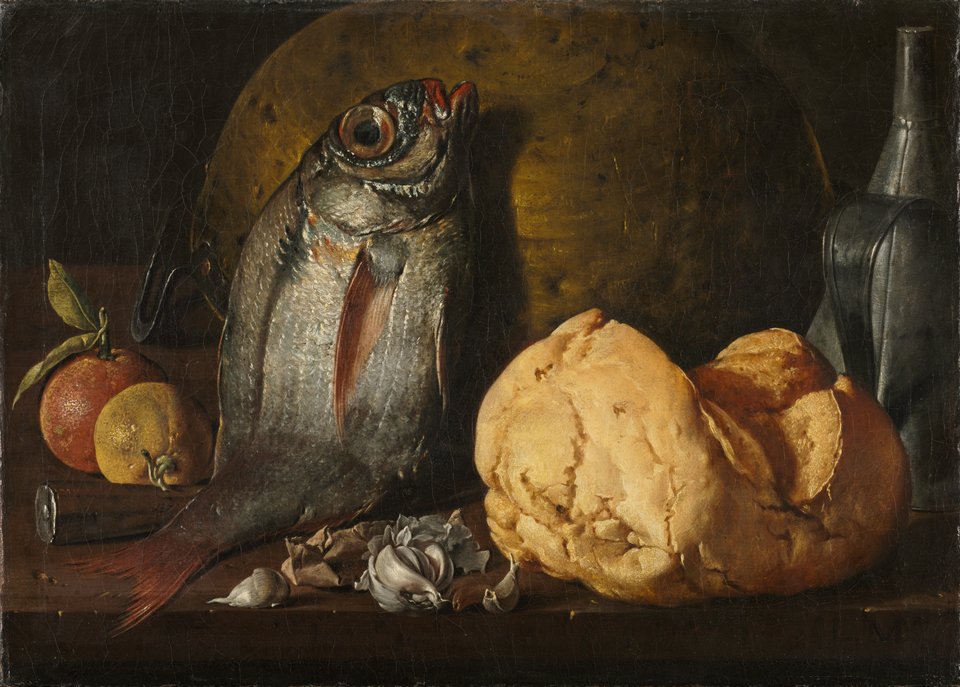
The bread crust in the Meléndez painting sits almost on the reference value. Maerz and Paul’s golden brown, as the dictionary files it, is darker and redder and sits outside the outline to the lower left. People’s average golden brown is lighter and more golden, up and to the right, close to caramel. The outline is an approximate range, not a measured one.

Shades and tints

Tints with white

Shades with black

Tones with gray

Golden brown sits in the middle. Tints add white, shades add black and tones add gray, in 10% steps out from it. Tap any swatch to copy its code.

Light and dark golden brown

#E0D1B9
Pale golden brownMixed 70% with white. A soft, biscuit cream for backgrounds.
#C2A373
Light golden brownMixed 40% with white. The color of a lightly toasted crust.
#996515
Golden brownThe reference color, ISCC-NBS strong yellowish brown.
#B27A01
Everyday golden brownPeople’s average golden brown in the xkcd survey. Lighter and more golden.
#80461B
Dictionary golden brownISCC-NBS strong brown, where the 1955 dictionary files Maerz and Paul’s golden brown. The same code as russet. See russet
#5C3D0D
Dark golden brownMixed 40% with black. A deep brown for text and borders.

Colors that go with golden brown

Pairings that work in rooms, outfits and interfaces.

Golden brown and cream

Warm and simple, like a bakery window. Easy to read for long text.

Golden brown and navy

Warm against cool. Classic and grown-up.

Golden brown and teal

Near-opposites on the color wheel. Lively, with a retro feel.

Golden brown and plum

Two deep, warm tones. Rich for fall and for food brands.

Bread and kettle

Crust, crumb and shadow, after Luis Meléndez’s still life of about 1772.

Golden brown night

A dark theme with a lighter golden brown as the accent.

Color-wheel palettes

Pick a palette to see where its colors sit on the color wheel. The caret marks golden brown. Tap a band to copy its code.

Similar colors

Sienna71%Mummy brown62%Copper64%Ginger79%Golden brownDrab84%Hazel76%

Lined up by hue around golden brown. Hover a color to see how similar it is.The bar under each name shows how similar it is. Similarity comes from the distance between the two colors in OKLab, a model of how we see color.

Golden brown vs caramel

Golden brown#996515 · hue 36°
  • Darker and browner
  • Named for baked and fried food
  • Holds white text
Caramel#C68E17 · hue 41°
  • Lighter and more golden
  • Named for cooked sugar
  • Needs dark text

Meaning

  • Baking
  • Frying and toasting
  • Maillard reaction
  • Acrylamide advice

Golden brown means food that is done. It is the color recipes ask for and the color of a good crust. Studies of color and mood test words like brown and yellow, not golden brown, so this section is about the kitchen: what makes the color, and why food agencies now ask cooks to stop a little short of it.

A cook’s target

Historical record

Recipes moved from “a nice brown” to golden brown in the late 1800s. Mrs Beeton’s 1861 book uses “nice brown” more than 70 times and golden brown not once. Fannie Farmer’s 1896 cookbook uses golden brown for toast, roast beef fat, braised meat, and the bread cube that shows frying fat is hot enough.1, 2

Browning is the Maillard reaction

Well established

The reaction of sugars with amino compounds, described by the French chemist Louis-Camille Maillard in 1912, gives heated food its aroma, taste and appearance. It is different from caramelization, where sugar breaks down on its own. Bread crust, toast and fried potatoes get their golden brown mostly from Maillard browning.3, 4

The same reaction makes acrylamide

Well established

In 2002, Swedish researchers found acrylamide in fried and baked starchy foods, but not in boiled ones. Within months, two teams showed in Nature that it forms in the Maillard reaction, mainly from the amino acid asparagine and sugars. Acrylamide causes cancer in lab animals at high doses.5, 6, 4

Darker food, more acrylamide

One study, mixed

In a study of roasted potato snacks, acrylamide rose as the snacks got darker and redder: lightness and acrylamide moved in opposite directions almost perfectly over roasting time. This is one study of one product; industry uses color as a quick check, but the link depends on the food and the recipe.7

Go for gold, not brown

Official advice, disputed

The UK’s Food Standards Agency advises cooks to aim for a golden yellow color or lighter when frying, baking, toasting or roasting starchy food. Its 2017 “Go for Gold” campaign was criticized by the statistician David Spiegelhalter and others, who pointed out that studies of people have found no strong link between dietary acrylamide and cancer.4, 8, 9

Sources (9)
  1. Beeton, I. (1861). The Book of Household Management. London: S. O. Beeton. Searched in the Internet Archive’s full text of the Leeds University Library copy.
  2. Farmer, F. M. (1896). The Boston Cooking-School Cook Book. Boston: Little, Brown. Searched in the Internet Archive’s full text.
  3. Hellwig, M., & Henle, T. (2014). Baking, ageing, diabetes: a short history of the Maillard reaction. Angewandte Chemie International Edition, 53(39), 10316–10329.
  4. Food Standards Agency. “Acrylamide” (2018). GOV.UK.
  5. Tareke, E., Rydberg, P., Karlsson, P., Eriksson, S., & Törnqvist, M. (2002). Analysis of acrylamide, a carcinogen formed in heated foodstuffs. Journal of Agricultural and Food Chemistry, 50(17), 4998–5006.
  6. Mottram, D. S., Wedzicha, B. L., & Dodson, A. T. (2002). Acrylamide is formed in the Maillard reaction. Nature, 419, 448–449. See also Stadler, R. H., et al. (2002), Acrylamide from Maillard reaction products, Nature, 419, 449–450.
  7. Majcher, M. A., & Jeleń, H. H. (2007). Acrylamide formation in low-fat potato snacks and its correlation with colour development. Food Additives and Contaminants, 24(4), 337–342.
  8. Choi, A. (2017). “What’s the Deal with Toast and Cancer?” NOVA Next, PBS, January 24, 2017.
  9. Spiegelhalter, D. (2017). “How dangerous is burnt toast?” Republished by Full Fact, January 23, 2017.

History

Golden brown started as a phrase in the kitchen, turned into a dictionary color, and in this century became a question of food safety.

  1. 1861

    Mrs Beeton’s Book of Household Management asks for “a nice brown” again and again, and never uses golden brown.1

  2. 1891

    First recorded use of golden brown as a color name in English.2

  3. 1896

    Fannie Farmer’s Boston Cooking-School Cook Book tells readers to color toast “a golden brown on each side”.3

  4. 1912

    The French chemist Louis-Camille Maillard describes the reaction between sugars and amino compounds that browns heated food.4

  5. 1930

    Maerz and Paul’s A Dictionary of Color includes golden brown. The 1955 ISCC-NBS dictionary files their sample as strong brown, #80461B.2, 5

  6. 1982

    The Stranglers’ song “Golden Brown” reaches number 2 on the UK singles chart, kept from the top by the Jam’s “Town Called Malice”.6

  7. 2002

    Swedish researchers report acrylamide in fried and baked foods. By October, two papers in Nature trace it to the Maillard reaction.7

  8. 2010

    In the xkcd color survey, people’s average golden brown comes out as #B27A01, lighter and more golden than the code.8

  9. 2017

    The UK’s Food Standards Agency launches “Go for Gold”, asking cooks to aim for golden yellow rather than brown when cooking starchy food.9

Sources (9)
  1. Beeton, I. (1861). The Book of Household Management. London: S. O. Beeton. Internet Archive full text.
  2. Wikipedia, “Gold (color)”, Golden brown, citing Maerz and Paul, A Dictionary of Color (1930), p. 195 and plate 14, sample F12.
  3. Farmer, F. M. (1896). The Boston Cooking-School Cook Book. Boston: Little, Brown. Internet Archive full text.
  4. Hellwig, M., & Henle, T. (2014). Baking, ageing, diabetes: a short history of the Maillard reaction. Angewandte Chemie International Edition, 53(39), 10316–10329.
  5. Jaffer, A. “(M) Dictionary of Color”, the ISCC-NBS placements of Maerz and Paul’s color names, with ISCC-NBS centroid colors.
  6. Official Charts Company. Official Singles Chart Top 100, 14–20 February 1982.
  7. Tareke, E., et al. (2002). Analysis of acrylamide, a carcinogen formed in heated foodstuffs. J. Agric. Food Chem., 50(17), 4998–5006; Mottram, D. S., et al. (2002), Acrylamide is formed in the Maillard reaction, Nature, 419, 448–449.
  8. Munroe, R. (2010). “Color survey results”. xkcd blog. The survey’s color averages are released as CC0 data.
  9. Choi, A. (2017). “What’s the Deal with Toast and Cancer?” NOVA Next, PBS, January 24, 2017.

Golden brown in use

A dark still life of a large silvery fish propped upright, an orange and a lemon, garlic cloves, a big round loaf of bread with a pale top and browned sides, a brass kettle and a pewter flask
#D7AE67#BE8F4A#95672D#5D381D#2C2116
PaintingStill Life with Fish, Bread, and Kettle, by Luis Meléndez (about 1772)

Meléndez, regarded as the finest Spanish still-life painter of the 1700s, set a big round loaf beside a fish and a brass kettle. The pale top of the bread reads about #D7AE67; its browned side reads about #95672D, almost exactly the golden brown code.

#D7AE67#BE8F4A#95672D#5D381D#2C2116
Source: Cleveland Museum of Art
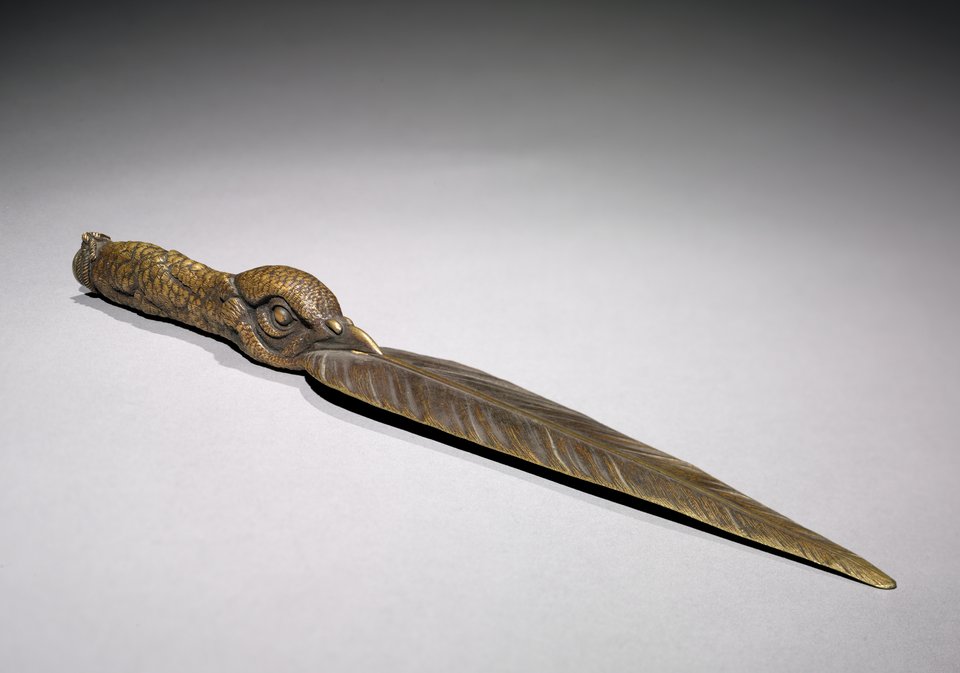
A long bronze letter opener on a gray backdrop, its handle shaped like a bird’s head with a hooked beak and its blade like a single feather
#B29979#836C50#5C482E#282017
MetalworkPaper knife by Jules Pierre Moigniez (1800s)

A French bronze letter opener with a bird’s head for a handle and a feather for a blade. The museum describes its finish as a golden brown patina. In the photo the bronze reads about #836C50 to #5C4B38: much duller and grayer than the code, the golden brown of old metal rather than of toast.

#B29979#836C50#5C482E#282017
Source: Cleveland Museum of Art

Palettes are sampled in-house.

Questions

What color is golden brown?

A deep, warm yellowish brown, the color of a well-baked crust or toast. The code is #996515 (RGB 153, 101, 21), the ISCC-NBS strong yellowish brown.

What is the hex code for golden brown?

#996515. It is the center of the ISCC-NBS color group strong yellowish brown. The 1955 color dictionary files Maerz and Paul’s golden brown a little darker and redder, at #80461B.

Why does food turn golden brown?

Mostly because of the Maillard reaction. When food is heated, sugars react with amino acids and make brown compounds and the smell and taste of a crust. Caramelization, where sugar breaks down on its own, adds to it in sweet foods.

Should toast be golden brown?

The UK’s Food Standards Agency advises aiming for golden yellow or lighter, because browner starchy food has more acrylamide, which causes cancer in lab animals. Critics point out that studies of people have found no strong link to cancer, so the advice is a precaution.

What is the difference between golden brown and caramel?

Golden brown (#996515) is darker and browner. Caramel (#C68E17) is lighter and more golden. Golden brown holds white text; caramel needs dark text.

Is the song Golden Brown about the color?

Not really. The Stranglers’ 1982 hit, which reached number 2 in the UK, uses the phrase as an image. Its singer and lyricist Hugh Cornwell has said the song works on two levels, about heroin and about a girl.

What colors go with golden brown?

Cream for a warm, simple look, navy for classic contrast, teal for a lively near-opposite, and plum for a rich fall palette. White text reads well on golden brown; black text only at large sizes.