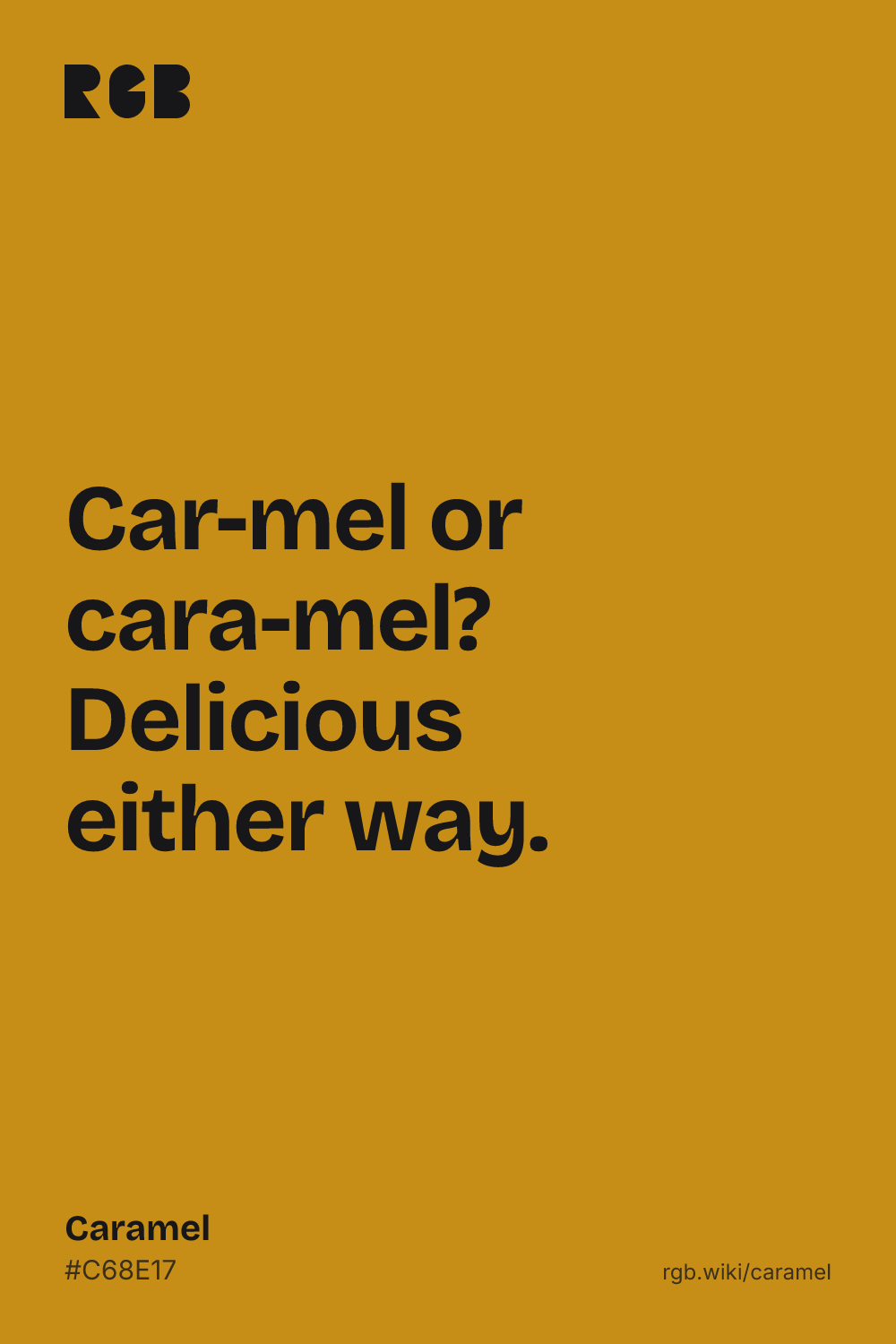
Caramel is a warm, golden brown. The code used here, #C68E17, is rich in red and green with very little blue, which gives it a deep amber-gold tone between yellow and brown.
The name comes from the sweet. The word came into English from French around 1702, by way of Spanish and Portuguese, from the Late Latin calamellus, “little reed”. Caramel is made by heating sugar to about 170 °C (338 °F), until it breaks down into compounds that bring both color and flavor.
Real caramel isn’t one color. Merriam-Webster describes it as anything from golden brown to dark brown, and the code sits at the light, golden end. Caramel color, the food additive known in Europe as E150, is taken much further: the EU describes it as a dark brown to black liquid or solid. It is one of the oldest and most used food colorings, in soft drinks, beer, sauces and baked goods.
Caramel is a strong mid-tone. Black or very dark brown text reads well on it; white text doesn’t, with a contrast under 3 to 1. Paired with cream it looks soft and sweet; with navy or teal it looks sharper.