Umber

A dark, cool brown named after the earth pigment painters used for shadows.

Overview

Umber is a dark brown with a cool, grayish cast. The code used here, #635147, has red a little ahead of green and blue, all well under half strength, so it reads as a soft, muted brown rather than a warm one.

The color is named after a pigment: a natural earth colored by iron oxides and manganese oxides. The manganese makes it darker and cooler than its cousins ochre and sienna. Dug and ground, it is raw umber, a greenish or yellowish brown. Heated, it becomes burnt umber, a warmer, redder brown.

Where the name comes from is debated. In Italian the pigment is terra d’ombra. Some read that as “earth of Umbria”, the region of central Italy; others trace it to Latin umbra, “shadow”, which Merriam-Webster favors. Either way, painters used it for shadows. The most prized umber came from Cyprus, where it formed in an unusual place: on the floor of an ancient ocean, as mud settling out of hot springs on a volcanic ridge.

People picture umber much brighter than the pigment. In the xkcd color survey, the average umber was #B26400, a bright orange brown, and the average burnt umber #A0450E. The web code is far closer to the real earth. It is dark enough for white text, at a contrast of 7.5 to 1, and pairs well with cream, ochre, sage and dusty blue.
HEX#635147
RGBrgb(99, 81, 71)
HSLhsl(21, 16%, 33%)
HSV21°, 28%, 39%
CMYK0, 18, 28, 61
OKLCHoklch(45.0% 0.029 50.7)
Every code converts from the HEX value #635147. #635147 is the center of ISCC-NBS color group 61, grayish brown, in John Foster’s sRGB version. The 1955 ISCC-NBS dictionary puts the umber brown of William H. Beck’s Postage-Stamp Color Names in that group, and Wikipedia uses the same code. The same dictionary files the raw umber of Maerz and Paul’s A Dictionary of Color (1930) as a moderate yellowish brown and their burnt umber as a moderate brown; the raw and burnt umber shades below use those two centers. CMYK is a screen-based estimate; print results vary.
Umber color card, hex #635147: “Umber-lievable”

Umber on the color map

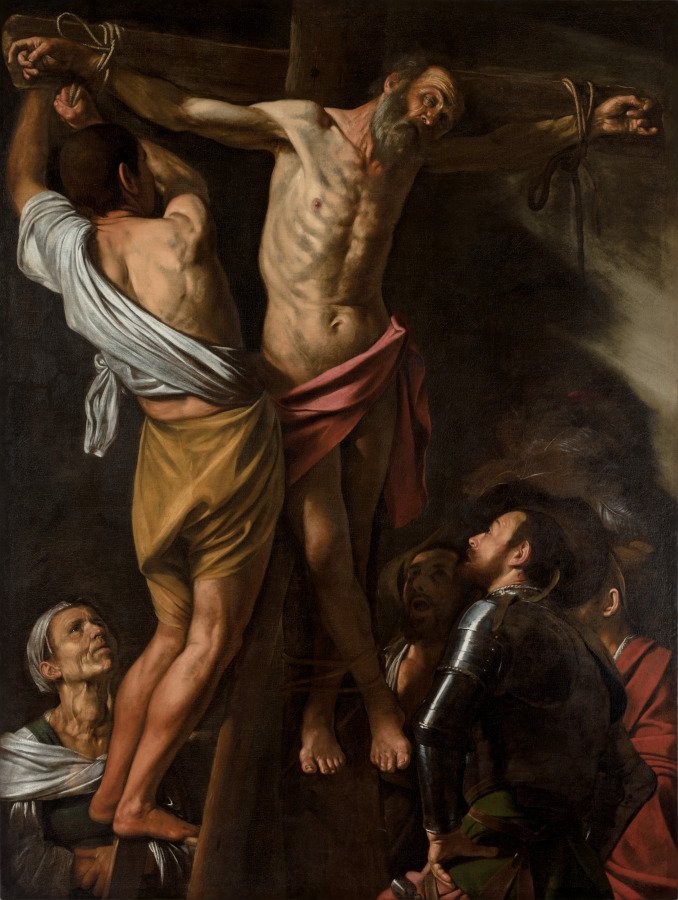
The dictionary’s burnt umber sits almost on the reference, only warmer and stronger. Its raw umber lies up and to the right: lighter and yellower. People’s average burnt umber in the xkcd survey sits inside the outline, a little to the left, but is far more intense, which this map of hue and lightness doesn’t show. Their average umber is above the outline: much lighter and more orange. The background of Caravaggio’s altarpiece, where the museum describes a dark umber-colored ground, falls far below. The outline is an approximate range, not a measured one.

Shades and tints

Tints with white

Shades with black

Tones with gray

Umber sits in the middle. Tints add white, shades add black and tones add gray, in 10% steps out from it. Tap any swatch to copy its code.

Light and dark umber

#A19791
Light umberMixed 40% with white. A warm gray for backgrounds.
#826644
Raw umberThe ISCC-NBS moderate yellowish brown, where the 1955 dictionary files Maerz and Paul’s raw umber. The unheated earth: lighter and yellower.
#635147
UmberThe reference color.
#6F4E37
Burnt umberThe ISCC-NBS moderate brown, where the 1955 dictionary files Maerz and Paul’s burnt umber. Heated: warmer and redder.
#8A3324
Web burnt umberThe burnt umber many color lists use. No standard defines it, and it is much redder than the pigment.
#3B312B
Dark umberMixed 40% with black. A soft near-black for text.

Colors that go with umber

Pairings that work in rooms, outfits and interfaces.

Old master

Umber with ochre, vermilion and a warm white: the core of a 1600s painter’s palette.

Umber and cream

Soft and warm, like a brown ink sketch on old paper.

Umber and sage

Earthy and calm. Good for homes, gardens and wellness.

Umber and dusty blue

A cool blue lifts the brown. Quiet and grown-up.

Underpainting

One brown mixed with white, the way painters laid in a picture before adding color.

Umber night

A dark theme with a pale tan accent.

Color-wheel palettes

Pick a palette to see where its colors sit on the color wheel. The caret marks umber. Tap a band to copy its code.

Similar colors

Wenge92%UmberToffee82%Coffee86%Dark brown73%Ebony81%Feldgrau77%

Lined up by hue around umber. Hover a color to see how similar it is.The bar under each name shows how similar it is. Similarity comes from the distance between the two colors in OKLab, a model of how we see color.

Burnt umber vs burnt sienna

Burnt umber#6F4E37 · hue 25°
  • A dark, cool brown
  • Earth with 5 to 20% manganese
  • Used for shadows and grounds
Burnt sienna#B04E0F · hue 23°
  • Lighter and a glowing orange-brown
  • Iron earth with little manganese
  • Named after Siena, in Tuscany

Meaning

  • Shadows
  • Ancient seafloor
  • Burnt umber
  • Underpainting

Umber is a painter’s brown and, in Cyprus, a geologist’s rock. Its meanings come from the pigment: a dark earth used for shadows, underpainting and quick-drying grounds for at least five hundred years. As with most named colors, color research tests broad hues like brown, not umber itself.

Manganese makes it dark

Well established

Umber is an iron-oxide earth like ochre and sienna, but with far more manganese oxide, about 5 to 20 percent. The manganese darkens it to a greenish or deep brown. It also helps oil paint dry quickly, which made umber useful in grounds and underpainting.1, 2

Born on an ancient seafloor

Geological study

The umbers of Cyprus lie on pillow lavas that once formed the floor of an ocean. The geologist A. H. F. Robertson showed in 1975 that they are mudstones rich in iron, manganese and trace metals, which settled out fast when hot springs on a volcanic ocean ridge poured metal-rich brines into the sea.3

The shadow brown

Historical record

Vermeer shaded his whitewashed walls with umber mixed with black and a little lead white, as in The Milkmaid. The umber kept the shadows from looking dull, which black alone would do. Rembrandt and Rubens used umber widely in their underpaintings.2

Not every painter liked it

Historical record

Umber had critics. In the 1600s the English painter Edward Norgate called it “a foul and greasy color”. The Spanish painter Antonio Palomino called it “very false”, and the Belgian painter Jan Blockx wrote that umber should not appear on the palette of the conscientious painter.4

Sources (4)
  1. Wikipedia, “Sienna”, on raw umber’s manganese content, citing Isabelle Roelofs, La couleur expliquée aux artistes (2012).
  2. Essential Vermeer, “Vermeer’s Palette: Umber”, citing Daniel V. Thompson, The Materials and Techniques of Medieval Painting (1956), and technical studies of Vermeer’s paintings.
  3. Robertson, A. H. F. (1975). Cyprus umbers: basalt–sediment relationships on a Mesozoic ocean ridge. Journal of the Geological Society, 131(5), 511–531. doi:10.1144/gsjgs.131.5.0511
  4. Wikipedia, “Umber”, section Criticism, citing Kate Helwig, “Iron Oxides”, in Artists’ Pigments, vol. 4 (National Gallery of Art, 2007), p. 56.

History

Umber began as mud on a seafloor, became one of the standard browns of European painting, and gave its name to a color in the 1500s.

  1. About 84–72 million years ago

    Hot springs on a volcanic ocean ridge pour iron- and manganese-rich brines into the sea. The mud that settles out, in rocks that now form the Troodos mountains of Cyprus, becomes the umbers of Cyprus.1, 2

  2. Late 1400s

    Umbers come into wide use in European painting. Giorgio Vasari (1511–1574) still describes them as fairly new.3

  3. 1568

    First known use of “umber” for a brown color in English.4

  4. 1606–7

    Caravaggio paints The Crucifixion of Saint Andrew on a dark brown ground of earth pigments. Analysis finds umber, with lead white and vermilion, in the red cloth around the saint.5

  5. 1650

    First recorded use of “burnt umber” as a color name in English.6

  6. About 1658–61

    Vermeer paints The Milkmaid, shading its whitewashed wall with a mix of umber, black and a little lead white.3

  7. 1930

    Maerz and Paul’s A Dictionary of Color prints samples of raw umber and burnt umber.6, 7

  8. 1955

    The ISCC-NBS dictionary files Maerz and Paul’s raw umber as a moderate yellowish brown and their burnt umber as a moderate brown. It files the umber brown of a postage-stamp color list as grayish brown, whose center is the web code.7

  9. 1973

    Geologists A. H. F. Robertson and J. D. Hudson describe Cyprus umbers as chemical precipitates on an ancient ocean ridge.8

Sources (8)
  1. Robertson, A. H. F. (1975). Cyprus umbers: basalt–sediment relationships on a Mesozoic ocean ridge. Journal of the Geological Society, 131(5), 511–531. doi:10.1144/gsjgs.131.5.0511 The abstract dates the umbers to the Campanian age.
  2. Wikipedia, “Campanian”, giving the age as 83.6 to 72.2 million years ago on the International Commission on Stratigraphy’s timescale.
  3. Essential Vermeer, “Vermeer’s Palette: Umber”, citing Daniel V. Thompson, The Materials and Techniques of Medieval Painting (1956), and technical studies of Vermeer’s paintings.
  4. Merriam-Webster, “umber”, definition, etymology and first known use (1568, in the color sense).
  5. Cleveland Museum of Art, “The Crucifixion of Saint Andrew, 1606–7”, Caravaggio (1976.2), conservation notes.
  6. Wikipedia, “Umber”, section Burnt umber, citing Maerz and Paul, A Dictionary of Color (1930), p. 191 and plate 15.
  7. Jaffer, A. “Maerz and Paul color names” and “Postage-Stamp Color Names”, with ISCC-NBS centroids from “Color-Name Dictionaries”, MIT CSAIL.
  8. Robertson, A. H. F. & Hudson, J. D. (1973). Cyprus umbers: chemical precipitates on a Tethyan ocean ridge. Earth and Planetary Science Letters, 18(1), 93–101. doi:10.1016/0012-821X(73)90039-3

Umber in use

Caravaggio painting of an old, bearded Saint Andrew tied to a cross, lit from the left against a nearly black brown background, with a man on a ladder beside him and onlookers below
#281B11#472D1A#704A2B#926D4C
PaintingThe Crucifixion of Saint Andrew by Caravaggio (1606–7)

Caravaggio laid this altarpiece on a double ground of brown earth pigments, which the museum’s conservators describe as a dark umber color, and painted the figures out of the darkness. Analysis found umber in the saint’s red cloth. In the photo, the background reads about #281B11, far darker than the web code, and the shadowed wood about #472D1A.

#281B11#472D1A#704A2B#926D4C
Source: Cleveland Museum of Art

Palettes are sampled in-house.

Questions

What color is umber?

A dark, grayish brown. The code most color lists use is #635147 (RGB 99, 81, 71). The pigment itself ranges from greenish brown to reddish brown.

What is the difference between raw umber and burnt umber?

Raw umber is the natural earth, dug and ground: a cool, greenish or yellowish brown. Burnt umber is raw umber that has been heated, which turns some of its iron into red hematite and gives a warmer, redder brown.

What is the difference between burnt umber and burnt sienna?

Both are heated earth pigments, but umber holds much more manganese. Burnt umber is a dark, cool brown, while burnt sienna is a lighter, glowing orange brown.

Why is it called umber?

Its Italian name, terra d’ombra, is traced either to Umbria, the region in central Italy, or to the Latin umbra, meaning shadow. Merriam-Webster favors the shadow meaning.

What is umber made of?

Clay colored by iron oxides and about 5 to 20 percent manganese oxides. The best-known natural umber comes from Cyprus, where it formed as mud from hot springs on an ancient seafloor.

Is umber a warm or cool brown?

Raw umber is one of the coolest browns, and mixed with white it gives greenish, silvery grays. Burnt umber is warmer. The web code #635147 sits in between: a muted brown with a faint warm tint.

What colors go with umber?

Cream and warm white for a soft look, ochre and terracotta for an earthy one, and sage or dusty blue for contrast.