Bronze

A warm golden brown named after the alloy of copper and tin, and the color of third place.

Overview

Bronze is a warm, golden orange-brown. The code used here, #CD7F32, has lots of red, a fair amount of green and little blue. Next to copper it is lighter and brighter.

The name comes from the metal, an alloy that is mostly copper with some tin. The word reached English through French from the Italian bronzo, and has named a color since at least 1753. Since 1904 it has also meant third place: Olympic winners get gold, runners-up silver, and third place bronze.

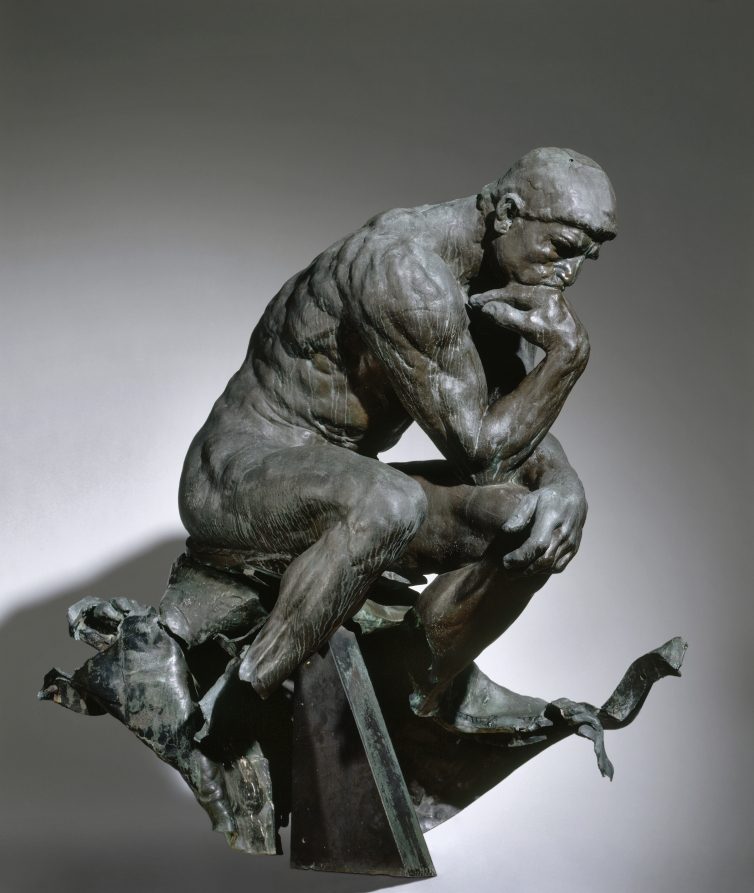
Freshly polished bronze is close to this code, but old bronze rarely is. Sculptors often treat a finished bronze with chemicals that darken it to brown, black or green, and the weather does the same outdoors. Rodin’s The Thinker in Cleveland looks almost charcoal in photographs.

Under light, a bronze medal shows pale gold glints and deep brown shadows on the same disc, and one code can only give the middle of that range. To suggest metal on screen, add a light rim such as #E1B284 and a dark edge such as #7B4C1E. Black text reads well on bronze; white text needs large, bold type.

HEX#CD7F32
RGBrgb(205, 127, 50)
HSLhsl(30, 61%, 50%)
HSV30°, 76%, 80%
CMYK0, 38, 76, 20
OKLCHoklch(66.6% 0.132 61.3)
Every code converts from the HEX value #CD7F32. #CD7F32 is the bronze most color lists use. Wikipedia gives it as a match for the bronze sample in Maerz and Paul’s A Dictionary of Color (1930), but the 1955 ISCC-NBS dictionary files that sample as a moderate yellowish brown, so treat the code as typical, not official. CMYK is a screen-based estimate; print results vary.
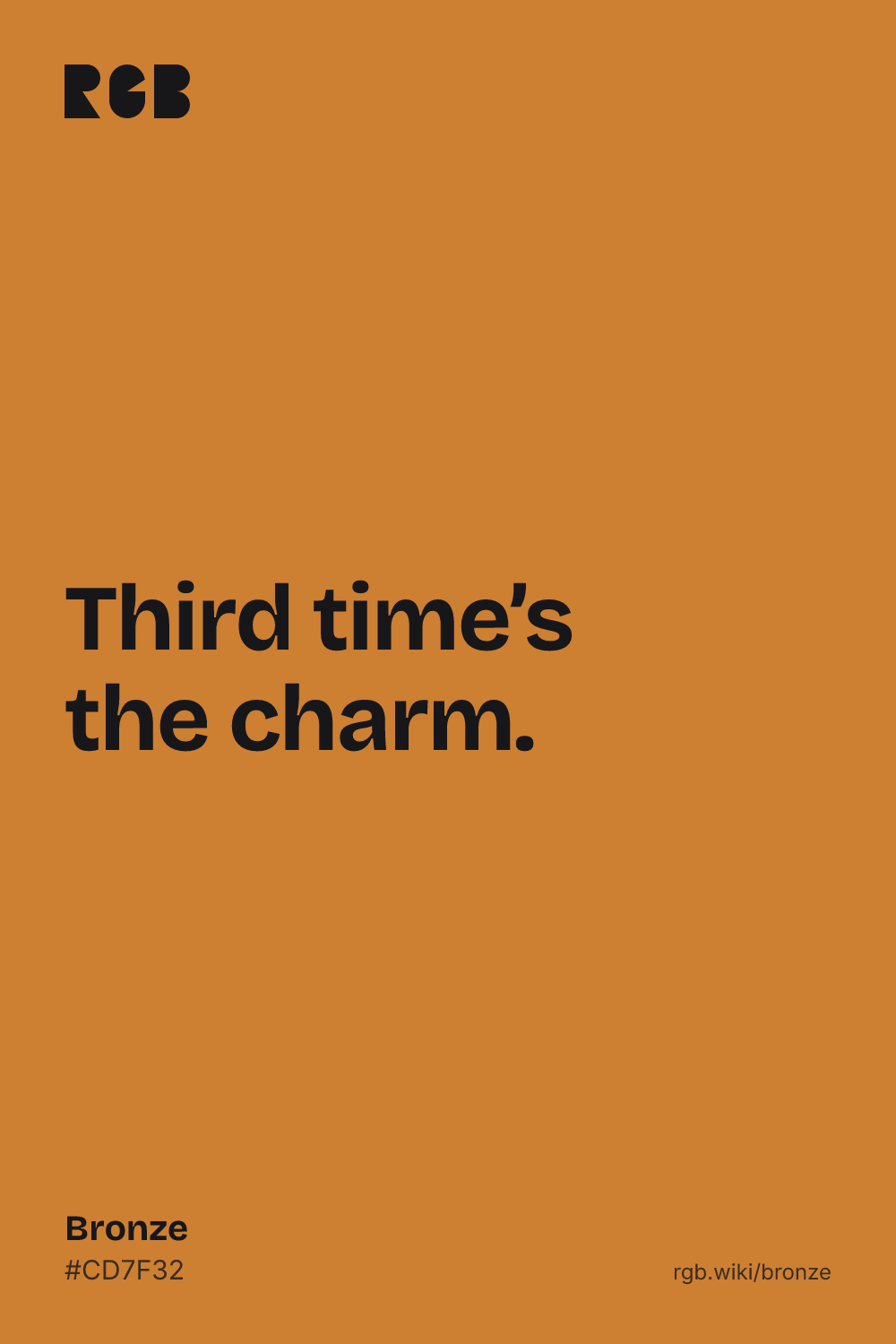
Bronze color card, hex #CD7F32: “Third time’s the charm”

Bronze on the color map

People’s average bronze in the xkcd survey is darker and more yellow, just outside the outline to the right. The ISCC-NBS moderate yellowish brown, which is also how Merriam-Webster defines the color bronze, is much darker and duller and sits well below the outline. Peru, the nearest CSS keyword, is almost the same color. The outline is an approximate range, not a measured one.

Shades and tints

Tints with white

Shades with black

Tones with gray

Bronze sits in the middle. Tints add white, shades add black and tones add gray, in 10% steps out from it. Tap any swatch to copy its code.

Light and dark bronze

#E1B284
Light bronzeMixed 40% with white. A pale gold for highlights.
#CD7F32
BronzeThe reference color.
#CD853F
PeruThe CSS keyword peru. Nearly the same, a touch lighter and softer. See peru
#826644
Dictionary bronzeThe ISCC-NBS moderate yellowish brown, where the 1955 dictionary files Maerz and Paul’s bronze. Closer to old, darkened metal.
#7B4C1E
Dark bronzeMixed 40% with black. A deep brown that holds white text.

Colors that go with bronze

Pairings that work in rooms, outfits and interfaces.

Bronze and forest green

Classic and outdoorsy, like an old statue in a park.

Bronze and navy

Warm metal on deep blue. Strong and sporty.

Bronze and ivory

Warm and elegant. Good for invitations and menus.

Bronze and black

Dramatic and luxurious. Metal on a night sky.

Bronze and teal

Near-opposites: warm metal against blue-green.

The podium

Bronze with silver and gold. Made for awards and rankings.

Color-wheel palettes

Pick a palette to see where its colors sit on the color wheel. The caret marks bronze. Tap a band to copy its code.

Similar colors

Cinnamon76%Ochre90%Copper75%BronzePeru92%Caramel77%Dark goldenrod76%

Lined up by hue around bronze. Hover a color to see how similar it is.The bar under each name shows how similar it is. Similarity comes from the distance between the two colors in OKLab, a model of how we see color.

Bronze vs copper

Bronze#CD7F32 · hue 30°
  • Lighter and brighter
  • An alloy of copper and tin
  • The color of third place
Copper#B87333 · hue 29°
  • Darker and a little duller
  • A pure metal
  • The real metal is pinker than the code

Meaning

  • Third place
  • Statues
  • Bells
  • Bronze Age
  • Ages of Man

Bronze stands for third place, for statues and bells, and for the age when people first made tools from an alloy. Its meanings come from the metal and from sport. Color research tests broad words like orange and brown, not bronze, so the claims here are about medals and statues.

Third place since 1904

Historical record

The 1904 Olympic Games in St. Louis were the first to award gold, silver and bronze medals for first, second and third place. At the first modern Games in 1896, winners got a silver medal and runners-up a bronze or copper one.1, 2
Third place can look happier than second

Two studies

In footage of the 1992 Olympics, bronze medalists looked happier than silver medalists. The researchers suggested that silver winners think “I almost won gold”, while bronze winners think “at least I won a medal”. A 2021 study of medal-stand photos from 2000 to 2016 found support for that idea and for a second one: silver medalists had often expected more.3, 4

Statues are often darkened on purpose

Well established

After polishing, artists may apply chemicals to a bronze to form a patina, which gives some control over its color. Sulfur compounds tend to turn bronze brown or black, and chlorides turn it green. That is why so many bronze statues look nothing like the bright code.5, 6

Sources (6)
  1. International Olympic Committee, “St. Louis 1904”, Olympics.com.
  2. International Olympic Committee, “Athens 1896 medal design”, Olympics.com.
  3. Medvec, V. H., Madey, S. F. & Gilovich, T. (1995). When less is more: Counterfactual thinking and satisfaction among Olympic medalists. Journal of Personality and Social Psychology, 69(4), 603–610. doi:10.1037/0022-3514.69.4.603
  4. Hedgcock, W. M., Luangrath, A. W. & Webster, R. (2021). Counterfactual thinking and facial expressions among Olympic medalists: A conceptual replication of Medvec, Madey, and Gilovich’s (1995) findings. Journal of Experimental Psychology: General, 150(6), e13–e21. doi:10.1037/xge0000992
  5. Wikipedia, “Bronze sculpture”, section on finishing.
  6. Wikipedia, “Patina”, section on artistic use.

History

Bronze gave its name to an age long before it named a color. Its place behind gold and silver goes back to ancient Greek poetry.

  1. About 3000 BCE

    People in Egypt, Mesopotamia and the Indus Valley start using bronze: copper with about 5% tin, harder than copper and easier to cast.1

  2. About 700 BCE

    The Greek poet Hesiod describes races of people made by the gods: golden, then silver, then a “brazen race” of bronze, “in no way equal to the silver age”.2, 3

  3. About 1440–44

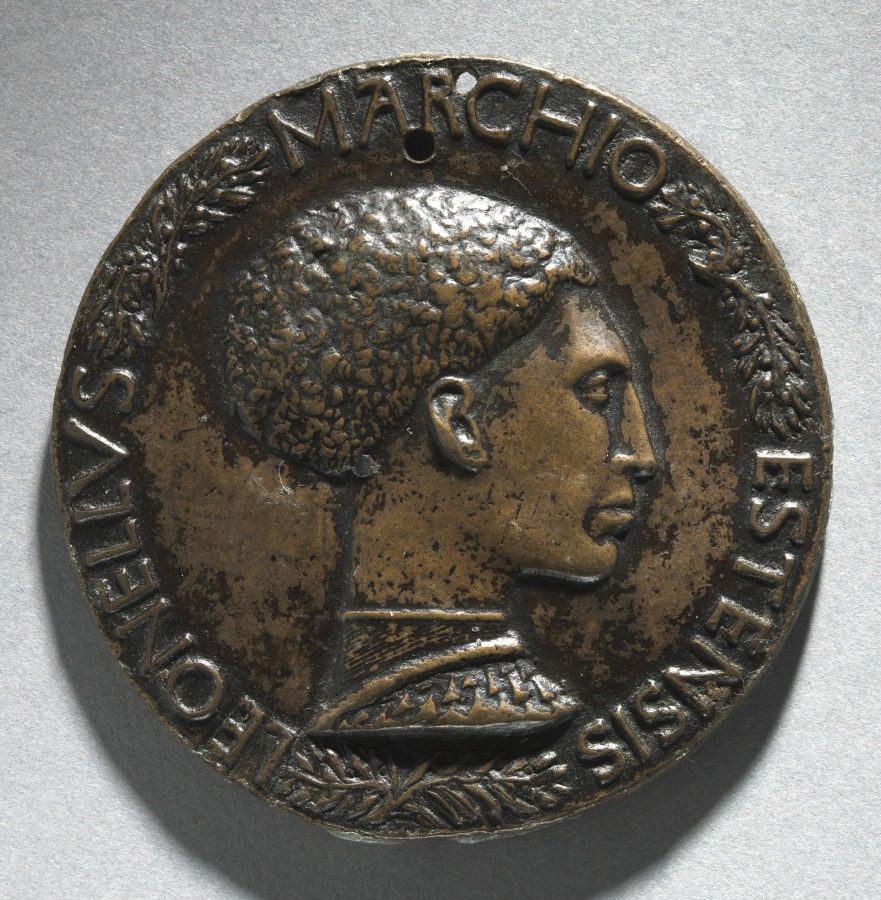
    Pisanello casts a bronze portrait medal of Leonello d’Este, Marquess of Ferrara. Pisanello is often credited with originating the commemorative portrait medal.4, 5

  4. 1753

    First recorded use of “bronze” as a color name in English.6

  5. 1896

    At the first modern Olympics in Athens, winners receive silver medals and runners-up bronze or copper.7

  6. 1904

    The St. Louis Olympics are the first to award gold, silver and bronze for first, second and third place.8

  7. 1917

    An enlarged cast of Rodin’s The Thinker, one of fewer than ten made in his lifetime, joins the Cleveland Museum of Art.9

  8. 1970

    On March 24, dynamite blows Cleveland’s Thinker off its pedestal. The museum never repaired it, and the bombing remains unsolved.10

Sources (10)
  1. Royal Society of Chemistry, “Tin”, Periodic Table.
  2. Hesiod, Works and Days, lines 109–155, translated by H. G. Evelyn-White (1914). Project Gutenberg.
  3. Wikipedia, “Hesiod”.
  4. Cleveland Museum of Art, “Portrait of Leonello d’Este, Marquess of Ferrara, c. 1440–44”, Pisanello (1971.4).
  5. Wikipedia, “Pisanello”, citing the Victoria and Albert Museum.
  6. Wikipedia, “Bronze (color)”, citing Maerz and Paul, A Dictionary of Color (1930), p. 191.
  7. International Olympic Committee, “Athens 1896 medal design”, Olympics.com.
  8. International Olympic Committee, “St. Louis 1904”, Olympics.com.
  9. Cleveland Museum of Art, “The Thinker, 1880–81”, Auguste Rodin (1917.42), gift of Ralph King.
  10. Arehart, M. (2018, February 2). “State of the Arts: The Thinker bombing”. WKSU / Ideastream Public Media.

Bronze in use

Rodin’s Thinker in dark bronze, a seated muscular man resting his chin on his hand, with the base below him torn into jagged strips
#6A6B66#51524A#363730#191812
SculptureThe Thinker by Auguste Rodin (1880–81)

In 1970 a bomb blew this enlarged cast off its pedestal outside the Cleveland Museum of Art, and the museum never repaired it. Its patina is a dark olive-gray, about #51524A in the photo, far from the bright bronze of the web code.

#6A6B66#51524A#363730#191812
Source: Cleveland Museum of Art
A round dark bronze medal with the profile of a young man with thick curly hair, framed by Latin lettering and olive branches
#7A6951#60503B#473E32#2E2A24
MedalPortrait of Leonello d’Este by Pisanello (about 1440–44)

One of the first Renaissance portrait medals, cast in bronze by the artist credited with inventing the form. Its sitter, the Marquess of Ferrara, was among the first patrons of medals. Today it is a deep olive brown, about #60503B, with lighter brown on the raised parts.

#7A6951#60503B#473E32#2E2A24
Source: Cleveland Museum of Art

Palettes are sampled in-house.

Questions

What color is bronze?

A warm, golden orange-brown. The code used here is #CD7F32 (RGB 205, 127, 50).

Why is bronze the color of third place?

The 1904 Olympics in St. Louis were the first to give gold, silver and bronze medals for first, second and third. The order echoes an ancient Greek ranking of ages: golden, then silver, then bronze.

What is the difference between bronze and copper?

Bronze (#CD7F32) is lighter and brighter. Copper (#B87333) is darker and a little duller. The metal bronze is copper with tin added.

Why are bronze statues dark or green?

Bronze reacts with air, water and chemicals to form a patina. Artists often add one on purpose, and weather adds more, turning statues brown, black or green.

What colors go with bronze?

Forest green or teal for contrast, navy or black for drama, and ivory or cream for a warm, elegant look.

Can I put white text on bronze?

Only at large, bold sizes. Black or a deep brown such as #2D2419 is easier to read on #CD7F32.