Walnut

A deep, reddish brown named after the walnut tree and its dark, prized wood.

Overview

Walnut is a deep, warm brown with a reddish cast, the color most people picture when they hear “walnut furniture”. The code most color lists use is #773F1A: red at under half strength, about half as much green and very little blue. Merriam-Webster defines walnut as a moderate reddish brown. On screen it is almost the same color as russet, which is a touch lighter.

One tree gives three browns. The heartwood of American black walnut runs from light to dark brown, and the dried timber of the European walnut can be chocolate brown or nearly black. The shell of the nut is a pale tan. The green husk around it holds a stain strong enough to dye wool, hair and the hands of anyone who shells the nuts.

The web code sits closest to old walnut furniture, though museum pieces photograph a little darker or grayer. The 1930 A Dictionary of Color chose a different walnut altogether: a light yellowish brown, nearer the shell than the wood. The name itself is Old English wealhhnutu, “foreign nut”.

Walnut is dark enough for white text, at a contrast of 8.4 to 1. It looks classic with cream, calm with sage, warm with honey yellow and rich with deep teal.

HEX#773F1A
RGBrgb(119, 63, 26)
HSLhsl(24, 64%, 28%)
HSV24°, 78%, 47%
CMYK0, 47, 78, 53
OKLCHoklch(43.1% 0.092 51.1)
Every code converts from the HEX value #773F1A. No color standard defines walnut. #773F1A is the code most color lists use, and it traces to a paint maker’s color, not a color dictionary. Merriam-Webster defines walnut as a moderate reddish brown, centered on #79443B in the ISCC-NBS system, and the 1955 ISCC-NBS dictionary files the walnut of Maerz and Paul’s A Dictionary of Color (1930) as a light yellowish brown, #C19A6B. CMYK is a screen-based estimate; print results vary.
Walnut color card, hex #773F1A: “Wal-nut your average brown”

Walnut on the color map

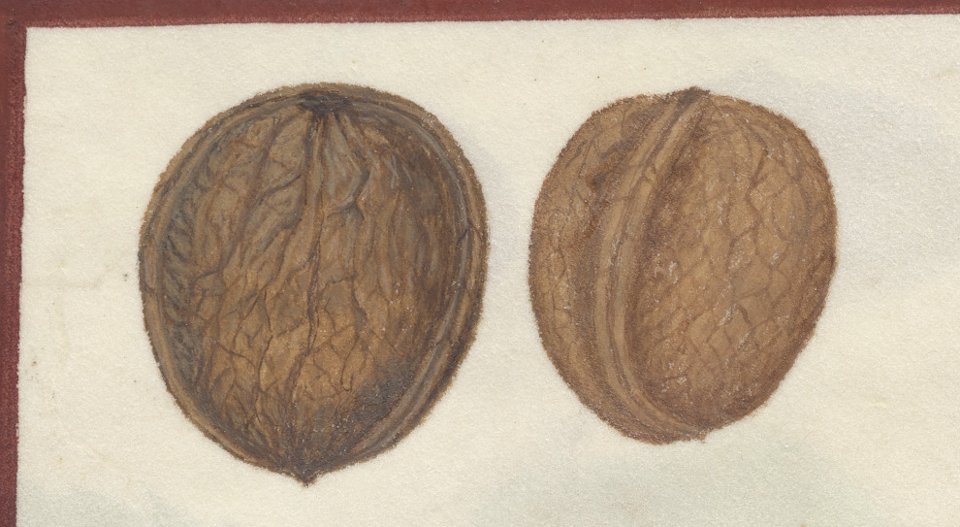
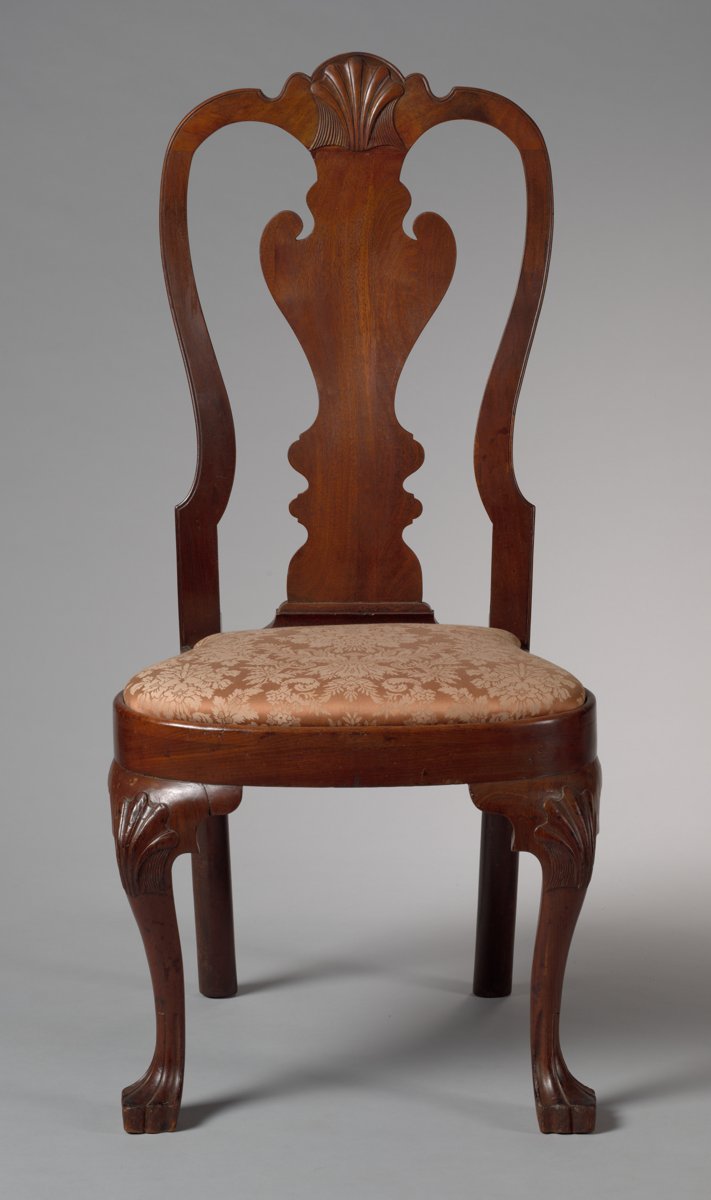
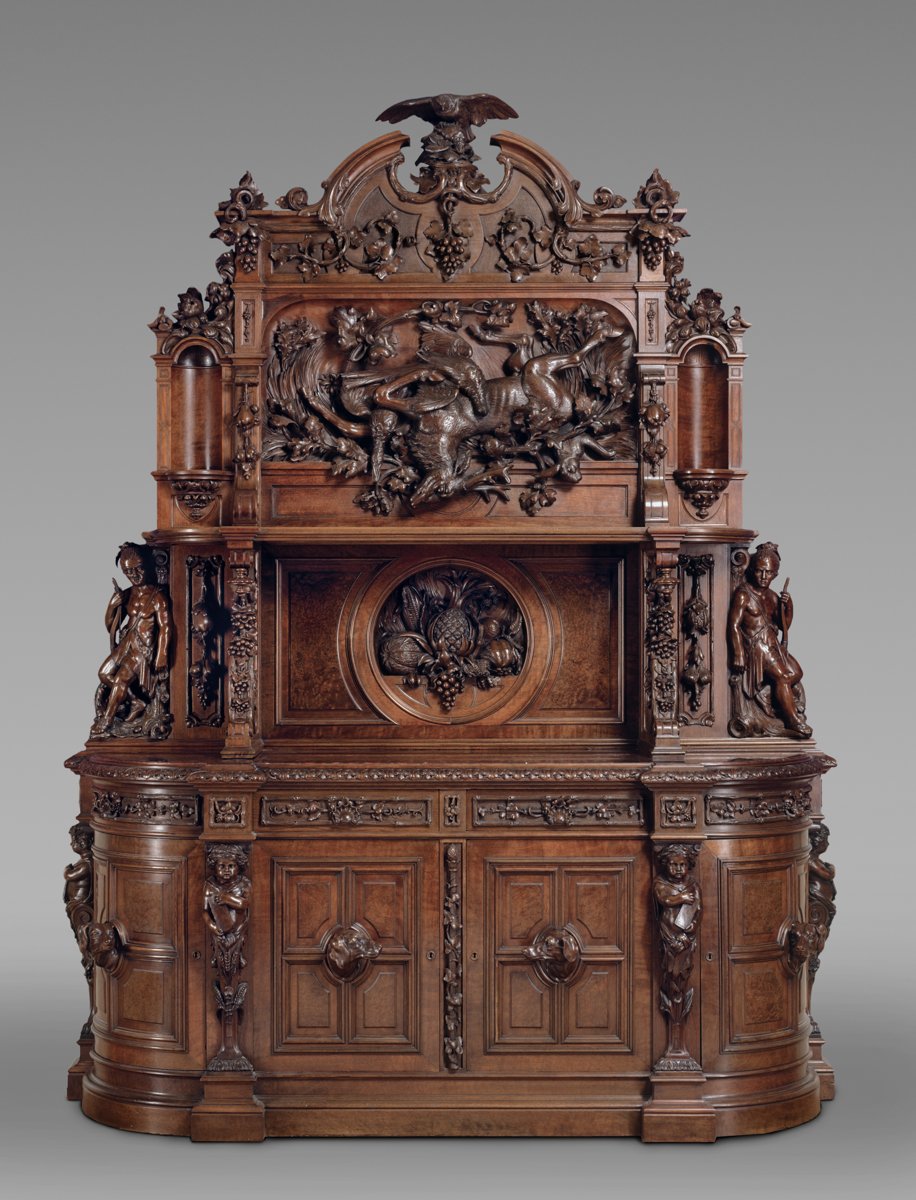
The two pieces of furniture and Merriam-Webster’s moderate reddish brown all sit inside the outline: the chair a little darker and redder than the code, the sideboard grayer, the dictionary color redder, near the left edge. The painted walnut shells sit above the outline to the right, lighter and yellower. Maerz and Paul’s walnut is lighter still, at the top edge of the view. The outline is an approximate range, not a measured one.

Shades and tints

Tints with white

Shades with black

Tones with gray

Walnut sits in the middle. Tints add white, shades add black and tones add gray, in 10% steps out from it. Tap any swatch to copy its code.

Light and dark walnut

#AD8C76
Light walnutMixed 40% with white. A soft, warm taupe for backgrounds.
#773F1A
WalnutThe reference color.
#C19A6B
Dictionary walnutThe ISCC-NBS light yellowish brown, where the 1955 dictionary files Maerz and Paul’s walnut. Nearer the nut’s shell than the wood.
#65321D
Walnut chairSampled from a museum photo of a Philadelphia walnut chair from 1735–45. Polished old wood.
#472610
Dark walnutMixed 40% with black. A deep brown for text and borders on light backgrounds.

Colors that go with walnut

Pairings that work in rooms, outfits and interfaces.

Walnut and cream

Dark wood and linen. Classic and easy to read.

Walnut and sage

Wood and leaves. Calm and natural.

Walnut and honey

Two warm tones, like lamplight on a wooden table.

Walnut and teal

Deep blue-green behind warm wood. Rich and modern.

Nut and husk

The tree’s own colors: dark wood, green husk, pale shell.

Walnut night

A dark theme with a lighter walnut as the accent.

Color-wheel palettes

Pick a palette to see where its colors sit on the color wheel. The caret marks walnut. Tap a band to copy its code.

Similar colors

Saddle brown78%WalnutRusset87%Coffee79%Chocolate92%Sepia91%Dark brown83%

Lined up by hue around walnut. Hover a color to see how similar it is.The bar under each name shows how similar it is. Similarity comes from the distance between the two colors in OKLab, a model of how we see color.

Walnut vs mahogany

Walnut#773F1A · hue 24°
  • Darker and browner
  • Named after a nut tree
  • Real walnut wood is chocolate brown
Mahogany#C04000 · hue 20°
  • Brighter, close to rust
  • Named after a tropical timber
  • Real mahogany is a deep red-brown

Meaning

  • Furniture
  • Hardwood
  • Nuts
  • Natural dye

Walnut means good, solid furniture: dining tables, desks, chairs and gunstocks. Its meanings come from the tree, which gives three different browns: dark heartwood, a pale nut shell and a husk that stains whatever touches it. Color research tests broad words like brown, not walnut, so the claims here are about the wood, the stain and the word.

Dark heart, pale edge

Well established

Walnut heartwood is brown and its sapwood nearly white. American black walnut runs from light to dark brown. European walnut is mustard yellow when freshly cut, darkens to brown within days and dries to chocolate brown or nearly black. No single code can cover that spread.1, 2
A stain that darkens in air

Well established

Walnut husks hold a colorless compound that turns into juglone when air reaches it. That is why a cut hull goes from yellow to black, and why shelling walnuts stains hands brown. Juglone has dyed wool and made ink, and it has the same chemical formula as lawsone, the dye in henna.3, 4

The classic gunstock wood

Well established

Walnut is hard, strong, resistant to shock and stable once dried. The USDA lists gunstocks among its main uses, after furniture and paneling, and it is still the favored wood for gunstocks.1, 5

A “foreign nut”

Dictionary record

The common walnut is native to Iran and Central Asia. Its English name comes from Old English wealhhnutu, literally “foreign nut”. Merriam-Webster also lists walnut as a color: a moderate reddish brown.6, 2

Sources (6)
  1. Wiemann, M. C. (2010). “Characteristics and Availability of Commercially Important Woods”, chapter 2 of Wood Handbook, FPL-GTR-190. USDA Forest Service, Forest Products Laboratory. PDF, entry “Walnut, Black”.
  2. Wikipedia, “Juglans regia”, sections Distribution, Wood and Dye.
  3. Wikipedia, “Juglone”, citing Gries, G. A. (1943), “Juglone, the active agent in walnut toxicity”, Northern Nut Growers Association Annual Report 34.
  4. PubChem, “Juglone” (CID 3806) and “Lawsone” (CID 6755), both C10H6O3. National Library of Medicine.
  5. Wikipedia, “Stock (firearms)”, section Materials.
  6. Merriam-Webster, “walnut”, definition and etymology.

History

People prized walnuts for food and dye long before they prized the wood. The color name came last, from the furniture.

  1. About AD 77

    Pliny the Elder writes that the green shell of the walnut is used to dye wool, and that young walnuts give hair a red tint, a trick learned from the stains they leave on hands.1

  2. Before 1100

    English has the word walnut, from Old English wealhhnutu, “foreign nut”.2

  3. 1608

    A French book of plant paintings shows two walnuts in their pale, wrinkled shells. It is now at the Cleveland Museum of Art.3

  4. About 1660–1720

    Fashionable English furniture is veneered in walnut over frames of oak or softwood. Worm damage and the new taste for mahogany end its run in the 1700s.4

  5. 1735–45

    A Philadelphia workshop makes a Queen Anne side chair in walnut, with carved shells on its crest and knees.5

  6. About 1855

    A walnut sideboard almost 3 meters (9½ feet) tall, attributed to Joseph Alexis Bailly, is carved with fruit, game and figures for a wealthy American dining room.6

  7. 1905

    Percy Macquoid names the second volume of his History of English Furniture “The Age of Walnut”, between his ages of oak and mahogany.4

  8. 1955

    The ISCC-NBS dictionary files the walnut of Maerz and Paul’s 1930 A Dictionary of Color as a light yellowish brown, much paler than the web code.7

Sources (7)
  1. Pliny the Elder, Natural History, book 15, chapter 24, translated by J. Bostock and H. T. Riley (1855). Perseus Digital Library.
  2. Merriam-Webster, “walnut”, etymology and first known use.
  3. The Cleveland Museum of Art, “English Walnuts, folio 43 (verso), from Florilegium”, France, 1608 (1963.594.43.b).
  4. Macquoid, P. (1905). A History of English Furniture, vol. 2, The Age of Walnut. Lawrence & Bullen. Internet Archive.
  5. The Cleveland Museum of Art, “Side Chair”, Philadelphia, Queen Anne style, 1735–1745, walnut (1986.209).
  6. The Cleveland Museum of Art, “Sideboard”, attributed to Joseph Alexis Bailly, c. 1855, walnut (1985.72).
  7. Jaffer, A. “(M) Dictionary of Color”, the ISCC-NBS placements of Maerz and Paul’s color names (1955 dictionary).

Walnut in use

A walnut side chair with a vase-shaped back, a carved shell at the top, a peach damask seat and curved legs ending in claw feet
#65321D#6F402A#562616#411A11
FurnitureSide chair, Philadelphia (1735–45)

A Queen Anne chair in walnut, with a carved shell on the crest and on each knee. The polished wood of the back reads about #65321D in the photo: a little darker and redder than the web code, the way old walnut usually looks.

#65321D#6F402A#562616#411A11
Source: Cleveland Museum of Art
A tall carved walnut sideboard with an eagle on top, a large carving of hunted game, standing figures at the sides and paneled cabinet doors below
#734D3C#5D3B2F#856556#3E241D
FurnitureSideboard attributed to Joseph Alexis Bailly (about 1855)

A towering walnut sideboard, almost 3 meters tall, carved with game, fruit and figures for a grand American dining room. Its cabinet doors read about #734D3C: the same depth as the web code but grayer, with the warm figure of burl walnut in the panels.

#734D3C#5D3B2F#856556#3E241D
Source: Cleveland Museum of Art
Two painted walnuts in their wrinkled light brown shells, one seen from the side and one from the seam, on cream vellum
#99775B#826852#AA8768#6E5847
ArtEnglish walnuts from a florilegium (1608)

A detail from a French book of plant paintings: two walnuts in their wrinkled shells. The shells sample at about #99775B, a light grayish brown far from the dark wood, and much closer to the 1930 dictionary’s walnut.

#99775B#826852#AA8768#6E5847
Source: Cleveland Museum of Art

Palettes are sampled in-house.

Questions

What color is walnut?

A deep, warm brown with a reddish cast. The code most color lists use is #773F1A (RGB 119, 63, 26). Merriam-Webster defines walnut as a moderate reddish brown.

Is there an official walnut color code?

No. No color standard defines walnut, and #773F1A traces to a paint maker’s color. Real walnut wood ranges from light brown to almost black, and a 1930 color dictionary gave walnut as a light yellowish brown.

What is the difference between walnut and mahogany?

As colors, walnut (#773F1A) is darker and browner, while mahogany (#C04000) is brighter and redder. As woods, walnut is a chocolate brown and mahogany a deeper red-brown.

Why do walnuts stain your hands?

The green husk holds a colorless compound that turns into juglone, a dark orange-brown dye, as soon as air reaches it. People have used the same stain to dye wool and hair since Roman times.

What colors go with walnut?

Cream and linen for a classic look, sage green for a calm, natural room, honey yellow for warmth and deep teal for a rich contrast.

Is walnut the same color as russet?

Almost. On screen, russet (#80461B) is a touch lighter, but the two codes are very close. In English, russet first named a coarse wool cloth; walnut is named after the tree.