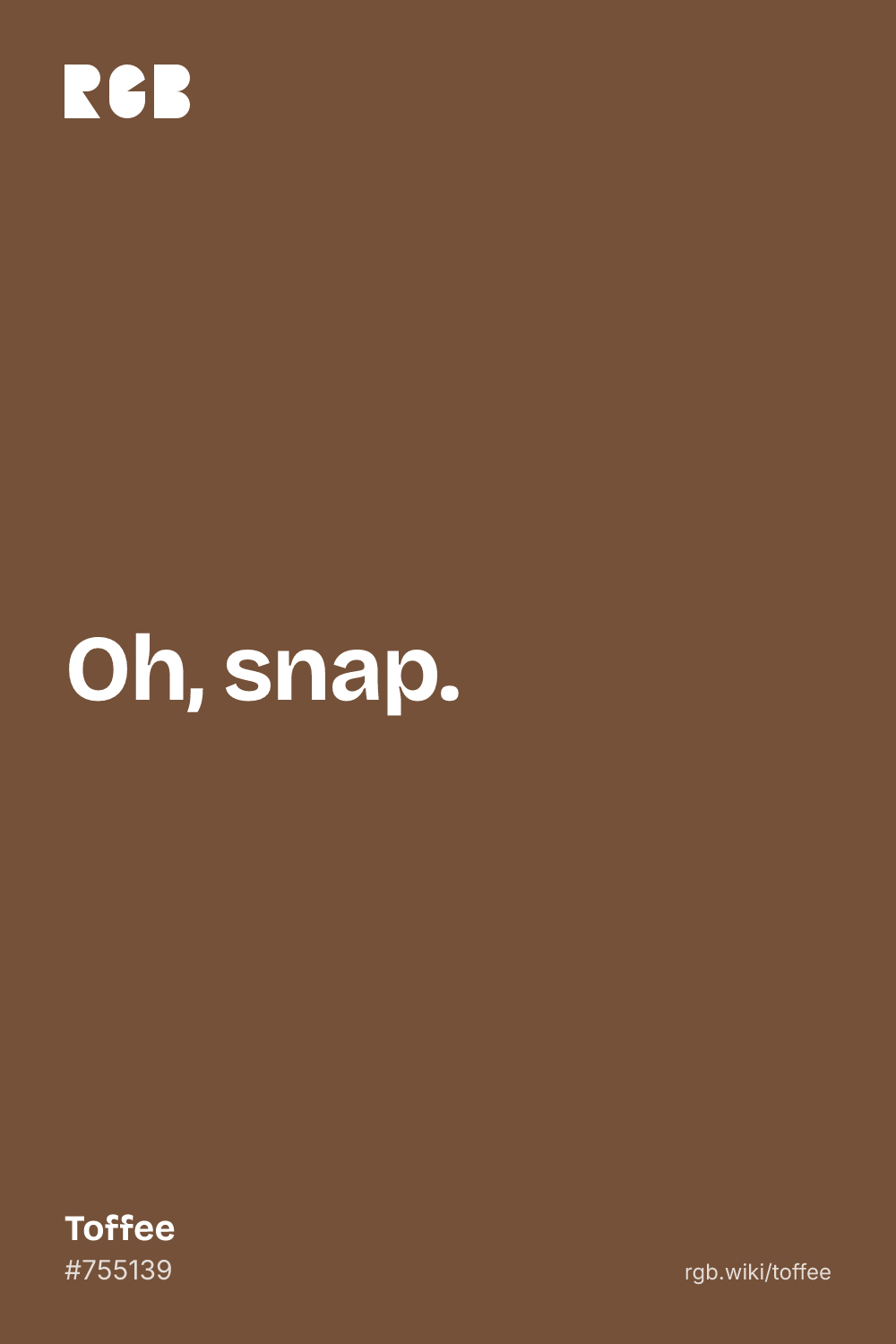
Toffee is a warm, medium-dark brown. Its usual code, #755139, has red at 46%, green at 32% and blue at 22%, a soft reddish brown. It is almost the same color as coffee (#6F4E37): side by side, coffee is only a touch darker.
The name comes from the sweet. English has used the word toffee since 1825, a variant of the older taffy. Toffee is sugar or treacle boiled with butter to the hard-crack stage, 300–310 °F (149–154 °C), when almost no water is left. That is what sets it apart from caramel candy: caramels are made with milk or cream and cooked only to the firm-ball stage, 245–250 °F, so they stay chewy. Toffee sets into a glassy sheet that snaps.
Toffee browns in two ways. Sugar breaks down as it heats, and the milk proteins in butter react with sugars in Maillard browning, the reaction that browns a bread crust. How far it goes depends on the recipe and the cook. A plain milk toffee measured in a 2019 study came out a light golden tan, close to #C58D4F, while treacle toffee, the Bonfire Night kind, is very dark. The code sits toward the dark end of that range.
Toffee is a dependable dark neutral. White text reads well on it, at a contrast of 7 to 1. It looks cozy with cream and caramel gold, festive with apple red, and calm next to teal.