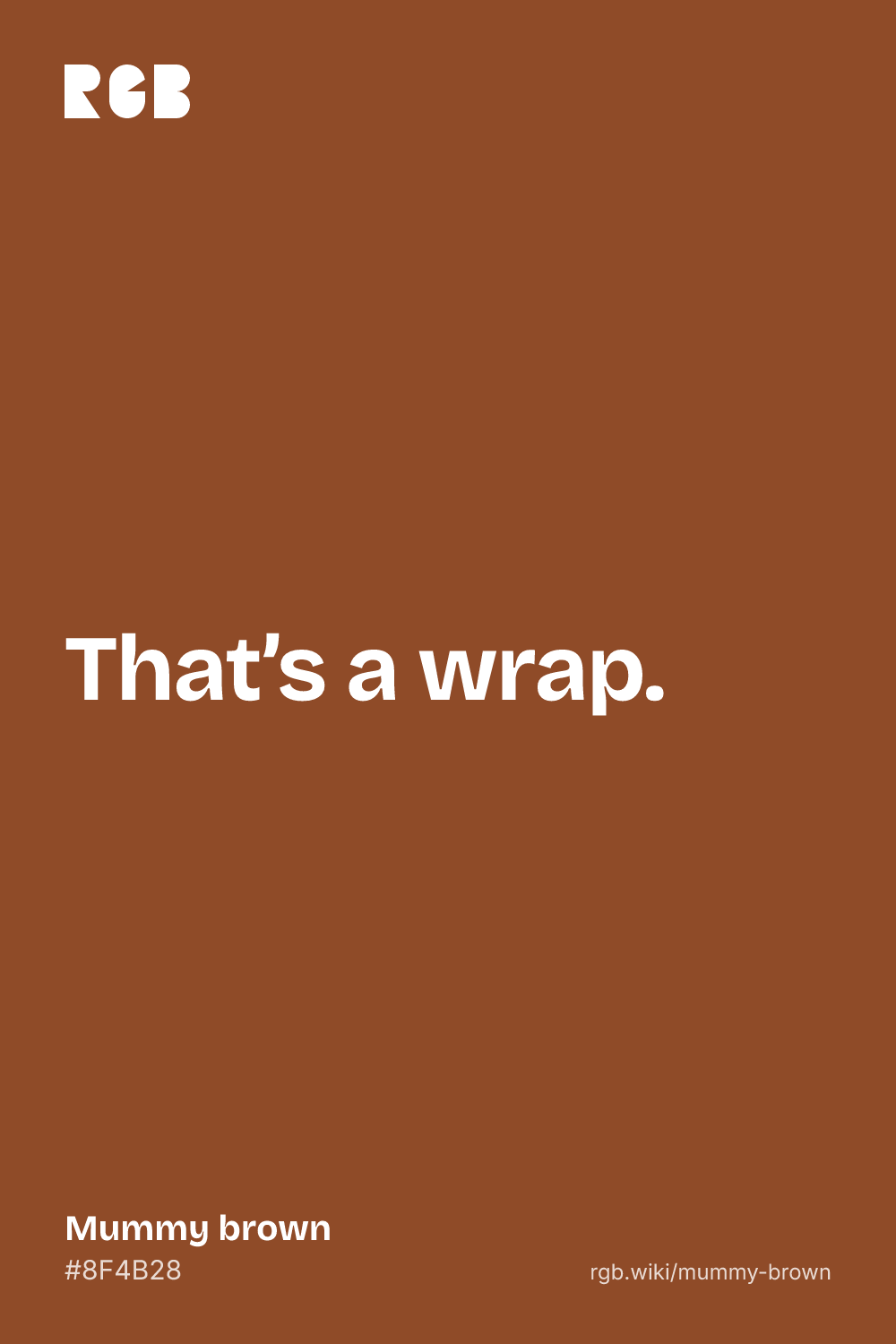
Mummy brown is a warm, reddish mid-brown. The code used here, #8F4B28, has red at a little over half strength, about half as much green and very little blue, so it reads as a glowing brown, close to russet and chestnut.
The name is literal. From the late 1500s until the early 1900s, European color makers sold a paint called mummy, made by grinding up Egyptian mummies, bones, wrappings and all, along with the resins and bitumen used to embalm them. Painters liked it as a transparent brown for glazes and shadows. It was a poor paint, though: it dried badly, cracked and faded.
The best-known story about it comes from the painter Edward Burne-Jones. In 1881, when a fellow painter told him the paint really did contain mummy, he fetched his only tube from the studio and buried it in his garden. Supplies ran out in the 20th century, and in 1964 the last London firm selling it said it had no mummies left.
The web code is brighter and redder than the old samples. Color dictionaries record mummy brown as a dark, dull brown, and the pigment itself was largely bitumen. #8F4B28 is dark enough for white text (6.6:1) and pairs well with papyrus cream, gold, deep green and teal.