Rosewood

A near-black red named after a fragrant tropical wood that is really much browner.

Overview

Rosewood is a very dark red. The code most color lists use is #65000B: red at about 40% strength, no green and a trace of blue. On screen it reads as a near-black red, lighter than oxblood and darker than maroon, with a slight cool lean toward burgundy.

The name comes from the wood, not the flower. True rosewoods are tropical hardwoods of the genus Dalbergia, prized for fine furniture and guitars, and freshly worked rosewood gives off a sweet, rose-like scent. The word has been in English since 1660, and a color name since 1892.

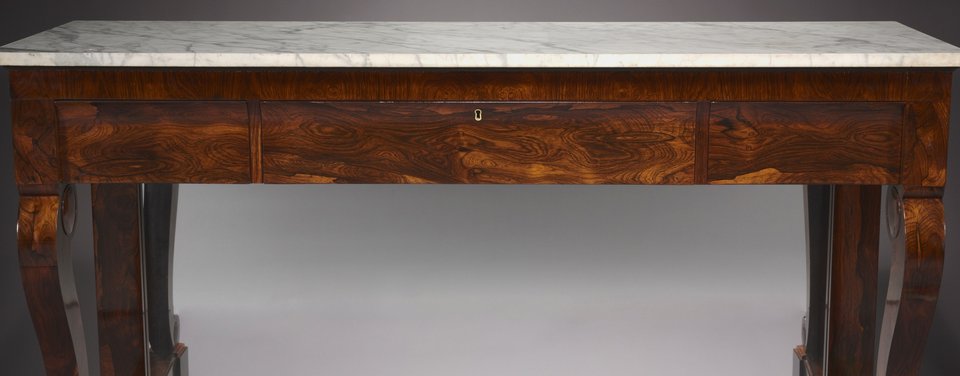
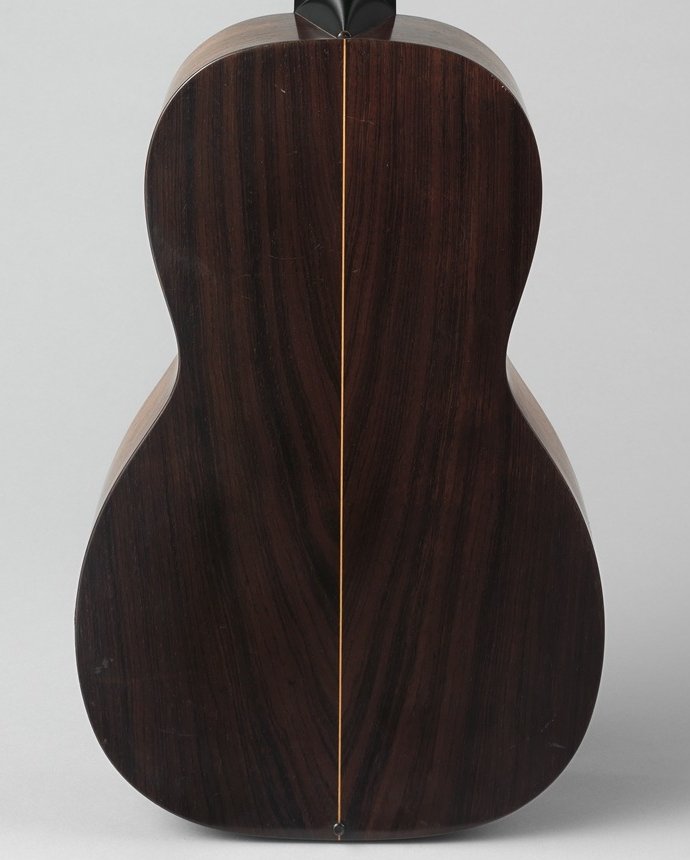
Real rosewood is far browner than the code. Brazilian and Indian rosewood run from golden brown through chocolate to dark purplish brown, streaked with black, and they darken with age. The veneer of a rosewood sideboard from about 1840 samples at #532B16, and the back of a 19th-century guitar at #281D1B. Color dictionaries side with the wood: their rosewood is a moderate reddish brown, about #79443B.

Use #65000B like a softer black. It carries white text at a contrast of 13.5 to 1, and looks rich with gold, cream or sage. For the look of the wood itself, use the browns sampled from the museum pieces below.

HEX#65000B
RGBrgb(101, 0, 11)
HSLhsl(353, 100%, 20%)
HSV353°, 100%, 40%
CMYK0, 100, 89, 60
OKLCHoklch(31.9% 0.129 24.8)
Every code converts from the HEX value #65000B. No color standard defines rosewood. #65000B is the code most color lists use, and it traces to a paint maker’s color list, not a color dictionary. The 1955 ISCC-NBS dictionary files the rosewood of Maerz and Paul’s A Dictionary of Color (1930) as a moderate reddish brown, centered on #79443B, and Merriam-Webster defines rosewood brown the same way. CMYK is a screen-based estimate; print results vary.
Rosewood color card, hex #65000B: “A rosewood by any other name”

Rosewood on the color map

Every real rosewood here sits to the right of the code, toward brown. The sideboard’s veneer is inside the outline near its right edge, at almost the same lightness, and the guitar’s back sits lower: darker, and nearly colorless. The dictionary rosewood is just above the outline, lighter and browner, and the golden huanghuali chair falls off the top of this view. None is anywhere near as intense as the code, which this map of hue and lightness doesn’t show. The outline is an approximate range, not a measured one.

Shades and tints

Tints with white

Shades with black

Tones with gray

Rosewood sits in the middle. Tints add white, shades add black and tones add gray, in 10% steps out from it. Tap any swatch to copy its code.

Light and dark rosewood

#D1B2B6
Pale rosewoodMixed 70% with white. A dusty mauve pink for backgrounds.
#A3666D
Light rosewoodMixed 40% with white. A muted, antique rose.
#79443B
Dictionary rosewoodModerate reddish brown, where the 1955 ISCC-NBS dictionary files Maerz and Paul’s rosewood. Merriam-Webster’s rosewood brown falls in the same group.
#65000B
RosewoodThe reference color.
#532B16
Rosewood veneerSampled from a museum photo of a rosewood sideboard from about 1840. What the wood really looks like.
#3D0007
Dark rosewoodMixed 40% with black. Nearly black, with a red glow.

Colors that go with rosewood

Pairings that work in rooms, outfits and interfaces.

Rosewood and cream

Deep red on warm paper. Classic and easy to read.

Rosewood and gold

Rich and formal, like a velvet-lined case.

Guitar back

From the Martin guitar: aged spruce top and dark rosewood back, with the code as the accent.

Huanghuali

The golden brown of a Chinese rosewood chair, with deep red for contrast.

Rosewood and sage

A soft green cools the red. Calm and natural.

Rosewood night

A dark theme with a lighter rosy red as the accent.

Color-wheel palettes

Pick a palette to see where its colors sit on the color wheel. The caret marks rosewood. Tap a band to copy its code.

Similar colors

Merlot64%Bordeaux82%Burgundy67%RosewoodMaroon68%Oxblood66%Caput mortuum71%

Lined up by hue around rosewood. Hover a color to see how similar it is.The bar under each name shows how similar it is. Similarity comes from the distance between the two colors in OKLab, a model of how we see color.

Rosewood vs mahogany

Rosewood#65000B · hue 353°
  • A near-black red on screen
  • Named after a fragrant wood from Dalbergia trees
  • The wood is dark brown to purplish brown
Mahogany#C04000 · hue 20°
  • A bright red-orange on screen
  • Named after a tropical timber from Swietenia trees
  • The wood is a deep reddish brown

Meaning

  • Rose scent
  • Fine furniture
  • Guitars
  • Protected trees

Rosewood means luxury woodwork: Chinese chairs and tables, polished sideboards, piano cases and the backs of fine guitars. It also means overharvesting. Demand has been so heavy that since 2017 every true rosewood has been under international trade controls. Color research tests broad words like red and brown, not rosewood, so the claims here are about the wood, its scent and its trade.

Named for a scent

Well established

Rosewood gives off a distinct, rose-like smell when it is cut and worked, and the USDA calls the odor of Brazilian rosewood “fragrant and distinctive”. That scent is the usual explanation for the name. The color of roses has nothing to do with it.1, 2, 3
Brown and purple, streaked with black

Well established

The USDA describes Brazilian rosewood in shades of brown, red and violet, streaked with black, and Indian rosewood as golden brown to dark purplish brown. Merriam-Webster’s definition says “usually dark red or purplish”. Indian rosewood darkens with age, and one of its old trade names was Bombay blackwood.2, 4, 5

A guitar maker’s favorite

Well established

For the backs and sides of acoustic guitars, perhaps no wood is held in higher regard than Brazilian rosewood. It has been almost impossible to trade since 1992, so guitar makers have turned mainly to East Indian rosewood instead. Rosewood is also a common wood for fretboards and marimba keys.6, 3

The most seized wildlife product

Seizure records

In UN records of wildlife seizures, rosewood made up the largest share by value of everything seized worldwide: about 41% in 2009–2013 and 32% in 2014–2018, ahead of elephant products. The UN warns that seizures show the work of enforcement as well as the size of the trade, so read these shares as a rough guide.7

Sources (7)
  1. Meier, E. “Brazilian Rosewood”, The Wood Database, entries Color/Appearance and Odor.
  2. Wiemann, M. C. (2010). “Characteristics and Availability of Commercially Important Woods”, chapter 2 of Wood Handbook, FPL-GTR-190. USDA Forest Service, Forest Products Laboratory. PDF, entries “Rosewood, Brazilian” and “Rosewood, Indian”.
  3. Wikipedia, “Rosewood”, sections True rosewoods and Uses.
  4. Merriam-Webster, “rosewood”, definition and first known use.
  5. Meier, E. “East Indian Rosewood”, The Wood Database, entry Color/Appearance, citing Farmer, R. H. (1972), Handbook of Hardwoods.
  6. Meier, E. “Distinguishing Brazilian Rosewood, East Indian and Other Rosewoods”, The Wood Database.
  7. United Nations Office on Drugs and Crime (2020). World Wildlife Crime Report 2020, Summary and Overview (PDF), figures 3 and 4 and box 1.

History

Rosewood was a luxury timber for centuries before it was a color name. Its recent history is one of protection, as the trees grew scarce.

  1. 1600s–1700s

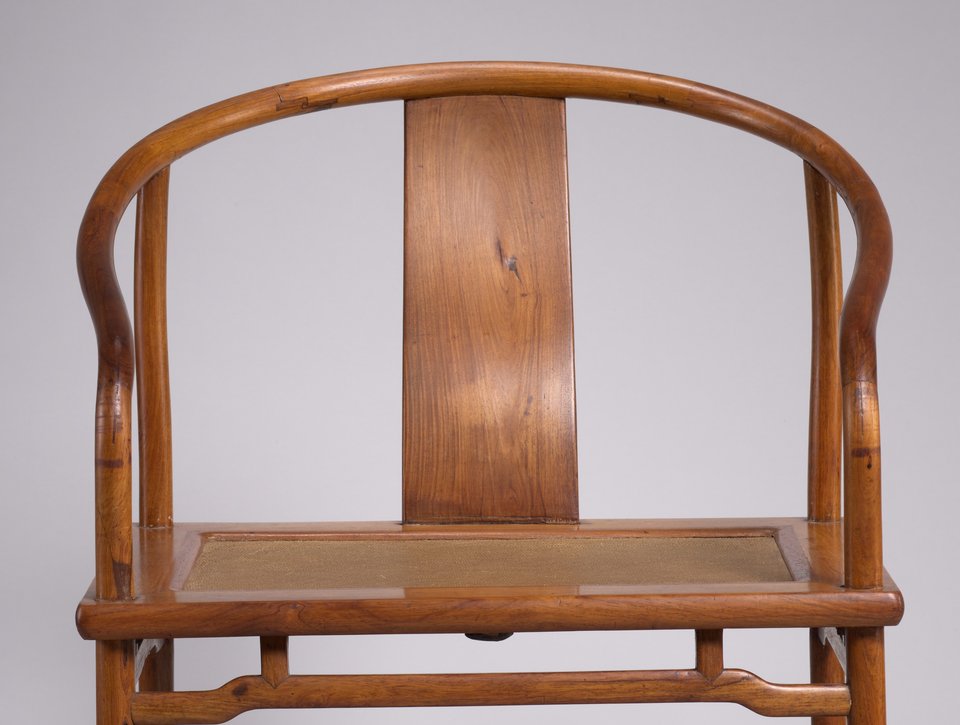
    Chinese furniture makers work in huanghuali, a Chinese rosewood. A horseshoe-back armchair from Jiangsu province, now in Cleveland, has a curved back joined without glue or nails.1, 2

  2. 1660

    First known use of the word “rosewood” in English, for the wood.3

  3. About 1840

    Duncan Phyfe and Son of New York make a sideboard in the plain “Grecian” style, decorated almost only with boldly patterned rosewood veneer.4

  4. Before 1867

    Christian Frederick Martin, a German-born guitar maker in Nazareth, Pennsylvania, builds a small guitar of spruce, rosewood and ebony.5

  5. 1892

    First recorded use of “rosewood” as a color name in English.6

  6. 1955

    The ISCC-NBS dictionary files the rosewood of Maerz and Paul’s 1930 A Dictionary of Color as a moderate reddish brown, much browner than the web code.7

  7. 1992

    Brazilian rosewood goes on Appendix I, the strictest list of CITES, the treaty that controls trade in endangered species, on June 11.8, 9

  8. 2013

    CITES lists all of Madagascar’s rosewoods. The next year, Singapore seizes 3,000 tons of Malagasy rosewood.8, 9

  9. 2016

    Meeting in Johannesburg, CITES members list the whole genus Dalbergia, all its rosewoods and palisanders, because the species are so hard to tell apart. The controls start on January 2, 2017.9, 10, 11

  10. 2019

    Meeting in Geneva, CITES members exempt finished musical instruments, their parts and accessories, and finished goods with up to 10 kg (22 lb) of rosewood per shipment. The change takes effect on November 26, 2019.8, 12, 13

Sources (13)
  1. The Cleveland Museum of Art, “Roundback Armchair: Lohan Type”, China, 1600s–1700s, rosewood (huanghuali) (1955.40.1).
  2. Wikipedia, “Dalbergia odorifera” (huanghuali), section Uses.
  3. Merriam-Webster, “rosewood”, first known use.
  4. The Cleveland Museum of Art, “Sideboard”, Duncan Phyfe and Son, New York, c. 1840, rosewood veneer (2000.72.1).
  5. The Metropolitan Museum of Art, “Guitar”, Christian Frederick Martin, before 1867, spruce, rosewood, ebony and nickel-silver (2012.209a, b).
  6. Wikipedia, “Shades of red”, Rosewood, citing Maerz and Paul’s A Dictionary of Color (1930), page 203 and plate 5.
  7. Jaffer, A. “(M) Dictionary of Color”, the ISCC-NBS placements of Maerz and Paul’s color names (1955 dictionary).
  8. Species+, developed by UNEP-WCMC and the CITES Secretariat, “Dalbergia”, CITES listing history and annotation #15.
  9. United Nations Office on Drugs and Crime (2020). World Wildlife Crime Report 2020, chapter 2, “Rosewood” (PDF), including table 1.
  10. CITES, “Largest ever World Wildlife Conference hailed as a ‘game changer’”, press release, Johannesburg, October 4, 2016.
  11. CITES, “New CITES trade rules come into effect as 2017 starts”, press release, January 2, 2017.
  12. CITES, “Music to your ears: CITES CoP18 moves towards strengthened regulations for tropical trees, as well as cautious exemptions for rosewood musical instruments”, press release, Geneva, August 29, 2019.
  13. CITES, Notification to the Parties No. 2019/067, “Results of the 18th meeting of the Conference of the Parties” (PDF), November 26, 2019.

Rosewood in use

The top of a sideboard with a white marble slab, three drawers and scrolled supports, all covered in swirling dark brown rosewood veneer
#532B16#412519#66341B#7D421D
FurnitureSideboard by Duncan Phyfe and Son (about 1840)

Made in New York in the plain “Grecian” style of Phyfe’s later years, this sideboard relies for its effect on boldly patterned rosewood veneer. The veneer samples at about #532B16, a dark, warm brown streaked with black: far browner than the web code.

#532B16#412519#66341B#7D421D
Source: Cleveland Museum of Art
The back of a small 19th-century guitar body in very dark brown rosewood, made of two panels joined by a thin pale stripe down the center
#281D1B#201816#3C2824
InstrumentGuitar by C. F. Martin (before 1867)

Christian Frederick Martin, a German-born guitar maker who settled in Nazareth, Pennsylvania, made this small guitar of spruce, rosewood and ebony. Its rosewood back samples at about #281D1B, a brown so dark it is nearly black.

#281D1B#201816#3C2824
Source: The Met
The curved top rail, arms and plain back splat of a Chinese horseshoe-back armchair in smooth golden brown wood
#B57D5E#9C6447#CA977D#693920
FurnitureRoundback armchair, China (1600s–1700s)

A horseshoe-back armchair from Jiangsu province, made of huanghuali, a Chinese rosewood. Its curved back is joined without glue or nails. The wood’s golden brown, about #B57D5E, shows how far the name rosewood stretches.

#B57D5E#9C6447#CA977D#693920
Source: Cleveland Museum of Art

Palettes are sampled in-house.

Questions

What color is rosewood?

A very dark red. The code most color lists use is #65000B (RGB 101, 0, 11). Real rosewood is much browner: it runs from golden brown to dark purplish brown, often streaked with black.

Is there an official rosewood color code?

No. No color standard defines rosewood, and #65000B traces to a paint maker’s color list. Maerz and Paul’s 1930 color dictionary gave rosewood as a moderate reddish brown, about #79443B, and Merriam-Webster defines rosewood brown the same way.

Why is it called rosewood?

After the wood, which gives off a sweet, rose-like scent when it is cut and worked. The word has been in English since 1660, and a color name since 1892.

What is the difference between rosewood and mahogany?

As web colors, rosewood (#65000B) is a near-black red and mahogany (#C04000) a bright red-orange. As woods, rosewood comes from Dalbergia trees and is dark brown to purplish brown with black streaks, while mahogany comes from Swietenia trees and is a deep reddish brown.

Is rosewood the same as burgundy?

No. Burgundy (#800020) is lighter and brighter. Rosewood (#65000B) is much darker, close to oxblood, and leans less toward purple.

Is rosewood protected?

Yes. Since January 2, 2017, every Dalbergia rosewood has been listed by CITES, so international trade in the wood needs permits. Since November 26, 2019, finished musical instruments, their parts and accessories have been exempt. Brazilian rosewood has been on CITES’s strictest list since 1992, and that exemption does not cover it.

What colors go with rosewood?

Cream and gold for a classic look, sage green for a calm contrast, and warm wood browns for a furniture palette. On a dark background, a lighter rosy red works as the accent.