A strong red named after the madder-root dye that chemists first made from coal tar.
Overview
Alizarin crimson is a strong, slightly cool red. Its usual web code is #E32636: red near full strength with a little green and a little blue. Despite the name, the code is a touch warmer than the web’s crimson, #DC143C.
The name comes from a pigment. Alizarin is the main red dye in the root of the madder plant, used since ancient Egypt. French chemists isolated it in 1826 and named it from alizari, a Modern Greek word for madder that goes back to Greek rhiza, root. In 1868 German chemists made it from anthracene, a coal-tar chemical. It was the first natural dye ever made in a lab, and the madder fields of Europe soon lost their market.
The real paint looks very different from the code. It is transparent, nearly maroon straight from the tube and a cool rose pink when thinned with water or white. Dictionary samples of madder colors sit darker and bluer than the web code. Painters prized it for glazes, dusky violets and soft near-blacks, but in thin washes it fades in strong light, and many have switched to modern replacements.
On screen, alizarin crimson is bold without being harsh. White text on it just passes for normal text (contrast about 4.6:1). It pairs with cream, charcoal, antique gold and deep teal.
HEX
#E32636
RGB
rgb(227, 38, 54)
HSL
hsl(355, 77%, 52%)
HSV
355°, 83%, 89%
CMYK
0, 83, 76, 11
OKLCH
oklch(59.1% 0.220 23.8)
Every code converts from the HEX value #E32636. No color standard defines alizarin crimson. #E32636 is the code most color lists use; Wikipedia credits it only to a color website. The paint varies with the maker, the binder and how thickly it is applied, so treat this code as typical, not official. CMYK is a screen-based estimate; print results vary.
Alizarin crimson on the color map
LighterDarker
All three dictionary madder colors sit below and left of the web code: darker and cooler. Crimson madder sits inside the outline near its bottom edge. Madder lake sits inside too, just below the code. Rose madder sits well to the left, outside the outline and toward purple, the way the real pigment looks when it is thinned. The outline is an approximate range, not a measured one.
Shades and tints
Tintswith white
Shadeswith black
Toneswith gray
Alizarin crimson sits in the middle. Tints add white, shades add black and tones add gray, in 10% steps out from it. Tap any swatch to copy its code.
Light and dark alizarin crimson
#F5B3B9
Pale alizarinThe code mixed with 65% white. A soft rose pink, close to a thin wash of the paint.
#EE7D86
Light alizarinThe code mixed with 40% white. A warm coral pink.
#E32636
Alizarin crimsonThe reference color.
#DC143C
CrimsonThe CSS keyword. A shade cooler and a little darker. See crimson
#941923
Deep alizarinThe code mixed with 35% black. A rich wine red.
#5B0F16
Alizarin masstoneThe code mixed with 60% black. Close to how the paint looks straight from the tube.
Colors that go with alizarin crimson
Pairings that work in rooms, outfits and interfaces.
Alizarin and cream
Warm and classic. Good for books, menus and invitations.
Alizarin and charcoal
Dramatic and modern. The red glows on a near-black ground.
Alizarin and deep teal
Near-opposites. A cool, dark green-blue makes the red sing.
Alizarin tints
One hue from masstone to wash, the way a painter uses it.
Alizarin and antique gold
Rich and festive. Suits packaging and holiday cards.
Alizarin and navy
Crisp and confident. A safe pairing for sport and civic design.
Color-wheel palettes
Pick a palette to see where its colors sit on the color wheel. The caret marks alizarin crimson. Tap a band to copy its code.
Lined up by hue around alizarin crimson. Hover a color to see how similar it is.The bar under each name shows how similar it is. Similarity comes from the distance between the two colors in OKLab, a model of how we see color.
Alizarin crimson vs crimson
Alizarin crimson#E32636 · hue 355°
A touch warmer and lighter
Named after a pigment from madder root
No standard defines the code
Crimson#DC143C · hue 348°
A touch cooler, leaning toward pink
Named after the kermes insect
A CSS color keyword
Meaning
Madder root
Coal-tar chemistry
Fades in thin washes
TV painting
Alizarin crimson stands for the meeting of an ancient plant dye and the modern chemical industry. Its name points back to madder root, and its history to the first natural dye made from coal tar. To painters it means deep glazes and a long argument about permanence. No study has tested moods for alizarin crimson itself; what it carries is its story.
Named after a little root
Dictionary etymology
Alizarin comes from French alizarine, from alizari, madder. That word was borrowed from Modern Greek alizári, a form of rizári, “little root,” from Greek rhiza, root. The dye is concentrated in the outer layers of the madder root.1, 2
The first natural dye made in a lab
Historical record
In 1868 Carl Graebe and Carl Liebermann showed that alizarin is built on anthracene, a coal-tar chemical, and made it from that. Their first method was too costly, but a better one followed in 1869, found at the same time by them and by William Henry Perkin in England. Once synthetic alizarin reached the market, madder growing almost stopped.3, 4, 5, 9
Permanent or fugitive? It depends how thin
Tests disagree
A pigment handbook rates pure alizarin lakes about 7 on an 8-point lightfastness scale, among the most stable lake pigments. Yet the US standards body ASTM rates alizarin crimson watercolor as poor and lists it as not lightfast enough for artists’ paints. In one painter’s sunlight tests, thin washes faded completely within about 300 hours. Thick paint holds up far better than a wash.2, 6
Mild, not poisonous
Safety data
Unlike vermilion or the old lead and arsenic pigments, alizarin is not a poison pigment. The pigment handbook calls madder nontoxic. Hazard notices for pure alizarin list it as harmful if swallowed and as a skin and eye irritant, so ordinary studio care applies.2, 7
A TV painter’s staple
Fan-compiled data
Bob Ross used alizarin crimson in 380 of the 403 paintings logged from The Joy of Painting. Only titanium white appears more often. The count comes from a fan-compiled list of the colors he named on air.8
Sources (9)
Merriam-Webster, “alizarin”, etymology and first known use (1827).
Helmut Schweppe and John Winter, “Madder and Alizarin,” in Artists’ Pigments: A Handbook of Their History and Characteristics, vol. 3, ed. E. W. FitzHugh (National Gallery of Art, Washington, 1997), pp. 109–142. PDF.
Encyclopædia Britannica, 11th ed. (1911), “Alizarin”, via Wikisource.
WebExhibits, Pigments through the Ages, “Madder lake”.
Bruce MacEvoy, handprint, “Red pigments”, entry for alizarin crimson (PR83), citing the ASTM watercolor standard (1999) and the author’s own sunlight tests.
Wikipedia, “Alizarin”, citing Bien, Stawitz and Wunderlich, “Anthraquinone Dyes and Intermediates,” Ullmann’s Encyclopedia of Industrial Chemistry, for alizarin as the first natural dye produced synthetically.
History
Alizarin crimson’s story runs from madder-dyed cloth in pharaohs’ Egypt to a patent race in 1869 and a long modern debate about whether the paint lasts.
c. 1567–1320 BCE
Madder is identified on Egyptian textiles of the Eighteenth Dynasty, the earliest evidence of the dye.1
146 BCE
A lump of pink pigment from Corinth, Greece, is later shown to be a madder lake: the dye fixed onto alumina so it can be used as paint.1
972
Madder lake colors the red medallions of the marriage certificate of the Byzantine princess Theophanu, an early use of madder lake as a paint.1
1826
French chemists Pierre-Jean Robiquet and Jean-Jacques Colin isolate the red dye in madder root and name it alizarin.1, 2
1868
Carl Graebe and Carl Liebermann show that alizarin is built on anthracene and make it from that coal-tar chemical, the first synthesis of a natural dye. Their process is too costly for industry.3, 10
1869
William Henry Perkin patents a practical method in England, found at the same time by the German chemists. Synthetic alizarin replaces madder, and its cultivation almost ceases.3, 4, 5
1891
Alizarin crimson is first sold as a watercolor paint.1
1893
First known use of “alizarin crimson” in English.2
1958
Quinacridone pigments first go on sale. Their reds and violets later become the usual lightfast stand-ins for alizarin crimson.6, 7
1983–1994
Bob Ross hosts The Joy of Painting on public television, reaching for alizarin crimson in almost every episode.8, 9
1999
The ASTM watercolor standard lists alizarin crimson among pigments not lightfast enough for artists’ paints.7
Sources (10)
Helmut Schweppe and John Winter, “Madder and Alizarin,” in Artists’ Pigments, vol. 3 (National Gallery of Art, Washington, 1997), pp. 109–142. PDF.
WebExhibits, Pigments through the Ages, “Madder lake”.
Wikipedia, “Quinacridone”, citing Suzanne Quillen Lomax, “Phthalocyanine and quinacridone pigments: their history, properties and use,” Studies in Conservation 50 (2005).
Bruce MacEvoy, handprint, “Red pigments”, entry for alizarin crimson (PR83), citing the ASTM watercolor standard (1999).
Wikipedia, “Alizarin”, citing Bien, Stawitz and Wunderlich, “Anthraquinone Dyes and Intermediates,” Ullmann’s Encyclopedia of Industrial Chemistry, for alizarin as the first natural dye produced synthetically.
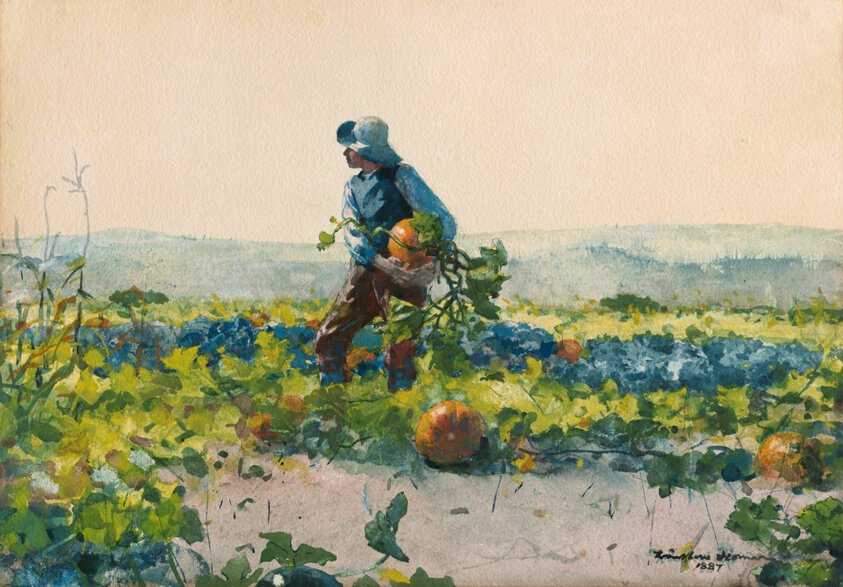
PaintingWinslow Homer’s For to Be a Farmer’s Boy (1887)
A watercolor at the Art Institute of Chicago. The sky now looks pale and empty, but analysis found Homer painted it with thin washes of chrome yellow and pink madder, alizarin’s natural cousin, to make an orange sunset. Both pigments faded. It shows what light does to thin madder reds.
#E8D5BF#AA782E#6A7438#496A63
Source: Art Institute of Chicago
Source
Sampled from the Art Institute of Chicago’s image (1963.760), released as CC0 (public domain). The faded sunset and the pigments come from the museum’s description. Colors in a photo shift with the lighting, so read the codes as close, not exact.
#9E6D5A#7D4234#36423B#977F4F
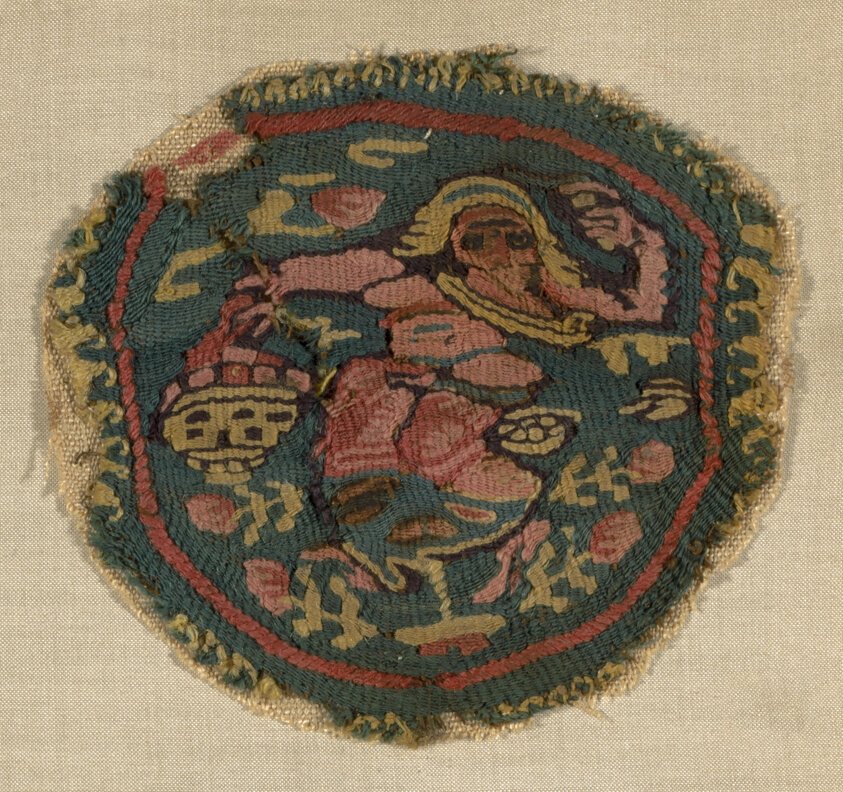
TextileRoundel with Aphrodite (6th–8th century)
A woven wool and linen roundel from a garment made in Byzantine Egypt. Scientists found madder and cochineal behind its reds and pinks, with indigo for the blue-green ground. Madder reds like these were the source of alizarin for thousands of years.
#9E6D5A#7D4234#36423B#977F4F
Source: Art Institute of Chicago
Source
Sampled from the Art Institute of Chicago’s image (1900.407a), released as CC0 (public domain). The dyes come from the museum’s description. Colors in a photo shift with the lighting, so read the codes as close, not exact.
#E61D2B#FFFFFF
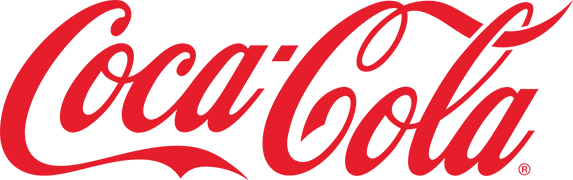
BrandingCoca-Cola
Coca-Cola’s red, #E61D2B, is almost the same as this page’s code, a touch more intense. It fills the script wordmark in the logo file on the brand’s US website.
#E61D2B#FFFFFF
Source: Coca-Cola logo file
Source
The red is the fill in Coca-Cola’s own logo file, served on its website. The logo shown is that file.
#E60012#000000
BrandingMitsubishi Group
The three diamonds of the Mitsubishi mark are #E60012, a purer red than this page’s code and slightly less pink.
#E60012#000000
Source: Mitsubishi logo file
Source
The red is the fill in Mitsubishi.com’s own logo file, served on its website.
#E91C24#FFFFFF#000000
BrandingPurina
The pet food maker’s red, #E91C24, is a touch more saturated and a little more orange than this page’s code. It fills the red and white checkerboard beside the Purina name.
#E91C24#FFFFFF#000000
Source: Purina logo file
Source
The red is the fill in Purina’s own logo file, served on its UK website. The logo shown is that file.
#E62725
BrandingWalgreens
The drugstore chain’s red, #E62725, is a hair lighter and a little more orange than this page’s code. It is the only color in the Walgreens script logo.
#E62725
Source: Walgreens logo file
Source
The red is the color of Walgreens’ own signature logo file, served on its website. The logo shown is that file.
#EC111A
BrandingScotiabank
The Canadian bank’s red, #EC111A, is a little brighter and less bluish than this page’s code. Scotiabank sets its whole wordmark in it.
#EC111A
Source: Scotiabank logo file
Source
The red is the fill in Scotiabank’s own logo file, served on its website. The logo shown is that file.
#ED1B2F
Branding3M
3M’s red, #ED1B2F, is a touch lighter and more vivid than this page’s code. It is the only color in the 3M mark on the company’s newsroom.
#ED1B2F
Source: 3M logo file
Source
The colors are the fills in 3M’s own logo file, served on its newsroom. The logo shown is that file.
Logos belong to their owners and are shown unaltered, only to show where each palette comes from. Palettes are sampled in-house.
Questions
What color is alizarin crimson?
A strong, slightly cool red. The usual web code is #E32636 (RGB 227, 38, 54). The real paint is darker and bluer: nearly maroon from the tube and rose pink when thinned.
What is alizarin crimson made of?
Alizarin, the red dye from madder root, fixed onto a colorless base such as aluminum hydroxide to make a pigment. Since the 1870s the alizarin has usually been made synthetically rather than taken from the plant.
Is alizarin crimson lightfast?
Not in thin layers. Thick paint holds up reasonably well, but washes and pale tints fade in strong light, and the ASTM watercolor standard rates it poor. Many painters use quinacridone or other modern reds instead.
What is the difference between alizarin crimson and crimson?
Crimson (#DC143C) is a CSS color named after the kermes insect. Alizarin crimson (#E32636) is named after a plant-based pigment. On screen, alizarin crimson is a touch warmer and lighter.
Is alizarin crimson the same as rose madder?
Close cousins. Rose madder is the traditional lake made from madder root itself; alizarin crimson uses synthetic alizarin and is usually deeper and bluer. Some dictionaries treat the names as the same pigment.
Is alizarin crimson toxic?
It is not a poison pigment like vermilion or lead white. Pure alizarin is classed as harmful if swallowed and can irritate skin and eyes, so normal studio care is enough.
What colors go with alizarin crimson?
Cream and antique gold for a warm, classic look; charcoal or navy for contrast; deep teal for a near-opposite that makes the red stand out.