Oxblood

A near-black red named after the blood of an ox.

Overview

Oxblood is a very dark red, almost black. Its usual code, #4A0000, is red at under a third of full strength, with no green or blue at all. In low light it reads as black with a red glow.

The name simply means the color of an ox’s blood, and it has been an English color word since 1705. Its French twin, sang de boeuf, names a famous Chinese porcelain glaze, which English speakers also call ox-blood.

Older references make oxblood much lighter than the web code. The oxblood in Maerz and Paul’s 1930 color dictionary is a moderate reddish brown, Merriam-Webster defines it the same way, and the Chinese glaze is a glossy deep red. The near-black code is closer to dried blood: people’s average “dried blood” in an online color survey, #4B0101, is almost identical.

Oxblood is a classic color for leather shoes and a fashion favorite every few autumns. Use it like a softer black: it carries cream or gold text and pairs well with tan, forest green and denim.

HEX#4A0000
RGBrgb(74, 0, 0)
HSLhsl(0, 100%, 15%)
HSV0°, 100%, 29%
CMYK0, 100, 100, 71
OKLCHoklch(25.7% 0.105 29.2)
Every code converts from the HEX value #4A0000. #4A0000 is the oxblood most references use, but no standard defines it: Wikipedia takes it from color websites. Color dictionaries put oxblood much lighter. The 1955 ISCC-NBS dictionary files the oxblood of Maerz and Paul’s A Dictionary of Color (1930) as a moderate reddish brown and Ridgway’s ox-blood red (1912) as a deep red; see the range below. CMYK is a screen-based estimate; print results vary.
Oxblood color card, hex #4A0000: “No bull. Just oxblood”

Oxblood on the color map

People’s average “dried blood” lands right on the code. Every older oxblood sits above the outline, much lighter: Maerz and Paul’s straight above, browner and grayer, and Ridgway’s swatch and the Chinese glaze above and a little to the left, toward crimson. The outline is an approximate range, not a measured one.

Shades and tints

Tints with white

Shades with black

Tones with gray

Oxblood sits in the middle. Tints add white, shades add black and tones add gray, in 10% steps out from it. Tap any swatch to copy its code.

Light and dark oxblood

#926666
Light oxbloodMixed 40% with white. A dusty brick-rose.
#893F45
CordovanLighter and softer, named after a horse leather. See cordovan
#800000
MaroonPure red at half strength, the CSS web color. See maroon
#4A0000
OxbloodThe reference color.
#340000
Dark oxbloodMixed 30% with black. Black with a faint red warmth.

Colors that go with oxblood

Pairings that work in rooms, outfits and interfaces.

Oxblood and cream

Classic and bookish. Safe for long text.

Oxblood and tan

Polished leather. Warm, tailored and quiet.

Oxblood and forest

Heritage colors: tweed, wood and library lamps.

Oxblood and blush

Soft against strong. Good for beauty and stationery.

Oxblood and denim

Boots and jeans. Casual and timeless.

Oxblood and gold

Dark and festive. Use oxblood as the background.

Color-wheel palettes

Pick a palette to see where its colors sit on the color wheel. The caret marks oxblood. Tap a band to copy its code.

Similar colors

Eigengrau39%Tyrian purple44%Bordeaux69%Rosewood66%OxbloodLamp black47%Caput mortuum55%

Lined up by hue around oxblood. Hover a color to see how similar it is.The bar under each name shows how similar it is. Similarity comes from the distance between the two colors in OKLab, a model of how we see color.

Oxblood vs maroon

Oxblood#4A0000 · hue 0°
  • Nearly black, with a red glow
  • Named after the blood of an ox
  • A leather and fashion color
Maroon#800000 · hue 0°
  • Red at half strength, clearly red
  • Named after the chestnut
  • A CSS color name and a school color

Meaning

  • Leather shoes
  • Porcelain glaze
  • London Underground
  • Fashion
  • Blood

Oxblood reads as dark, rich and a little severe: polished shoes, leather armchairs and autumn coats. Its name is blunt, the color of an ox’s blood, and it shares that name with a celebrated Chinese porcelain glaze. Studies of color and emotion test broad words such as red, not oxblood itself.

A glaze named for ox blood

Museum records

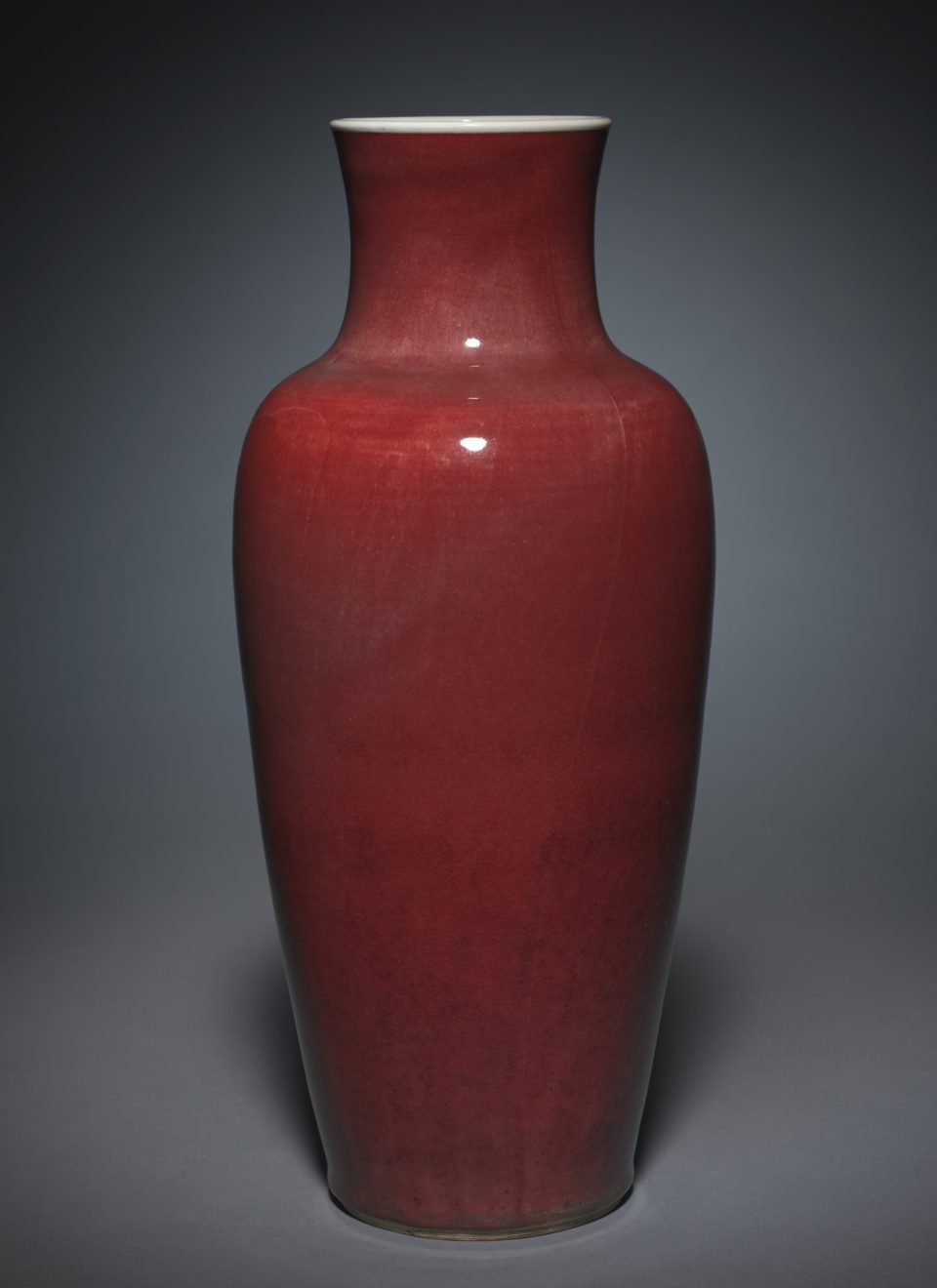
Potters at Jingdezhen, China, developed a deep copper-red glaze around 1705–1712, in the reign of the Kangxi emperor. One of its Chinese names means “ox-blood red”, and in the West it is known by the French sang de boeuf, ox blood.1, 2
Real ox blood in paint: thin evidence

Weak evidence

Popular accounts say real ox blood went into old paints and leather dyes, but the sources behind that story are thin. Blood has turned up in some old paints, though: the red paint on a 1,000-year-old gold mask from Peru contained human blood proteins.3, 4

Oxblood fronts on the Tube

Historical record

In 1903 the architect Leslie Green was hired to design 50 new London Underground stations. He faced their street fronts in glazed terracotta in ox-blood red. The stations opened in 1906 and 1907 on lines that are now parts of the Piccadilly, Bakerloo and Northern lines.5

Sources (5)
  1. Wikipedia, “Sang de boeuf glaze”.
  2. Cleveland Museum of Art, “Bottle Vase”, China, Kangxi reign (1662–1722), Lang ware (1940.942): “‘Ox blood’ glaze is one of the Qing dynasty’s accomplishments in porcelain production.”
  3. Wikipedia, “Oxblood”, Origin section, which cites a HowStuffWorks article on red barns.
  4. Pires, E., Carvalho, L. D. C., Shimada, I. & McCullagh, J. (2021). Human blood and bird egg proteins identified in red paint covering a 1000-year-old gold mask from Peru. Journal of Proteome Research, 20(11), 5212–5217. doi:10.1021/acs.jproteome.1c00472
  5. Wikipedia, “Leslie Green”.

History

Oxblood is a plain description: the color of an ox’s blood. It has named a Chinese glaze, the fronts of London’s early Tube stations and a run of fashion seasons.

  1. 1705

    First known use of “oxblood” as a color name in English.1

  2. About 1705–1712

    Potters at Jingdezhen develop a copper-red glaze, fired without oxygen, that Western collectors later call sang de boeuf, or ox blood.2

  3. 1903

    Leslie Green becomes architect to the Underground Electric Railways Company of London. His stations, faced in ox-blood red glazed terracotta, open in 1906 and 1907.3

  4. 1912

    Robert Ridgway’s Color Standards and Color Nomenclature includes an “ox-blood red”, a deep red in the later ISCC-NBS system.4

  5. 1930

    Maerz and Paul’s A Dictionary of Color includes an oxblood sample, a moderate reddish brown in the ISCC-NBS system.4

  6. 2012

    Oxblood is one of the fashion colors of the fall and winter season, on clothes, accessories and lipstick.5

Sources (5)
  1. Merriam-Webster, “oxblood”, definition and first known use.
  2. Wikipedia, “Sang de boeuf glaze”.
  3. Wikipedia, “Leslie Green”.
  4. Kelly, K. L. & Judd, D. B. (1955). The ISCC-NBS Method of Designating Colors and a Dictionary of Color Names. NBS Circular 553. Entries for Ridgway’s ox-blood red and Maerz and Paul’s oxblood as digitized by John Foster, in Aubrey Jaffer’s sub-dictionaries (R) and (M).
  5. Wikipedia, “Oxblood”, In modern fashion section, citing The Washington Post (10 October 2012) and NewsOK (9 October 2012).

Oxblood in use

A tall Chinese porcelain vase with a white rim, covered in a glossy, deep ox-blood red glaze
#8E3535#6B2729#592123#3A2020
CeramicsOx-blood vase, China (1662–1722)

A tall porcelain vase from the imperial kilns at Jingdezhen, made in the Kangxi reign, when the ox-blood glaze was developed. Its glossy red is far lighter and redder than the web’s near-black oxblood, much closer to the oxblood of the old color dictionaries.

#8E3535#6B2729#592123#3A2020
Source: Cleveland Museum

Palettes are sampled in-house.

Questions

What color is oxblood?

A very dark red, close to black. Its usual code online is #4A0000 (RGB 74, 0, 0), though no standard defines it. Dictionaries describe oxblood as a deep red or a reddish brown.

What is the difference between oxblood and maroon?

Both codes are pure red with no green or blue. Maroon (#800000) is red at half strength and clearly reads as red. Oxblood (#4A0000) is much darker, almost black, and older references give it a brown cast.

Is oxblood the same as burgundy?

No. Burgundy (#800020) is lighter and leans purple, like red wine. Oxblood is darker and browner, like leather or dried blood.

Is oxblood made from real ox blood?

The name describes the color. Stories of real ox blood in old paints and leather dyes are common, but the evidence for them is thin. The famous Chinese ox-blood glaze gets its red from copper.

What colors go with oxblood?

Cream, tan and camel for a classic leather look, blush for softness, forest green or denim blue for contrast, and gold for something festive.

Why are some London Underground stations oxblood red?

The architect Leslie Green faced the stations he designed for three new lines with glazed terracotta in ox-blood red. They opened in 1906 and 1907.