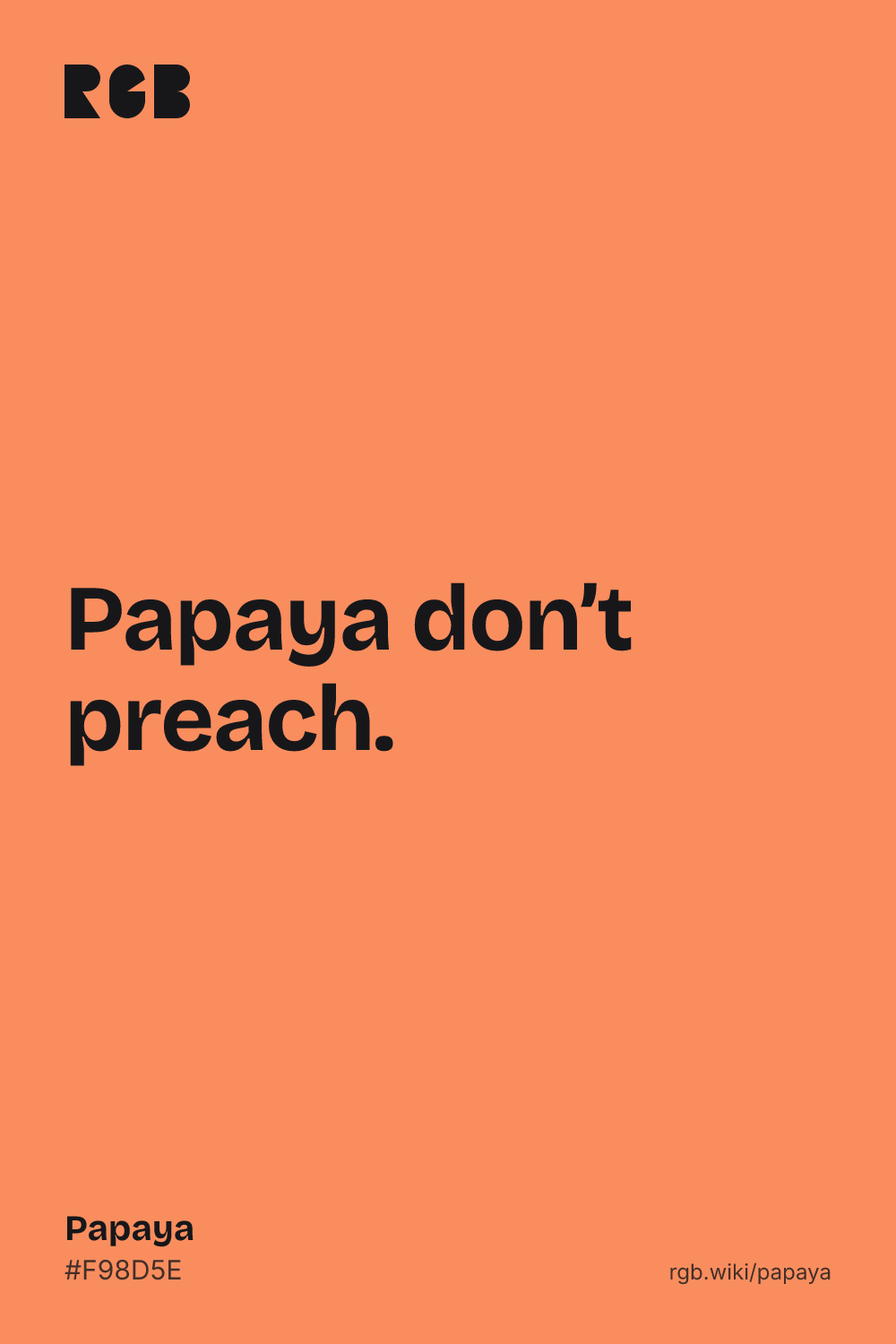
Papaya is a soft orange with a pink cast, named after the flesh of the ripe fruit. Its code, #F98D5E, has red almost at full strength, a little over half green and about a third blue. No color standard defines it, but it is the value most color lists give. On screens it sits close to coral and salmon, softer than the first and more orange than the second.
The name has a near twin that looks nothing like it. The CSS keyword papayawhip, #FFEFD5, is a pale cream. It comes from the X Window System’s 1989 color list, which copied its light colors from a paint maker’s samples to give screens soft window backgrounds. It is a whipped-cream pale, not the color of the fruit, and has no link to the code on this page.
Real papayas come in two flesh colors, and one gene decides which. Red-fleshed varieties, often the large ones sold in US markets, store lycopene, the red pigment of tomatoes. Yellow-fleshed ones turn that lycopene into beta-carotene and related yellow-orange pigments. A two-letter insertion in the gene that would do the conversion breaks it, leaves the lycopene in place and keeps the flesh red.
Papaya is a light color: black text on it reaches 9:1, white text only 2.3:1. Use dark text on it, or deep papaya, #955538, for text on white. It pairs well with teal, navy, leaf green and cream. Racing fans know a louder papaya: McLaren’s orange, which its own website codes as #FF8000.