Marigold is a warm orange yellow, deeper than amber and brighter than goldenrod. Its code is #EAA221: strong red, a good deal of green and very little blue, which puts it right on the line between orange and yellow.
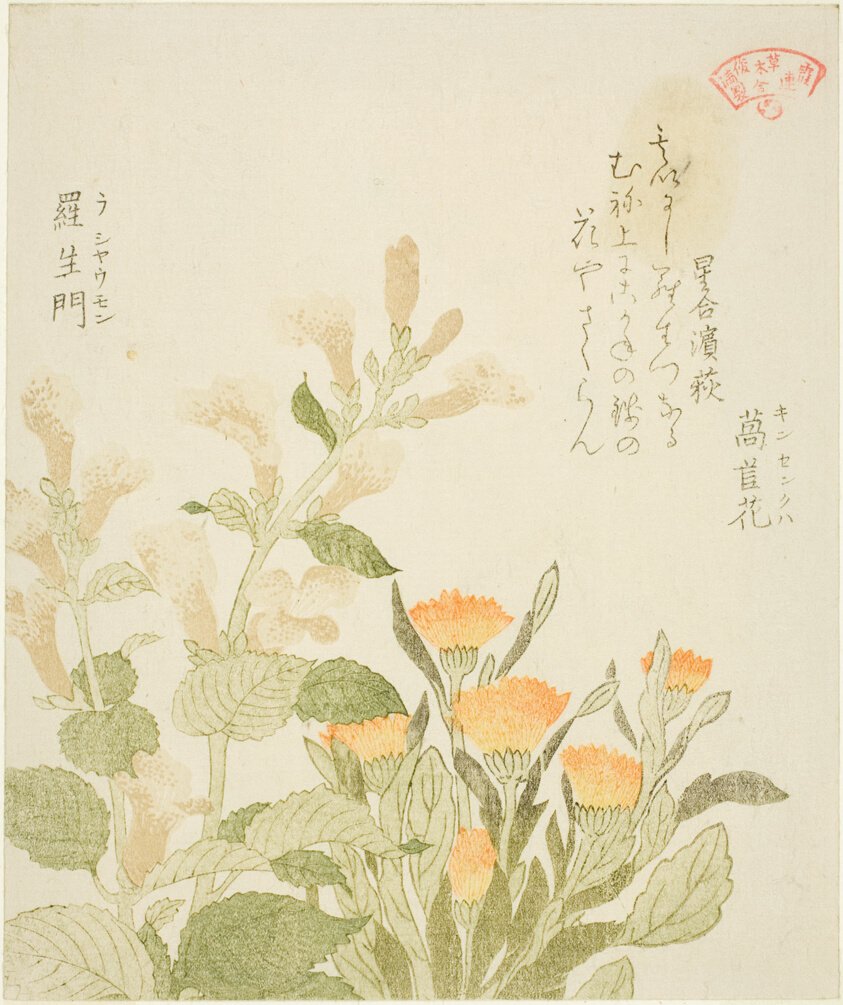
The name is older than the flower most people picture. Merriam-Webster traces marigold to Middle English, from Mary, mother of Jesus, and gold, and dates it to the 14th century, when it meant the pot marigold, Calendula. The big orange marigolds of today, Tagetes, are native to Mexico and reached European herbals only in the 1500s.
In Mexico the flower is cempasúchil, from the Nahuatl for “twenty flower”, and it fills altars and graves at Día de Muertos. In India, where Portuguese trade brought it in the 1500s and 1600s, it is strung into garlands and offerings. The orange in both comes mostly from one pigment, lutein, and marigold petals add that same pigment to chicken feed to deepen the yellow of egg yolks.
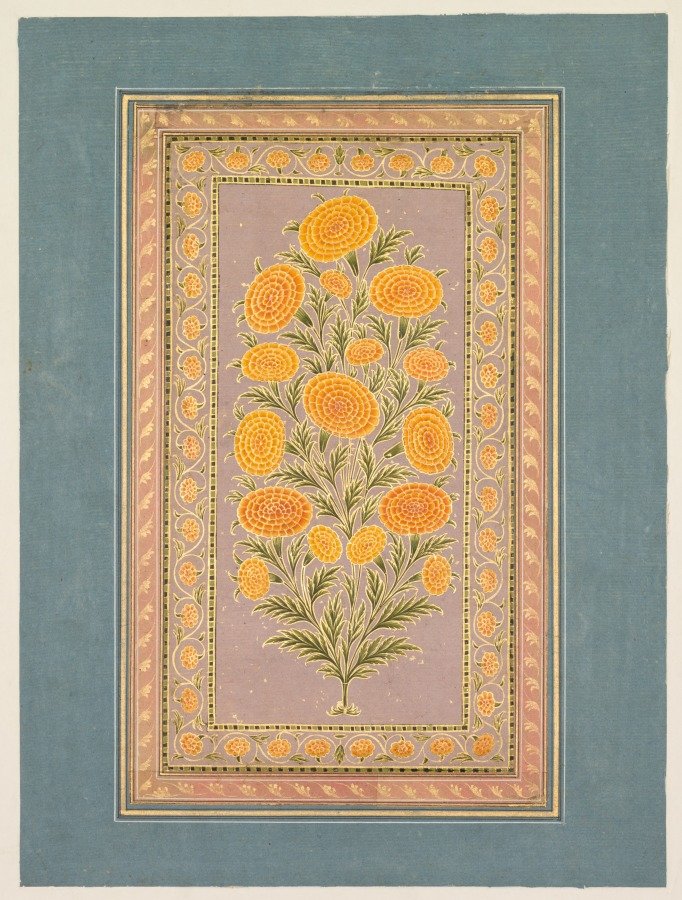
On screens, marigold is a light color: white text on it reaches only about 2.2:1, so it needs dark text. The xkcd color survey’s marigold, #FCC006, is yellower. The flowers in an Indian painting of about 1765, shown below, come out very close to this code.