French for raw
Word historyEcru comes from French écru, “unbleached, raw”, from Old French escru and Latin crudus, raw. It first named the natural color of linen and silk that had not been bleached.1, 2
A grayish yellow named after raw, unbleached cloth.
Ecru is a grayish yellow, the color of raw, unbleached cloth. Its code here is #C2B280: strong red and green with much less blue, which gives a muted, sandy yellow with a touch of gray.
The word is French. Écru means raw or unbleached, and it first named the natural color of linen and silk before bleaching. English has used ecru as a color word since 1836. In 1930, the authors of A Dictionary of Color wrote that ecru, beige and grège all meant the same thing: cloth in its raw state.
Today the name covers a wide range. This code is the dictionary color, but the average ecru in the xkcd color survey was #FEFFCA, a very pale cream, while the textile trade’s 1941 color card made ecru a grayish brown. Unbleached linen in old textiles, like the pieces below, is often darker and browner still.
Ecru works as a soft neutral for clothes, rooms and packaging. It pairs well with navy, olive, rust and charcoal, and with ivory or white for a tone-on-tone look.
| HEX | #C2B280 | |
|---|---|---|
| RGB | rgb(194, 178, 128) | |
| HSL | hsl(45, 35%, 63%) | |
| HSV | 45°, 34%, 76% | |
| CMYK | 0, 8, 34, 24 | |
| OKLCH | oklch(76.5% 0.069 92.4) |
People’s average ecru in the xkcd survey is far paler, just above the top of this view. Pale yellow sits above the outline, much lighter. Textile ecru sits on the lower left edge of the outline: darker and browner. The unbleached linen in the lace sits farther down and to the left. The outline is an approximate range, not a measured one.
Tints with white
Shades with black
Tones with gray
Pairings that work in rooms, outfits and interfaces.
Classic and nautical, like canvas and denim.
Earthy and outdoorsy. Suits workwear and gardens.
Warm and autumnal. Good for packaging and menus.
Sober and modern. Charcoal keeps ecru from looking dated.
Tone on tone, like raw and bleached linen side by side.
Soft and vintage. Suits weddings and stationery.
Pick a palette to see where its colors sit on the color wheel. The caret marks ecru. Tap a band to copy its code.
Lined up by hue around ecru. Hover a color to see how similar it is.The bar under each name shows how similar it is. Similarity comes from the distance between the two colors in OKLab, a model of how we see color.
Ecru reads as natural, plain and quietly old-fashioned: the color of linen, cotton and silk before bleaching and dyeing. It was a fashion favorite until about 1910, when beige took its place, and the name has drifted lighter since. As with most named colors, research on color and emotion tests broad hues such as yellow or brown, not ecru itself.
Ecru comes from French écru, “unbleached, raw”, from Old French escru and Latin crudus, raw. It first named the natural color of linen and silk that had not been bleached.1, 2
In 1930, Maerz and Paul’s A Dictionary of Color wrote that ecru, beige and grège all meant the color of raw, unbleached, undyed cloth. Ecru had been hugely popular until about 1910, they said, and since then beige had taken over.3
In the xkcd color survey, where people named over five million colors online, the average ecru was #FEFFCA, a very pale cream. That is far lighter than the dictionary’s grayish yellow. The survey was open to anyone online, so it reflects web users, not everyone.4
Ecru began as a dye-house word for raw cloth. It had its heyday in late 19th-century fashion, gave way to beige, and color references have never agreed on how dark it is.
First known use of “ecru” as a color word in English, from French écru, raw.1
Ecru and beige move from the dye house into fashion. Ecru stays enormously popular until about 1910.2
Maerz and Paul’s A Dictionary of Color says ecru, beige and grège mean the same thing, and that ecru has become nearly obsolete as a fashion word.2
The Standard Color Card of America, the textile trade’s color card, shows an ecru that is later classed as a light grayish yellowish brown.3
The Descriptive Color Names Dictionary shows ecru as a grayish yellow, the color of this page’s code.3
The US National Bureau of Standards publishes the ISCC-NBS dictionary, which sorts these ecrus into three different color names.3
In the xkcd color survey, the average color people call ecru is a very pale cream, #FEFFCA.4
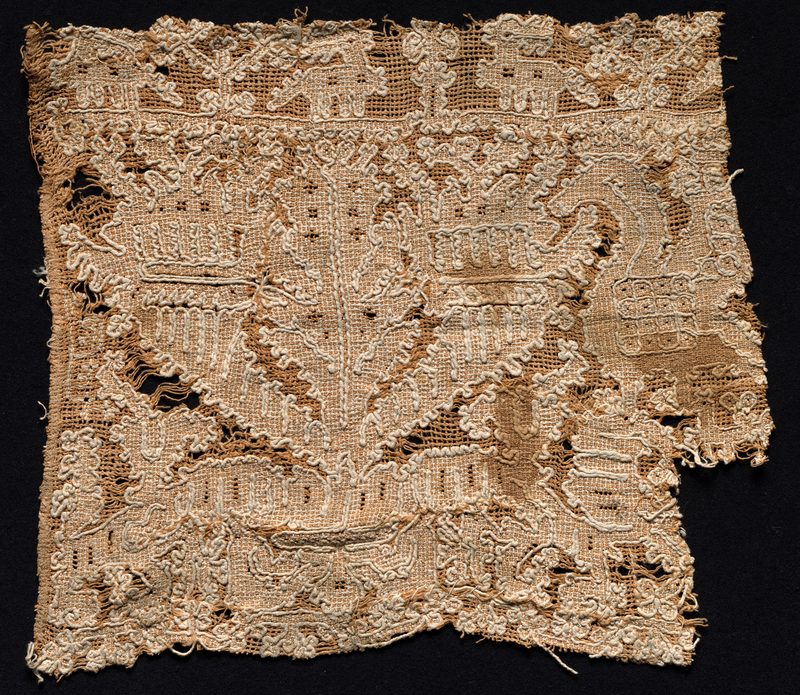
A fragment of Italian needle lace at the Cleveland Museum of Art. The museum describes its ground as unbleached linen, a dark yellow, with the pattern worked in bleached linen. In the photo the raw linen is a light tan, about #A68463, and even the bleached thread is a warm cream.
Sampled from the Cleveland Museum of Art’s photograph (1920.1256), released as CC0 (public domain). The description of the linen comes from the museum’s record. Colors in a photo shift with the lighting, so read the codes as close, not exact.
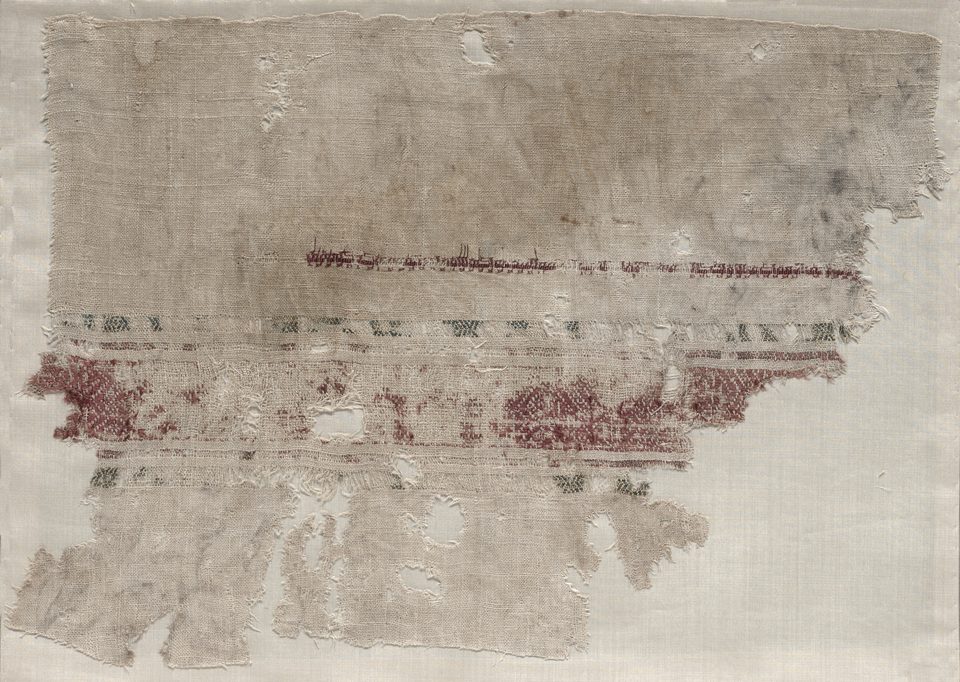
A linen cloth made in Egypt in the 930s, with embroidered bands and a line of Arabic text, now at the Cleveland Museum of Art. The museum calls the plain cloth ecru linen. In the photo it is a soft grayish beige, about #A39686: closer to the textile trade’s ecru than to this page’s code.
Sampled from the plain linen in the Cleveland Museum of Art’s photograph (1932.31), released as CC0 (public domain). The museum’s record describes the cloth as ecru linen. Colors in a photo shift with the lighting, so read the codes as close, not exact.
Palettes are sampled in-house.
A grayish yellow, the color of raw, unbleached cloth. The code here is #C2B280 (RGB 194, 178, 128). In everyday use, ecru often means something paler: a light cream.
EK-roo or AY-kroo. Merriam-Webster lists both.
They began as the same idea: both are French words for the color of undyed cloth. Today the web’s beige (#F5F5DC) is a pale off-white, while ecru (#C2B280) is darker and grayer. In everyday speech the two overlap.
Ivory (#FFFFF0) is an off-white with a faint yellow tint. Ecru is much darker and grayer, though some people use ecru for pale creams close to ivory.
Raw or unbleached. The French word écru goes back to Latin crudus, raw. Ecru cloth is cloth left in its natural color.
Navy and charcoal for contrast, olive and rust for an earthy look, and ivory or white for a soft tone-on-tone palette.