Desert

A soft, sandy brown, named for deserts that are rarely just one color.

Overview

Desert is a light, warm brown with a soft pinkish cast, like sunlit sand or dry earth. The code most color lists use is #C9A27E: red at almost 80 percent, green near two thirds and blue about half. No color standard defines it.

It has been a color name since 1920, according to Maerz and Paul’s A Dictionary of Color (1930). The ISCC-NBS color dictionary files their desert as a light yellowish brown, the group whose center is camel’s code, a little darker and more golden than this one. In an online survey, people picked a yellower desert, closer to sand.

Real deserts rarely match one code. Sand covers only about a fifth of the world’s deserts; most of the rest is gravel and bare rock. Dunes in Namibia and central Australia turn red as iron oxide coats their grains, the Arabian Peninsula has black lava fields, and the layers of Arizona’s Painted Desert run from rust red to bluish green.

As a color, desert is a warm, quiet neutral for walls, clothing and screens. It needs dark text, since white text on it is hard to read. It pairs well with sky blue, sage green, rust red and charcoal.

HEX#C9A27E
RGBrgb(201, 162, 126)
HSLhsl(29, 41%, 64%)
HSV29°, 37%, 79%
CMYK0, 19, 37, 21
OKLCHoklch(73.9% 0.067 64.2)
Every code converts from the HEX value #C9A27E. No color standard defines desert. #C9A27E is the code most color lists use. It sits close to #C19A6B, the light yellowish brown where the 1955 ISCC-NBS dictionary files the desert of Maerz and Paul’s A Dictionary of Color (1930), as transcribed by Aubrey Jaffer and shown on Wikipedia. CMYK is a screen-based estimate; print results vary.
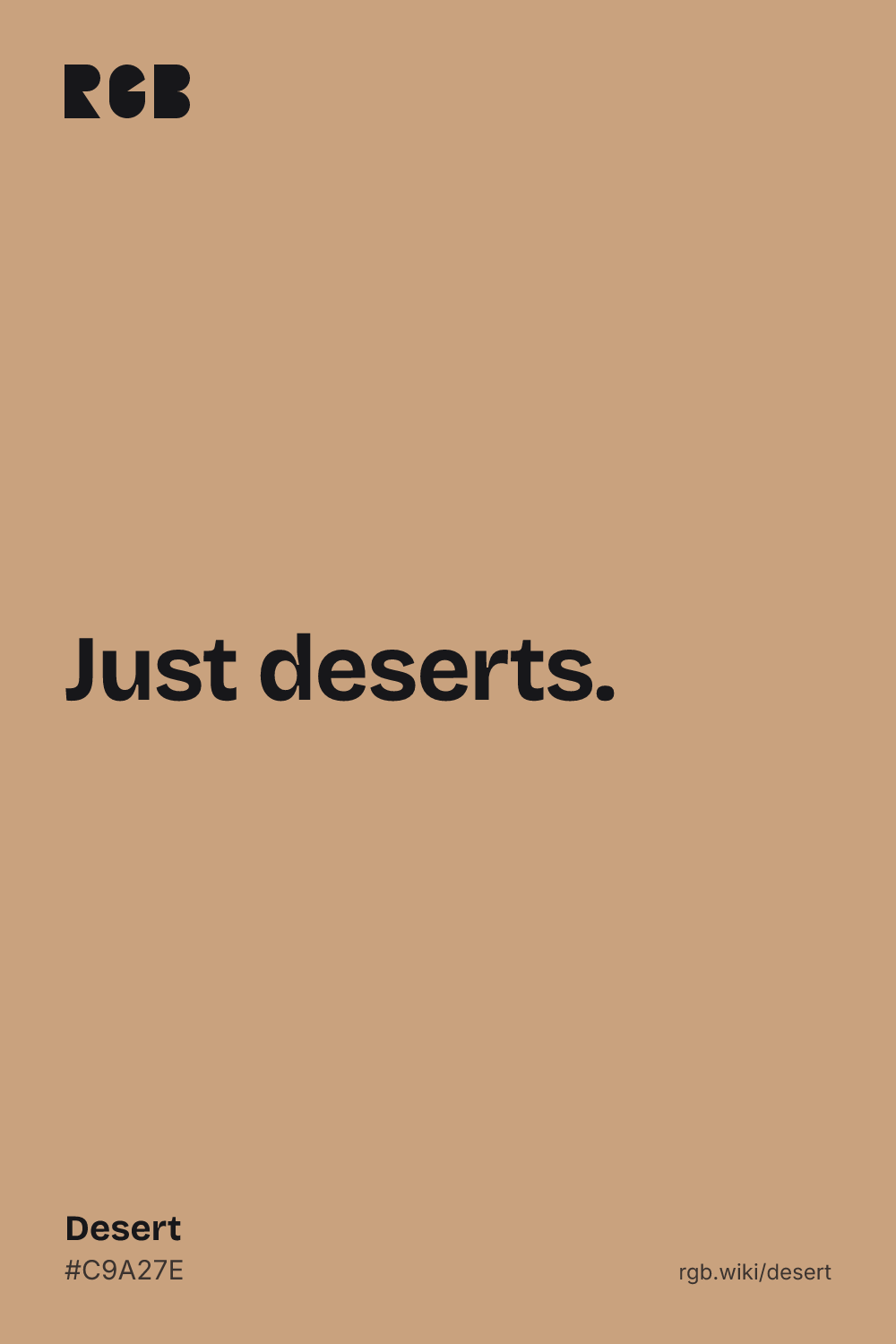
Desert color card, hex #C9A27E: “Just deserts”

Desert on the color map

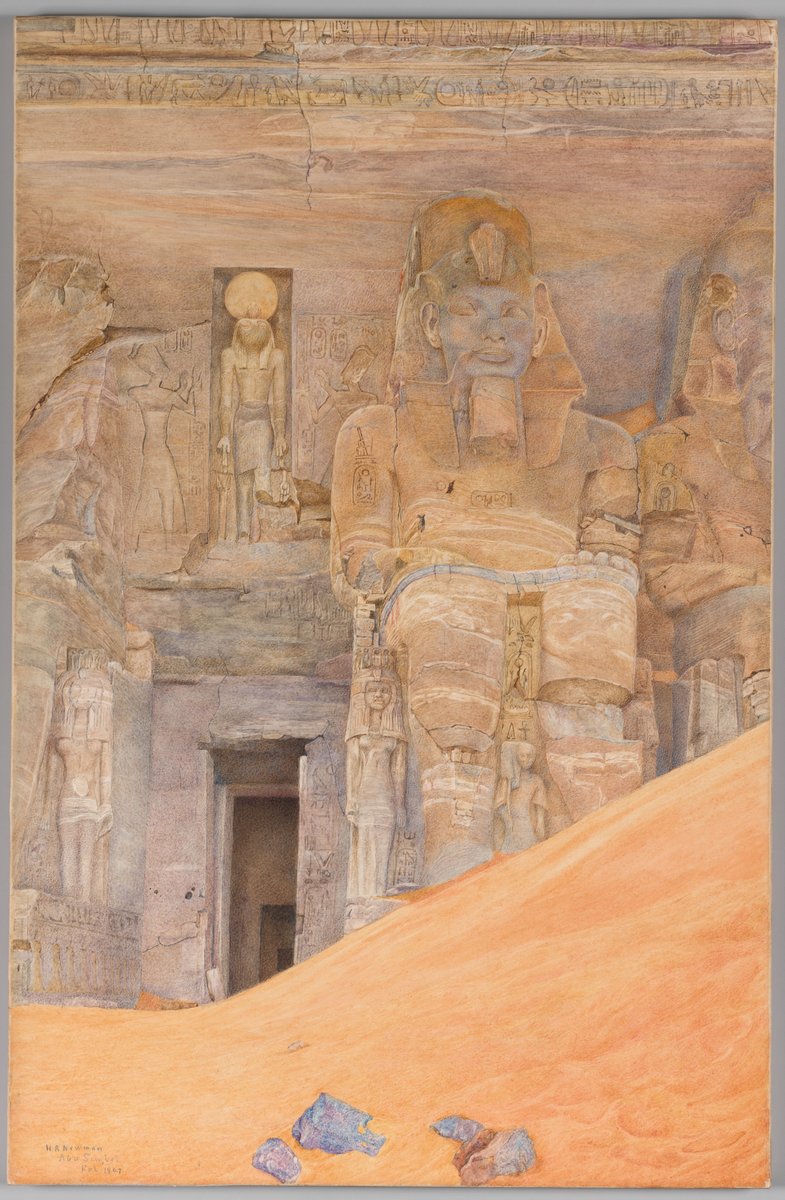
Maerz and Paul’s desert sits inside the outline, a little lower and to the right, toward gold. The survey’s desert lies far to the right: much yellower. The sand in Newman’s Abu Simbel is inside, above and to the left, lighter and more orange. Gérôme’s sunlit sand sits just below the reference, the same hue but darker, and the Army’s 1950 desert sand is below it and a little to the left. The outline is an approximate range, not a measured one.

Shades and tints

Tints with white

Shades with black

Tones with gray

Desert sits in the middle. Tints add white, shades add black and tones add gray, in 10% steps out from it. Tap any swatch to copy its code.

Light and dark desert

#EFE3D8
Pale desertMixed 70% with white. A warm off-white for backgrounds.
#EDC9AF
Desert sandThe pale, pinkish desert sand most color lists show. It comes from a crayon color; no standard defines it.
#C9A27E
DesertThe reference color.
#C19A6B
Dictionary desertLight yellowish brown, the ISCC-NBS group for Maerz and Paul’s desert. It is the code this site uses for camel. See camel
#79614C
Dark desertMixed 40% with black. A soft brown for text and borders on pale desert.

Colors that go with desert

Pairings that work in rooms, outfits and interfaces.

Desert and sky

Sunlit sand under a clear blue sky. Open and fresh.

Red dunes

Sand and iron red, like the dunes of the Namib and central Australia.

Salt flat

Pale and quiet, with the white of a dry lake bed.

Lava field

A dark theme: basalt black, with warm sand as the accent.

Desert sage

Dusty green and sand, the colors of desert scrub.

Painted desert

Bands of rust, lavender and pale clay, like Arizona’s badlands.

Color-wheel palettes

Pick a palette to see where its colors sit on the color wheel. The caret marks desert. Tap a band to copy its code.

Similar colors

DesertCamel85%Tan76%Sandstone91%Greige73%Khaki82%Ecru79%

Lined up by hue around desert. Hover a color to see how similar it is.The bar under each name shows how similar it is. Similarity comes from the distance between the two colors in OKLab, a model of how we see color.

Desert vs camel

Desert#C9A27E · hue 29°
  • Lighter, with a slight pink cast
  • A color name since 1920
  • No standard defines its code
Camel#C19A6B · hue 33°
  • Darker and more golden
  • A color name since 1916, after camel hair
  • The center of the dictionary group for desert

Meaning

  • Dry land
  • Sun and heat
  • Warm neutral
  • Camouflage

Desert brings to mind open, sunbaked land: dunes, wide skies and heat. In homes and clothing it works as a warm, quiet neutral, and armies use similar tans to hide vehicles in dry country. The real thing is far more varied than one sandy brown, as the claims below show. Studies of color and emotion test broad words such as brown or yellow, not desert, so nothing here is about mood.

Mostly gravel and rock

Government science

About a third of Earth’s land is desert, defined by dryness, not by heat or sand. The US Geological Survey estimates that sand covers only about 20 percent of the world’s deserts. Nearly half are plains of loose gravel left behind when wind blows the fine grains away; the rest is bare rock, desert soils and dry lake beds.1
Red sand takes time

Government science

NASA describes the dunes of Namibia’s Namib Sand Sea as quartz sand colored by a coating of iron oxide that grows redder farther inland from the coast. In Australia’s Simpson Desert, sand runs from brilliant white near its source to dark red, because a layer of hematite, an iron oxide, forms on the grains as the sand ages.2, 3

Black lava, white ash

Government science

The Arabian Peninsula is known for sand, but it also holds at least 12 lava fields. In Harrat Khaybar, a volcano built of dark basalt lava stands near two pale ones whose names both come from the Arabic word for white. In many deserts, rocks left exposed for ages darken under desert varnish, a shiny stain of manganese and iron oxides.4, 1

Painted by groundwater

Park science

The bands of Arizona’s Painted Desert are ancient soils, laid down more than 200 million years ago. According to the National Park Service, the red and green layers hold about the same amount of iron. Where the water table stayed high, the iron took on a greenish or bluish hue; where it rose and fell, the iron rusted red.5

Tan to hide and to stay cool

Military record

In the 1990–91 Gulf War, US commanders ordered vehicles that arrived in woodland camouflage to be repainted tan. A Defense Department report notes that the tan coating was also reformulated to reflect more sunlight, because the heat vehicles soaked up in the desert was a serious concern.6

Sources (6)
  1. US Geological Survey, Deserts: Geology and Resources, General Interest Publication, chapters “What is a desert?”, “Desert features” and “Eolian processes”.
  2. NASA Earth Observatory, “Sandscapes of the Namib Desert”, Image of the Day, January 13, 2020.
  3. NASA Earth Observatory, “Queensland’s Channel Country”, Image of the Day, September 15, 2012.
  4. NASA Earth Observatory, “White and Black Volcanoes of Saudi Arabia”, Image of the Day, May 22, 2024.
  5. US National Park Service, Petrified Forest National Park, “Geologic Formations”.
  6. US Department of Defense, Special Assistant for Gulf War Illnesses, “Environmental Exposure Report: Chemical Agent Resistant Coating (CARC)”, interim report, updated February 22, 2000. Sections III and IV.

History

Desert is a young color name, from the 1920s. Since then, color dictionaries, the US government and ordinary people have each pictured it a little differently.

  1. 1920

    First recorded use of desert as a color name in English, according to Maerz and Paul.1

  2. 1930

    Maerz and Paul’s A Dictionary of Color prints desert as plate 12, sample I7.1

  3. 1950

    A US federal paint specification, TT-C-595, lists two desert sands: one for the Army’s Quartermaster Corps and one from the Army’s own color list.2

  4. 1955

    The ISCC-NBS dictionary files Maerz and Paul’s desert as a light yellowish brown, the group whose center, #C19A6B, is now camel’s code. It places the two federal desert sands darker, as a light grayish brown and a light brown.2, 3

  5. 1990–91

    In the Gulf War, US Army units whose vehicles arrive in woodland camouflage repaint them tan. By February 1991, painters at the port of Al Jubayl have finished 3,500 priority vehicles and 5,000 others.4

  6. 2010

    In the xkcd color survey, the average color people call desert is a golden tan, #CCAD60, yellower than the usual web code.5

Sources (5)
  1. Maerz, A. & Paul, M. R. (1930). A Dictionary of Color. New York: McGraw-Hill. p. 203 and plate 12, sample I7, as cited in Wikipedia, “Desert sand (color): Desert”.
  2. Kelly, K. L. & Judd, D. B. (1955). The ISCC-NBS Method of Designating Colors and a Dictionary of Color Names. National Bureau of Standards Circular 553. PDF at NIST. Section on Federal Specification TT-C-595 (dated January 12, 1950) and index entries “Desert” and “Desert Sand”.
  3. Jaffer, A. Transcriptions of the ISCC-NBS dictionary: Maerz and Paul and Federal Specification TT-C-595, with centroid colors from “Color-Name Dictionaries”, MIT CSAIL.
  4. US Department of Defense, Special Assistant for Gulf War Illnesses, “Environmental Exposure Report: Chemical Agent Resistant Coating (CARC)”, section IV, “Use of CARC during Operations Desert Shield and Desert Storm”, updated February 22, 2000.
  5. Munroe, R. (2010). “Color survey results”. xkcd blog. The survey’s color averages are released as CC0 data.

Desert in use

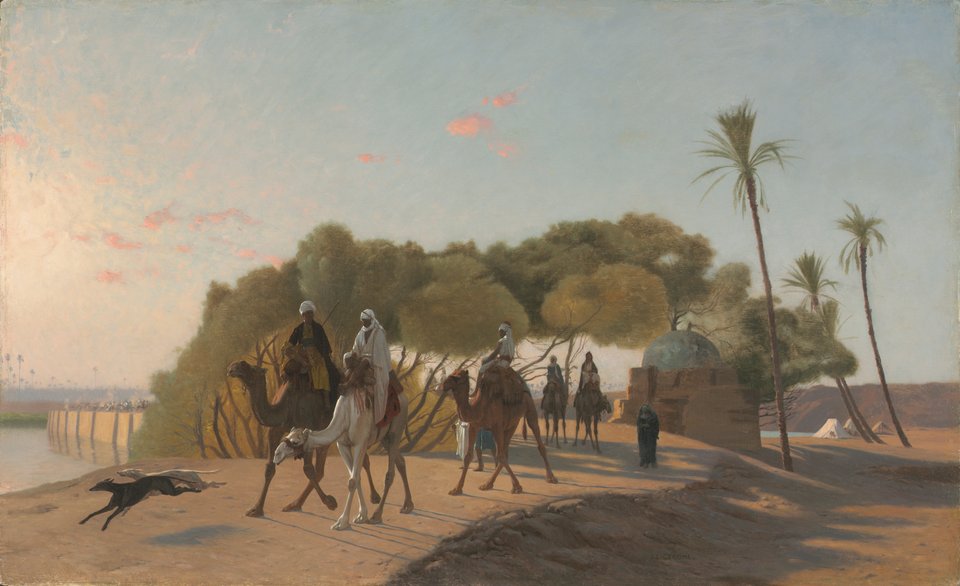
A painting of a camel caravan with riders leaving a grove of trees and palm trees, crossing tan sand under a pale evening sky, with a dog running ahead
#A68564#876D54#564B40#A5ACA7
PaintingLeaving the Oasis, Jean-Léon Gérôme (1880s)

Gérôme painted his camel caravans in the studio, from memories and sketches of trips to Egypt that began in 1856. His sunlit sand, about #A68564, has the same hue as this page’s desert but is darker. The museum points out the violet shadows cast by the camels’ legs.

#A68564#876D54#564B40#A5ACA7
Source: Cleveland Museum of Art
A watercolor of the carved front of an Egyptian rock temple with colossal seated statues, half hidden by a smooth slope of orange sand
#F0B986#EEA873#C79E79#9E795A
WatercolorAbu Simbel, Henry Roderick Newman (1907)

The temples at Abu Simbel lay buried in sand until the 1800s. Newman built up this view with tiny dots of color to capture, in the museum’s words, the tonality of sand and desert light. His sand is a peachy orange, about #EEA873, while the carved stone of the great seated statue, about #C79E79, is almost exactly this page’s desert.

#F0B986#EEA873#C79E79#9E795A
Source: Cleveland Museum of Art
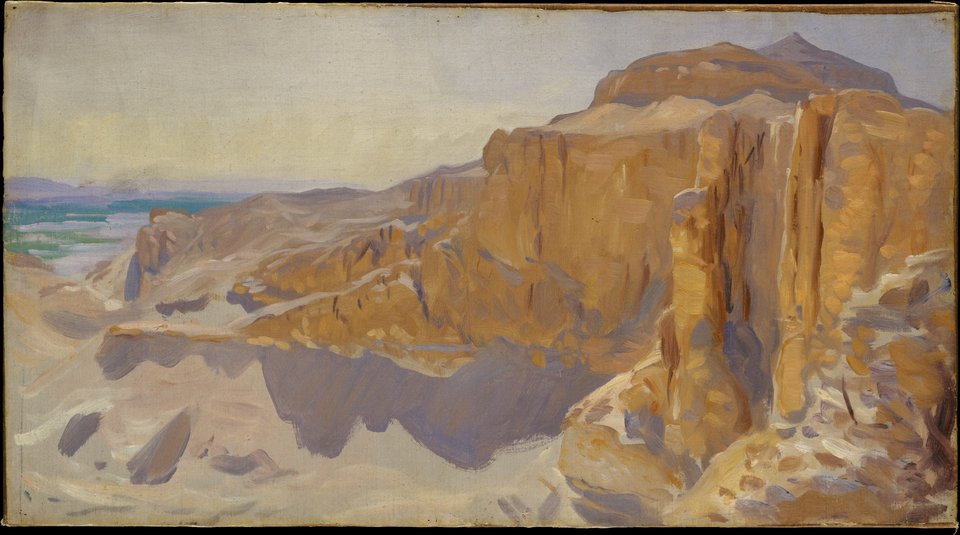
A loosely painted view of tall, golden desert cliffs with lilac shadows, and a glimpse of green fields and blue haze in the distance at left
#AA7E44#775134#81716E#B4A690
PaintingCliffs at Deir el Bahri, Egypt, John Singer Sargent (1890–91)

No dunes here: Sargent painted a desert of bare rock. The cliffs glow a golden brown in the sun, about #AA7E44, deeper and more orange than this page’s code, and the shadows turn a lilac gray, about #81716E.

#AA7E44#775134#81716E#B4A690
Source: The Met
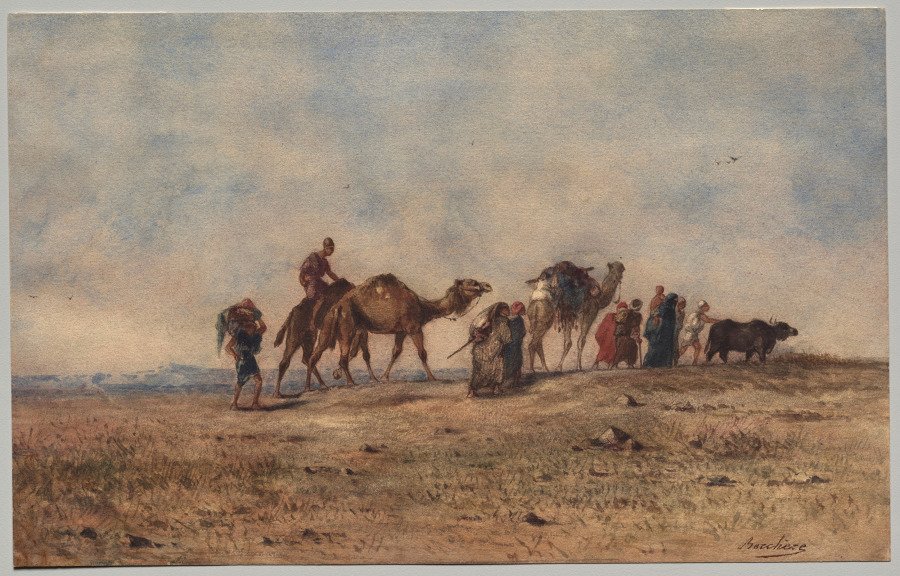
A watercolor of a line of travelers, camels and an ox crossing a flat, stony brown plain under a cloudy sky
#A78260#926F52#634835#B2A594
WatercolorA Caravan in the Desert, Narcisse Berchère (1860s)

Berchère’s travelers cross a flat, open plain in Egypt, scattered with stones and dry grass rather than dunes. The ground is a dusty brown, about #926F52 to #A78260, darker and duller than this page’s code.

#A78260#926F52#634835#B2A594
Source: Cleveland Museum of Art

Palettes are sampled in-house.

Questions

What color is desert?

A light, warm brown with a soft pinkish cast, like sunlit sand. The code most color lists use is #C9A27E (RGB 201, 162, 126). No color standard defines it, and the 1955 ISCC-NBS color dictionary places desert a little darker and more golden, near #C19A6B.

Is desert the same as desert sand?

Not quite. The desert sand on most color lists, #EDC9AF, is much paler and pinker, and comes from a crayon color. A 1950 US government paint specification went the other way, with two desert sands darker than #C9A27E.

What is the difference between desert and sandstone?

Very little. Sandstone (#C8A97E) is a shade lighter and a touch more yellow. Side by side, the two are hard to tell apart.

Why are some deserts red?

Iron. Over time, a thin coat of iron oxide forms on sand grains, so older sand that has blown farther from its source turns redder. NASA describes this in the dunes of Namibia and of Australia’s Simpson Desert.

Are most deserts sandy?

No. The US Geological Survey estimates that sand covers only about 20 percent of the world’s deserts. Nearly half are gravel plains, and the rest is bare rock, desert soils and dry lake beds.

What colors go with desert?

Sky blue and sage green for a fresh look, rust red and lavender for warmth, off-white for a light room, and charcoal or black for contrast.

How do you mix desert paint?

Start with white and add yellow ochre, then warm it with a little burnt sienna until it turns slightly pink. If it gets too bright, a touch of raw umber dulls it. Paint makers’ shades called desert vary a lot, so compare samples in your own light.