Flax is a soft, pale yellow, the color of cleaned flax fiber and of “flaxen” hair. Its usual code is #EEDC82: red and green high, blue a little over half as strong, which gives a clear, light straw yellow. It is almost exactly the code most lists give buff, and a little lighter than straw.
The name follows the fiber, not the flower. The flax plant, grown for linen and linseed, has small blue flowers, and color names took those too: flax-flower blue is in Ridgway’s 1912 color standards. But to call something flax or flaxen means the pale, strawy color of the fiber ready for spinning. Maerz and Paul date flaxen as a color word to 1602, around the time Shakespeare’s Ophelia sang of an old man whose beard “was as white as snow” and whose head was “all flaxen”.
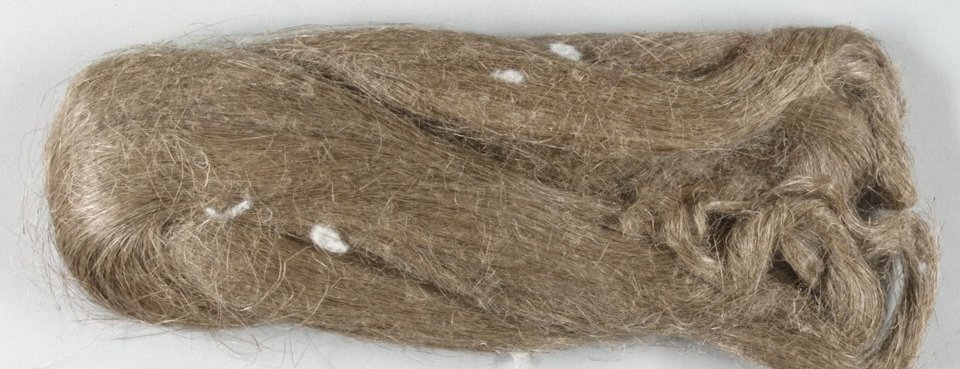
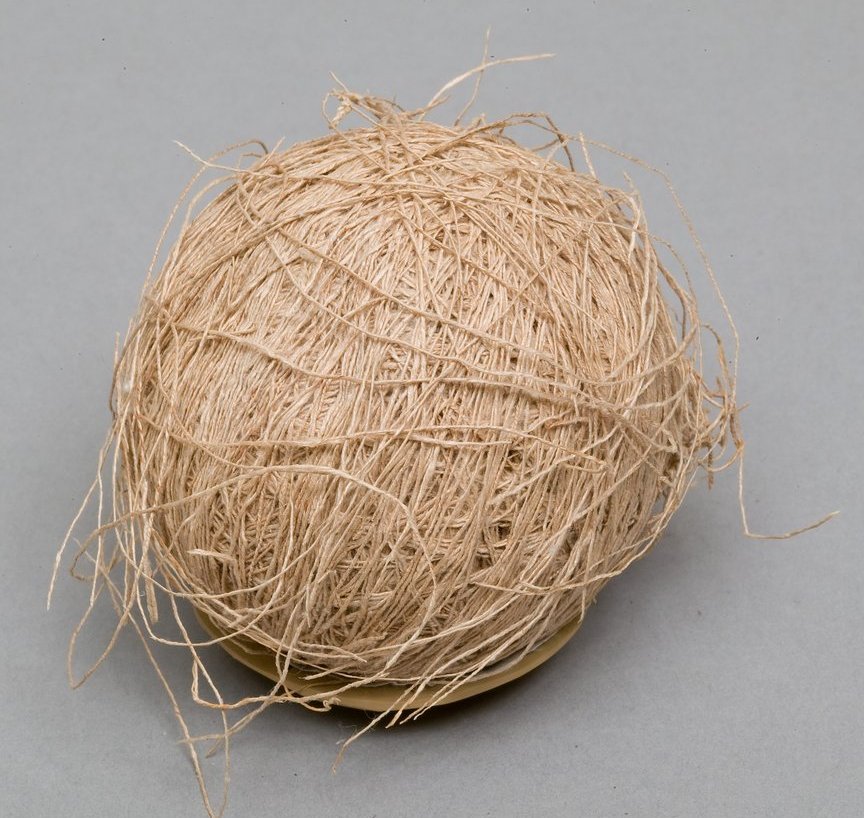
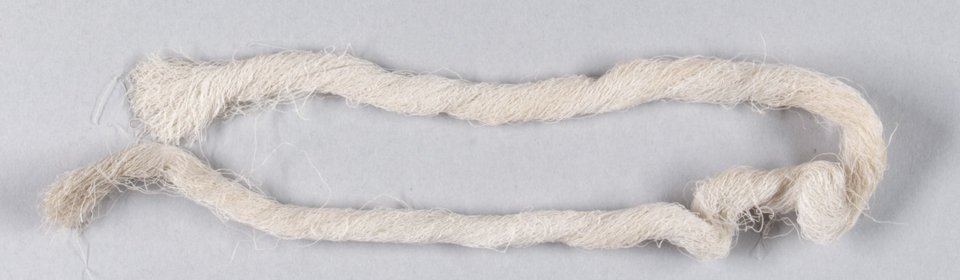
The code and the real thing part ways. #EEDC82 is Wikipedia’s match for the flax sample in Maerz and Paul’s A Dictionary of Color (1930), which dates flax as a color name to 1915, the year the American textile trade issued its first standard color card. Yet the 1955 ISCC-NBS dictionary files that same sample as a grayish yellow, the group whose center is the code for ecru. Flax fiber in museums is grayer still, from a grayish off-white to a grayish brown.
On screens, flax is a gentle, warm light color that needs dark text: white text on it can’t be read. It suits natural, handmade designs next to linen white, and its oldest partner is the blue of the flax flower. Navy, sage and charcoal also work well with it.