Celadon is a pale, soft green with a hint of gray, named after the jade-like glazes of China and Korea. The code here, #ACE1AF, is the one most references use for the color. No standard defines it, and the glazes themselves run from pale blue-green to deep olive.
The name is French. In Honoré d’Urfé’s novel L’Astrée (1607–1627), the shepherd Céladon wears grayish-green ribbons, and his name passed to the color, to the glaze and even to a green mineral, celadonite. European collectors coined the term for the pottery; Merriam-Webster dates the English color word to about 1768.
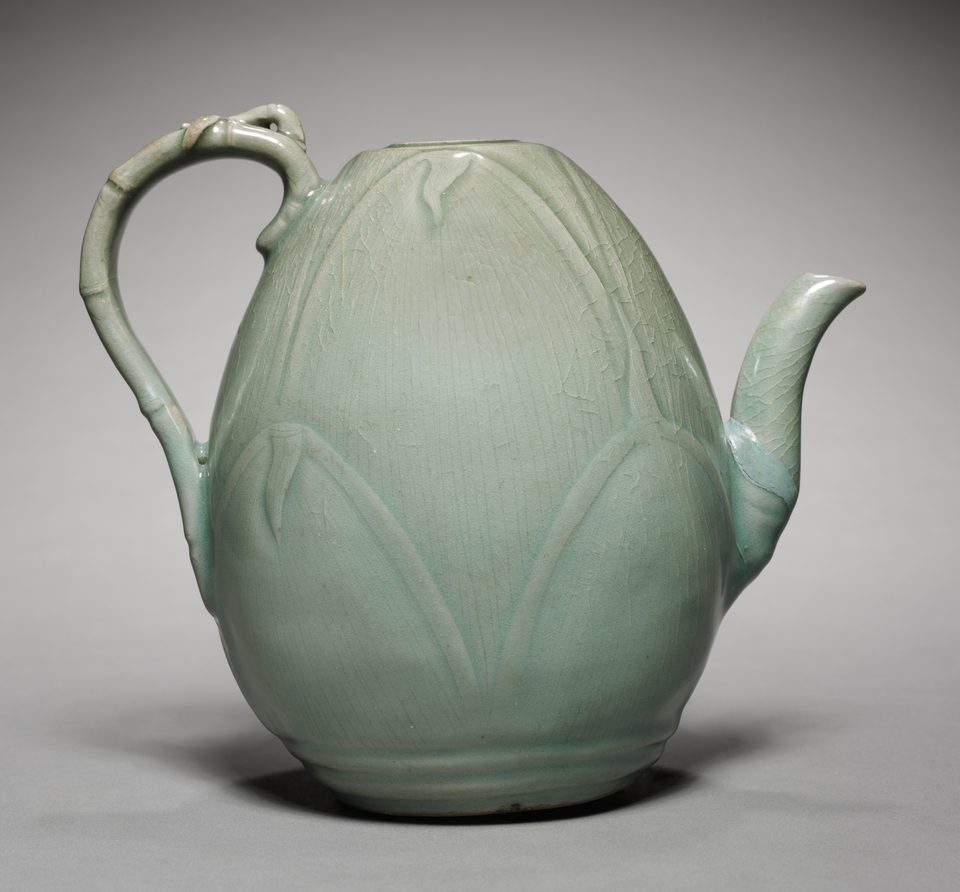
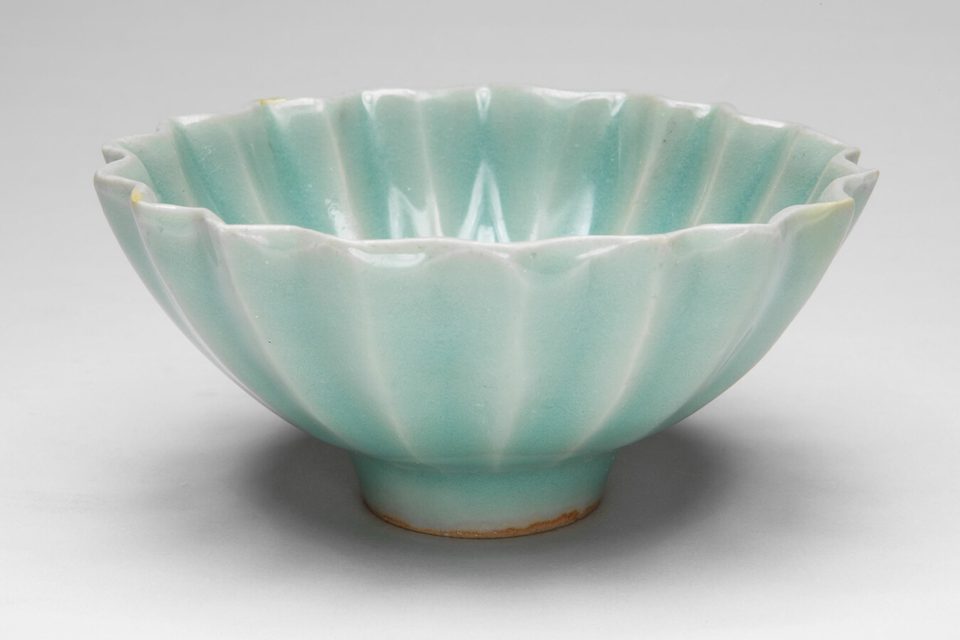
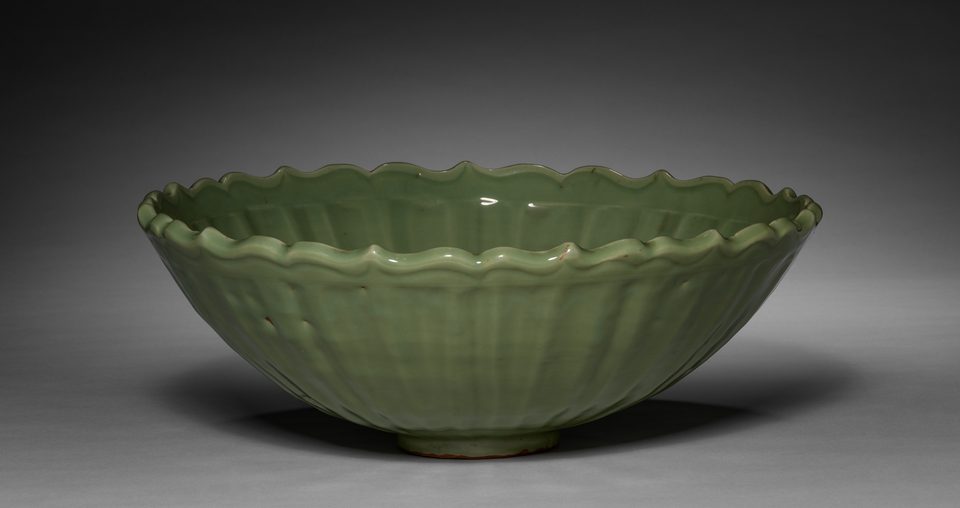
Celadon glazes get their green from a little iron oxide, between 0.75 and 2.5 percent, fired in a kiln starved of oxygen. Too little iron turns the glaze blue, too much turns it olive and then black. Potters aimed for the look of jade, the most prized material in China, and the museum pieces below show how far real glazes sit from #ACE1AF.
Use celadon as a calm, natural background. It pairs well with warm wood, cream, terracotta and charcoal, and with soft pinks for a gentle contrast. It is light, so text on it should be dark.