A rich bluish green named after the stone carved in China and Mesoamerica for thousands of years.
Overview
Jade is a rich green with a cool, slightly bluish cast. The code most color lists use is #00A86B: no red, strong green and some blue. No standard defines it, but it matches what people call jade: in the xkcd color survey, the average jade was #1FA774, almost the same.
The name comes from a stone, or really two. Jade is the name shared by nephrite and jadeite, two different minerals that look alike and are tough enough to carve into thin, polished shapes. The English word goes back to the Spanish piedra de la ijada, “stone of the loin”, because the stone was thought to cure kidney pain.
Real jade is rarely this vivid. Nephrite tends toward muted greens, and jadeite comes in many colors, from white and lavender to an intense green. The museum jades below, from a Chinese ritual disc to a Maya crown ornament, all sample far grayer than the code.
Jade green feels calm and natural. It pairs well with gold, cream and warm wood, and with coral or blush for contrast. White text on it is hard to read at small sizes, so use a darker shade behind text.
HEX
#00A86B
RGB
rgb(0, 168, 107)
HSL
hsl(158, 100%, 33%)
HSV
158°, 100%, 66%
CMYK
100, 0, 36, 34
OKLCH
oklch(64.5% 0.149 158.8)
Every code converts from the HEX value #00A86B. #00A86B is the jade most color lists use, but no color standard defines it; Wikipedia showed it for years without a source. Merriam-Webster defines jade green as “a light bluish green”, and people’s average jade in the xkcd survey is almost the same as this code. CMYK is a screen-based estimate; print results vary.
Jade on the color map
LighterDarker
People’s average jade and jade green in the xkcd survey sit right on the code. The stones do not. Both jadeite samples sit lower and to the left, darker and more yellow, and they are far grayer than the map can show. The Maya ornament falls outside the outline. The outline is an approximate range, not a measured one.
Shades and tints
Tintswith white
Shadeswith black
Toneswith gray
Jade sits in the middle. Tints add white, shades add black and tones add gray, in 10% steps out from it. Tap any swatch to copy its code.
Light and dark jade
#99DCC4
Pale jadeMixed 60% with white. A soft mint for backgrounds.
#66CBA6
Light jadeMixed 40% with white. Fresh and bright.
#00A86B
JadeThe reference color.
#009E60
Shamrock greenA little darker and less blue, with a page of its own. See shamrock green
#006540
Dark jadeMixed 40% with black. A deep green that holds white text.
Colors that go with jade
Pairings that work in rooms, outfits and interfaces.
Jade and gold
Rich and traditional. Good for luxury and festive designs.
Jade and coral
Near-opposites: cool green against warm coral. Lively and fresh.
Jade and navy
Deep and confident. Good for finance and tech.
Jade and cream
Soft and natural. Suits wellness and food brands.
Jade and blush
Gentle contrast. Popular for weddings and stationery.
Jade and charcoal
Modern and calm. The green glows on a dark ground.
Color-wheel palettes
Pick a palette to see where its colors sit on the color wheel. The caret marks jade. Tap a band to copy its code.
Lined up by hue around jade. Hover a color to see how similar it is.The bar under each name shows how similar it is. Similarity comes from the distance between the two colors in OKLab, a model of how we see color.
Jade vs emerald green
Jade#00A86B · hue 158°
Darker and bluer
Named after nephrite and jadeite
The stone is often muted and translucent
Emerald green#50C878 · hue 140°
Lighter and brighter
Named after a gem variety of beryl
Fine emeralds are vivid green to bluish green
Meaning
Gemstone
Virtue
Royalty
Mesoamerica
New Zealand
Jade stands for virtue and rank in Chinese tradition, and the peoples of ancient Mexico and Central America valued it above gold. In New Zealand, Māori carve it into heirlooms. Almost all of this meaning belongs to the stone, not the screen color. Color research tests broad words such as green, not jade itself.
Confucius compared jade to virtue
Classical text
In the Book of Rites, a Chinese classic, Confucius says jade is not prized for being rare. The wise of old saw good qualities in it: its smooth gloss was like benevolence, its fine, strong grain like intelligence, and the way its flaws never hide its beauty, nor its beauty its flaws, like loyalty.1
Worth more than gold in Mexico
Eyewitness account
In 1519, envoys of the Aztec ruler Moctezuma gave the Spanish four green stones called chalchihuitl and said each was worth more than a load of gold. The soldier Bernal Díaz, who was there, wrote that the Aztecs prized them more than Europeans prized emeralds.2
A Māori treasure
Museum record
In New Zealand, nephrite is pounamu, or greenstone, a taonga (treasure) of the Māori. Hei-tiki pendants carved from it are heirlooms that gain mana, or prestige, as they pass from one generation to the next.3, 4
Sources (4)
Li Ki (Book of Rites), Book XLV, “Phing Δ, sections 12–13, translated by James Legge, Sacred Books of the East, vol. 28 (1885). Sacred Texts Archive.
Díaz del Castillo, B. The Memoirs of the Conquistador Bernal Diaz del Castillo, vol. 1, chapter XL, translated by John Ingram Lockhart (1844). Project Gutenberg.
Cleveland Museum of Art, “Pendant (Hei-tiki)”, New Zealand, Māori, 1800s (1954.147).
Jade was carved for thousands of years before its name became a color. Its story runs from Neolithic China and the Maya to a Spanish medical book and a French mineralogist.
3300–2200 BCE
In the Liangzhu culture of eastern China, high-status people are buried with jade discs (bi) and squared tubes (cong). Rare, extra-large discs usually lie on the chest of the dead.1
250–900 CE
Maya rulers wear carved jadeite on their crowns. The Maya, and the Olmec before them, got their jadeite from one source: the Motagua River valley in Guatemala.2, 3
1519
Envoys of Moctezuma give the Spanish four green stones, each said to be worth more than a load of gold.4
1565
The Spanish physician Nicolás Monardes writes of the piedra de la ijada, “stone of the loin”, a stone from the Americas believed to cure kidney pain. Through French, the phrase becomes the English word jade.5
About 1800
Bright green jadeite from Burma reaches China in quantity. It becomes known as fei cui, kingfisher jade, after the bird’s feathers.3
1863
French mineralogist Alexis Damour shows that what was called jade can be one of two minerals, nephrite or jadeite, and names jadeite.3
1890
First known use of “jade green” as a color name in English.6
Sources (6)
Cleveland Museum of Art, “Ceremonial Disc (Bi)”, East China, Liangzhu culture, 3300–2200 BCE (1917.974).
Wikipedia, “Jade”, citing Muriel Porter Weaver’s The Aztecs, Maya, and Their Predecessors on the Motagua source and S. Howard Hansford’s “Jade and the kingfisher” (1948).
Díaz del Castillo, B. The Memoirs of the Conquistador Bernal Diaz del Castillo, vol. 1, chapters XXXIX–XL, translated by John Ingram Lockhart (1844). Project Gutenberg.
Merriam-Webster, “jade”, etymology and word origin.
Merriam-Webster, “jade green”, definition and first known use.
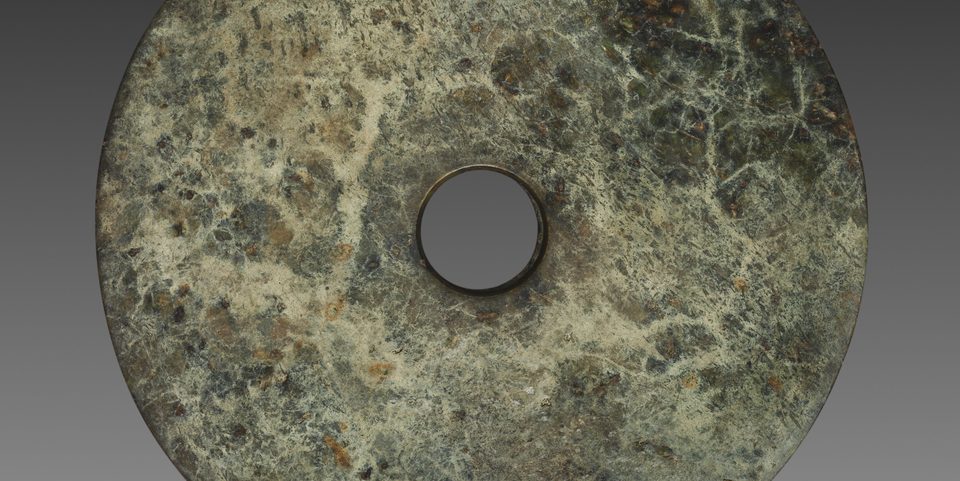
A nephrite disc 32 cm across from Neolithic eastern China, now at the Cleveland Museum of Art. Discs this large were laid on the chests of high-status dead. The stone is a mottled gray-green, about #868369, nothing like the bright web code.
#868369#6D6B55#535141#A09C7E
Source: Cleveland Museum of Art
Source
Sampled from the Cleveland Museum of Art’s photograph (1917.974), released as CC0 (public domain). The picture shown is a detail of the center. Colors in a photo shift with the lighting, so read the codes as close, not exact.
#6F805D#576A43#8B987A#B5BEA9
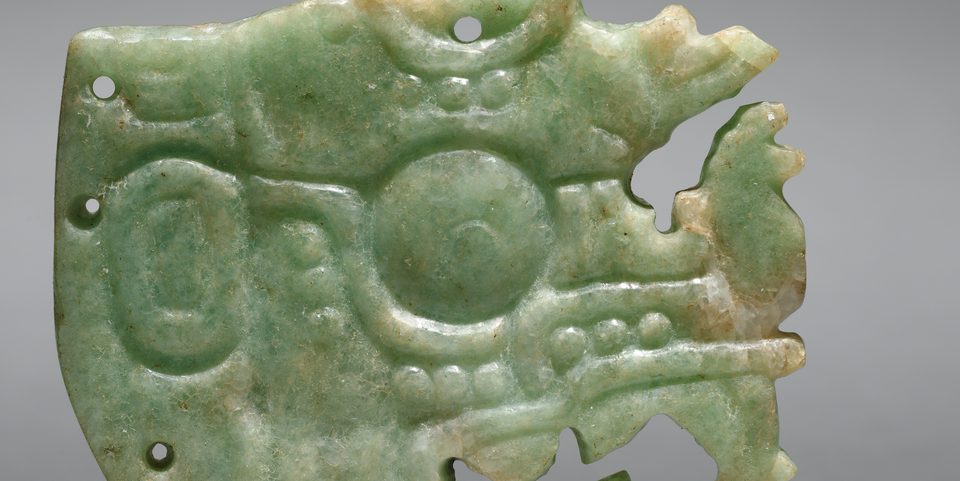
RegaliaMaya crown ornament (250–900 CE)
A jadeite plaque with the head of a deity linked to Maya royalty, made to be tied to a ruler’s crown. Its soft green, about #6F805D, is grayer and more yellow than the web code.
#6F805D#576A43#8B987A#B5BEA9
Source: Cleveland Museum of Art
Source
Sampled from the Cleveland Museum of Art’s photograph (1993.7), released as CC0 (public domain). The picture shown is a detail. Colors in a photo shift with the lighting, so read the codes as close, not exact.
#6F8370#5D6F5F#48604C#91A193
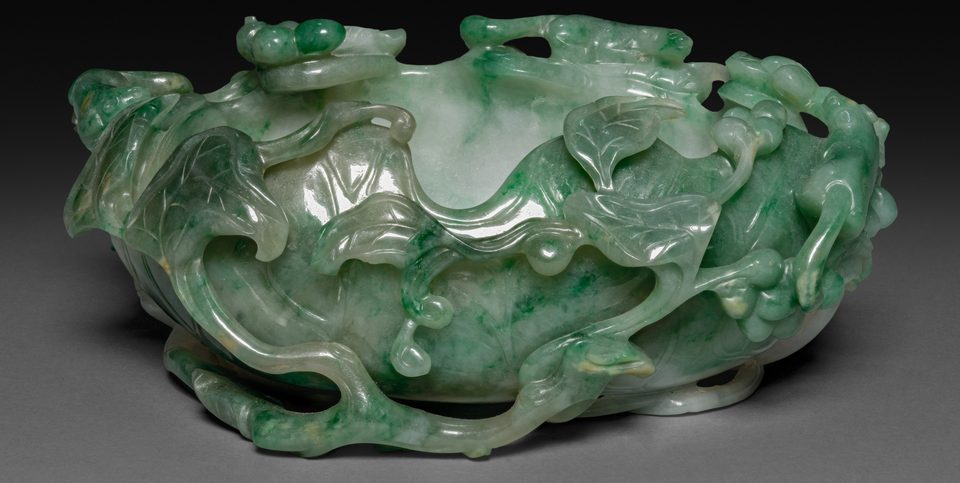
CarvingLotus-leaf brushwasher, China (1800s)
A water bowl for a scholar’s desk, carved from translucent jadeite during the Qing dynasty, after jadeite began reaching China in quantity. Streaks of vivid green run through pale stone, but overall it samples near #6F8370.
#6F8370#5D6F5F#48604C#91A193
Source: Cleveland Museum of Art
Source
Sampled from the Cleveland Museum of Art’s photograph (1990.35), released as CC0 (public domain). Colors in a photo shift with the lighting, so read the codes as close, not exact.
#57533E#413B24#838071
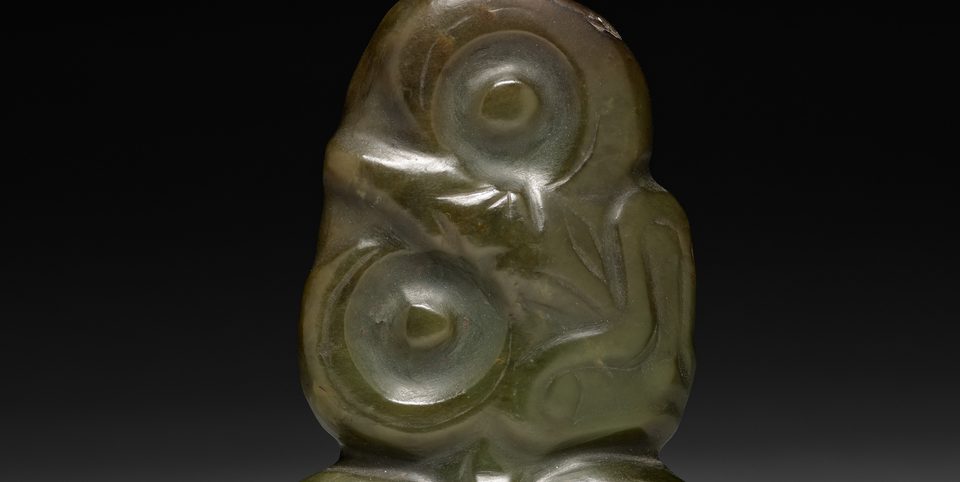
PendantHei-tiki, New Zealand (1800s)
A Māori neck pendant of pounamu, New Zealand nephrite, now at the Cleveland Museum of Art. Hei-tiki may represent Hine-te-Iwaiwa, a legendary ancestress. This stone is a deep olive green, about #57533E.
#57533E#413B24#838071
Source: Cleveland Museum of Art
Source
Sampled from the Cleveland Museum of Art’s photograph (1954.147), released as CC0 (public domain). The picture shown is a detail of the head. Colors in a photo shift with the lighting, so read the codes as close, not exact.
#00A758
BrandingManulife
Manulife’s green, #00A758, is a little more vivid and yellower than this page’s code. It colors the bars of the insurer’s logo symbol.
#00A758
Source: Manulife logo file
Source
The green is the color of the symbol in the Manulife logo file on the company’s Indonesian website. The logo shown is that file.
Logos belong to their owners and are shown unaltered, only to show where each palette comes from. Palettes are sampled in-house.
Questions
What color is jade?
A rich green with a slightly bluish cast. The usual code is #00A86B (RGB 0, 168, 107). Real jade varies far more, from gray-green and olive to white, lavender and vivid green.
Is jade the same as jade green?
Yes, they are two names for the same color. Merriam-Webster defines jade green as a light bluish green, first used as a color name in 1890.
What is the difference between jade and emerald green?
Jade (#00A86B) is darker and bluer. Emerald green (#50C878) is lighter and brighter. The stones differ too: emerald is a gem variety of beryl, while jade is nephrite or jadeite.
What colors go with jade?
Gold and cream for a classic look, coral or blush pink for contrast, and navy or charcoal for something deep and modern.
What is real jade?
Two different minerals share the name: nephrite and jadeite. Both are made of tiny interlocking crystals, which makes them very tough. Nephrite’s colors tend to be muted; jadeite comes in more colors, and its green is the most valuable.
Why is jade important in China?
Jade has been carved in China for more than 4,000 years and was linked to rank and virtue. In the Book of Rites, Confucius compares its qualities to benevolence, intelligence and loyalty.