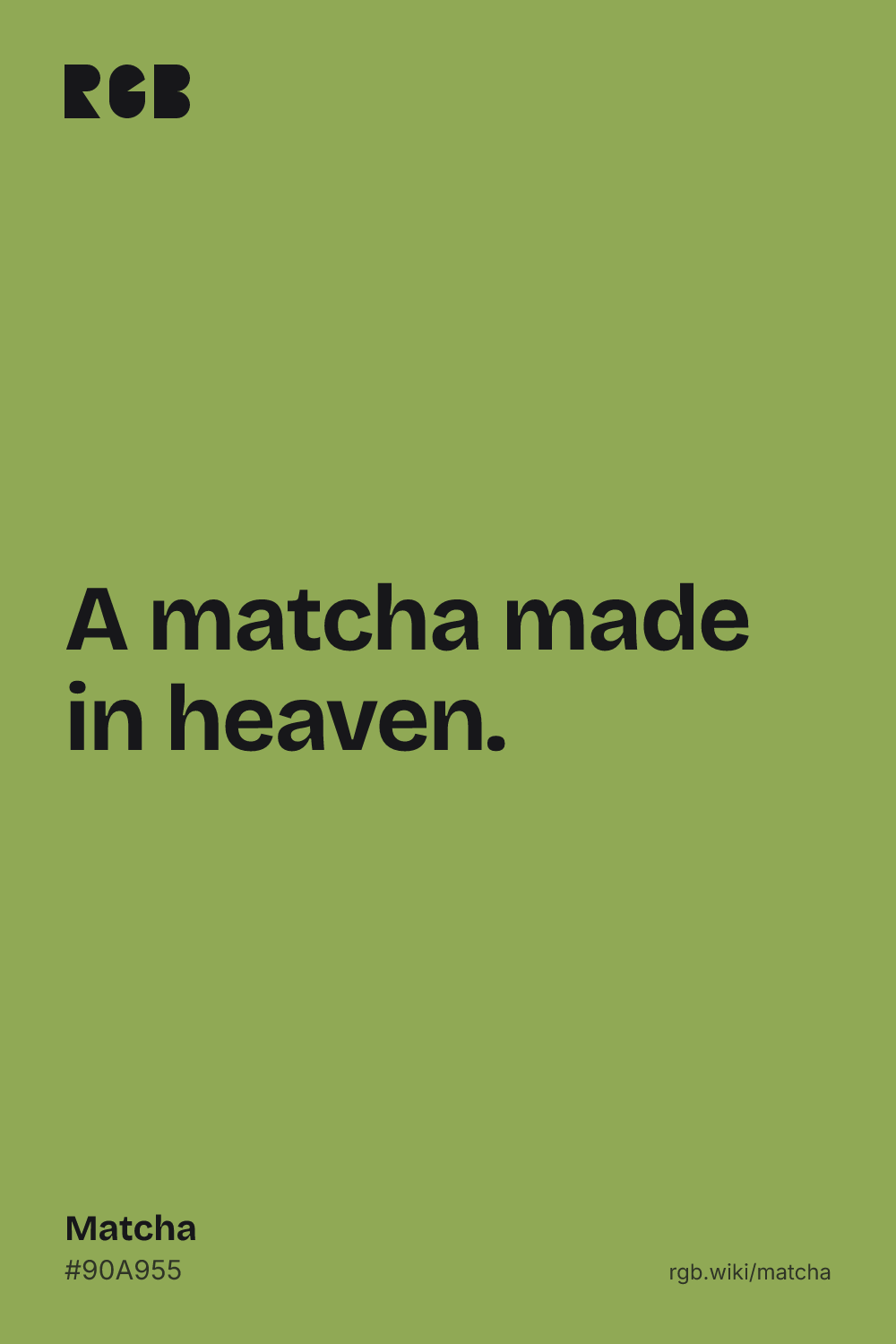
Matcha is a medium yellow-green named after the powdered green tea of Japan. Its web code, #90A955, has green in the lead at 66%, red at 56% and blue at only 33%, which gives a soft, slightly muted leaf green. It sits right next to moss green, but is a little brighter and more colorful. Black text reads well on it; white text does not.
The real color comes from shade. For two to three weeks before picking, growers cover the tea bushes, and leaves grown in low light build up more chlorophyll. The leaves are steamed, which stops the enzymes that would brown them, then dried without rolling and ground to a fine powder. In one lab comparison of green teas, matcha kept more of its chlorophyll in the bright green forms than any other tea tested.
No two tins look quite the same. Top grades use young spring leaves, while cooking grades use older leaves picked later. Heat and time turn chlorophyll into pheophytin, an olive-brown pigment, so old or warm-stored matcha goes dull. When researchers measured ten matcha powders bought in Poland, the readings ran from light khaki to dark olive, all yellower than the web code.
Japan’s industrial standard for color names lists 抹茶色, matcha-iro, as a pale, grayish yellow-green, close to #BBBF85 on screen. On a page, #90A955 pairs well with cream, the black of a raku tea bowl, red bean brown and soft cherry-blossom pink.