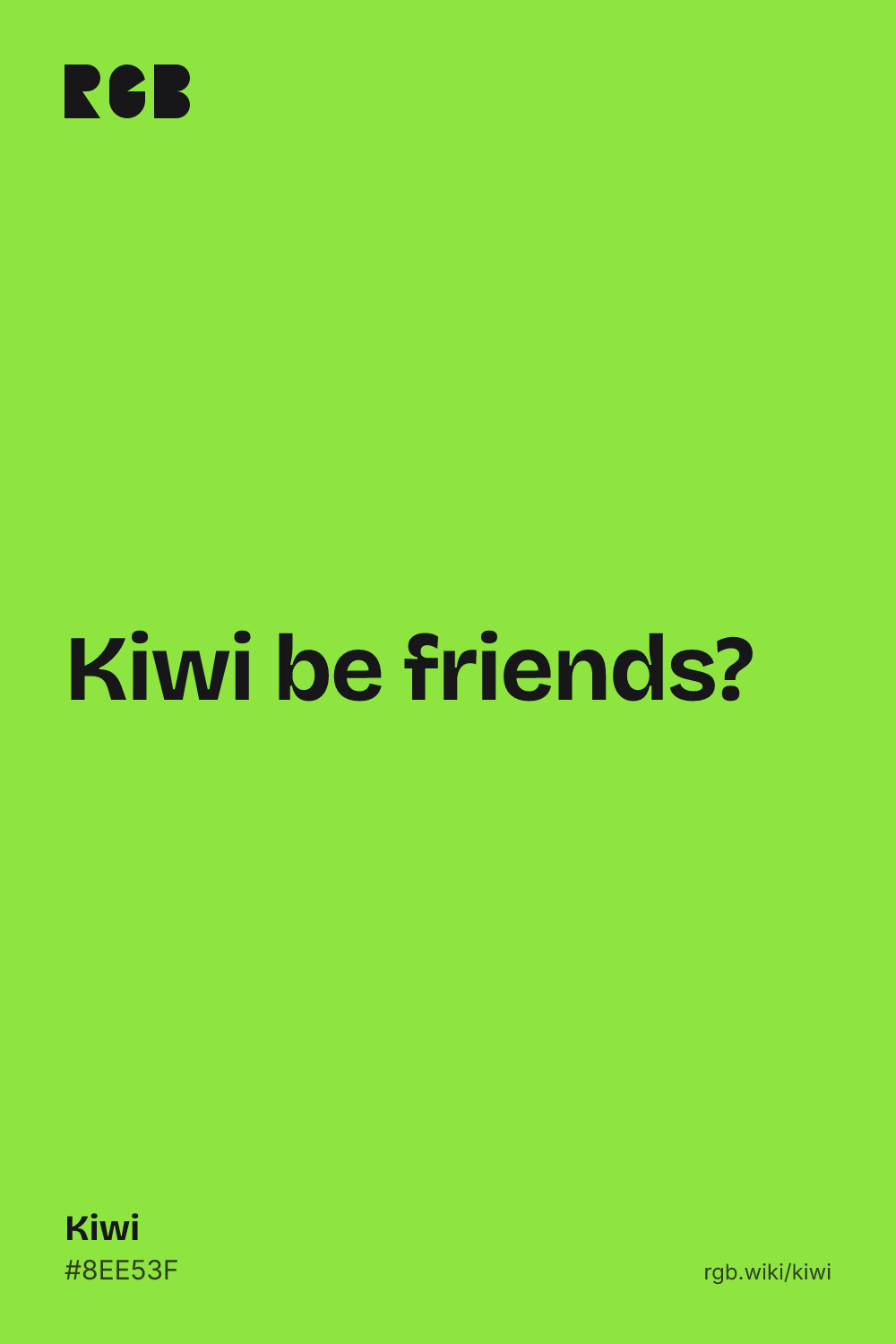
Kiwi is a light, vivid yellow-green named after the inside of the kiwifruit. Its usual code, #8EE53F, has green near full strength, a good share of red and little blue, which makes it look bright and juicy. It is greener and lighter than brat green and warmer than lime green. Black text reads well on it; white text does not.
The color of the fruit is unusual. Most fruits lose their green as they ripen, when chlorophyll breaks down and yellow, orange or red pigments take over. The common green kiwifruit, ‘Hayward’, keeps its chlorophyll right through ripening, so a ripe kiwi is still green inside. Gold kiwifruit are close relatives that do the usual thing: their chlorophyll fades and the flesh turns yellow.
The code comes from a survey, not a color standard. In Randall Munroe’s 2010 xkcd color survey, people named colors on their own screens, and the average color they called “kiwi green” is exactly #8EE53F. The colors they called plain “kiwi” averaged a shade lighter, #9CEF43. That makes kiwi a picture of what people remember, a bright slice of green, rather than a measurement of the fruit.
The name is younger than the fruit. Until 1959 English speakers called it the Chinese gooseberry. New Zealand exporters renamed it after New Zealanders, who are nicknamed Kiwis, not after the bird, which is brown. In design, #8EE53F is a fresh accent for food, sport and summer palettes, and it pairs well with charcoal, berry pink, navy and warm browns.