Pistachio

A soft yellow-green, named after the kernel of the pistachio nut.

Overview

Pistachio is a light, soft yellow-green named after the pistachio nut. The code used here, #93C572, is the one most color lists give: a gentle green that leans toward yellow, fresher than sage green and softer than yellow-green.

The color comes from the kernel, not the shell. Pistachio shells are pale beige. Inside, under a thin purplish skin, the kernel is green, and growers prize the greenest ones. That green is chlorophyll, and roasting, storage and strong sun all fade it toward yellow and brown.

The web code sits one digit away from the dictionary. The ISCC-NBS color dictionary files the old color name “pistachio green” in two groups. One is light yellowish green, centered on #93C592. Change the second-to-last digit and you get #93C572. No source says whether that is a copying slip or a choice, but the dictionary’s color is a little bluer and grayer.

Pistachio suits desserts, spring palettes and soft modern rooms. It pairs well with cream, blush pink, plum and navy. For the greenest pistachios of all, look to Bronte in Sicily, where “intense green” kernels are written into European law.

HEX#93C572
RGBrgb(147, 197, 114)
HSLhsl(96, 42%, 61%)
HSV96°, 42%, 77%
CMYK25, 0, 42, 23
OKLCHoklch(76.9% 0.124 133.9)
Every code converts from the HEX value #93C572. No color standard defines pistachio. #93C572 is the code most color lists use, and Wikipedia gave it for years, credited to ISCC-NBS. The ISCC-NBS dictionary itself places Maerz and Paul’s pistachio green in two groups: light yellowish green, centered on #93C592, and moderate yellow green, #8A9A5B. Both are on the map below. CMYK is a screen-based estimate; print results vary.
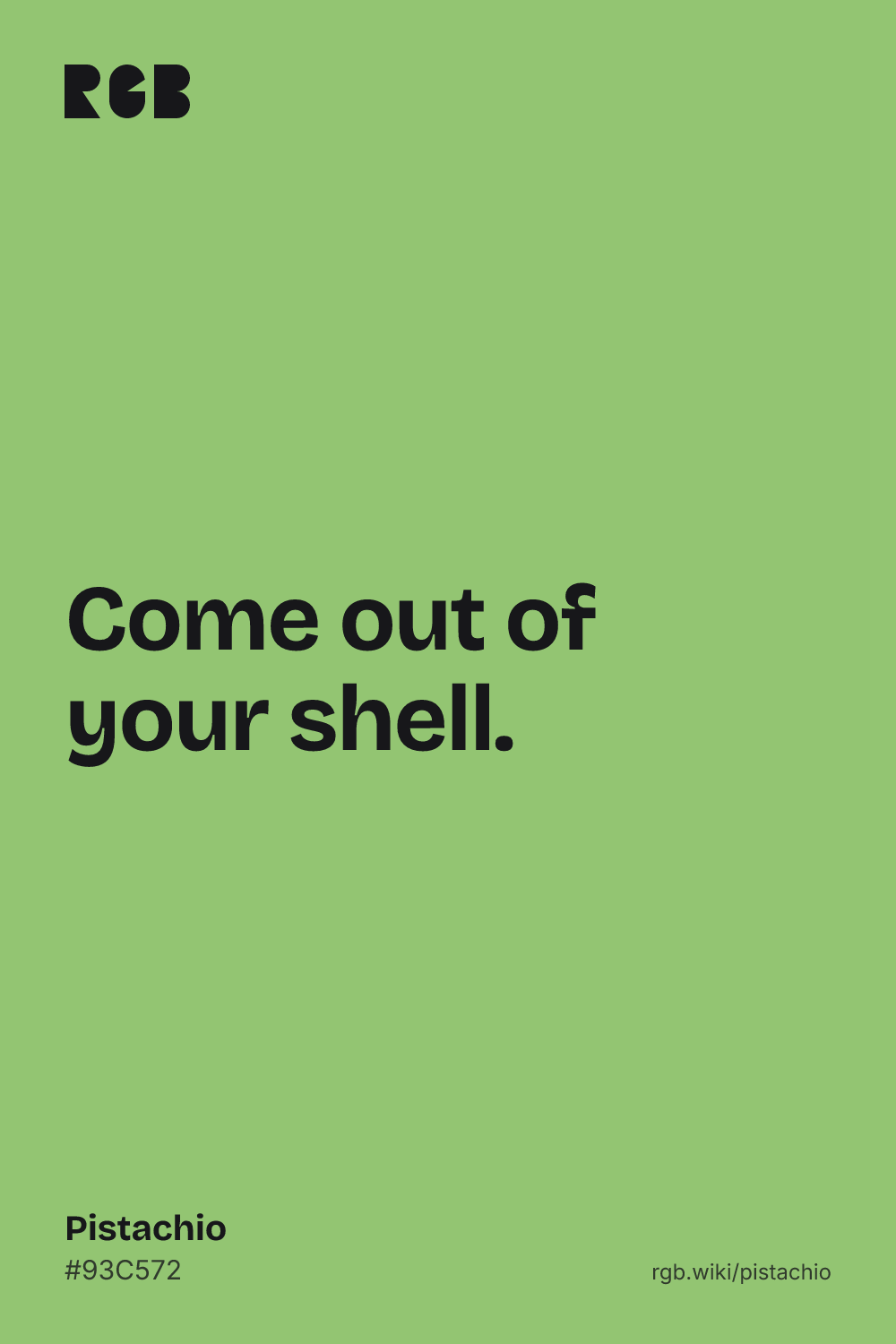
Pistachio color card, hex #93C572: “Come out of your shell”

Pistachio on the color map

The dictionary’s light yellowish green sits at the right edge of the outline, at the same lightness but bluer. Its moderate yellow green falls lower and to the left, darker and yellower. Both survey averages sit higher, much lighter and more vivid than the code: people picture pistachio as a bright, pale green, more like gelato than the nut. The outline is an approximate range, not a measured one.

Shades and tints

Tints with white

Shades with black

Tones with gray

Pistachio sits in the middle. Tints add white, shades add black and tones add gray, in 10% steps out from it. Tap any swatch to copy its code.

Light and dark pistachio

#D4E8C7
Pale pistachioMixed 60% with white. A soft, airy background.
#B3D69C
Light pistachioMixed 30% with white. Close to pistachio gelato.
#93C572
PistachioThe reference color.
#93C592
Light yellowish greenThe ISCC-NBS center for pistachio green. One digit away, a little bluer and grayer.
#678A50
Dark pistachioMixed 30% with black. A leafy mid green.
#4A6239
Deep pistachioMixed 50% with black. Good for text and buttons on pale pistachio.

Colors that go with pistachio

Pairings that work in rooms, outfits and interfaces.

Pistachio and cream

Soft and fresh. Easy for kitchens, cafés and spring stationery.

Gelato counter

Pistachio, strawberry, vanilla and chocolate. Sweet and playful.

Shell and kernel

Drawn from the nut itself: beige shell, purplish skin, green kernel.

Pistachio and navy

Crisp and confident. Navy gives the soft green some weight.

Pistachio and plum

Opposites on the color wheel, softened. Rich but not loud.

Pistachio and coral

Warm and cheerful. A summer pair for food and fashion.

Color-wheel palettes

Pick a palette to see where its colors sit on the color wheel. The caret marks pistachio. Tap a band to copy its code.

Similar colors

Matcha62%Yellow-green67%PistachioPastel green66%Dark sea green75%Emerald green70%Medium aquamarine64%

Lined up by hue around pistachio. Hover a color to see how similar it is.The bar under each name shows how similar it is. Similarity comes from the distance between the two colors in OKLab, a model of how we see color.

Pistachio vs sage green

Pistachio#93C572 · hue 96°
  • Clearer and more colorful
  • Named after the nut’s kernel
  • Fresh and sweet
Sage green#9CAF88 · hue 89°
  • Grayer and more muted
  • Named after sage leaves
  • Quiet and earthy

Meaning

  • Nuts
  • Gelato
  • Freshness
  • Bronte green

Pistachio reads as fresh, sweet and light: the green of a shelled nut, a scoop of gelato or a spring dessert. In the nut trade, green means quality, and the greenest kernels are worth the most. Chemistry explains where that green comes from and why it fades. No study has tested how the color pistachio affects mood, so the claims below are about the nut and the name.

A green written into law

Legal standard

Sicily’s Bronte pistachios are a protected product in the European Union. Their rules require kernels of “intense green”, with a set ratio of the two main chlorophylls, and the fruit must be husked within 24 hours of picking to avoid browning.1
The green is chlorophyll

Lab studies

In lab tests, the red-green reading of a pistachio kernel tracked its chlorophyll, and roasting temperature was the main thing that changed its color. A second study found chlorophylls broke down heavily in roasting, while the yellow carotenoids held up. That is why roasted pistachios look duller and yellower.2, 3

Shade keeps kernels greener

One study

In an Iranian trial, pistachios grown under shade netting had greener kernels than those grown in full sun. Chlorophyll fell by about a third over six months of storage. The sun-grown nuts tasted better, so greener was not better on every count.4

People picture it brighter

Survey data

Asked to name colors online, people’s average “pistachio” was a much lighter, more vivid green than this page’s code, in two separate surveys. The name seems to call up gelato more than the nut. Online surveys use uncalibrated screens, so read the averages as rough.5

Sources (5)
  1. Publication of an application for registration, ‘Pistacchio Verde di Bronte’, EC No IT-PDO-0005-0305-07.08.2003. Official Journal of the European Union, C 130, 9 June 2009, p. 16. EUR-Lex.
  2. Dini, A., Falahati-Pour, S. K., Behmaram, K. & Sedaghat, N. (2019). The kinetics of colour degradation, chlorophylls and xanthophylls loss in pistachio nuts during roasting process. Food Quality and Safety. doi:10.1093/fqsafe/fyz020
  3. Pedron, G. et al. (2026). Roasting-like thermal reconfiguration of bioactive and pigment profiles in pistachios from distinct geographical origins. Food Science & Nutrition, 14(6), e72051. doi:10.1002/fsn3.72051
  4. Shakerardekani, A. & Esmaeilpour, A. (2025). Quality assessment of pistachio fruit cultivated under shade netting structures. Scientific Reports, 15, 23007. doi:10.1038/s41598-025-06212-5
  5. Munroe, R. (2010). xkcd color survey results (CC0), and Moroney, N. (2007), Color Naming Experiment, as compiled in Jaffer, A., “Color-Name Dictionaries”, MIT CSAIL.

History

People have eaten pistachios for thousands of years, but pistachio as a color name is far younger. Its story runs from Fatimid linen to red-dyed shells and a protected green from Sicily.

  1. About 35 CE

    Lucius Vitellius, the Roman governor of Syria, brings the pistachio to Italy, according to Pliny the Elder.1

  2. 983–990

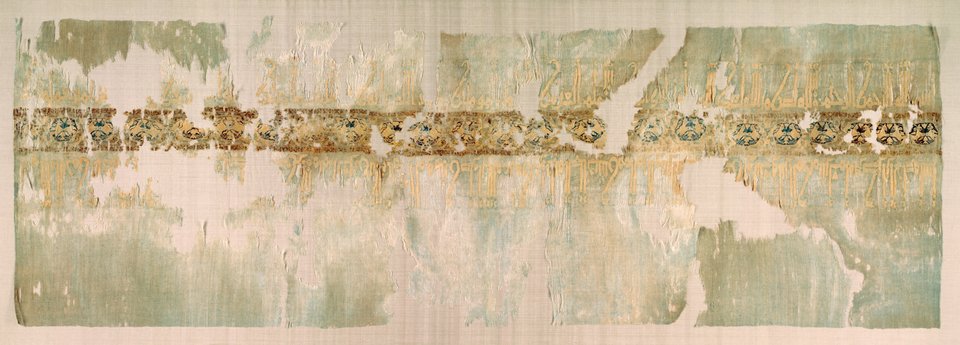
    The caliph’s workshop in Tinnis, Egypt, weaves a fine linen turban cloth dyed what the Cleveland Museum of Art calls “a cherished pistachio color”.2

  3. 1598

    First known use of “pistachio” in English, from Italian pistacchio, through Latin and Greek from an Iranian word.3

  4. 1854

    The pistachio arrives in California as a garden tree.1

  5. 1930

    Maerz and Paul’s A Dictionary of Color lists both “pistache” and “pistachio green” as color names.4

  6. 1955

    The ISCC-NBS dictionary of color names files them as light yellowish green and moderate yellow green.4

  7. Up to the 1970s

    Most pistachios sold in the US are imported, mainly from the Middle East. Their shells are dyed red to hide stains left by slow, traditional harvesting.5

  8. 1979 to 1980s

    An embargo on Iranian pistachios helps California’s orchards take off. Harvesting there keeps shells clean, and red pistachios fade out during the 1980s.5

  9. 2010

    The European Union registers Pistacchio Verde di Bronte as a protected designation of origin, with rules that require an intense green kernel.6, 7

Sources (7)
  1. Wikipedia, “Pistachio”, History section, citing Pliny the Elder, Natural History xv.22, and the University of Georgia.
  2. The Cleveland Museum of Art, “Turban end with tiraz”, Egypt, Tinnis, Fatimid period, 983–990 (1950.354).
  3. Merriam-Webster, “pistachio”, etymology and first known use.
  4. Jaffer, A. “(M) Dictionary of Color”, the ISCC-NBS placements of Maerz and Paul’s color names (1955 dictionary).
  5. Spiegel, A. (2015). “Remember red pistachios? Here’s what happened to them”. HuffPost, quoting the American Pistachio Growers.
  6. Commission Regulation (EU) No 21/2010 of 12 January 2010 [Pistacchio Verde di Bronte (PDO)]. legislation.gov.uk.
  7. Publication of an application for registration, ‘Pistacchio Verde di Bronte’. Official Journal of the European Union, C 130, 9 June 2009, p. 16. EUR-Lex.

Pistachio in use

A long, faded linen cloth in pale khaki, torn in places, with a woven band of medallions and two rows of Arabic letters across the middle
#CCBEA1#B9AE8D#AAA07B#806640
TextileTurban end with tiraz, Fatimid Egypt (983–990)

A fine linen turban cloth from the caliph’s workshop in Tinnis, with a band of silk tapestry and Arabic inscriptions blessing the caliph al-ʿAziz. The museum says it was dyed “a cherished pistachio color”. A thousand years on, the linen reads as a pale grayish khaki, about #AAA07B, with only a hint of green left.

#CCBEA1#B9AE8D#AAA07B#806640
Source: Cleveland Museum of Art
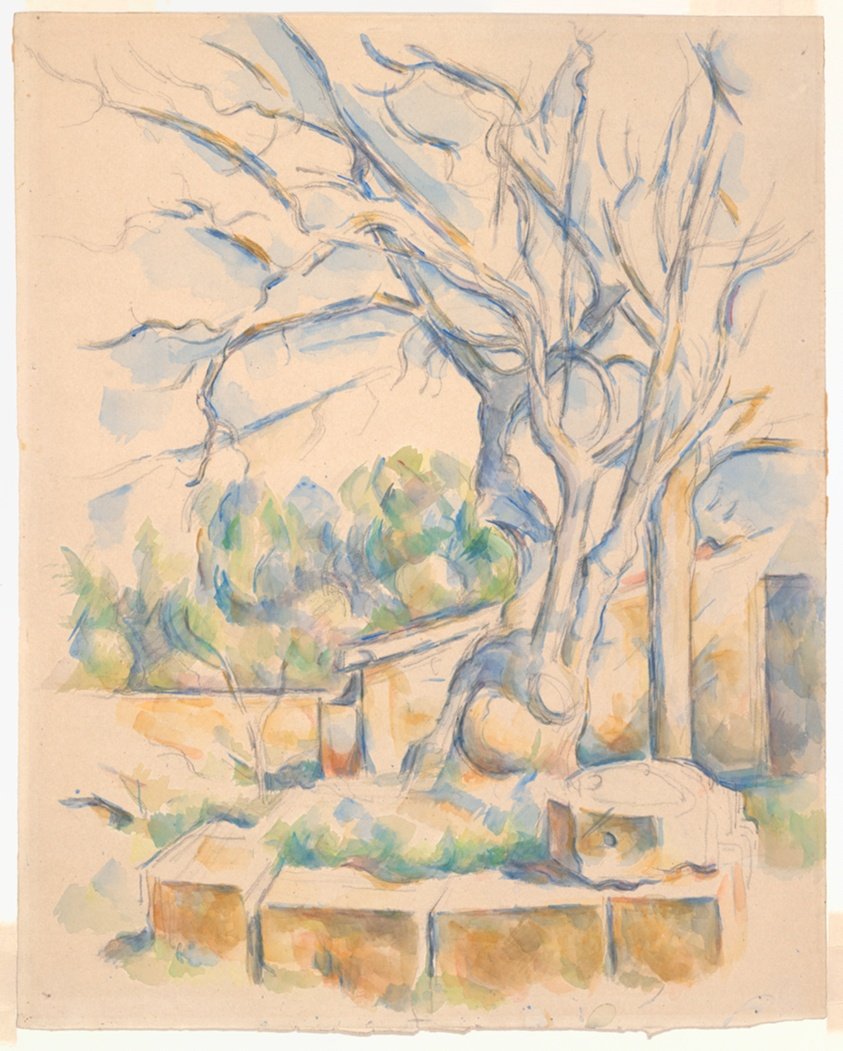
A watercolor of a leafless tree with twisting blue-gray branches above a low stone wall, with soft green and blue trees behind it, on cream paper
#A8A78F#879492#CCA06C#F4D7B9
PaintingPistachio Tree at Château Noir by Paul Cézanne (about 1900)

Cézanne’s watercolor of a pistachio tree at the Château Noir, its bare branches drawn in pencil and washed in blue above a low stone wall. The greens are in the trees behind it, and they are soft gray-greens like #A8A78F, far grayer than the pistachio of a nut.

#A8A78F#879492#CCA06C#F4D7B9
Source: Art Institute of Chicago

Palettes are sampled in-house.

Questions

What color is pistachio?

A light, soft yellow-green, like the kernel of a shelled pistachio nut. The most common code is #93C572 (RGB 147, 197, 114).

What is the hex code for pistachio green?

There is no official one. #93C572 is the code most color lists use. The ISCC-NBS dictionary places pistachio green in two groups, centered on #93C592 (a slightly bluer, grayer green) and #8A9A5B (darker and yellower).

Why are pistachio nuts green?

The kernel holds chlorophyll, the same green pigment as leaves. Roasting breaks it down, so roasted pistachios look duller and yellower than raw ones.

Why were pistachios dyed red?

Imported pistachios had shells stained by slow, traditional harvesting, and sellers dyed them red to hide the marks. Clean, machine-harvested California nuts made the dye unnecessary, and red pistachios faded out in the 1980s.

What is the difference between pistachio and sage green?

Pistachio (#93C572) is clearer and more colorful. Sage green (#9CAF88) is grayer and more muted, closer to dried herbs than to a fresh nut.

What colors go with pistachio?

Cream and warm whites, blush pink and coral for warmth, plum as a soft opposite, and navy or deep brown for contrast.

Is pistachio the same as mint green?

No. Mint green (#98FF98) is much lighter and brighter, and slightly bluer. Pistachio is darker and leans toward yellow.