Topaz

A light golden orange named after a gem that is usually colorless.

Overview

Topaz is a light, golden orange, a soft color between yellow and orange. The code most color lists use is #FFC87C: red at full strength, green at about 78% and blue at about half, which warms and softens it.

The name has wandered more than most. The Roman writer Pliny praised topazos for its green tints and tied it to a fog-bound island in the Red Sea; that stone was probably peridot. In the Middle Ages, topaz meant any yellow gem. Only in 1737 did the name settle on the mineral we call topaz today.

That mineral is usually colorless. Traces of other elements and tiny flaws in the crystal make it brown, yellow, orange, pink, red or purple, and the costliest kind, imperial topaz, is a reddish orange. The familiar blue topaz is almost always colorless topaz that has been irradiated and heated. Perhaps that is why, in a large online survey, the average color people called topaz was a teal, #13BBAF.

On screens, #FFC87C is a light color. Use dark text on it, never white. For text and borders in the same family, use a deep shade such as #80643E. It pairs well with navy and sapphire blue, with sky blue, and with chocolate brown.
HEX#FFC87C
RGBrgb(255, 200, 124)
HSLhsl(35, 100%, 74%)
HSV35°, 51%, 100%
CMYK0, 22, 51, 0
OKLCHoklch(86.6% 0.113 74.3)
Every code converts from the HEX value #FFC87C. No color standard defines topaz. #FFC87C is the code most color lists use; it appears in Wikipedia’s list of colors with no source. The 1955 ISCC-NBS dictionary files the topaz in Maerz and Paul’s A Dictionary of Color (1930) under darker golden browns. One of them, dark orange yellow #BE8A3D, has the same hue and strength as the code but is much darker; see the range below. CMYK is a screen-based estimate; print results vary.
Topaz color card, hex #FFC87C: “Topaz that”

Topaz on the color map

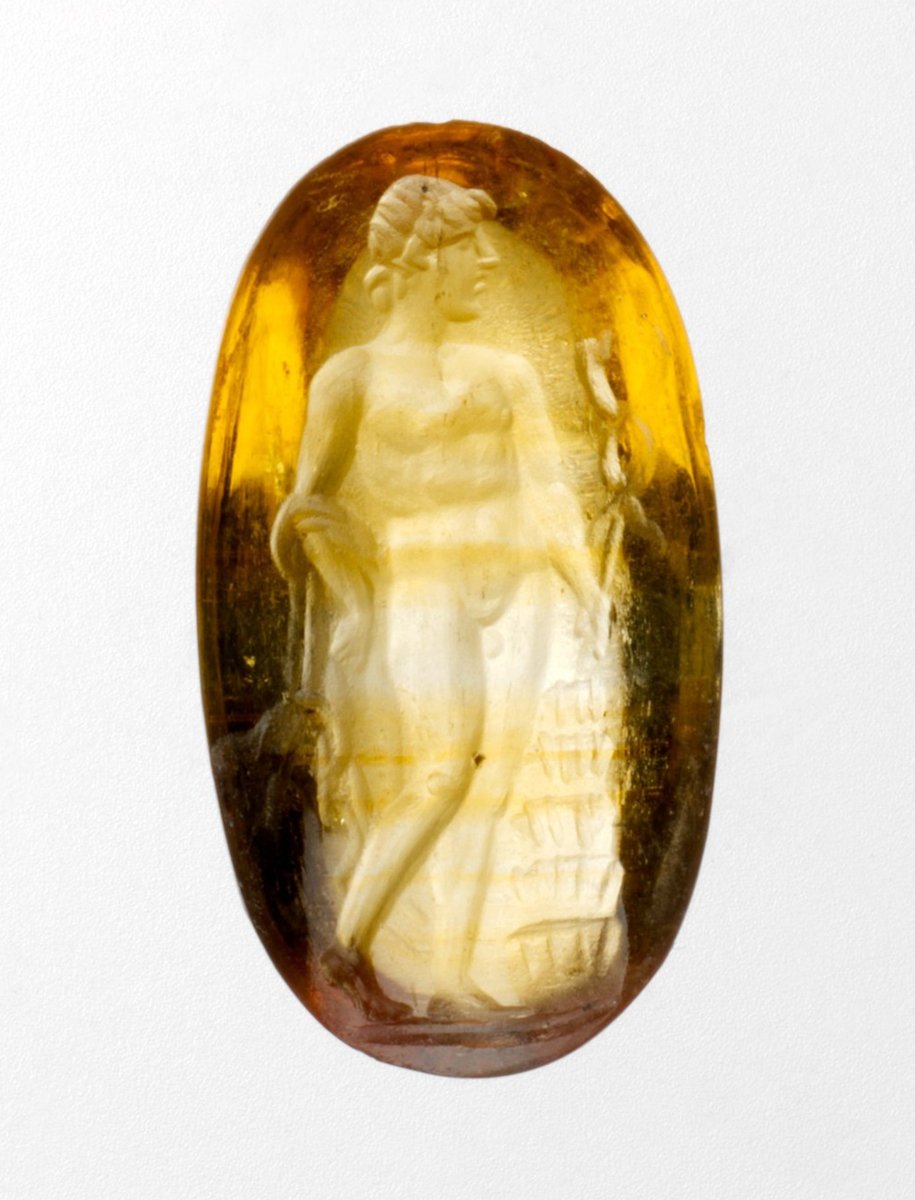
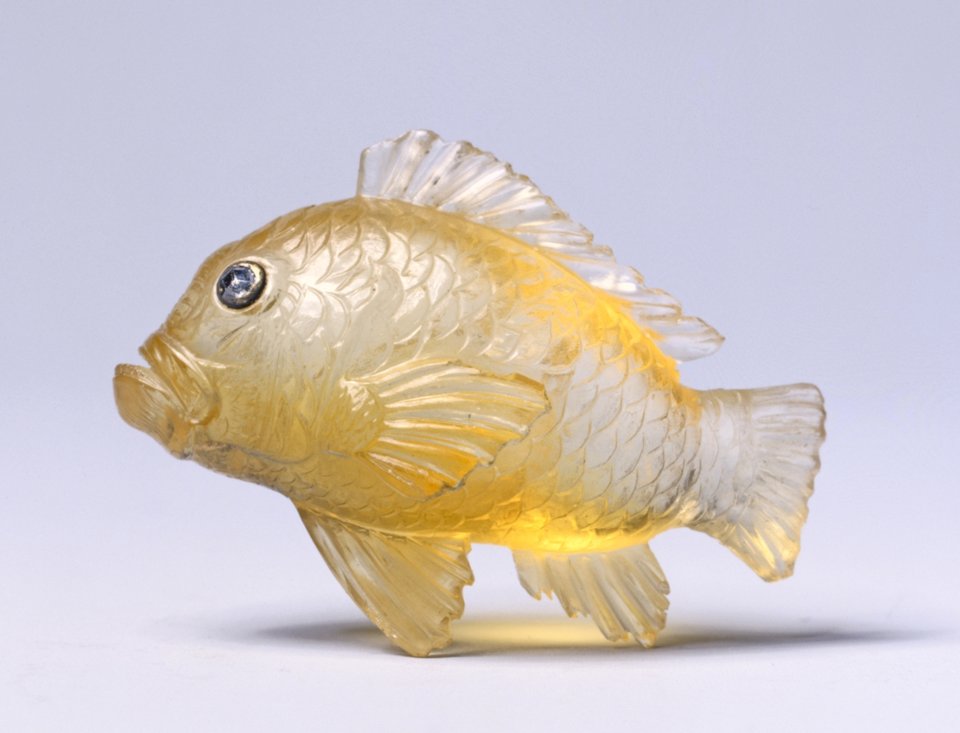
The Fabergé goldfish sits inside the outline, a little darker and yellower than the code. The dictionary’s golden browns and the Roman ring stone have nearly the same hue as the code but sit well below the outline: real golden topaz and the old dictionary sample are much darker than the screen color. The xkcd survey’s teal topaz, #13BBAF, is too far round the color wheel to show on this map. The outline is an approximate range, not a measured one.

Shades and tints

Tints with white

Shades with black

Tones with gray

Topaz sits in the middle. Tints add white, shades add black and tones add gray, in 10% steps out from it. Tap any swatch to copy its code.

Light and dark topaz

#FFE9CB
Pale topazMixed 60% with white. A warm cream for backgrounds.
#FFC87C
TopazThe reference color.
#BF965D
Golden topazMixed 25% with black. Close to the deeper gold of the carved Fabergé goldfish.
#BE8A3D
Dictionary topazThe ISCC-NBS dark orange yellow, one of the groups where the 1955 dictionary files Maerz and Paul’s topaz. Same hue, much darker.
#80643E
Dark topazMixed 50% with black. A golden brown for text on light backgrounds.

Colors that go with topaz

Pairings that work in rooms, outfits and interfaces.

Topaz and navy

Warm gold against deep blue. Classic and calm.

Two topazes

Golden topaz beside the sky blue of treated blue topaz.

Fabergé goldfish

From the museum photo: golden topaz fading to almost clear.

Topaz and chocolate

Warm and rich, like caramel and cocoa. Good for food and cafés.

Topaz and sage

Soft gold with muted green. Easy and natural.

Topaz night

A dark theme with topaz as the glowing accent.

Color-wheel palettes

Pick a palette to see where its colors sit on the color wheel. The caret marks topaz. Tap a band to copy its code.

Similar colors

Apricot70%TopazSand77%Jasmine72%Naples yellow69%Buff74%Flax74%

Lined up by hue around topaz. Hover a color to see how similar it is.The bar under each name shows how similar it is. Similarity comes from the distance between the two colors in OKLab, a model of how we see color.

Topaz vs amber

Topaz#FFC87C · hue 35°
  • Lighter and softer
  • Named after a hard mineral
  • Leans orange
Amber#FFBF00 · hue 45°
  • Stronger and purer
  • Named after fossil tree resin
  • Halfway between yellow and orange

Meaning

  • Gemstone
  • Treated blue
  • Imperial topaz
  • November birthstone

Topaz’s meanings come from the gem, one of November’s birthstones, and from its many colors, most of them rare in nature. Research on color and emotion tests broad words like yellow and orange, not topaz, so the claims here are about the stone.

Colorless by nature

Well established

Most topaz is colorless, often with a grayish cast. Its colors come from impurities and defects: chromium makes natural pink, red and violet topaz, and flaws in the crystal make it yellow, brown or blue. Brown is common and is sometimes mistaken for smoky quartz.1, 2

Blue topaz is almost always treated

Well established

The vast majority of blue topaz sold today is colorless topaz that has been irradiated and heated, a permanent change. Rainbow-colored topaz is coated with a thin film. Natural blue topaz is rare.1, 3, 2

Imperial topaz, a czar’s stone

Two stories

Reddish orange imperial topaz is one of the gem’s most expensive colors. The name is usually traced to 19th-century Russia, where the finest stones from the Urals were kept for the royal family. In Brazil, people tell of an emperor given a reddish topaz in 1881.1, 4, 3

Strength and calm, in lore

Folklore

The ancient Greeks believed topaz gave them strength. Renaissance Europeans thought it could break magic spells and dispel anger, and many in India believe topaz worn above the heart brings long life, beauty and intelligence. These are beliefs, not tested effects.4

Sources (4)
  1. Gemological Institute of America, “Topaz description”.
  2. Wikipedia, “Topaz”, section Characteristics, citing Hurrell and Johnson, Gemstones (2016), and Emporia State University on treated blue topaz.
  3. Gemological Institute of America, “November birthstones”.
  4. Gemological Institute of America, “Topaz history and lore”.

History

Few gem names have moved around as much. Topaz began as a green stone from a foggy island, spent centuries as any yellow gem, and settled on today’s mineral less than three hundred years ago.

  1. 77 CE

    Pliny the Elder writes that topazos is prized “for its green tints” and comes from a Red Sea island so often hidden by fog that sailors had to seek it. The stone he describes was probably peridot.1, 2

  2. 1st century BCE–3rd century CE

    A Roman gem cutter carves a golden ring stone. The Metropolitan Museum still catalogs it as “beryl, yellow, or topaz”.3

  3. Middle Ages

    “Topaz” is used for any yellow gemstone.4

  4. 1737

    The name is first applied to the mineral now called topaz.4

  5. 1800s

    In Russia, where the Ural Mountains are the leading source, a pink topaz is named imperial to honor the czar, and ownership is kept to the royal family.2

  6. 1881

    Brazil’s Emperor Pedro II visits Ouro Preto, near the country’s richest topaz mines, and is given a reddish topaz, Brazil’s version of the imperial topaz story.5

  7. Late 1800s–early 1900s

    Peter Carl Fabergé’s firm carves a tiny goldfish from golden topaz, with rose-cut diamond eyes.6

  8. 1955

    The ISCC-NBS dictionary files Maerz and Paul’s topaz (1930) under light brown, dark orange yellow and light yellowish brown, all darker than the web code.7

  9. 1969

    Texas names Texas blue topaz its state gem, by House Concurrent Resolution No. 12.8

  10. 1972

    Mining for pink topaz begins at Ghundao Hill, near Katlang in northwestern Pakistan.5

  11. 2010

    In the xkcd color survey, where people named millions of colors on their own screens, the average color called topaz is a teal, #13BBAF.9

Sources (9)
  1. Pliny the Elder, The Natural History, book 37, chapter 32, “Topazos: two varieties of it”, trans. John Bostock and H. T. Riley (1855). Perseus Digital Library.
  2. Gemological Institute of America, “Topaz history and lore”.
  3. The Metropolitan Museum of Art, “Topaz ring stone”, Roman, 1st century BCE–3rd century CE (81.6.74).
  4. Wikipedia, “Topaz”, sections Etymology and History, citing Hurlbut and Klein, Manual of Mineralogy (1985).
  5. Gemological Institute of America, “November birthstones”.
  6. The Cleveland Museum of Art, “Goldfish”, Peter Carl Fabergé, late 1800s–early 1900s (1966.453).
  7. Jaffer, A. “(M) Dictionary of Color”, the ISCC-NBS placements of Maerz and Paul’s color names (1955 dictionary).
  8. Texas State Library and Archives Commission, “State Symbols”.
  9. Munroe, R. “Color Survey Results” (2010), and the table of 954 colors, CC0.

Topaz in use

A small carved fish of translucent golden topaz with finely cut scales, fins and a diamond eye, on a pale gray background
#D8B673#BF9747#D8C4A5#877252
CarvingGoldfish by Peter Carl Fabergé (late 1800s–early 1900s)

A goldfish only 3.4 cm long, carved in St. Petersburg from golden topaz, with rose-cut diamond eyes. Its deepest gold, about #D8B673, is darker and yellower than the web code, and the thin fins and tail are almost clear.

#D8B673#BF9747#D8C4A5#877252
Source: Cleveland Museum of Art
An oval golden-orange gemstone, clear at the edges, carved with a pale standing figure, on a white background
#C69314#D0B15C#EDD798#56320C
GemRing stone, Roman (1st century BCE–3rd century CE)

A small oval ring stone, 1.5 cm long, carved with a standing figure. The museum titles it topaz but lists the material as “beryl, yellow, or topaz”: a golden stone is hard to name by eye. Its edges glow a deep gold, about #C69314, around a pale carved center.

#C69314#D0B15C#EDD798#56320C
Source: Metropolitan Museum

Palettes are sampled in-house.

Questions

What color is topaz?

A light golden orange. The code most color lists use is #FFC87C (RGB 255, 200, 124). Real topaz is most often colorless, and it also comes in brown, yellow, orange, pink, red, purple and blue.

Is topaz yellow or blue?

Both, and more. Golden and brownish stones are the classic topaz color. Most blue topaz sold today is colorless topaz that has been irradiated and heated.

Why do some color lists show topaz as teal?

In the xkcd color survey (2010), the average color people called topaz was a teal, #13BBAF. Treated blue topaz is the kind most shoppers see, which may explain it.

What is imperial topaz?

A reddish orange to pinkish orange topaz, one of the gem’s most valuable colors. Its name is usually traced to 19th-century Russia, where the finest stones were kept for the czar’s family.

What is the difference between topaz and amber?

Topaz (#FFC87C) is lighter and softer. Amber (#FFBF00) is a stronger, purer yellow-orange. The gem amber is fossil tree resin, while topaz is a hard mineral.

What colors go with topaz?

Navy and sapphire blue for contrast, sky blue for a two-topaz look, chocolate brown and cream for warmth, and a deep brown-black for a dark theme.