Sea green is a medium-dark green with a cool, slightly bluish cast, partway from a leafy green toward teal. Its code, #2E8B57, is the CSS keyword seagreen: some red, strong green and a fair amount of blue, at a little over half brightness. Black text reads well on it. White text works only at large sizes.
The name is old. “Sea green” has been an English color word since at least 1598, and in the 1640s it was a political color: supporters of the Levellers, a movement of the English Civil War, wore sea-green ribbons. The web code is much newer. It comes from the X Window System’s color list, retuned in 1989, and its relatives are named oddly: dark sea green is lighter than sea green, and light sea green is a bluer color altogether.
Real seawater turns this kind of green near the coast. Water soaks up red light, and three things common in shallow seas soak up blue: the chlorophyll in phytoplankton, dissolved organic matter washed off the land, and fine sediment stirred up from the seabed. What is left is green. The ocean blue page tells the other half: why open water is blue, and why the bluest seas hold the least life.
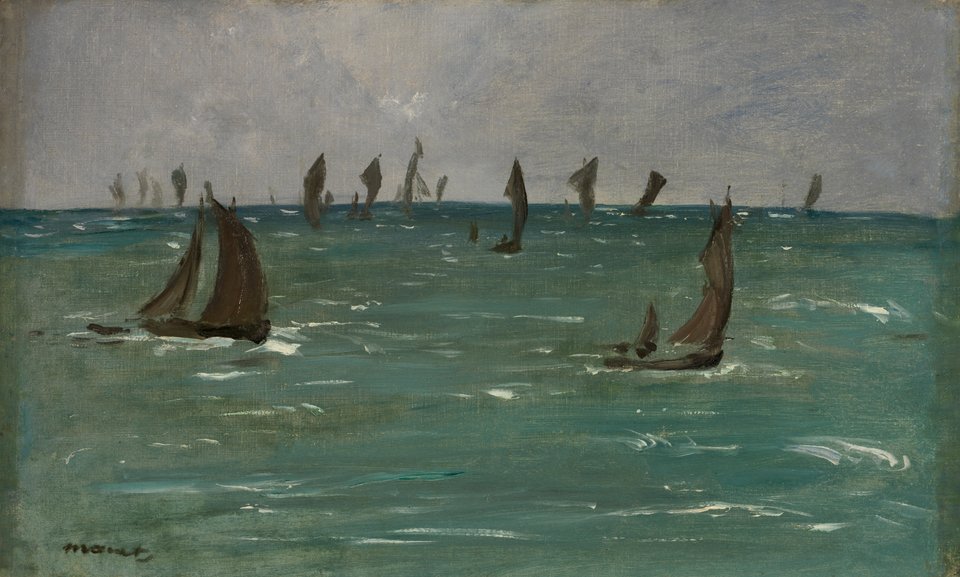
Ask people, and sea green gets much brighter. In the xkcd color survey, the average sea green was a light, minty #53FCA1, while a 1930 color dictionary gave the name to a dull yellow-green. Painters saw something else again: Manet’s sea, below, has sea green’s hue but is far grayer.