Viridian

A cool blue-green named after a 19th-century chromium pigment.

Overview

Viridian is a cool, medium-dark green with a clear blue cast. The code #40826D is a screen match for the viridian sample in a 1930 color dictionary.

The name comes from the Latin viridis, green. It belongs to a pigment, a hydrated chromium oxide first made in Paris in 1838. Its makers kept the recipe secret for years; in 1859 Guignet patented a method of making it. The word viridian is recorded in English by 1882.

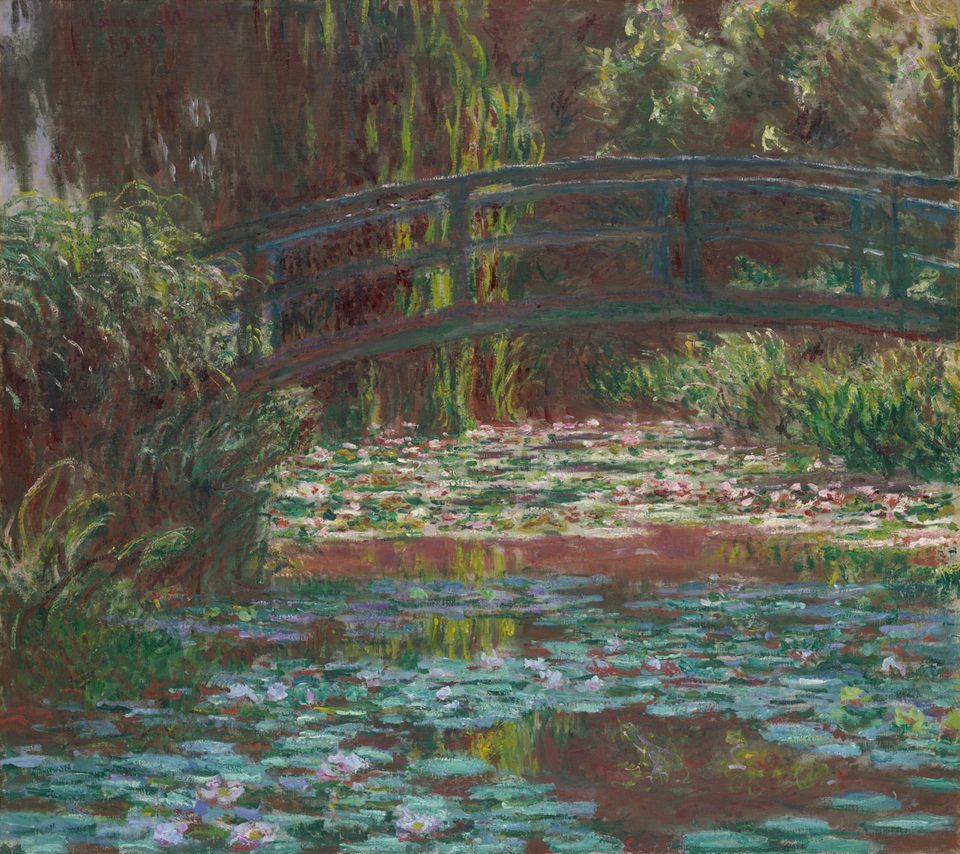
Merriam-Webster calls the pigment “a brilliant green”; the web code is a softer, grayer version of it. The paint is transparent and very permanent, and unlike the arsenic greens of the 1800s it is not poisonous. It is the only green pigment the Art Institute of Chicago found in Monet’s Water Lily Pond of 1900.

On screen, #40826D is a calm, natural green. It takes white or black text about equally well, so use it for blocks of color rather than small type. It pairs well with cream, coral, lilac and gold.

HEX#40826D
RGBrgb(64, 130, 109)
HSLhsl(161, 34%, 38%)
HSV161°, 51%, 51%
CMYK51, 0, 16, 49
OKLCHoklch(55.7% 0.076 170.4)
Every code converts from the HEX value #40826D. Wikipedia gives #40826D as a screen match for the viridian sample in Maerz and Paul’s A Dictionary of Color (1930), and flags that a better citation is needed. The ISCC-NBS dictionary files that same sample under strong green and moderate green, so read the code as close, not exact. CMYK is a screen-based estimate; print results vary.
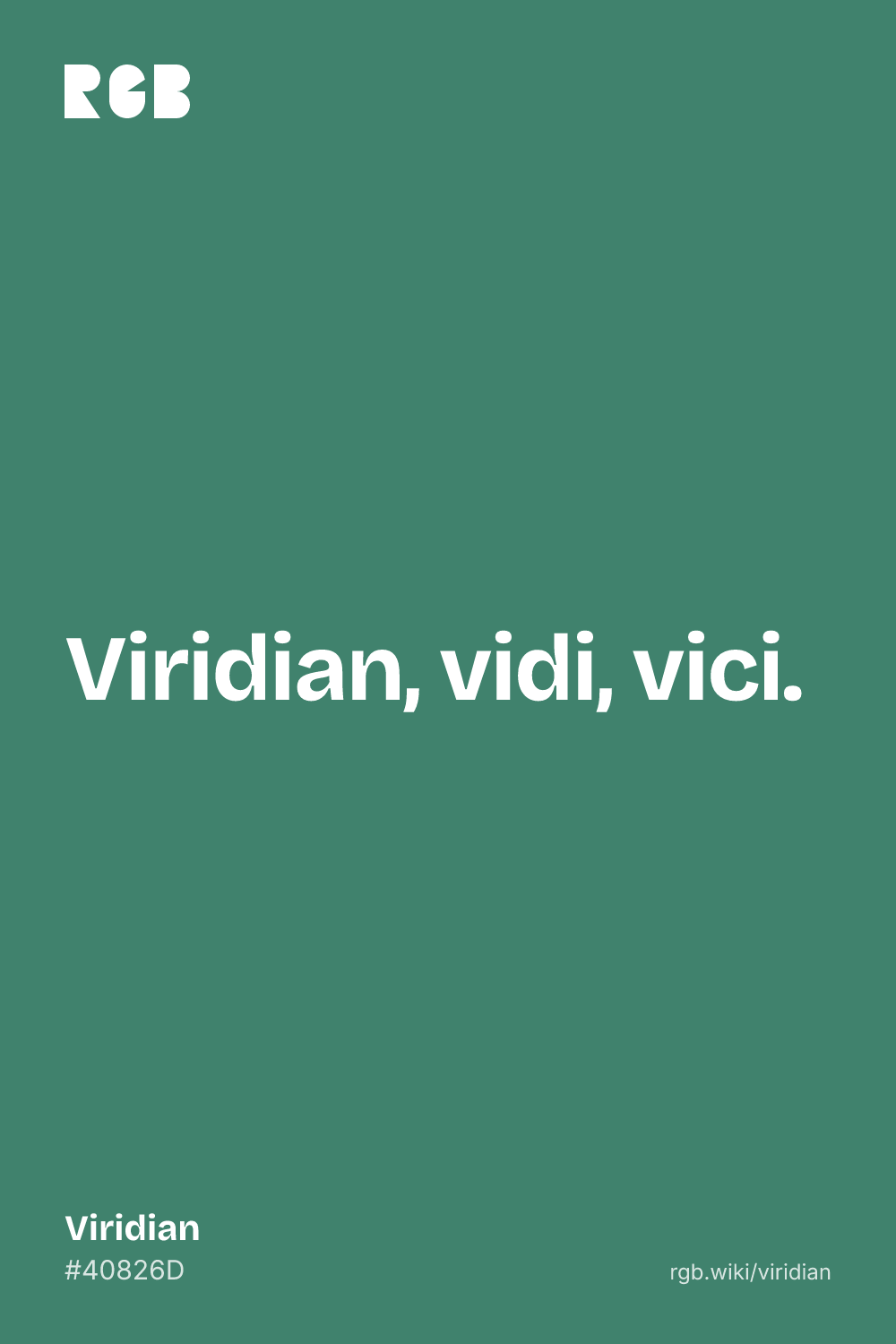
Viridian color card, hex #40826D: “Viridian, vidi, vici”

Viridian on the color map

The survey average and the dictionary’s strong green sit inside the outline, a little to the left: slightly yellower and more saturated than the reference. The survey’s viridian is also a touch lighter, and strong green a little darker. Brilliant green sits above the outline, much lighter. The outline is an approximate range, not a measured one.

Shades and tints

Tints with white

Shades with black

Tones with gray

Viridian sits in the middle. Tints add white, shades add black and tones add gray, in 10% steps out from it. Tap any swatch to copy its code.

Light and dark viridian

#C6DAD3
Pale viridianMixed 70% with white. A soft, misty green.
#8CB4A7
Light viridianMixed 40% with white. A gentle sea green.
#40826D
ViridianThe reference color.
#49796B
Hooker’s greenA slightly grayer green with a page of its own. See hooker's green
#264E41
Dark viridianMixed 40% with black. A deep forest green.

Colors that go with viridian

Pairings that work in rooms, outfits and interfaces.

Viridian and cream

Natural and calm, like old botanical prints.

Viridian and coral

Near-opposites. Fresh, warm and lively.

Viridian and lilac

Monet’s water garden: viridian beside cobalt violet.

Viridian and gold

Rich and traditional. Good for labels and stationery.

Viridian and navy

Cool and steady. A safe pair for brands and interfaces.

Viridian and sand

Soft and outdoorsy, like dune grass and beach.

Color-wheel palettes

Pick a palette to see where its colors sit on the color wheel. The caret marks viridian. Tap a band to copy its code.

Similar colors

Olive green60%Sea green74%Eucalyptus81%ViridianHooker's green86%Pine green77%Teal79%

Lined up by hue around viridian. Hover a color to see how similar it is.The bar under each name shows how similar it is. Similarity comes from the distance between the two colors in OKLab, a model of how we see color.

Viridian vs emerald green

Viridian#40826D · hue 161°
  • Darker and bluer
  • A chromium oxide pigment, not poisonous
  • Named from Latin viridis, green
Emerald green#50C878 · hue 140°
  • Lighter and brighter
  • Its 1814 pigment contained arsenic
  • Named after the gemstone

Meaning

  • Impressionism
  • Chromium oxide
  • Permanent
  • Water gardens
  • Foliage

Viridian’s associations come from its history as a paint: a safe, lasting green that painters such as Monet relied on. Research on color and emotion tests broad words like “green”, not viridian, so there is no evidence for moods tied to this color itself.

A recipe kept secret

Historical record

Pannetier, a Paris color maker, began making the pigment in 1838. He and his successor Binet produced it for many years and kept the recipe secret. In 1859 Guignet patented a method of making it, and the pigment soon spread.1, 2
A safe green in a poisonous age

Pigment history

Viridian replaced emerald green, a copper and arsenic pigment, in many uses, from industrial printing to watercolor painting. Pigment histories credit its lack of toxicity for part of that success, along with its permanence.1

Monet’s only green

Museum analysis

The Art Institute of Chicago analyzed three of Monet’s paintings of his water garden at Giverny: Water Lily Pond (1900), Irises (1914–17) and Water Lily Pond (1917–19). In each, viridian is the only green pigment on the list of what was found.3, 4, 5

Sources (5)
  1. WebExhibits, Pigments through the Ages, “Viridian: history”.
  2. Museum of Fine Arts, Boston, CAMEO, “Viridian”.
  3. Art Institute of Chicago, Monet Paintings and Drawings at the Art Institute of Chicago, “Cat. 37 Water Lily Pond, 1900”.
  4. Art Institute of Chicago, Monet Paintings and Drawings at the Art Institute of Chicago, “Cat. 46 Irises, 1914–17”.
  5. Art Institute of Chicago, Monet Paintings and Drawings at the Art Institute of Chicago, “Cat. 47 Water Lily Pond, 1917–19”.

History

Viridian began as a costly secret in a Paris workshop and became one of the standard greens of 19th-century painting.

  1. 1797

    Chromium, the metal that would later give viridian its color, is discovered.1

  2. 1838

    Pannetier, a Paris color maker, begins making the green pigment. He and his successor Binet keep the recipe secret for many years.2, 3

  3. 1859

    Guignet patents a method of making it. The pigment is still sometimes called Guignet’s green.1, 2, 3

  4. 1877

    Monet uses viridian in Arrival of the Normandy Train, Gare Saint-Lazare, even in the paint of his signature and date.4

  5. 1882

    The earliest recorded use of the word viridian in English, according to Merriam-Webster.5

  6. 1888

    Van Gogh paints the night sky of Café Terrace at Night with Prussian blue and viridian.6

  7. 1900

    Monet paints Water Lily Pond, now in Chicago. Viridian is the only green pigment the museum found in it.7

  8. 1930

    Maerz and Paul’s A Dictionary of Color prints a viridian sample. The web code #40826D is a screen match for it.8

Sources (8)
  1. ColourLex, “Viridian”.
  2. WebExhibits, Pigments through the Ages, “Viridian: history”.
  3. Museum of Fine Arts, Boston, CAMEO, “Viridian”.
  4. Art Institute of Chicago, “Cat. 16 Arrival of the Normandy Train, Gare Saint-Lazare, 1877”.
  5. Merriam-Webster, “viridian”.
  6. WebExhibits, Pigments through the Ages, “Viridian: overview”.
  7. Art Institute of Chicago, “Cat. 37 Water Lily Pond, 1900”.
  8. Wikipedia, “Viridian”; ISCC-NBS placements via Aubrey Jaffer’s dictionary pages.

Viridian in use

Monet’s painting of an arched wooden footbridge over a pond covered with water lilies, framed by willows and dense green plants
#384B3F#557266#779C99#8C7460
PaintingWater Lily Pond (1900)

Monet’s Japanese-style footbridge over the pond he dug at Giverny, now at the Art Institute of Chicago. The museum lists viridian as the only green pigment in it, alongside yellows, reds, blues, cobalt violet and lead white.

#384B3F#557266#779C99#8C7460
Source: Art Institute of Chicago

Palettes are sampled in-house.

Questions

What color is viridian?

A cool, medium-dark green with a blue cast. The usual code is #40826D (RGB 64, 130, 109). The paint itself is a brighter, more transparent blue-green.

What is viridian made of?

Hydrated chromium oxide. It is transparent, very permanent and not poisonous, which made it a favorite with 19th-century painters.

What is the difference between viridian and emerald green?

Viridian (#40826D) is darker and bluer. Emerald green (#50C878) is lighter and brighter, and its 1814 pigment was made with arsenic, while viridian is a safe chromium pigment.

Is viridian the same as phthalo green?

No. Both are cool greens, but viridian is a chromium oxide made from 1838, while phthalo green is a much stronger copper pigment made from 1938.

Where does the name viridian come from?

From the Latin viridis, meaning green. It is recorded in English by 1882.

What colors go with viridian?

Cream and sand for a natural look, coral for warm contrast, lilac for a Monet feel, and gold or navy for something more formal.