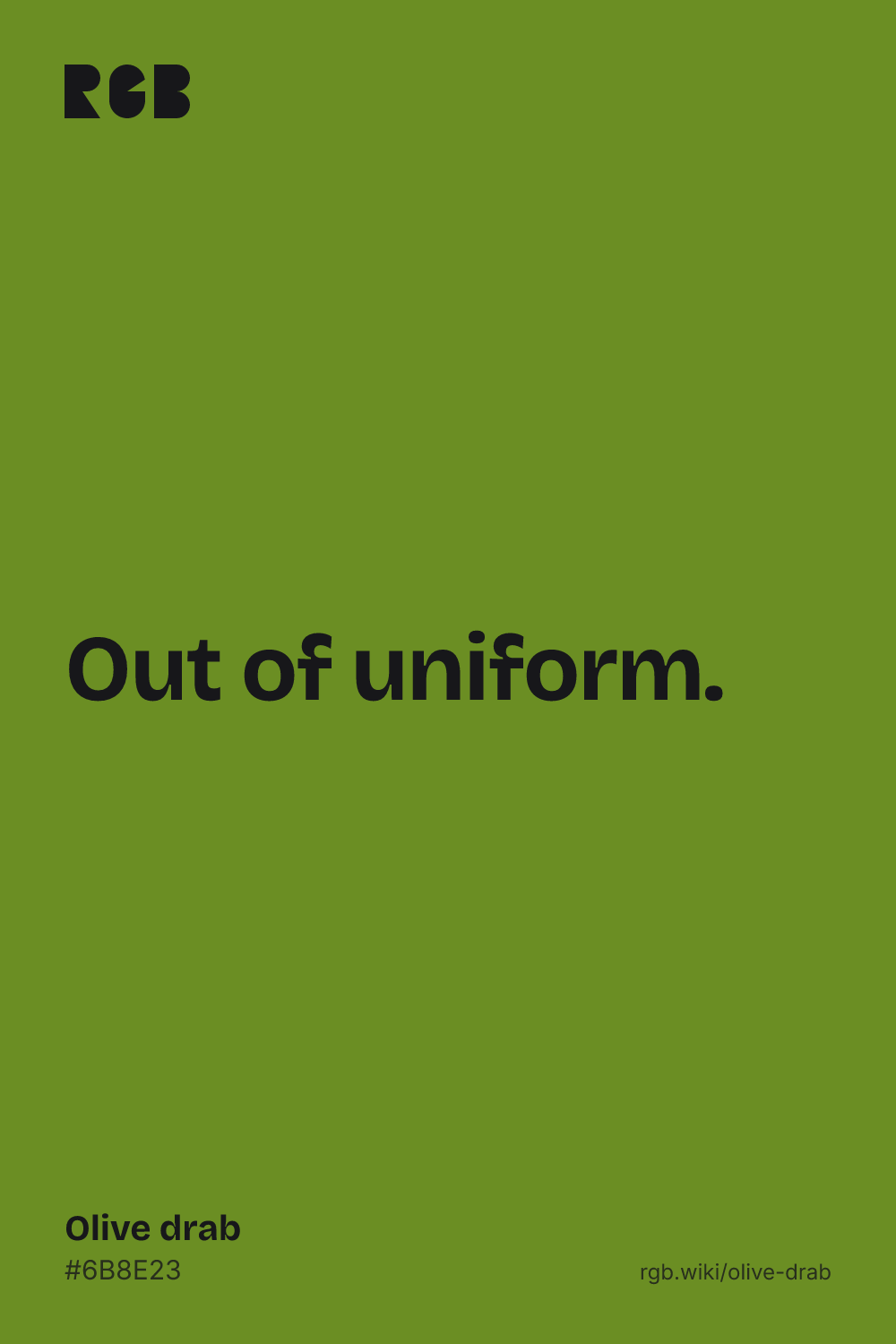
Olive drab, on screens, is a medium yellow green, like leaves in the shade. Its code is #6B8E23: green at about 56%, red at 42% and blue low, at 14%. Each channel is about 70% of the CSS keyword yellowgreen, #9ACD32, so olive drab is simply that color dimmed, on the same hue of 80°.
The code is older than the name. The X Window System’s oldest surviving color list, from 1986, already had 107 142 35, but called it medium forest green, and kept that name until 1988. In 1989 Paul Raveling, who retuned the list on his own HP monitor at USC’s Information Sciences Institute, gave the same value a second name, olive drab, and added four numbered steps, OliveDrab1 to OliveDrab4. When X11 Release 4 shipped that December, only olive drab was left, and the web adopted the list in 2001. No note records why the army name was chosen.
The real olive drab belongs to the US Army. After testing how visible different colors were, the Army adopted it for winter uniforms and overcoats in 1902, and in World War II it moved from olive drab No. 3 to the dark green No. 7, which was harder to spot from the air. Dictionaries call olive drab a grayish olive: the ISCC-NBS dictionary files Maerz and Paul’s 1930 sample around #5B5842, and the federal paint standard’s olive drab camouflage chip measures about #57513E. The web color is far lighter and greener than either.
On screens, olive drab takes black text: black on it has a contrast of about 5.5:1, enough for body text. White reaches only about 3.8:1, so keep white text large or bold. It pairs well with khaki, cream, rust and charcoal.