A deep, cool green named after glass bottles, and the green of Bangladesh’s flag.
Overview
Bottle green is a deep green with a cool, slightly blue lean. Its usual code, #006A4E, has no red, green at about 42% of full strength and blue at about 31%. That makes it a little brighter and bluer than hunter green and less blue than pine green.
The name is older than most color words for green. Merriam-Webster dates “bottle green” to 1789. It names the color of ordinary glass bottles, which were green because of iron. Sand, the main ingredient of glass, carries a little iron oxide, and the iron gives plain glass a green tint that shows when the glass is thick. Glassmakers learned to cancel the tint for clear glass, but for wine and beer a dark bottle was useful: it keeps out some of the light that spoils the drink.
Real bottle glass rarely matches the web code. Old wine bottles are olive or almost black, and color dictionaries place bottle green darker and grayer than #006A4E. The code itself comes from the flag of Bangladesh, whose 1972 flag rules call for a field of bottle green; color sites list it as “Bangladesh green”.
On screens, #006A4E carries white text easily (6.6:1). It looks traditional next to cream and brass, and fresh next to coral or pale aqua.
HEX
#006A4E
RGB
rgb(0, 106, 78)
HSL
hsl(164, 100%, 21%)
HSV
164°, 100%, 42%
CMYK
100, 0, 26, 58
OKLCH
oklch(46.5% 0.095 167.0)
Every code converts from the HEX value #006A4E. #006A4E is the bottle green most color lists use. Wikipedia takes it from a color website that calls it “Bangladesh green”, after the flag of Bangladesh, whose official rules ask for bottle green but define it only by a dye recipe, with no screen value. The color dictionaries are darker: Ridgway’s bottle green (1912) falls in the ISCC-NBS dark green, centered on #1B4D3E, and the dictionary files Maerz and Paul’s sample (1930) under two groups, dark bluish green and dark grayish green. No standard settles the gap; see the range below. CMYK is a screen-based estimate; print results vary.
Bottle green on the color map
LighterDarker
The flag’s screen value sits almost on top of the code. Ridgway’s dictionary bottle green lies below it, darker and grayer, at nearly the same hue, and Maerz and Paul’s dark bluish green is below and to the right, bluer. People’s bottle green in the xkcd survey is darker and much yellower, beyond the left edge of the outline, so it is pinned there. The outline is an approximate range, not a measured one.
Shades and tints
Tintswith white
Shadeswith black
Toneswith gray
Bottle green sits in the middle. Tints add white, shades add black and tones add gray, in 10% steps out from it. Tap any swatch to copy its code.
Light and dark bottle green
#99C3B8
Pale bottle greenMixed 60% with white. A soft sea-glass green.
#338871
Light bottle greenMixed 20% with white. Livelier, still dark enough for white text.
#006A4E
Bottle greenThe reference color.
#1B4D3E
Dictionary bottle greenThe ISCC-NBS dark green, where the dictionary files Ridgway’s bottle green (1912).
#00402F
Deep bottle greenMixed 40% with black. Almost black in low light.
#464620
Old bottle glassSampled from an 18th-century wine bottle at the Met: olive, not blue-green.
Colors that go with bottle green
Pairings that work in rooms, outfits and interfaces.
Bottle green and cream
Like a paper label on a green bottle. Calm and traditional.
Bottle green and brass
A dark green ground with brass details. Suits pubs, libraries and heritage brands.
Green and red
The two colors of the flag of Bangladesh. Bold; give the red a small role.
Old glass
Olive, amber and green, the real colors of old bottles on a windowsill.
Bottle green and coral
Near-opposites on the wheel. Fresh and lively.
Sea glass
Bottle green with its own pale tint and a cool gray. Quiet and clean.
Color-wheel palettes
Pick a palette to see where its colors sit on the color wheel. The caret marks bottle green. Tap a band to copy its code.
Lined up by hue around bottle green. Hover a color to see how similar it is.The bar under each name shows how similar it is. Similarity comes from the distance between the two colors in OKLab, a model of how we see color.
Bottle green vs hunter green
Bottle green#006A4E · hue 164°
Cooler, with a blue lean
No red at all
Named after glass bottles
Hunter green#355E3B · hue 129°
Grayer and a little darker
Leans toward yellow
Named after hunters’ clothes
Meaning
Glass bottles
Iron in glass
Light protection
Bangladesh
Bottle green means glass: the everyday green of wine and beer bottles, caused by iron in the sand. Dark glass also has a job, shielding drinks from light, though green does it less well than brown. In Bangladesh, bottle green is the national color by law. Research on color and emotion tests broad words such as green, not bottle green itself.
Iron makes glass green
Glass chemistry
The sand, lime and soda used for glass carry natural impurities such as iron oxide, so plain glass comes out greenish, most visibly in thick pieces. Since at least the second century BCE, glassmakers have added manganese, later called “glassmakers’ soap”, to balance the tint and make clear glass.1, 7
Green glass protects beer only a little
Food chemistry
Light makes riboflavin in beer break down the hop bitter compounds, forming a sulfur compound that smells like a skunk. Brown glass gives beer some protection; green and clear glass give almost none, so brewers who use them rely on cartons or special hop extracts.2, 3
Darker green bottles shield wine better
Laboratory study
In lab tests on Chardonnay, light changed the wine’s color most in clear bottles and least in dark “antique green” ones, in line with how much light each glass let through. Even the darkest green bottle let in some ultraviolet light.4
The national green of Bangladesh
Official record
Bangladesh’s flag rules of 1972 say the flag will be bottle green with a red circle. The green is usually read as the country’s lush land, and the red as the rising sun and the blood shed in the 1971 Liberation War.5, 6
Wikipedia, “Beer bottle”, Lightstruck beer, citing Baxter, E. D., & Hughes, P. S. (2001). Beer: Quality, Safety and Nutritional Aspects. Royal Society of Chemistry.
Bottle green was a color of glass long before it was a color name. The word came in the late 1700s, the dictionaries pinned it down in the 1900s, and in 1972 it became the color of a national flag.
1630s
Sir Kenelm Digby runs a glassworks in England whose coal-fired furnaces make strong, dark wine bottles. Their translucent green or brown glass also protects the wine from light. In 1662 Parliament recognizes his claim to the invention.1
About 1760
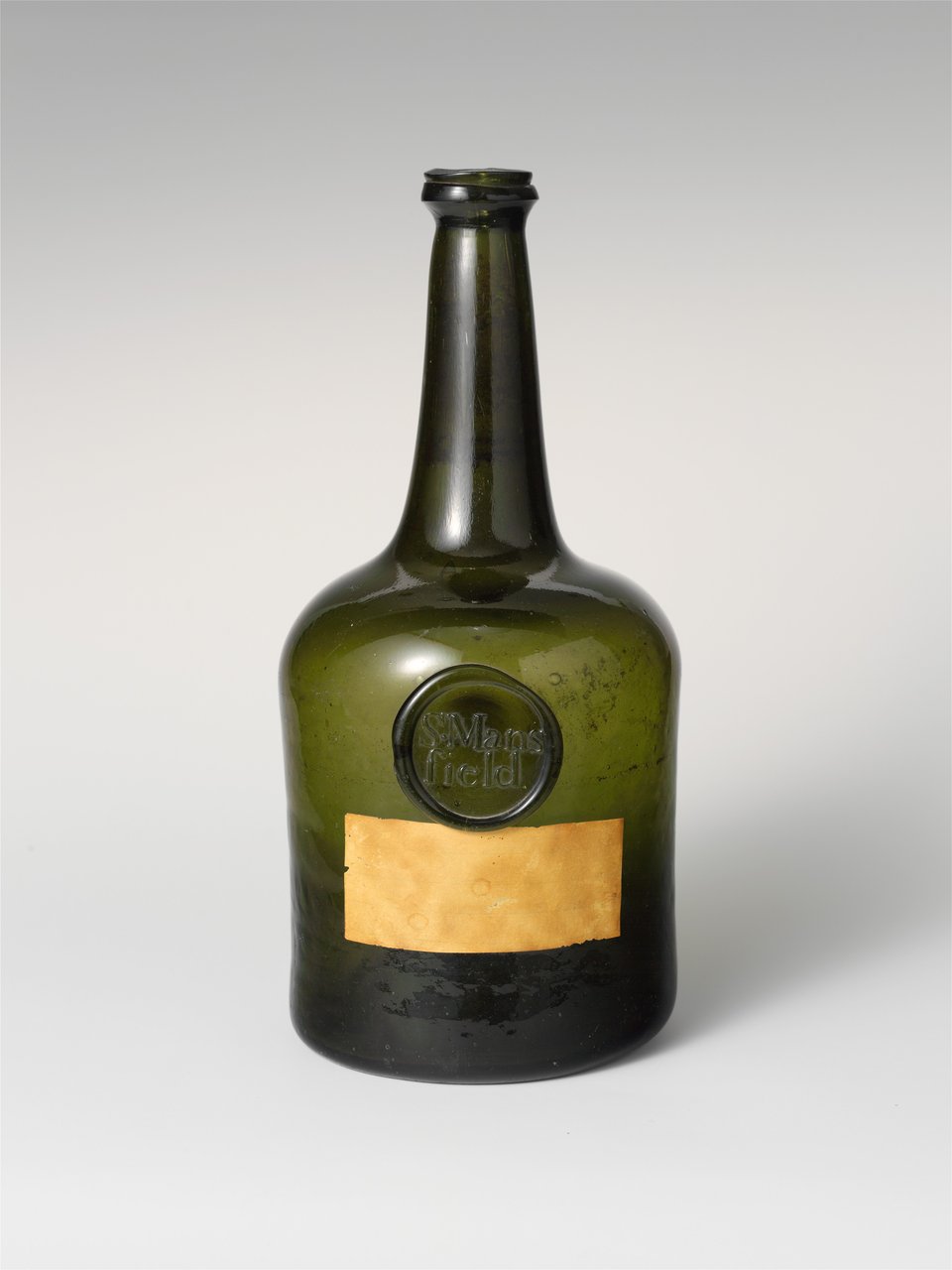
A free-blown wine bottle, probably British, is made in deep olive-green glass and stamped with an owner’s seal, as many bottles of the time were. It is now at the Metropolitan Museum of Art.2
1789
First known use of “bottle green” as a color name in English, meaning a dark green.3
1912
Robert Ridgway’s Color Standards and Color Nomenclature includes a bottle green. The ISCC-NBS dictionary later files it as dark green, centered on #1B4D3E.4
1930
Maerz and Paul’s A Dictionary of Color prints a bottle green sample and dates the name to 1816, later than the 1789 use Merriam-Webster has since found.5, 3
2 March 1971
Students raise a green flag with a red disc and a map of the country at Dhaka University, the pattern later taken up by the independence government.6
1972
Bangladesh adopts its national flag on 17 January. The flag rules call for a bottle green field with a red circle, dyed with set amounts of named green and orange dyes, and the map is dropped.6, 7
2012
Chemists in Melbourne show that dark green wine bottles slow light damage to white wine more than clear or pale bottles, though none block it fully.8
Sources (8)
Wikipedia, “Kenelm Digby”, citing Estreicher, S. K. (2006). Wine: From Neolithic Times to the 21st Century, pp. 73–74. Algora Publishing.
GlassSealed wine bottle, probably British (about 1760)
A free-blown bottle with a glass seal stamped with an owner’s name. Its glass is far from the web code: an olive green, about #464620 in the body and #585817 where light shines through, darkening to near-black #242419 at the base.
#585817#464620#6D6A3C#242419
Source: The Met
Source
Sampled from the Metropolitan Museum of Art’s photograph (33.71.1), released as CC0 (public domain). The paper label was left out of the codes. Colors in a photo shift with the lighting and the glass’s thickness, so read the codes as close, not exact.
#006747#DA291C
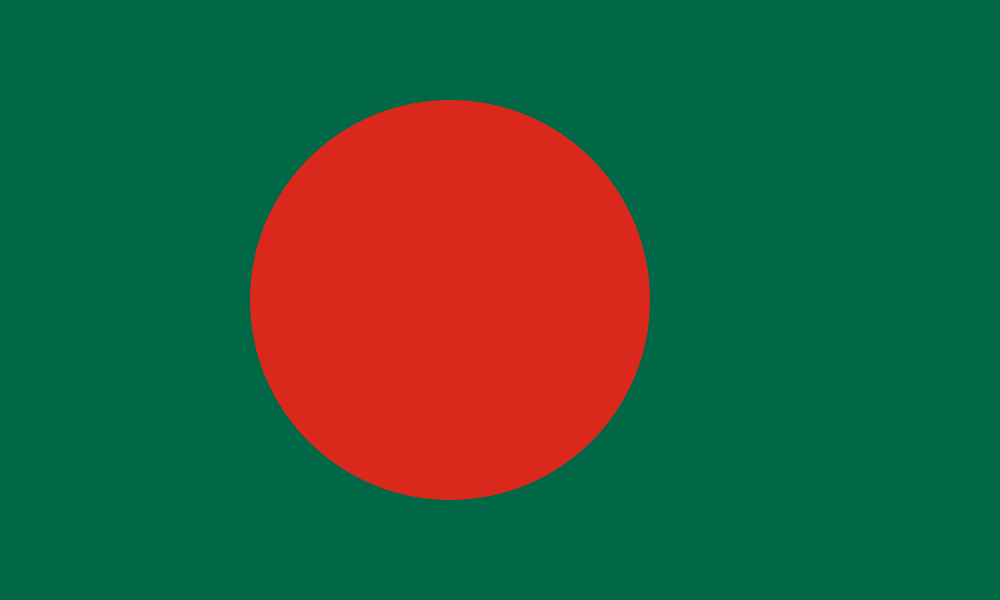
FlagFlag of Bangladesh
The flag rules call for a bottle green field with a red circle set a little toward the staff. The flag’s usual screen value, #006747, is almost the same as the web’s bottle green, #006A4E, with red #DA291C.
#006747#DA291C
Source: Flag rules
Source
The People’s Republic of Bangladesh Flag Rules, 1972, as given by Banglapedia, name the colors only as bottle green and as dye recipes, with no screen values. The codes shown are a commercial print-ink match’s own screen values, as given by Wikipedia. The flag is drawn in-house from its official construction: 10 by 6, with a red circle whose radius is one fifth of the length, centered nine twentieths of the way from the staff.
#00704A#FFFFFF
BrandingStarbucks
The coffee chain’s green, #00704A, is slightly lighter and a touch yellower than this page’s code. It fills the siren logo, with the mermaid drawn in white.
#00704A#FFFFFF
Source: Starbucks logo file
Source
The green is the fill in Starbucks’s own logo file, served on its website. The logo shown is that file.
#147350#FF6C00#EB0F2A
Branding7-Eleven
7-Eleven’s green, #147350, is lighter and slightly yellower than this page’s code. It colors the ELEVEN lettering across the logo’s orange and red 7.
#147350#FF6C00#EB0F2A
Source: 7-Eleven logo file
Source
The orange, red and green are the fills in 7-Eleven’s own logo file, served on its US website. The logo shown is that file.
#006A4D#000000
BrandingLloyds
The British bank’s green, #006A4D, is practically this page’s code. In the Lloyds logo it marks the black horse’s mane.
#006A4D#000000
Source: Lloyds Bank logo file
Source
The green and black are the fills in the Lloyds Bank logo served on its website. The logo shown is that file.
#006F46#004E36
BrandingWhole Foods
Whole Foods Market’s green, #006F46, is slightly lighter, more vivid and a touch yellower than this page’s code. The grocer uses it for buttons and links on its website.
#006F46#004E36
Source: Whole Foods website CSS
Source
The greens are color tokens in the stylesheets of wholefoodsmarket.com, read on November 18, 2026. The logo shown is the white wordmark served inline on the same page, unaltered.
Logos belong to their owners and are shown unaltered, only to show where each palette comes from. Palettes are sampled in-house.
Questions
What color is bottle green?
A deep green with a slight blue lean, named after green glass bottles. Its usual code is #006A4E (RGB 0, 106, 78).
Why are glass bottles green?
Sand for glass contains a little iron oxide, which tints glass green. Makers can cancel the tint for clear glass, but green and brown glass also block some of the light that spoils wine and beer.
Does green glass protect beer?
Only a little. Light breaks down hop compounds in beer and creates a skunky smell. Brown glass gives some protection, while green and clear glass give almost none.
Is the flag of Bangladesh bottle green?
Yes. Bangladesh’s 1972 flag rules say the flag is bottle green with a red circle. They define the colors by dye recipes, so screen codes such as #006747 and #006A4E are close matches, not official values.
How old is the name bottle green?
Merriam-Webster dates it to 1789. Maerz and Paul’s 1930 Dictionary of Color gave 1816, before that earlier use was found.
What is the difference between bottle green and hunter green?
Bottle green (#006A4E) is cooler and leans toward blue. Hunter green (#355E3B) is grayer and leans toward yellow.
Is bottle green the same as British racing green?
No. British racing green (#004225) is darker. Both are deep, cool greens, but bottle green is brighter.
What colors go with bottle green?
Cream and brass for a traditional look, coral for contrast, pale aqua and gray for a clean look, and red, as on the flag of Bangladesh.