Heliotrope

A bright pinkish purple named after a flower said to turn toward the sun.

Overview

Heliotrope is a light, vivid purple with a pink cast, named after the heliotrope flower. Its usual code is #DF73FF: blue at full strength, red at 87% and green at 45%. That puts it close to orchid, but brighter and a little bluer.

The name is Greek for “sun-turner”: heliotrope plants were said to turn their flowers to follow the sun. The garden heliotrope, a shrub from South America, has dense clusters of purple flowers that smell of vanilla. In the spring of 1880, two decades after the mauve craze, Paris fashion took the flower’s name for a new rosy purple, and newspapers across the English-speaking world reported it.

Color references disagree about how deep heliotrope is. People in the xkcd color survey picked a bright purple close to the web code. Merriam-Webster calls it a moderate to reddish purple, and the 1955 ISCC-NBS dictionary files the 1930 sample behind the web code as a dark reddish purple. The flowers themselves run from dark purple to pale purple and white.

The name has a second life as a gem. Heliotrope is also bloodstone: a dark green stone with red spots, nothing like the color. On screens, #DF73FF is light enough for dark text. It glows next to charcoal or navy and looks vintage with cream.

HEX#DF73FF
RGBrgb(223, 115, 255)
HSLhsl(286, 100%, 73%)
HSV286°, 55%, 100%
CMYK13, 55, 0, 0
OKLCHoklch(73.2% 0.217 318.0)
Every code converts from the HEX value #DF73FF. #DF73FF is the heliotrope most color lists use. Wikipedia gives it as the match for the heliotrope sample in Maerz and Paul’s A Dictionary of Color (1930), but the ISCC-NBS dictionary (1955) files that same sample as a dark reddish purple, centered on #5D3954, and Merriam-Webster defines heliotrope as “a variable color averaging a moderate to reddish purple”. No standard settles the gap; see the range below. CMYK is a screen-based estimate; print results vary.
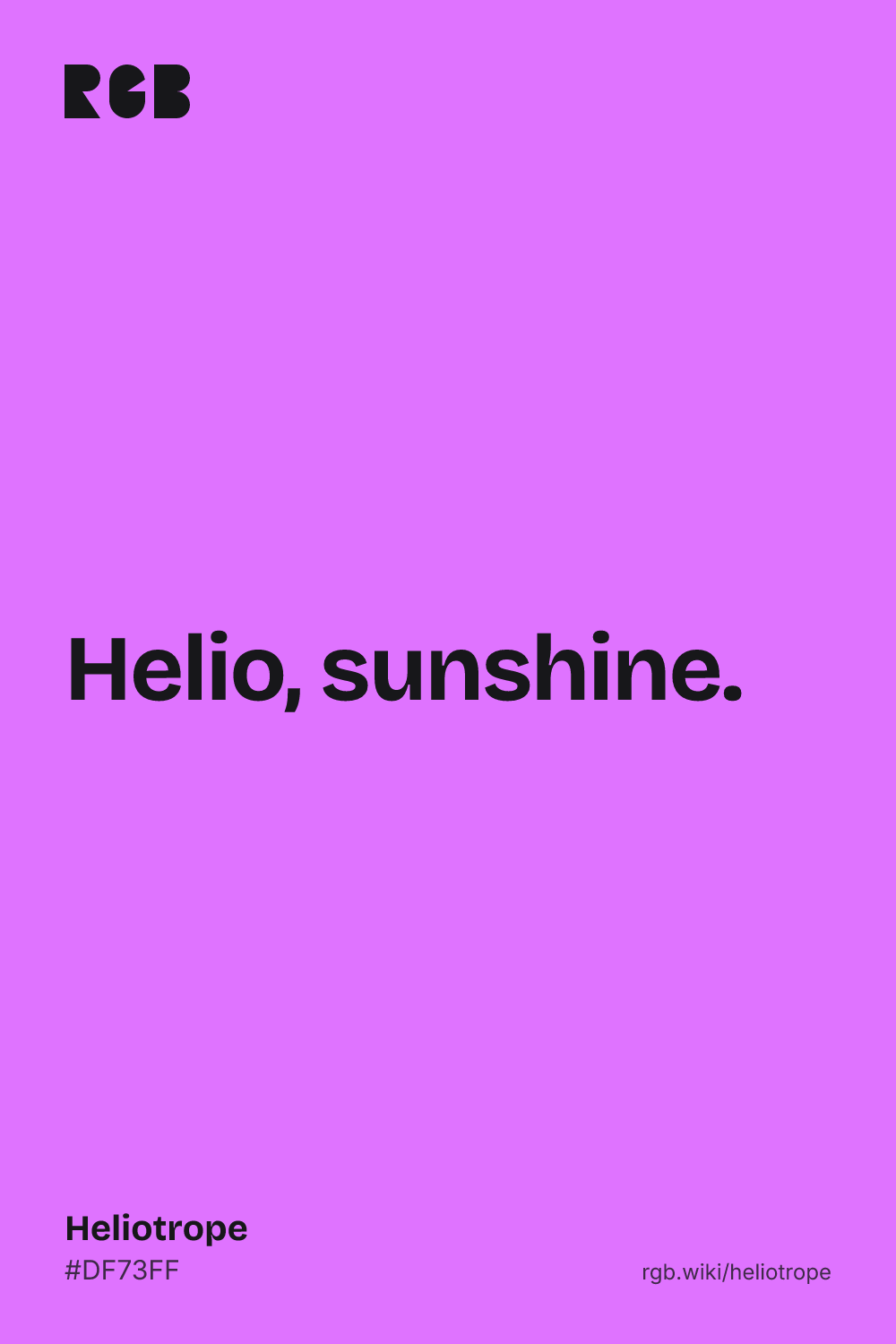
Heliotrope color card, hex #DF73FF: “Helio, sunshine”

Heliotrope on the color map

People’s average heliotrope in the xkcd survey sits just below the code, inside the outline: a little deeper and more intense. Merriam-Webster’s reddish purple lies below the outline and to the right, darker, grayer and pinker. The dictionary’s placement for the 1930 sample is darker still, off the bottom of this view, so it is pinned to the edge. The outline is an approximate range, not a measured one.

Shades and tints

Tints with white

Shades with black

Tones with gray

Heliotrope sits in the middle. Tints add white, shades add black and tones add gray, in 10% steps out from it. Tap any swatch to copy its code.

Light and dark heliotrope

#F2C7FF
Pale heliotropeMixed 60% with white. A soft pink-lilac for backgrounds.
#DF73FF
HeliotropeThe reference color.
#AA98A9
Heliotrope grayThe ISCC-NBS pale purple, where the 1955 dictionary files Maerz and Paul’s heliotrope gray, a color name since 1912.
#864599
Deep heliotropeMixed 40% with black. Dark enough for white text, for buttons and headings.
#5D3954
Dictionary heliotropeThe ISCC-NBS dark reddish purple, where the 1955 dictionary files the 1930 heliotrope sample.
#563C5C
Old heliotropeMaerz and Paul’s old helio, a color name since 1926, filed by ISCC-NBS as dark purple.

Colors that go with heliotrope

Pairings that work in rooms, outfits and interfaces.

Heliotrope and charcoal

A dark theme where heliotrope glows. Modern and bold.

Heliotrope and cream

In 1880 fashion writers paired heliotrope silks with light cream. Soft and vintage.

Bloodstone

The gem that shares the name: deep green and rusty red, with heliotrope as the spark.

Heliotrope and lemon

Near-opposites on the wheel. Bright and playful.

Heliotrope and teal

Cool green-blue against warm purple. Fresh and confident.

Heliotrope and gray

Tonal and calm, with heliotrope gray to soften the brightness.

Color-wheel palettes

Pick a palette to see where its colors sit on the color wheel. The caret marks heliotrope. Tap a band to copy its code.

Similar colors

Lavender55%HeliotropeMedium orchid46%Pink-purple58%Orchid70%Neon pink41%Bubblegum pink46%

Lined up by hue around heliotrope. Hover a color to see how similar it is.The bar under each name shows how similar it is. Similarity comes from the distance between the two colors in OKLab, a model of how we see color.

Heliotrope vs orchid

Heliotrope#DF73FF · hue 286°
  • Brighter, leaning a little blue
  • Named after a sun-turning flower
  • The Paris fashion color of 1880
Orchid#DA70D6 · hue 302°
  • Softer and pinker
  • The CSS keyword orchid
  • Named after the orchid family

Meaning

  • Sun-turner
  • Fashion color
  • Devotion
  • Medical term

Heliotrope’s meanings come from its name and its moment. The Greek name means turning toward the sun. Paris made it the fashion color of spring 1880, the Victorian language of flowers read it as devotion, and doctors still use the word for a purplish skin color. Research on color and emotion tests broad words such as purple, not heliotrope itself.

Named for turning to the sun

Word history

The name comes through Latin from Greek hēliotropion, from hēlio-, sun, and tropos, turn, because the plant’s flowers were thought to turn toward the sun. Merriam-Webster notes that turning toward the sun is common among flowers and even leaves, so the heliotrope is far from unique.1
Paris’s new color for 1880

Historical record

In early 1880, newspapers reported that heliotrope would be the leading color of the Paris spring fashions, describing it as the rosy purple of the newly opened flower. An American fashion magazine agreed it was very fashionable, but warned that this pinkish purple did not suit many people.2, 3

Devotion, in the language of flowers

Victorian custom

Kate Greenaway’s 1884 Language of Flowers gives heliotrope the meanings devotion and faithfulness. An 1892 cigarette card from a series called Floral Beauties and Language of Flowers, now at the Met, is captioned “Heliotrope: Devotion”.4, 5

A word doctors still use

Medical usage

In dermatomyositis, an inflammatory disease of the muscles and skin, a purple color on the upper eyelids is called a heliotrope rash. A century ago, doctors described a “heliotrope cyanosis”, a purplish-blue skin color, as a mark of the deadly bronchitis of 1916–17 and the 1918–19 flu pandemic.6, 7

Sources (7)
  1. Merriam-Webster, “heliotrope”, definitions, etymology and “Did you know?” note.
  2. Quinion, M. “Heliotrope”. World Wide Words, quoting the Launceston Examiner, 24 April 1880.
  3. Zwolan, M. (2020). “1880”. Fashion History Timeline, Fashion Institute of Technology, quoting Peterson’s Magazine, April 1880, p. 328.
  4. Greenaway, K. (1884). Language of Flowers. London: George Routledge and Sons. Internet Archive (Smithsonian Libraries copy).
  5. The Metropolitan Museum of Art, “Heliotrope: Devotion, from the series Floral Beauties and Language of Flowers”, American Tobacco Company, 1892 (63.350.204.75.38).
  6. MedlinePlus, U.S. National Library of Medicine, “Dermatomyositis”.
  7. Oxford, J. S. et al. (2002). World War I may have allowed the emergence of “Spanish” influenza. The Lancet Infectious Diseases, 2(2), 111–114. doi:10.1016/s1473-3099(02)00185-8

History

Heliotrope was a gem and a flower long before it was a color. Paris fashion made it a color name in 1880, and color dictionaries have disagreed about how deep it is ever since.

  1. About 77 CE

    Pliny the Elder describes the gem heliotropium as leek green with blood-red streaks. Placed in a bowl of water in sunlight, he writes, it turns the sun’s reflection the color of blood, which is how it got its name.1

  2. Early 1600s

    Probably in Prague, the gem carver Ottavio Miseroni cuts a head of the Virgin from a single piece of heliotrope.2

  3. 1605

    First known use of “heliotrope” in modern English, for the plant. The word comes through Latin from Greek hēliotropion, from the words for sun and turn. An Old English form, eliotropus, is older still.3, 4

  4. 1880

    Newspapers report that heliotrope will lead the Paris spring fashions, describing it as “that rosy purple conspicuous in the newly-blown flower”.4 In April, Peterson’s Magazine calls the new color very fashionable, but not becoming to many people, “as it is of a pinkish purple”.5

  5. 1884

    Kate Greenaway’s Language of Flowers gives heliotrope’s meaning as “Devotion. Faithfulness.”6

  6. 1916–19

    Doctors at army camps in France and Britain see a “heliotrope cyanosis”, a purplish-blue skin color, in deadly outbreaks of bronchitis. The same sign is prominent in the 1918–19 flu pandemic.7

  7. 1930

    Maerz and Paul’s A Dictionary of Color prints a heliotrope sample and dates the color name to 1882, two years after the Paris fashion.8

  8. 1955

    The ISCC-NBS dictionary of color names files Maerz and Paul’s heliotrope as a dark reddish purple, far darker than today’s web code.9

  9. 2010

    In the xkcd color survey, the average color people call heliotrope is #D94FF5, close to the web code.10

Sources (10)
  1. Pliny the Elder, Natural History 37.165, translated by D. E. Eichholz (1962). Attalus.org.
  2. The Metropolitan Museum of Art, “Pendant with head of the Virgin”, Ottavio Miseroni, probably Prague, early 17th century, heliotrope with enameled gold mount (1982.60.393).
  3. Merriam-Webster, “heliotrope”, etymology and first known use.
  4. Quinion, M. “Heliotrope”. World Wide Words, quoting the Launceston Examiner, 24 April 1880.
  5. Zwolan, M. (2020). “1880”. Fashion History Timeline, Fashion Institute of Technology, quoting Peterson’s Magazine, April 1880, p. 328.
  6. Greenaway, K. (1884). Language of Flowers. London: George Routledge and Sons. Internet Archive (Smithsonian Libraries copy).
  7. Oxford, J. S. et al. (2002). World War I may have allowed the emergence of “Spanish” influenza. The Lancet Infectious Diseases, 2(2), 111–114. doi:10.1016/s1473-3099(02)00185-8
  8. Wikipedia, “Heliotrope (color)”, citing Maerz, A. & Paul, M. R. (1930), A Dictionary of Color, p. 196 and plate 54.
  9. Jaffer, A. “(M) Dictionary of Color”, the ISCC-NBS placements of Maerz and Paul’s color names (1955 dictionary).
  10. Munroe, R. (2010). “Color survey results”. xkcd blog. The survey’s color averages are released as CC0 data.

Heliotrope in use

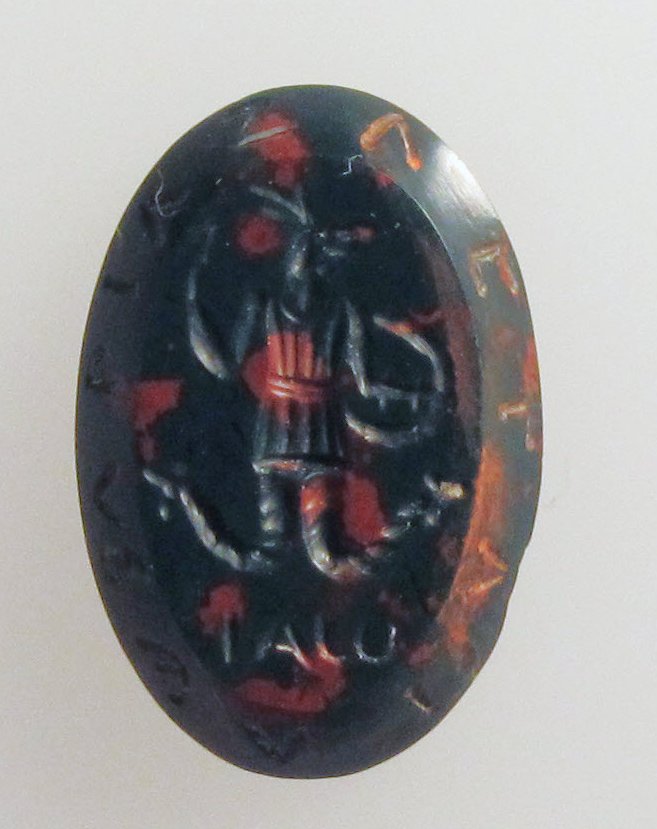
A small oval gem, so dark green it looks nearly black, with scattered red spots, engraved with a standing figure that has a bird’s head and coiled snake legs
#1D252D#373740#824C49
GemHeliotrope seal stone, Roman (200s CE)

A gem cutter engraved a rooster-headed figure with snake legs into this oval of heliotrope, about 2 cm long. The green is so dark it reads almost black, about #1D252D, and the red spots that earned the stone the name bloodstone sit near #824C49.

#1D252D#373740#824C49
Source: The Met
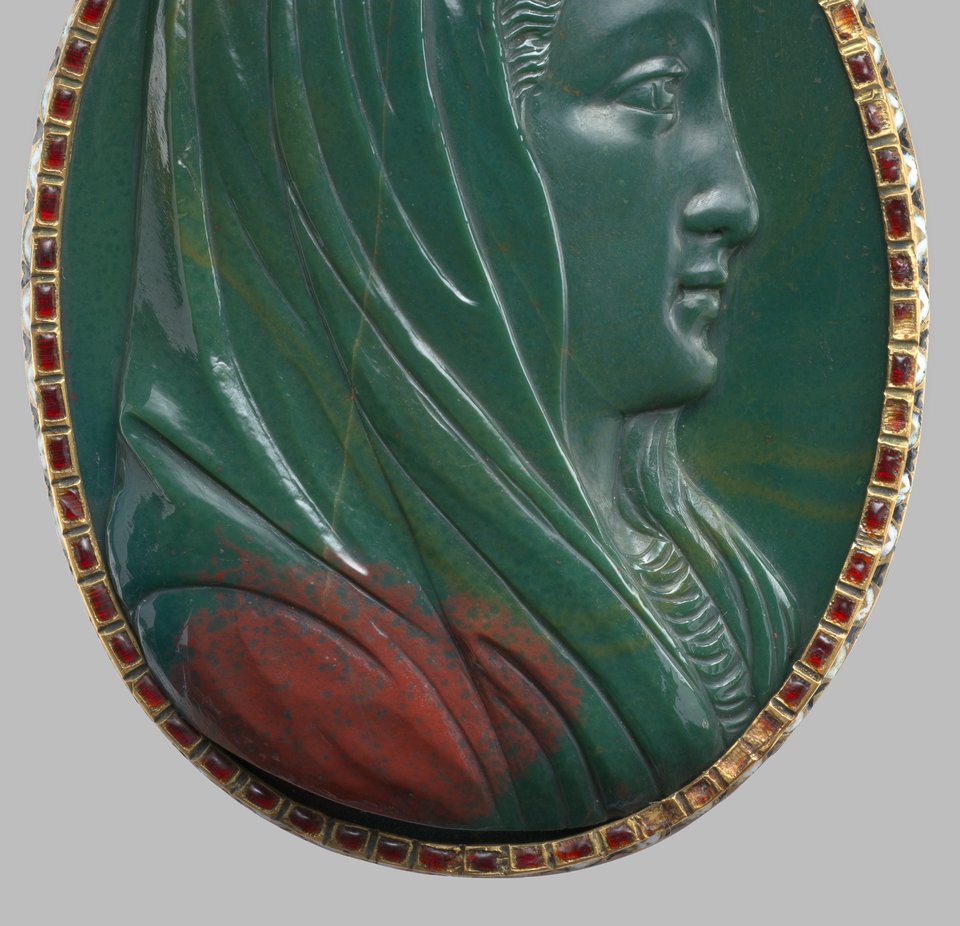
A green stone cameo of the Virgin Mary in profile, wearing a veil, with a patch of brick red across her shoulder, in a gold frame set with red enamel
#305043#5D726B#60312A#744942
JewelryPendant with head of the Virgin, Ottavio Miseroni (early 1600s)

Miseroni, a gem carver working in Prague, cut the Virgin’s veiled head from one piece of heliotrope. The stone is a deep green, about #305043, and a patch of its red, about #60312A, falls across her robe at the shoulder.

#305043#5D726B#60312A#744942
Source: The Met
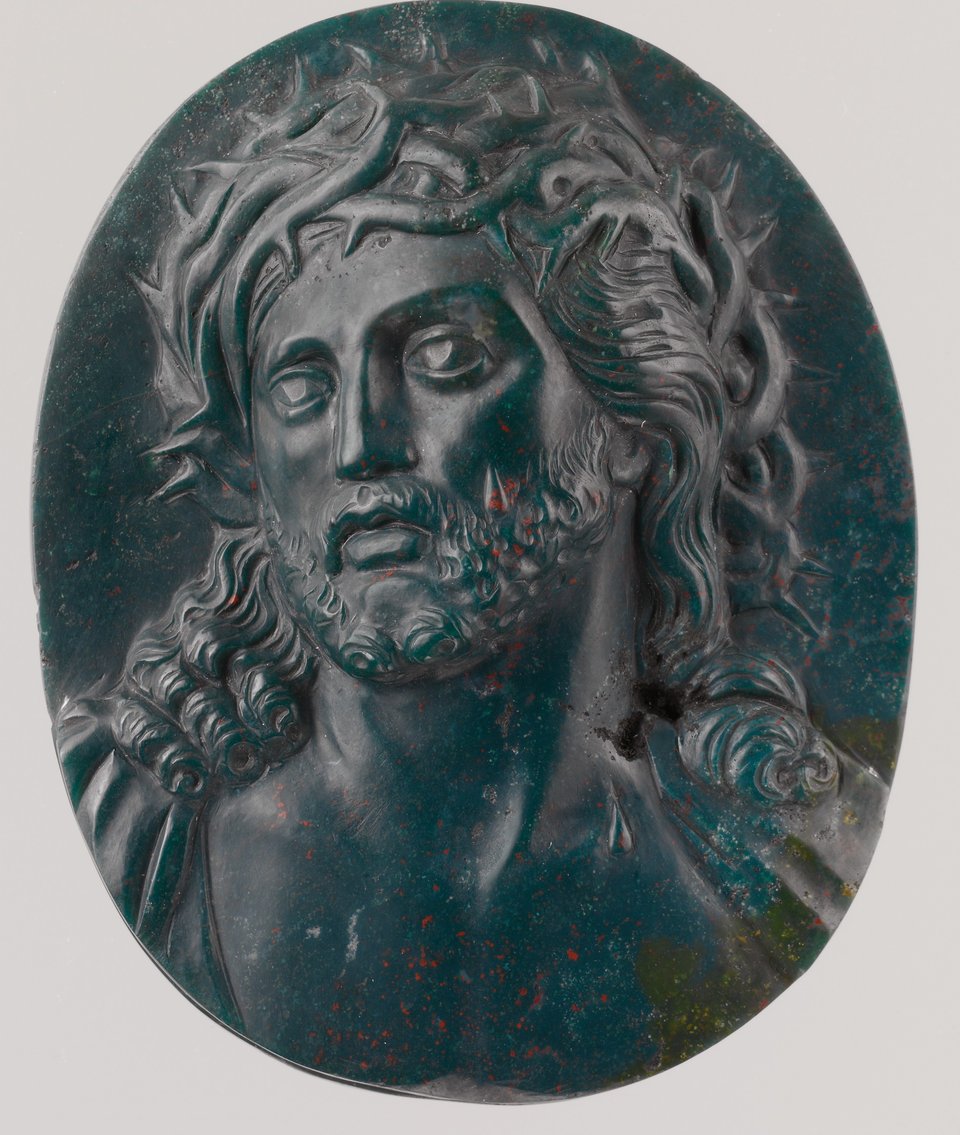
An oval relief of Christ wearing a crown of thorns, carved from a very dark green stone with faint red flecks
#1F3335#3B4547#6A3834
SculptureBust of Christ crowned with thorns, Milan (mid to late 1600s)

The Met notes that heliotrope was popular in Milan, and that its red flecks led this carver to suggest drops of blood. In the photograph the stone is a very dark green, about #1F3335, with tiny flecks near #6A3834.

#1F3335#3B4547#6A3834
Source: The Met

Palettes are sampled in-house.

Questions

What color is heliotrope?

A bright purple with a pink cast, named after the heliotrope flower. The usual code is #DF73FF (RGB 223, 115, 255). Older color dictionaries make heliotrope darker and redder.

Why is it called heliotrope?

The name comes from the Greek words for sun and turn. Heliotrope plants were thought to turn their flowers toward the sun, and Paris fashion borrowed the flower’s name for a rosy purple in 1880.

Is heliotrope the same as bloodstone?

As a gem, yes: heliotrope is another name for bloodstone, a dark green stone with red spots. The color heliotrope is named after the flower, not the stone.

What is the difference between heliotrope and orchid?

They are close. Heliotrope (#DF73FF) is brighter and leans a little toward blue. Orchid (#DA70D6), the CSS keyword, is softer and pinker.

Was heliotrope a mourning color?

Purples were allowed in half-mourning, the last stage of Victorian mourning dress, and heliotrope is often listed among them. Museum records of half-mourning dresses more often name purple, lilac or mauve.

What is a heliotrope rash?

A purple color on the upper eyelids, often with swelling, that is a sign of dermatomyositis, an inflammatory disease of the muscles and skin. Doctors named it after the color.

What colors go with heliotrope?

Charcoal and navy make it glow. Cream gives it a vintage look, deep green echoes the bloodstone, and soft gray calms it down.