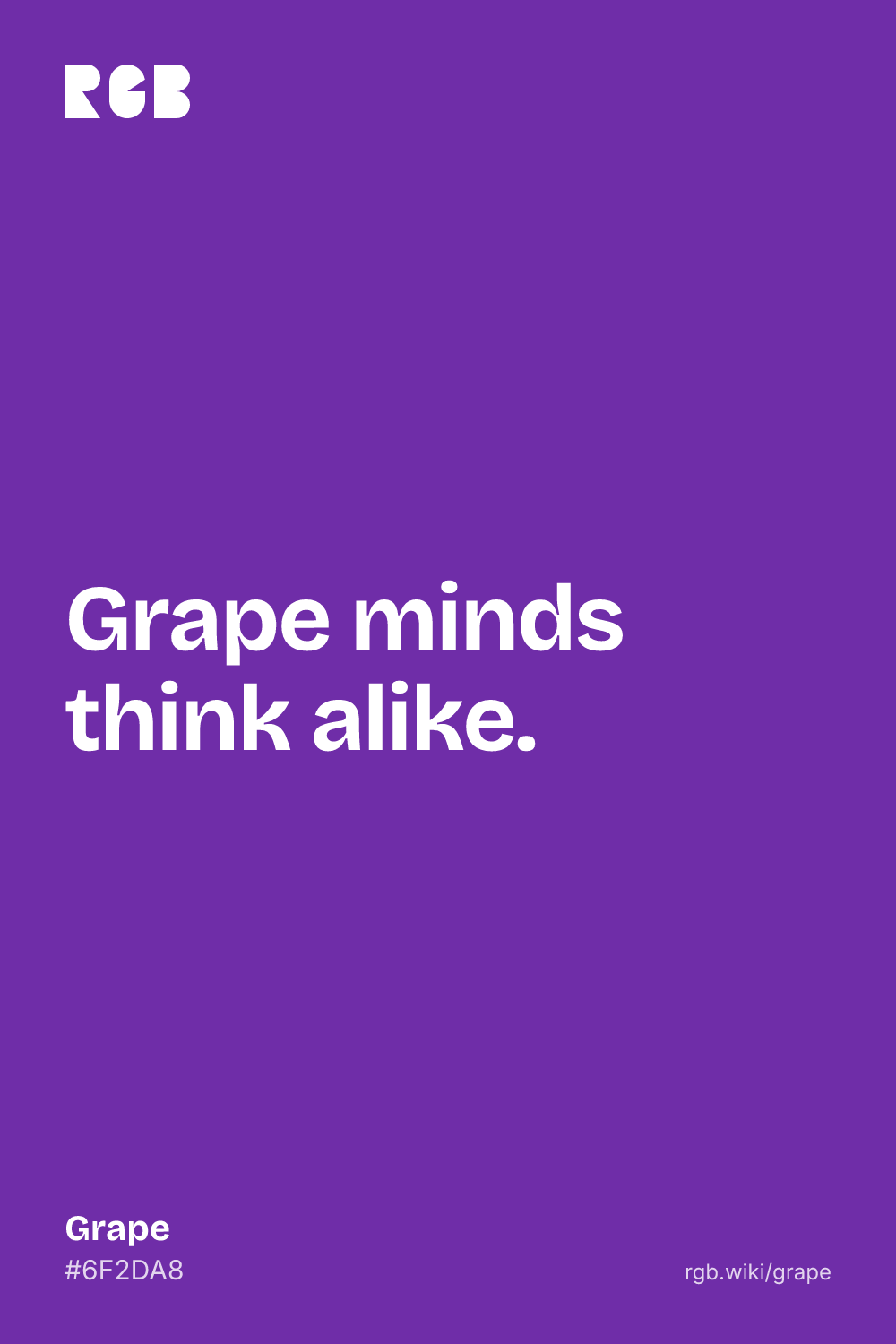
Grape is a deep purple that leans toward blue, named after the fruit. Its usual code is #6F2DA8: blue at about two-thirds strength, red at 44% and green low at 18%. That makes it bluer than plum and almost the same as the CSS keyword rebeccapurple, only a touch brighter.
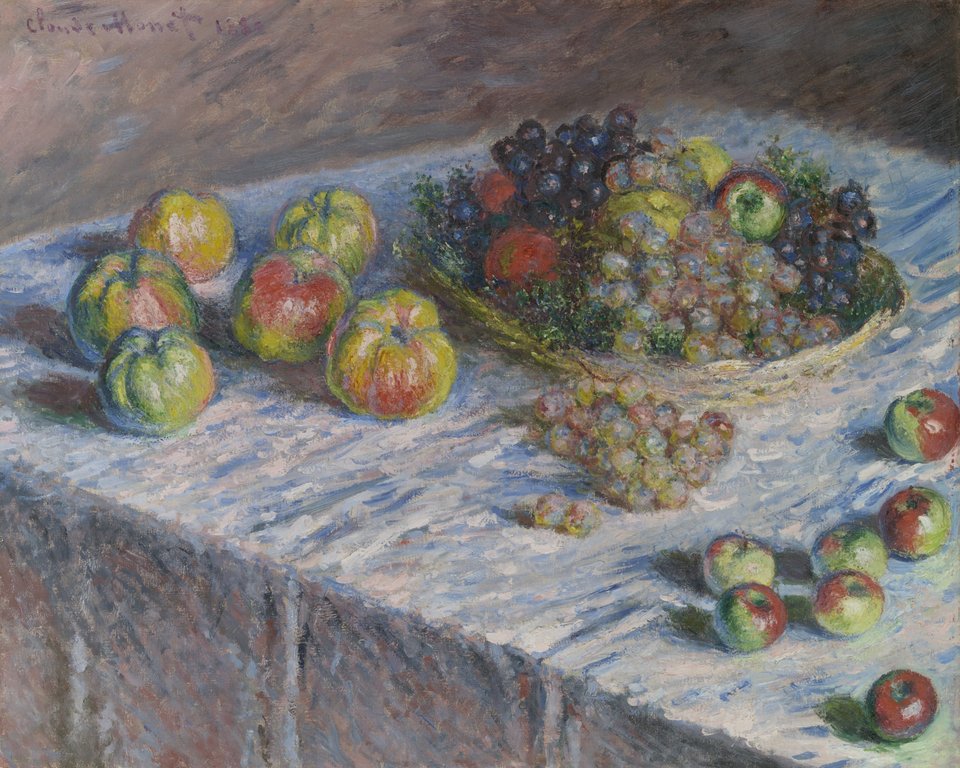
Real grapes are not one color. Merriam-Webster describes the fruit as light green or deep red to purplish black, and the grapes sold for eating and winemaking are mostly green, red or blue-black. The purple of American grape juice and grape jelly comes from one grape: the Concord, a dark blue-purple variety first grown in Concord, Massachusetts, in 1849. Its strong “grapey” smell comes from methyl anthranilate, the same compound flavor makers use for artificial grape, so grape candy and soda taste like a Concord and are usually colored purple to match.
Color references disagree about how grape looks. No color standard defines the web code, which traces to a scented crayon color of 1994. Maerz and Paul’s A Dictionary of Color (1930) has samples called grape and concord that the ISCC-NBS dictionary files as dark violet, about #2F2140, close to black. People in the xkcd color survey picked a grayer, pinker purple, #6C3461.
Grape’s purple is also a real food color. Anthocyanin pigments steeped from grape skins are sold as grape skin extract, or enocianina, and U.S. rules allow it in drinks. On screens, #6F2DA8 is dark enough for white text, at a contrast of 8 to 1. It pairs well with leaf greens, gold and cream, and softens to lilac when mixed with white.