Blush

A rosy pink named after the color a face turns.

Overview

Blush is a rosy pink. The code used here, #DE5D83, is strong in red with more blue than green, which gives a deep, slightly cool pink with plenty of color.

The name comes from the reddening of the face. The verb goes back to Old English blyscan, “to redden”, related to an old word for flame, and blush has named a color in English since 1590. It also names the makeup brushed onto the cheeks.

Most people mean something softer. In the xkcd color survey, the average blush was a light peachy pink, #F29E8E, and the average blush pink was #FE828C. The 1955 ISCC-NBS dictionary files Maerz and Paul’s blush as a moderate yellowish pink, about #D9A6A9. All three are much lighter than this code, which traces to a crayon color rather than a color dictionary.

#DE5D83 works as a bright accent. Black text reads better on it than white. For the paler blush most people picture, use a tint such as #F2BECD, and pair it with sage, cream or navy.

HEX#DE5D83
RGBrgb(222, 93, 131)
HSLhsl(342, 66%, 62%)
HSV342°, 58%, 87%
CMYK0, 58, 41, 13
OKLCHoklch(65.1% 0.164 4.5)
Every code converts from the HEX value #DE5D83. No color standard defines blush. #DE5D83 is the code most color lists use, and it traces to a crayon color, not a color dictionary. The 1955 ISCC-NBS dictionary files the blush of Maerz and Paul’s A Dictionary of Color (1930) as a moderate yellowish pink, about #D9A6A9, and people’s average blush in the xkcd survey was a lighter, peachier #F29E8E. CMYK is a screen-based estimate; print results vary.
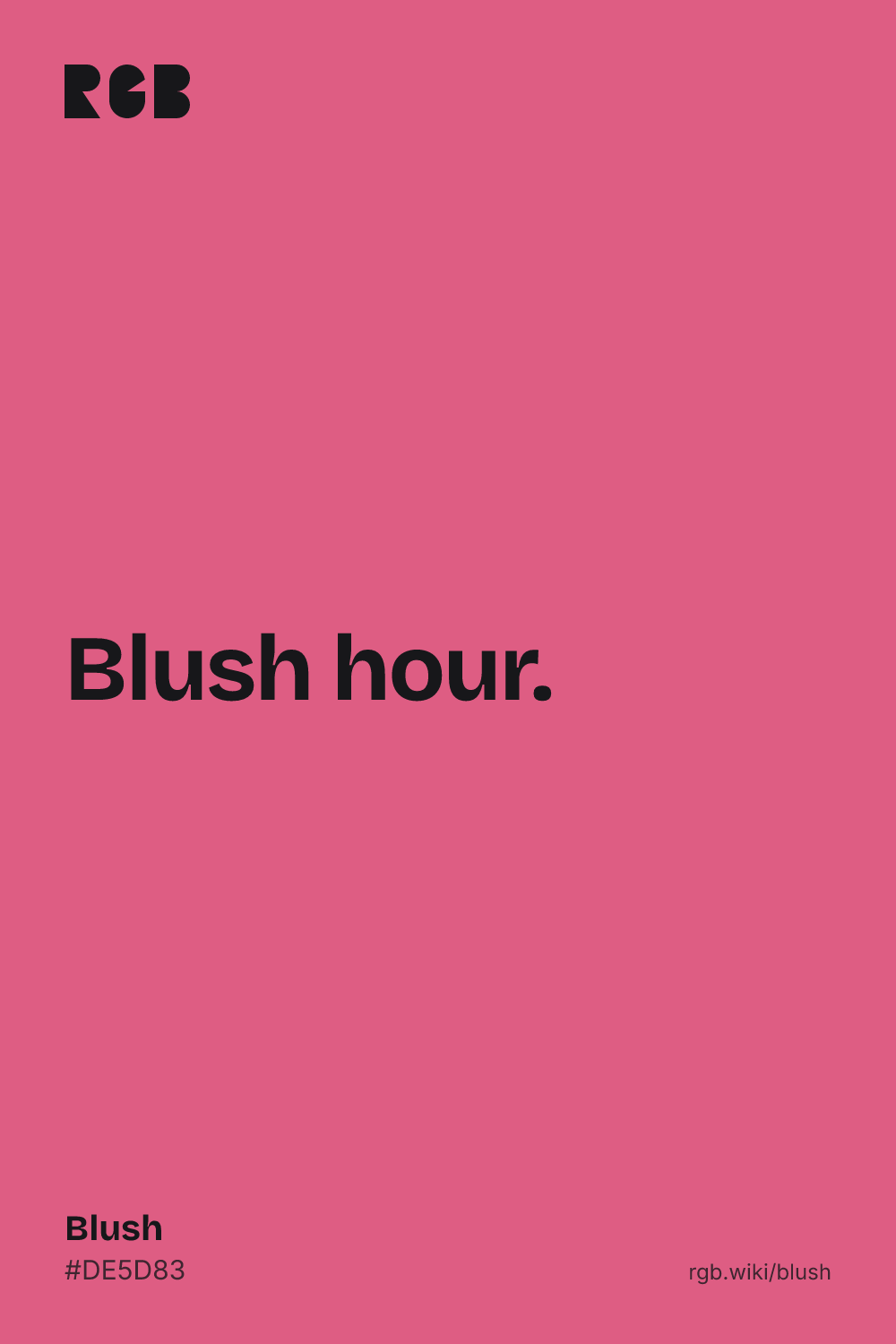
Blush color card, hex #DE5D83: “Blush hour”

Blush on the color map

Every other blush sits above the code and to its right: lighter and warmer. The survey’s blush pink is closest, at the top right edge of the outline. The dictionary blush and the valentine’s rose sit above the outline and are much grayer, which this map of hue and lightness doesn’t show. The survey’s plain blush is lighter and peachier still. The outline is an approximate range, not a measured one.

Shades and tints

Tints with white

Shades with black

Tones with gray

Blush sits in the middle. Tints add white, shades add black and tones add gray, in 10% steps out from it. Tap any swatch to copy its code.

Light and dark blush

#F2BECD
Pale blushMixed 60% with white. Close to the soft blush most people picture.
#DE5D83
BlushThe reference color.
#DB7093
Pale violet redThe CSS keyword palevioletred. Almost the same, a little softer. See pale violet red
#FE828C
Blush pinkThe xkcd survey average for blush pink. Warmer and lighter.
#F29E8E
Survey blushThe xkcd survey average for blush. A light peachy pink.
#D9A6A9
Dictionary blushThe ISCC-NBS moderate yellowish pink, where the 1955 dictionary files Maerz and Paul’s blush.
#85384F
Deep blushMixed 40% with black. A dark rose for text and borders.

Colors that go with blush

Pairings that work in rooms, outfits and interfaces.

Blush and sage

Pink and soft green, like a rose and its leaves.

Blush and navy

Bright pink on deep blue. Confident and modern.

Valentine, 1850

From a Victorian valentine: a pale rose and green leaves on cream.

Blush and gold

Warm and festive. Suits invitations and packaging.

Soft blush

A tonal set from pale to deep, for a gentle, all-pink look.

Blush night

A dark theme with a lighter blush as the accent.

Color-wheel palettes

Pick a palette to see where its colors sit on the color wheel. The caret marks blush. Tap a band to copy its code.

Similar colors

Mulberry65%Pale violet red81%BlushStrawberry72%Watermelon66%Pink-red65%Indian red69%

Lined up by hue around blush. Hover a color to see how similar it is.The bar under each name shows how similar it is. Similarity comes from the distance between the two colors in OKLab, a model of how we see color.

Blush vs dusty rose

Blush#DE5D83 · hue 342°
  • Brighter and more intense
  • Named after a reddening face
  • Most people mean a paler pink
Dusty rose#C08081 · hue 359°
  • Grayer and softer
  • Rose with the brightness taken out
  • A muted, vintage pink

Meaning

  • Blushing
  • Makeup
  • Romance
  • Roses

Blush is named after something the body does: the reddening of the face from embarrassment, shame or shyness. It also names the makeup that imitates it, and it reads as soft and romantic, the pink of roses and valentines. The claims below are about blushing itself. Research on color and emotion tests basic words like pink and red, not blush.

“The most human of all expressions”

Historical record

Charles Darwin opened his 1872 chapter on blushing with that line. He noted that monkeys redden from passion but that no animal had been shown to blush, that the face, ears and neck usually redden most, and he collected reports that people with dark skin blush too, even when little or no redness can be seen.1
Widened blood vessels

Expert review

A 2020 review of the research concludes that blushing appears to be driven mainly by the sympathetic nervous system, through signals that widen blood vessels in the face, perhaps with some local inflammation of the vessels as well.2

Watching yourself sing works

Small studies

In a 1990 study, 32 students watched a video of themselves singing, recorded the day before. Their cheeks and ears reddened and their cheeks warmed more than during a tense clip from Hitchcock’s Psycho. In a follow-up with 48 women, blushing grew as the audience grew from one person to four.3, 4

A blush can help after a mistake

Two small experiments

In two experiments with 128 people, faces shown with a blush after a story about a wrongdoing or a mishap were usually rated more sympathetic and trustworthy than the same faces without one. The studies used photos and short stories, not real encounters.5

Sources (5)
  1. Darwin, C. (1872). The Expression of the Emotions in Man and Animals, chapter 13, “Self-attention, shame, shyness, modesty: blushing”. Mead Project, Brock University.
  2. Drummond, P. D., Shapiro, G. B., Nikolić, M. & Bögels, S. M. (2020). Treatment options for fear of blushing. Current Psychiatry Reports, 22(6), 28. doi:10.1007/s11920-020-01152-5
  3. Shearn, D., Bergman, E., Hill, K., Abel, A. & Hinds, L. (1990). Facial coloration and temperature responses in blushing. Psychophysiology, 27(6), 687–693. doi:10.1111/j.1469-8986.1990.tb03194.x
  4. Shearn, D., Bergman, E., Hill, K., Abel, A. & Hinds, L. (1992). Blushing as a function of audience size. Psychophysiology, 29(4), 431–436. doi:10.1111/j.1469-8986.1992.tb01716.x
  5. Dijk, C., de Jong, P. J. & Peters, M. L. (2009). The remedial value of blushing in the context of transgressions and mishaps. Emotion, 9(2), 287–291. doi:10.1037/a0015081

History

Blush was a word for a glance and for a red face long before it named a color. Its pinks have ranged from rose to peach ever since.

  1. 1300s

    First known use of blush as a noun, for a glance or first look, the sense that survives in “at first blush”. The verb goes back to Old English blyscan, “to redden”.1

  2. 1590

    First recorded use of blush as a color name in English.2

  3. About 1840–1850

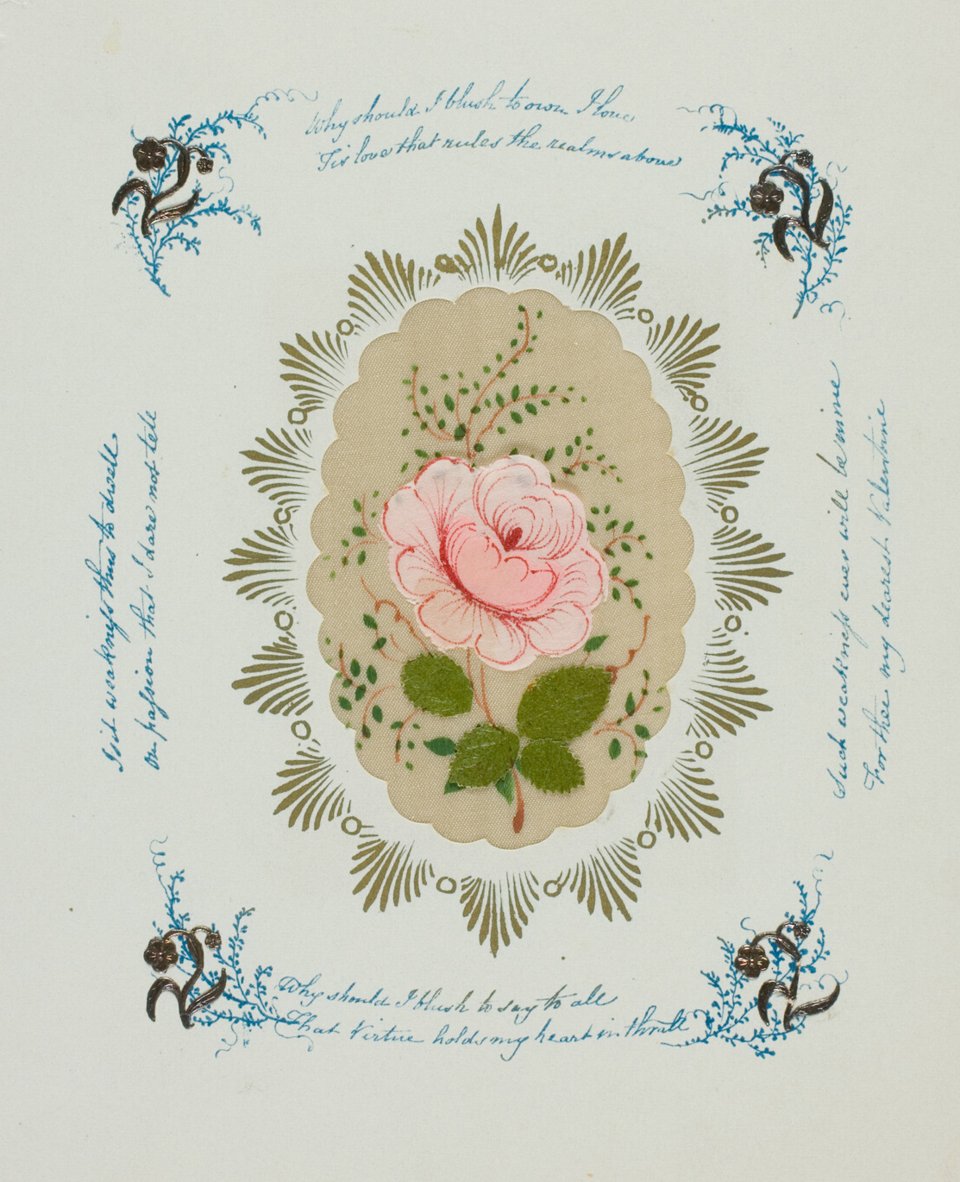
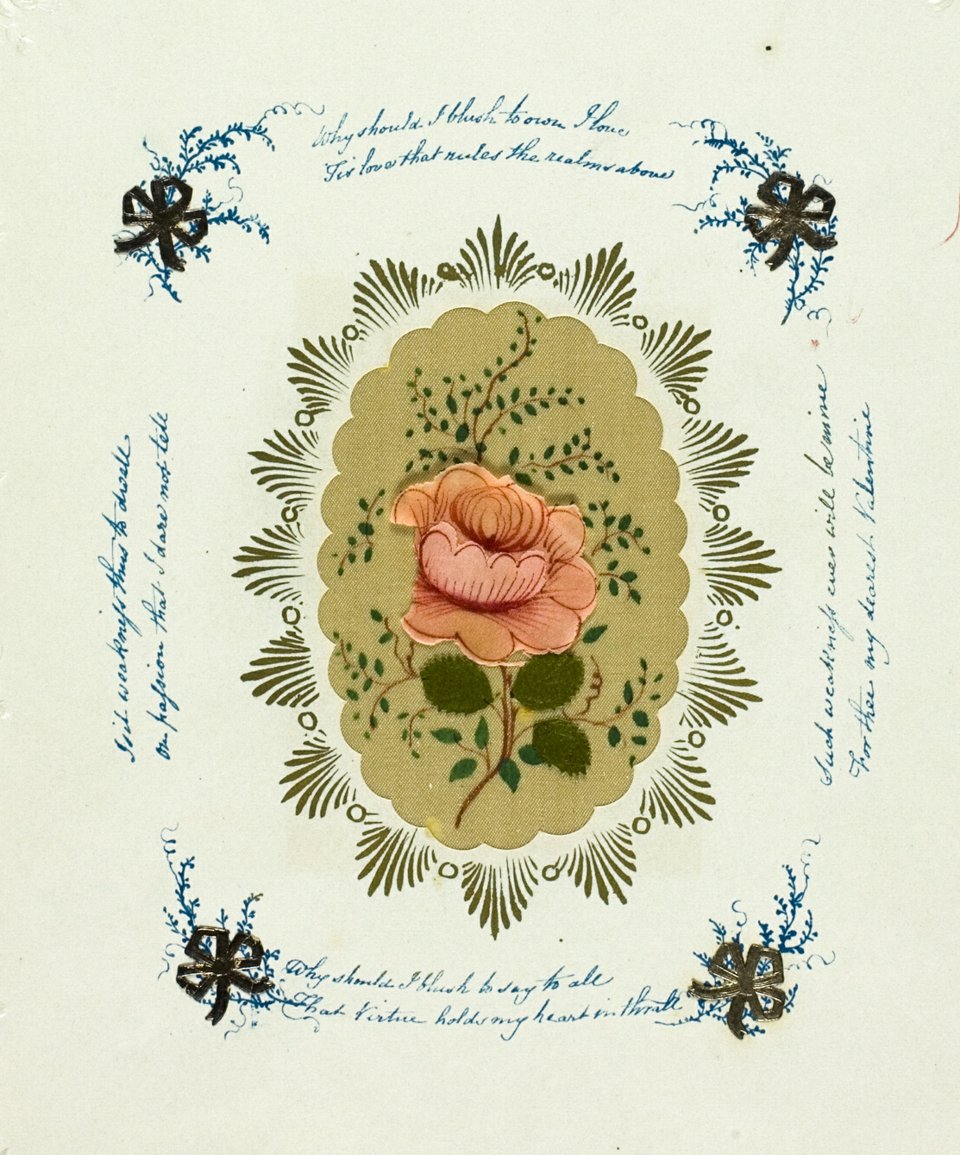
    George Kershaw publishes paper valentines titled Why Should I Blush, each with a hand-colored rose. Two copies at the Art Institute of Chicago color the rose differently: peach on one, pink on the other.3, 4

  4. 1872

    Charles Darwin calls blushing “the most peculiar and the most human of all expressions”.5

  5. 1930

    Maerz and Paul’s A Dictionary of Color prints a blush sample, on plate 12.2

  6. 1955

    The ISCC-NBS dictionary files Maerz and Paul’s blush under moderate yellowish pink, with a second blush entry under light brown.6

  7. 2010

    In the xkcd color survey, people’s average blush is #F29E8E and their average blush pink #FE828C, both far lighter than the usual web code.7

Sources (7)
  1. Merriam-Webster, “blush”, definitions, etymology and first known use.
  2. Wikipedia, “Blush (color)”, citing Maerz and Paul, A Dictionary of Color (1930), p. 190 and plate 12, sample A7.
  3. Art Institute of Chicago, “Why Should I Blush (valentine)”, George Kershaw, about 1840 (1919.370).
  4. Art Institute of Chicago, “Why Should I Blush (valentine)”, George Kershaw, about 1850 (1919.367).
  5. Darwin, C. (1872). The Expression of the Emotions in Man and Animals, chapter 13. Mead Project, Brock University.
  6. Jaffer, A. “(M) Dictionary of Color”, the ISCC-NBS placements of Maerz and Paul’s color names (1955 dictionary).
  7. Munroe, R. (2010). “Color survey results”. xkcd blog. The survey’s color averages are released as CC0 data.

Blush in use

A paper valentine with an embossed white border, blue handwritten verses at the edges, and a pale pink rose with green leaves on a cream oval in the center
#E1AEA3#CD877C#B44D43#616A17
ValentineWhy Should I Blush, valentine by George Kershaw (about 1850)

An embossed paper valentine whose verse begins “Why should I blush to own I love”. The hand-colored rose at its center samples at about #E1AEA3, deepening to #CD877C, with red outlines near #B44D43: a soft, grayed pink, far paler than the blush code and close to the dictionary’s blush.

#E1AEA3#CD877C#B44D43#616A17
Source: Art Institute of Chicago
A paper valentine with an embossed border, blue verses at the edges, and a peach-colored rose with green leaves on a pale olive oval in the center
#E5A27D#D08556#AA5E33#44470E
ValentineWhy Should I Blush, valentine by George Kershaw (about 1840)

Another copy of the same design, with its rose colored a warm peach: about #E5A27D, with deeper coral at #D08556 and #AA5E33. Side by side, the two cards show how far a blush could stretch, from pink toward peach, as the survey’s peachy blush still does.

#E5A27D#D08556#AA5E33#44470E
Source: Art Institute of Chicago

Palettes are sampled in-house.

Questions

What color is blush?

A rosy pink. The code used here is #DE5D83 (RGB 222, 93, 131). Many people use blush for a paler, softer pink.

What is the hex code for blush pink?

There is no standard one. #DE5D83 is the most common code for blush, but people’s average blush pink in the xkcd survey was #FE828C, and their average blush was a peachier #F29E8E. For a pale blush, try a tint such as #F2BECD.

Why do people blush?

Blushing is a reddening of the face, ears and neck, usually from embarrassment, shame or shyness. It appears to be driven by the sympathetic nervous system, which widens blood vessels in the face.

Do people with dark skin blush?

Yes. In 1872 Darwin gathered reports that people with dark skin blush too, even when little or no redness can be seen.

What is the difference between blush and dusty rose?

Blush (#DE5D83) is brighter and more intense. Dusty rose (#C08081) is grayer and softer, rose with the brightness taken out.

What colors go with blush?

Sage and cream for a soft look, navy for contrast, gold for warmth, and deeper rose tones for an all-pink palette. Black text reads better on blush than white.