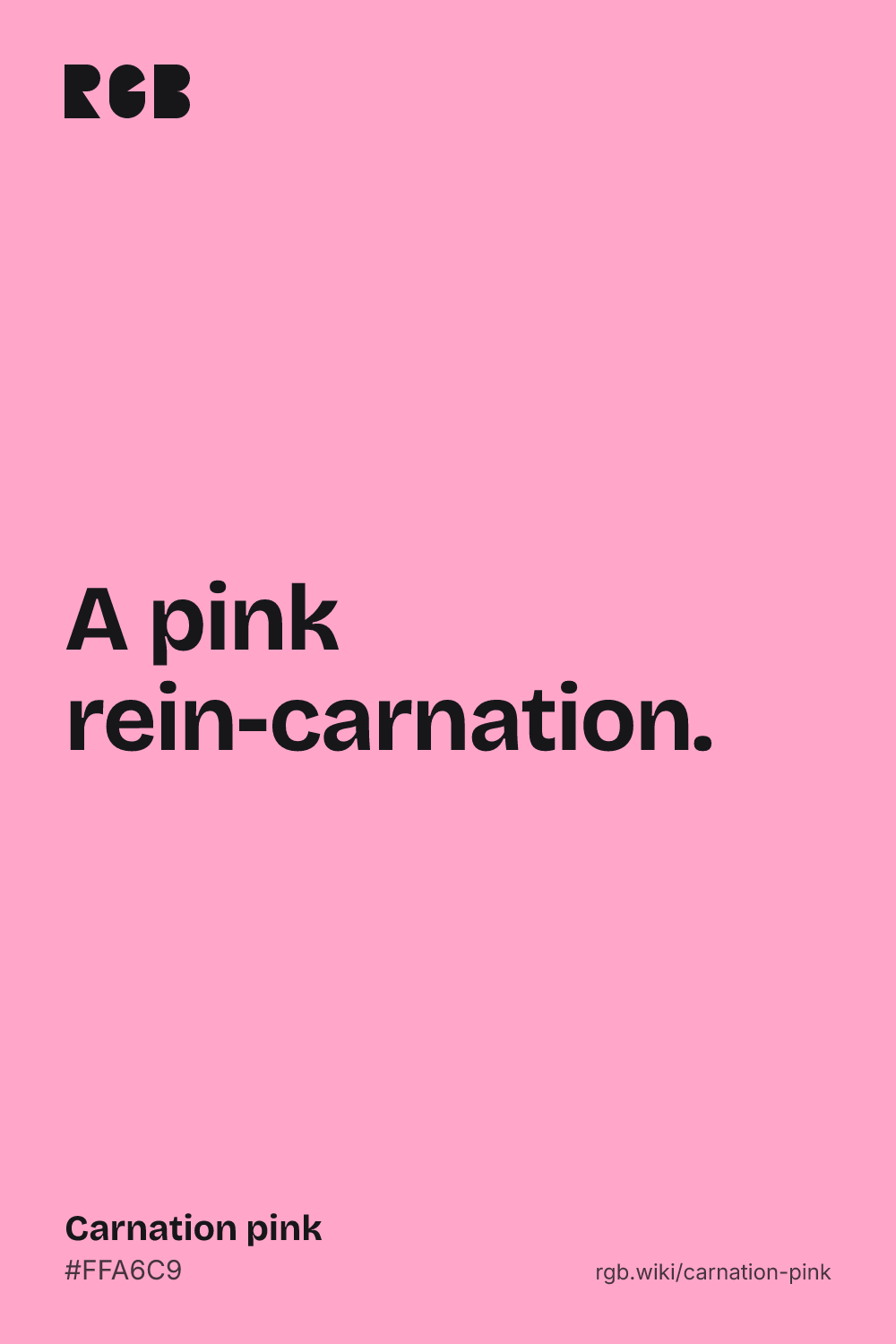
Carnation pink is a light, rosy pink with a slight purple lean, named after the carnation flower. Its usual code, #FFA6C9, has red at full strength, green at 65% and blue at 79%. That makes it paler and cooler than Baker-Miller pink and flamingo pink. The code traces to a crayon color sold since 1903, not to a color dictionary.
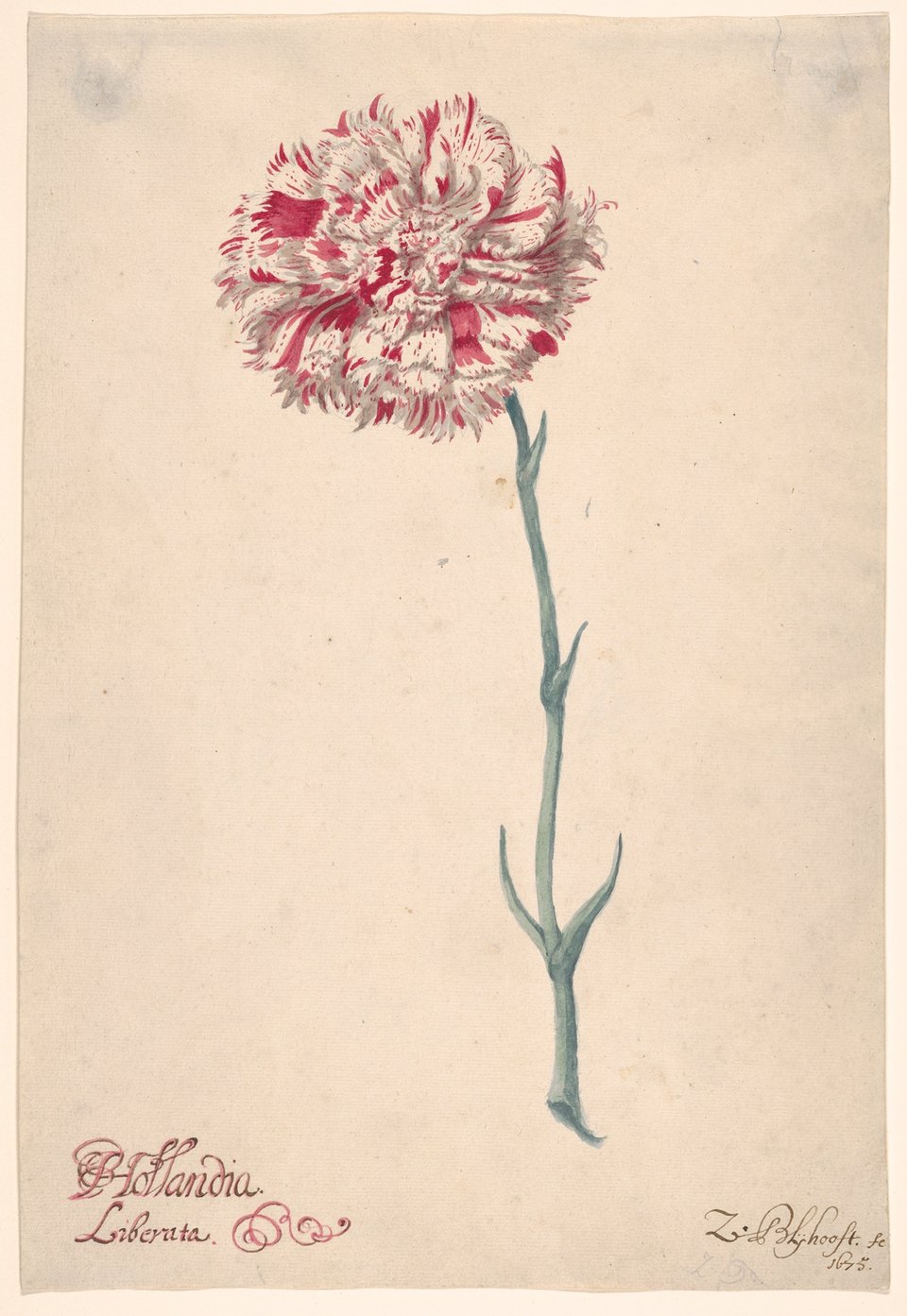
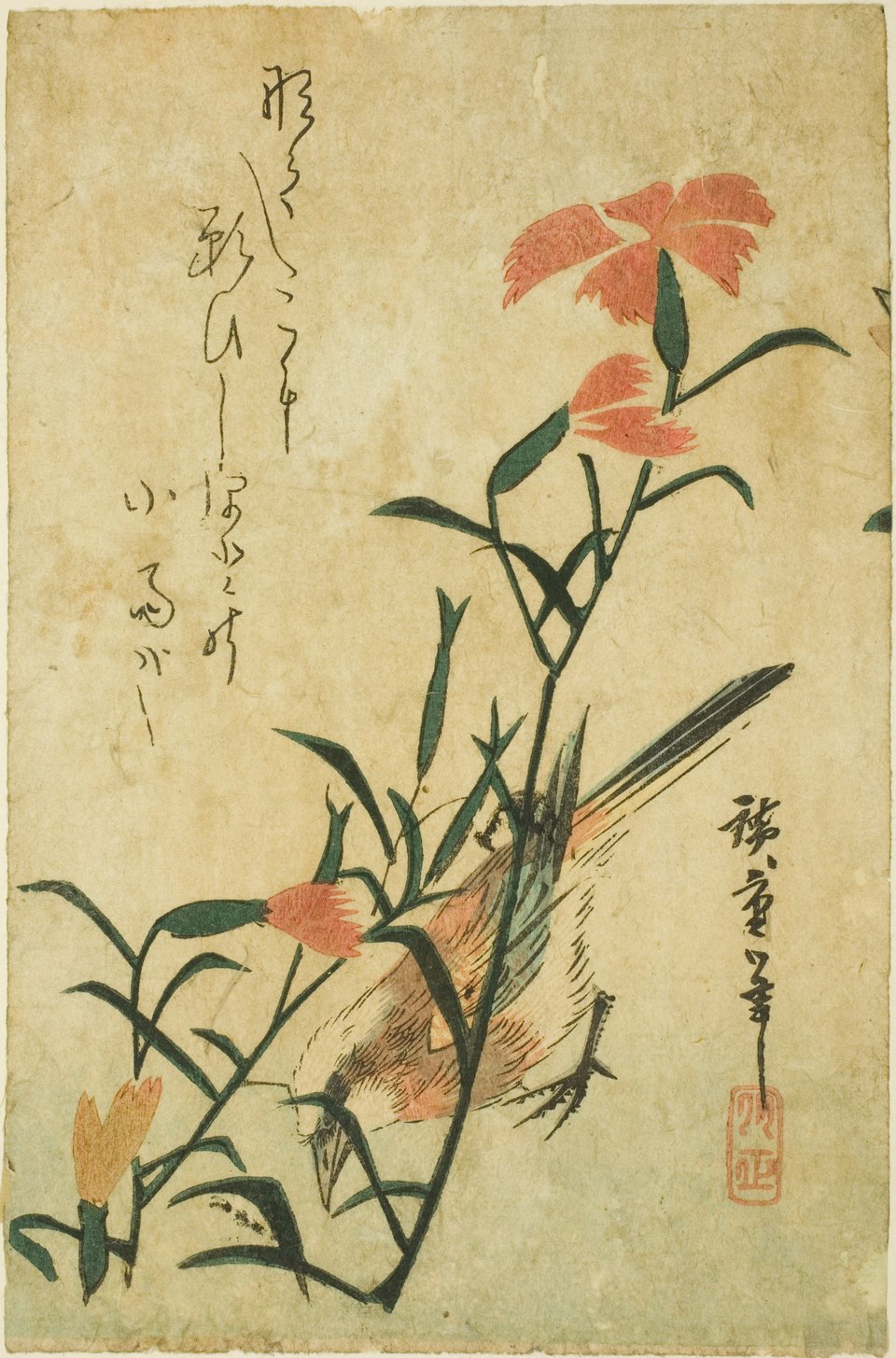
The carnation, Dianthus caryophyllus, is the clove pink of the Mediterranean. Its wild flowers are a bright pinkish purple, and gardeners have bred it in red, pink, yellow, white and green. The name is doubly floral: the color word pink was itself taken from these flowers, the garden pinks, in the late 1600s. And carnation is older as a color word than as a flower name in English. From Latin carn-, flesh, it meant the color of skin by about 1535, and Shakespeare’s Mistress Quickly still puns on it in Henry V.
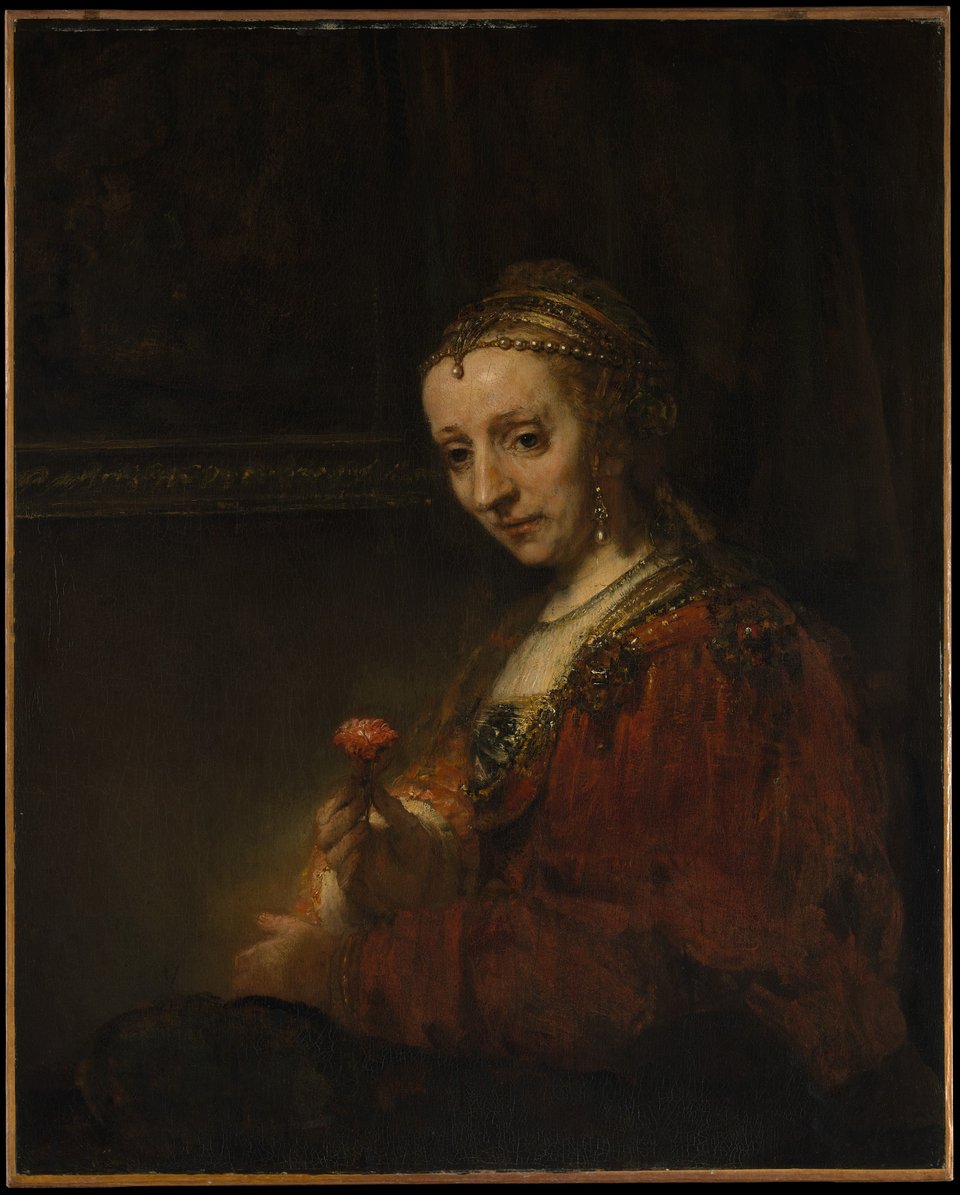
Today the flower is best known for Mother’s Day. In 1908 Anna Jarvis gave out 500 white carnations, her late mother’s favorite flower, at the first Mother’s Day service in Grafton, West Virginia. Florists soon taught Americans to wear a bright carnation, usually pink or red, for a living mother and a white one for a mother who had died. Long before that, a carnation in a Dutch portrait spoke of love and marriage.
Dictionaries never settled on one carnation. Maerz and Paul’s 1930 dictionary has a carnation red, a carnation rose and a plain carnation that the 1955 ISCC-NBS dictionary files as pale yellow, the same group as their Spanish flesh: a trace of the old skin color. Merriam-Webster’s carnation is “a moderate red”. On screen, #FFA6C9 is light enough for black text (contrast 11.6:1); white text does not work on it. It looks fresh with sage green, crisp with navy and soft with white.