Pearl

A soft, creamy white named after the one gem that grows inside a living animal.

Overview

Pearl is a soft, warm off-white with a touch of cream, the color of a classic white pearl. The code most color lists use is #EAE0C8: red and green high, blue a little lower, which tints white toward beige.

The color word has drifted. In older dictionaries pearl was a gray: the 1955 ISCC-NBS dictionary files Maerz and Paul’s pearl as a light gray, #B9B8B5, and Merriam-Webster still defines pearl as a nearly neutral, slightly bluish medium gray. On screens, pearl now usually means this creamy white. English has used pearl as a color name since at least 1604.

Real pearls are harder to pin down. Their body color may be white, cream, gray, black or gold, often with a pink, green or blue overtone, and some show orient, a soft rainbow shimmer made as light breaks up in the thin layers of nacre. A flat code can show the body color, but not the glow.

To suggest a pearl on screen, use a soft radial gradient: a near-white highlight such as #F9F6EE, the base #EAE0C8, and a warm gray shadow such as #BBB3A0, with a faint pink or green tint at the edge. Pearl is far too light for white text; use dark text on it.
HEX#EAE0C8
RGBrgb(234, 224, 200)
HSLhsl(42, 45%, 85%)
HSV42°, 15%, 92%
CMYK0, 4, 15, 8
OKLCHoklch(90.8% 0.034 88.1)
Every code converts from the HEX value #EAE0C8. No color standard defines pearl. #EAE0C8 is the code most color lists use; Wikipedia presents it as the average color of a pearl, a claim its editors mark as dubious, with no source. The 1955 ISCC-NBS dictionary files the pearl in Maerz and Paul’s A Dictionary of Color (1930) as a light gray, #B9B8B5, and Merriam-Webster defines the color pearl as a gray too. CMYK is a screen-based estimate; print results vary.
Pearl color card, hex #EAE0C8: “Go on, clutch your pearls”

Pearl on the color map

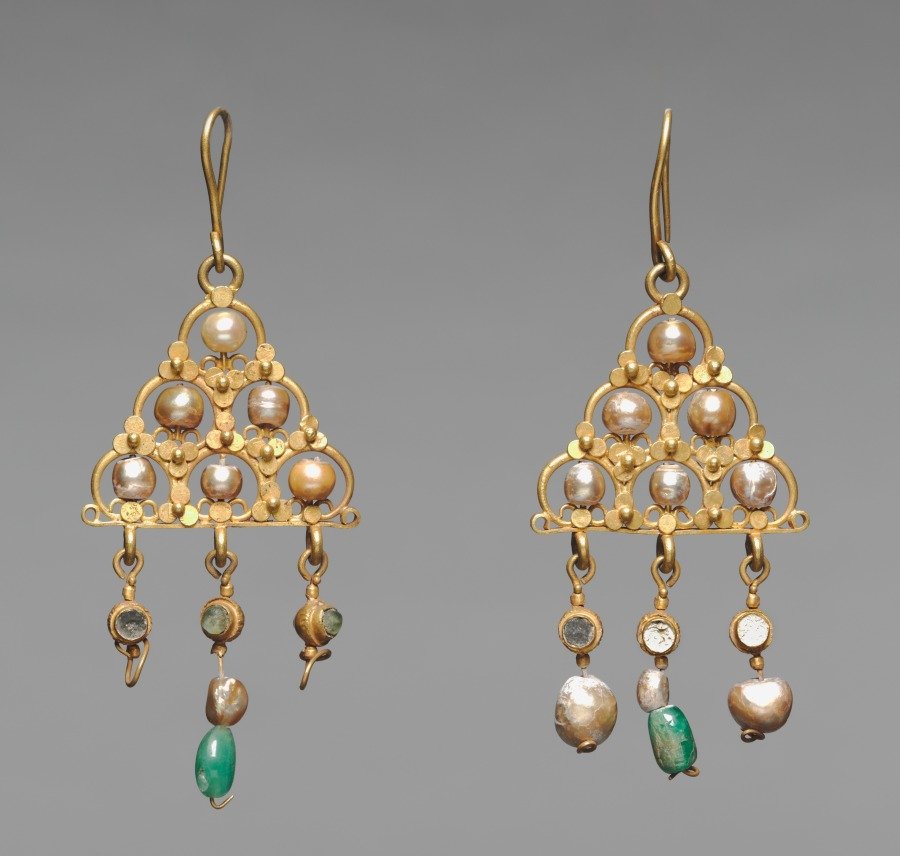
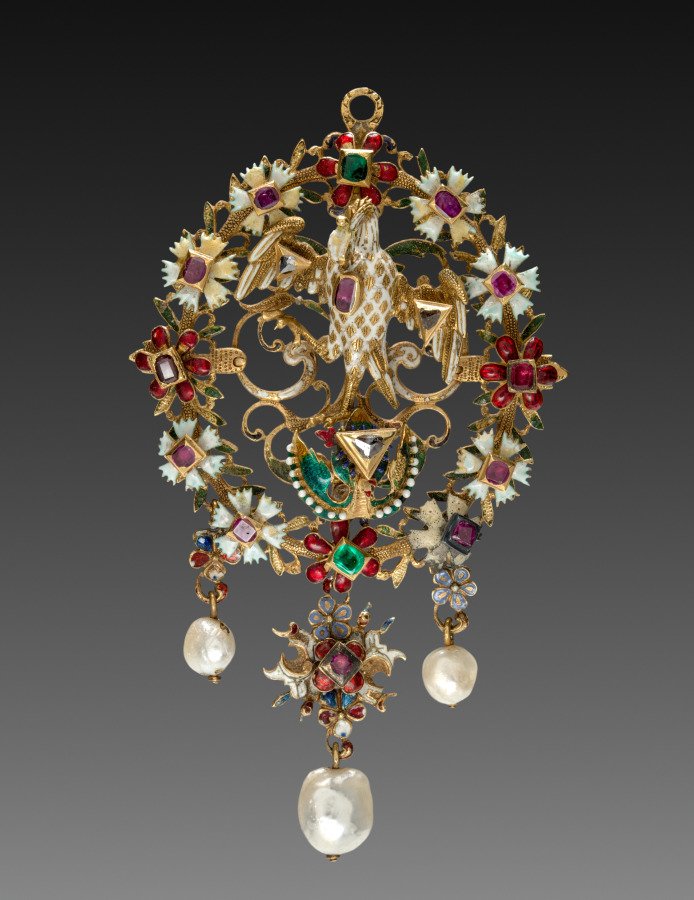
The pearl on the German pendant sits inside the outline, a little darker and cooler than the code. The dictionary’s light gray has almost no hue and sits below the outline: the old color word was much grayer. The Byzantine pearls, now a soft tan, sit below and to the left. The outline is an approximate range, not a measured one.

Shades and tints

Tints with white

Shades with black

Tones with gray

Pearl sits in the middle. Tints add white, shades add black and tones add gray, in 10% steps out from it. Tap any swatch to copy its code.

Light and dark pearl

#F9F6EE
Pearl highlightMixed 70% with white. The shine in a pearl gradient.
#EAE0C8
PearlThe reference color.
#DDDBCF
Renaissance pearlSampled from a baroque pearl on a German pendant of about 1600. Cooler and grayer than the code.
#B9B8B5
Pearl grayThe ISCC-NBS light gray, where the 1955 dictionary files Maerz and Paul’s pearl.
#BBB3A0
Pearl shadowMixed 20% with black. A warm gray for the shadow side of a pearl gradient.
#5E5A50
Dark pearlMixed 60% with black. A warm dark gray for text on pearl backgrounds.

Colors that go with pearl

Pairings that work in rooms, outfits and interfaces.

Pearl and navy

Classic and calm. Suits weddings, menus and stationery.

Renaissance pendant

From the museum photo: baroque pearls with gold, ruby and emerald.

Pearl and blush

Soft and romantic. A favorite for bridal work.

Pearl and sage

Creamy white with muted green. Fresh and natural.

Pearl and charcoal

Light on dark. Calm and modern for interfaces.

Black pearl

Dark gray with green and purple overtones, like a Tahitian pearl, and pearl white as the accent.

Color-wheel palettes

Pick a palette to see where its colors sit on the color wheel. The caret marks pearl. Tap a band to copy its code.

Similar colors

Champagne pink91%Almond94%Champagne87%Wheat86%Bone90%PearlParchment87%

Lined up by hue around pearl. Hover a color to see how similar it is.The bar under each name shows how similar it is. Similarity comes from the distance between the two colors in OKLab, a model of how we see color.

Pearl vs ivory

Pearl#EAE0C8 · hue 42°
  • Darker and more beige
  • Named after a gem grown in mollusks
  • Once meant a light gray
Ivory#FFFFF0 · hue 60°
  • Almost white, a faint yellow tint
  • Named after elephant tusk
  • A CSS keyword

Meaning

  • Organic gem
  • From the water
  • The moon
  • Luster

Pearl’s meanings come from the gem: grown in water by a living animal, round like the moon, and for most of history so rare that only the rich could wear it. Research on color and emotion tests broad words like white, not pearl, so the claims here are about the gem.

Grown, not mined

Well established

A pearl forms inside the soft tissue of a mollusk, an oyster or a mussel. The animal coats an irritant with nacre, layers of the mineral aragonite bound by a horny protein, the same material that lines its shell. Natural pearls form with no human help at all.1, 2, 3

Most pearls today are cultured

Well established

To culture a pearl, a technician implants a piece of mantle tissue, often with a shell bead, into a host mollusk, which then coats it with nacre. Centuries of pearl fishing stripped the natural beds, and cultured pearls now make up the vast majority of pearl sales.1, 2

A color with an overtone

Well established

White and cream are the most familiar pearl colors, and black, gray and silver are fairly common, but pearls come in every hue. A second color, the overtone, often lies over the body color, usually pink, green, purple or blue. Some pearls also shimmer with orient, a rainbow play of light made in the overlapping layers of nacre.1, 3

Tears, dew and the moon, in lore

Folklore

People in the ancient Middle East believed pearls were teardrops fallen from heaven; in China, that they came from a dragon’s brain; Columbus and his peers, that oysters made them from dew. Many cultures linked the round gem with the moon, and in Europe pearls stood for modesty and purity. These are beliefs, not facts.2, 4

Sources (4)
  1. Gemological Institute of America, “Pearl description”.
  2. Gemological Institute of America, “June birthstones”.
  3. Wikipedia, “Pearl”, sections on physical properties and formation.
  4. Gemological Institute of America, “Pearl history and lore”.

History

For thousands of years, every pearl came from a wild mollusk opened by hand, which made pearls among the costliest things a person could wear. Culturing changed that a little over a century ago.

  1. 2206 BCE

    The oldest known written mention of natural pearls, recorded by a Chinese historian, dates to this year.1

  2. 77 CE

    Pliny the Elder tells how Cleopatra won a wager with Mark Antony by dissolving one of the two largest pearls in the world in vinegar and drinking it.2

  3. 600s

    A Byzantine goldsmith makes chandelier earrings for a woman of the court, set with pearls, glass and emeralds.3

  4. 1498–1502

    On his third and fourth voyages, Columbus meets people adorned with pearls. Pearl beds off present-day Venezuela and Panama feed European demand, then decline within a century.1

  5. 1500s

    La Peregrina, a drop-shaped pearl about the size of a pigeon’s egg, is found in the Gulf of Panama and passes to European royalty.4

  6. About 1600

    A German jeweler hangs three large baroque pearls from an enameled gold pendant with a pelican.5

  7. 1604

    First recorded use of “pearl” as a color name in English.6

  8. 1705

    First known use of “pearl gray”, which Merriam-Webster defines as a yellowish to light gray.7

  9. Early 1900s

    Japanese pioneers grow whole cultured pearls. By the 1920s they are commercially important, just as natural pearl production starts to decline.1

  10. 1955

    The ISCC-NBS dictionary files Maerz and Paul’s pearl (1930) as a light gray.8

Sources (8)
  1. Gemological Institute of America, “Pearl history and lore”.
  2. Pliny the Elder, The Natural History, book 9, chapter 58, “Instances of the use of pearls”, trans. John Bostock and H. T. Riley (1855). Perseus Digital Library.
  3. The Cleveland Museum of Art, “Earrings (pair)”, Byzantium, 600s (1947.178).
  4. Gemological Institute of America, “June birthstones”.
  5. The Cleveland Museum of Art, “Pendant with Pelican”, Germany, c. 1600 (1959.336).
  6. Wikipedia, “Pearl (color)”, citing Maerz and Paul, A Dictionary of Color (1930), p. 201 and plate 44.
  7. Merriam-Webster, “pearl gray”, definition and first known use.
  8. Jaffer, A. “(M) Dictionary of Color”, the ISCC-NBS placements of Maerz and Paul’s color names (1955 dictionary).

Pearl in use

An ornate gold pendant with a white enamel pelican, red and green stones and white enamel flowers, with three large irregular pearls hanging from the bottom
#DDDBCF#C8C2B2#B2AB99#FBFBF8
JewelryPendant with Pelican, Germany (about 1600)

An enameled gold pendant set with rubies, emeralds and diamonds, with three large baroque pearls hanging below. The pearls read about #DDDBCF, a cooler, grayer white than the web code, with bright highlights and soft gray shadows.

#DDDBCF#C8C2B2#B2AB99#FBFBF8
Source: Cleveland Museum of Art
A pair of triangular gold earrings set with small tan-pink pearls, with pearls and green stones hanging below
#D1BA9C#C9B69E#B5A18E#CBA869
JewelryEarrings, Byzantium (600s)

Gold chandelier earrings worn at the Byzantine court, set with small pearls and green stones. After some 1,400 years the pearls read a soft tan with a pink cast, about #C9B69E, much darker than the web code.

#D1BA9C#C9B69E#B5A18E#CBA869
Source: Cleveland Museum of Art

Palettes are sampled in-house.

Questions

What color is pearl?

A soft, creamy off-white. The code most color lists use is #EAE0C8 (RGB 234, 224, 200). Real pearls also come in pink, gold, gray and black.

Is pearl white or gray?

It depends on the source. Screen color lists use a creamy white, #EAE0C8, but older color dictionaries treat pearl as a light gray, and Merriam-Webster still defines the color pearl as a nearly neutral gray.

What is the difference between pearl and ivory?

Pearl (#EAE0C8) is darker and more beige. Ivory (#FFFFF0) is almost pure white with a faint yellow tint.

How do I make a pearl effect on a screen?

Use a soft radial gradient instead of one flat color: a near-white highlight such as #F9F6EE, the base #EAE0C8 and a warm gray shadow such as #BBB3A0, with a faint pink or green tint for the overtone.

How are pearls made?

A mollusk coats an irritant with layers of nacre, the material that lines its shell. Natural pearls form on their own; cultured pearls start from tissue, and often a bead, implanted by a pearl farmer.

What colors go with pearl?

Navy for a classic look, blush pink for weddings, sage green for a fresh feel, and charcoal or near-black for a calm, modern contrast.