Oyster is a pale, warm gray with a little beige in it, named after the inside of an oyster shell. The code used here is #D6D0C4: red, green and blue all high and close together, with blue a little lower, so it reads as an off-white that has been softly dimmed. It is grayer and a step darker than bone or pearl.
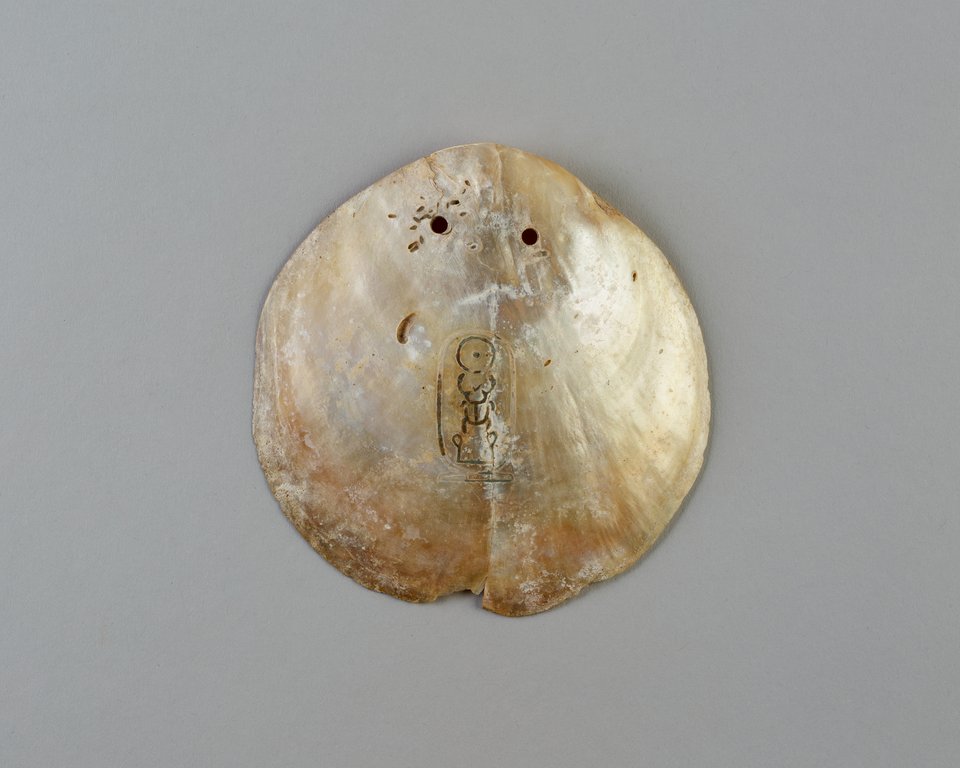
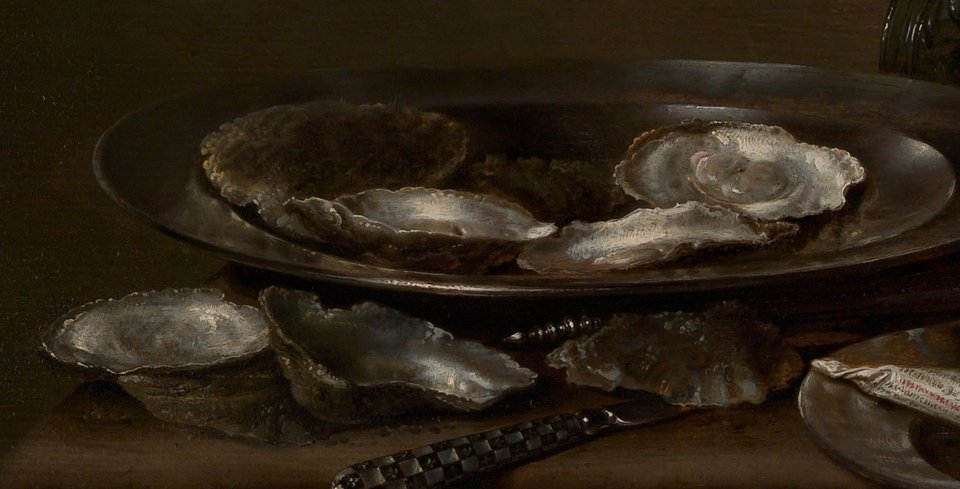
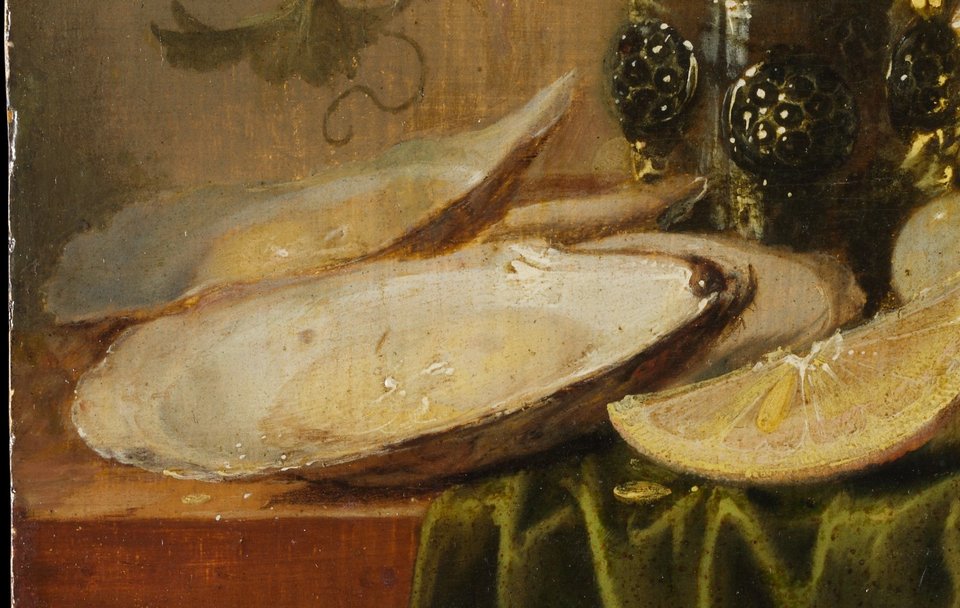
Merriam-Webster defines oyster, or oyster white, as “a grayish-white color”. That fits a freshly opened shell: the inside of a true oyster is calcite, whitish or bluish gray, not the rainbow mother-of-pearl of pearl oysters, which belong to a different family. Oyster shells have also made a real paint. In Japan, heated and ground oyster and clam shells give gofun, a shell white still used in painting.
Color references disagree about what oyster is. Maerz and Paul’s 1930 Dictionary of Color lists oyster white and oyster gray, and the 1955 ISCC-NBS dictionary files both as a pale yellow green; Merriam-Webster still defines oyster gray that way. The same 1955 dictionary files the oyster gray of a US federal paint specification as a plain light gray, and RAL, the German color standard, calls its color 1013 oyster white, about #DFDBC7. The code on this page sits in the middle of them.
On screens, #D6D0C4 is a calm background for dark text, with strong contrast for charcoal or navy. It suits interiors, menus and packaging, and looks at home next to slate blue, sage and one bright accent such as lemon or vermilion.